Ferry Irwandi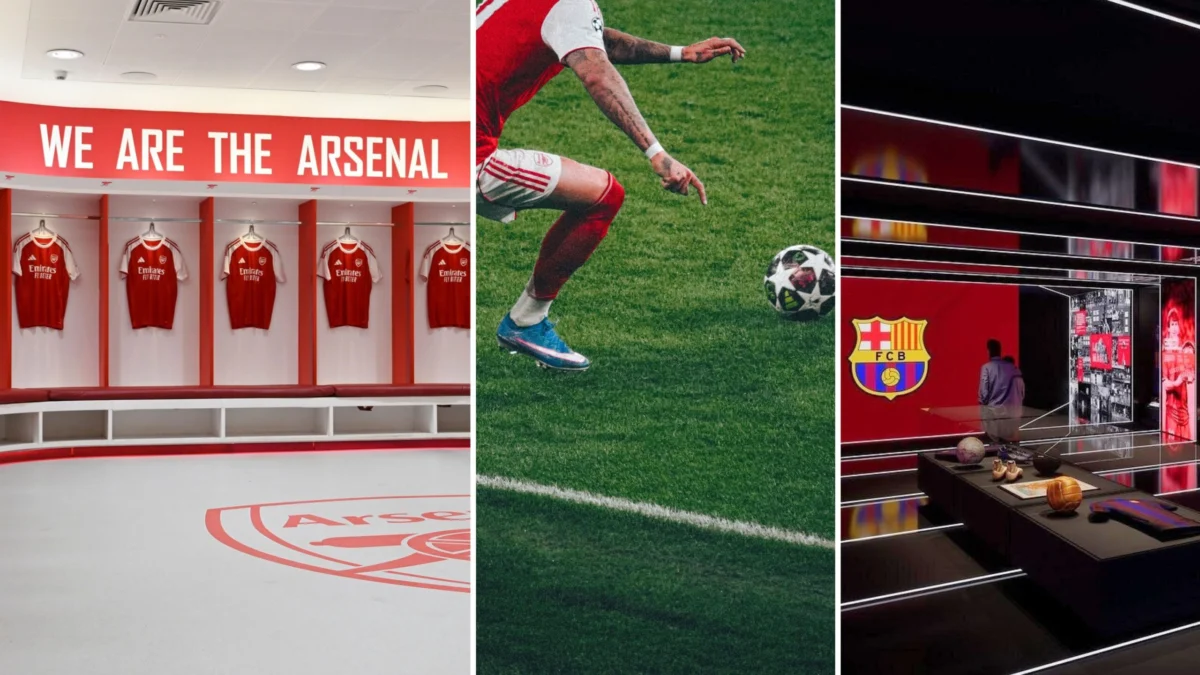
These excursions transcend simple sightseeing; they provide a clinical look at the operational mechanics of world-class sporting franchises. From the architectural evolution of century-old stands to the high-tech recovery suites used by modern athletes, stadium tours allow fans to occupy the spaces usually reserved for the elite. The following 11 tours represent the pinnacle of football heritage and modern sports management, offering a blueprint for a pilgrimage through the sport’s ancestral home.
The Scottish Heartland: Celtic Park, Glasgow
To understand the cultural weight of soccer in Northern Britain, a visit to Celtic Park is mandatory. Known colloquially as "Paradise," the stadium serves as the home of Celtic FC and stands as the largest football arena in Scotland with a capacity of over 60,000. The tour provides a stark chronological contrast, tracing the club’s history from its founding in 1887 by Brother Walfrid to its current status as a perennial UEFA Champions League contender.
The transition from the club’s original site, which was grimly nicknamed "the graveyard" due to its proximity to a cemetery, to the current 1892 site represents a pivotal moment in Glasgow’s urban development. Visitors are granted access to the boardroom, the home dressing room, and the iconic tunnel leading to the pitch. Historical data suggests that Celtic Park’s atmosphere is frequently cited by world-class players, including Lionel Messi and Cristiano Ronaldo, as among the most intense in the sport, making the "quiet hours" tour a unique opportunity to appreciate the scale of the architecture without the roar of the crowd.
The Manchester Rivalry: Old Trafford and Etihad Stadium
Manchester remains the undisputed capital of English football, defined by the "Derby" rivalry between Manchester United and Manchester City. A comprehensive heritage tour of the city typically begins at Old Trafford, the "Theatre of Dreams." Since its opening in 1910, Old Trafford has survived wartime bombings and undergone massive expansions to its current 74,000-seat capacity. The tour highlights the Munich Tunnel, a memorial to the 1958 air disaster that claimed the lives of the "Busby Babes," providing a somber look at how tragedy and recovery are woven into the club’s DNA.
In contrast, the Etihad Campus represents the zenith of modern oil-funded sports infrastructure. Home to Manchester City, the current dominant force in the Premier League, the tour showcases the integration of men’s and women’s facilities within a singular, high-tech hub. Analysts note that the Etihad’s "Tunnel Club" experience—where fans can view players through glass partitions as they prepare to take the field—has set a new global standard for VIP engagement.
Spanish Grandeur: The Santiago Bernabéu, Madrid
Real Madrid’s Santiago Bernabéu is currently undergoing a massive €900 million renovation, transforming it into a 365-day-a-year entertainment hub. Despite the construction, the stadium tour remains a top-tier attraction in Spain. The tour’s centerpiece is the "Trophy Room," which houses a record-breaking collection of UEFA Champions League trophies.
Architecturally, the Bernabéu is a marvel of urban integration, sitting directly in the heart of Madrid’s financial district. The tour explains the engineering behind the new retractable pitch—a system that allows the grass to be stored in an underground greenhouse—ensuring the venue can host concerts and NFL games without damaging the playing surface. This technological leap is a primary reason why the Bernabéu is often shortlisted for the 2030 World Cup final.

The London Powerhouses: Stamford Bridge and Emirates Stadium
London offers a dense concentration of elite stadiums, but Chelsea’s Stamford Bridge and Arsenal’s Emirates Stadium provide the most distinct contrasts in philosophy. Stamford Bridge, one of the oldest grounds in the country, offers an intimate look at a "compact" elite stadium. The Chelsea FC Museum is particularly noted for its interactive exhibits, tracing the club’s meteoric rise following the 2003 takeover by Roman Abramovich, which fundamentally altered the economic landscape of European soccer.
Conversely, the Emirates Stadium represents the "Highbury transition." Moving from the historic but small Highbury ground in 2006 was a financial necessity for Arsenal. The tour, narrated by club legends, emphasizes the "Invincibles" season of 2003-04. The Emirates is praised for its sightlines and acoustics, designed specifically to amplify the crowd’s energy, a fact supported by architectural firm Populous, which spearheaded the project.
The "This is Anfield" Experience: Liverpool FC
Anfield is perhaps the most emotive stadium in the world. The tour is centered around the club’s mantra of "redemption and resilience." Visitors can touch the famous "This is Anfield" sign in the tunnel, a ritual believed to bring luck to the home side. Beyond the superstitions, the tour provides a detailed look at the recent expansion of the Main Stand and the Anfield Road Stand, which have increased capacity to over 60,000 while maintaining the ground’s historic character.
The Liverpool FC story is also one of social history. The tour discusses the club’s deep ties to the city’s working-class identity and the global impact of the "You’ll Never Walk Alone" anthem. This cultural immersion is a key factor in why Anfield attracts over 400,000 tour visitors annually.
Catalan Identity: Camp Nou, Barcelona
FC Barcelona’s Camp Nou is currently the subject of the "Espai Barça" project, a multi-billion euro redevelopment. While the main stadium is under renovation, the "Barça Immersive Tour" remains a critical stop. FC Barcelona is famously "Més que un club" (More than a club), serving as a symbol of Catalan nationalism.
The tour explores the legacy of Johan Cruyff, the Dutch visionary who implemented the "Tiki-Taka" style of play that defined an era of global soccer. Access to the presidential box and the media rooms provides insight into the immense political and commercial pressure that surrounds the club. Data from the Catalan Tourism Board indicates that the Camp Nou Museum is the most visited museum in Catalonia, outperforming even the Dalí Theatre-Museum.
The "Home of Football": Wembley Stadium, London
Wembley Stadium is the national arena of England and arguably the most famous stadium in the world. The current 90,000-seat iteration, featuring the iconic 133-meter-tall arch, replaced the original "Twin Towers" stadium in 2007. The tour is a journey through the history of the English game, from the 1966 World Cup victory to the 2022 Women’s Euro success.
Wembley’s scale is difficult to comprehend without a guided tour. The Royal Box, where the monarch presents trophies, and the vast changing rooms—designed to accommodate both soccer and American football teams—highlight the venue’s versatility. It remains a "bucket-list" destination because it represents the ultimate stage for any professional player.

The Roman Legacy: Stadio Olimpico
In Rome, the Stadio Olimpico serves as a shared home for AS Roma and SS Lazio. The tour is a masterclass in the intersection of sports and political history. Located within the Foro Italico complex, the stadium features Mussolini-era architecture, characterized by neoclassical statues and grand marble mosaics.
The tour explores the "Derby della Capitale," one of the most volatile and passionate rivalries in the sport. Visitors gain access to the mixed zones where international journalists gather and the locker rooms where legends like Francesco Totti spent their entire careers. The Roman tour is unique because it emphasizes the "Ultras" culture—the organized fan groups that occupy the Curva Nord and Curva Sud.
Shared Sovereignty: San Siro, Milan
Milan’s San Siro (officially the Stadio Giuseppe Meazza) is a brutalist masterpiece. Like the Olimpico, it is shared by two giants: AC Milan and Inter Milan. The stadium is famous for its eleven cylindrical towers that support the massive roof structure.
The tour provides a rare look at how two competing organizations manage a single facility. There are separate locker rooms for both clubs, each decorated to reflect their respective red-and-black and blue-and-black identities. However, with both clubs currently exploring plans to build their own separate stadiums, the window to experience the San Siro in its original shared format may be closing, adding a sense of urgency to this tour.
National Pride: Stade de France, Paris
Located in Saint-Denis, the Stade de France is the largest stadium in France and the site of the nation’s 1998 World Cup triumph. The tour focuses on the "Les Bleus" legacy and the stadium’s role as a multi-sport venue, hosting the Rugby World Cup and the 2024 Olympic Games.
The architecture is notable for its "floating" roof, which protects spectators while leaving the pitch open to the elements. The museum contains a significant archive of jerseys and memorabilia from the 1998 squad, including Zinedine Zidane’s match-worn gear. For fans of the French national team, this is the ultimate pilgrimage site.
Analysis of Broader Impact and Sports Tourism Trends
The proliferation of stadium tours is not merely a commercial endeavor for clubs; it is a vital tool for global brand expansion. As the 2026 World Cup approaches, these European institutions are using tours to solidify their fan bases in North America and Asia. By providing a tangible connection to the history of the sport, clubs ensure that fans remain engaged even when thousands of miles away from the live matches.
Furthermore, the economic impact on local municipalities is significant. Cities like Manchester and Barcelona have seen a "stadium effect," where the presence of an elite venue drives hotel bookings, restaurant revenue, and infrastructure investment. The 11 tours listed above contribute hundreds of millions of euros annually to their respective local economies, proving that the business of soccer is now a year-round enterprise that extends far beyond the 90 minutes on the pitch. For the traveler, these tours offer a deep, analytical, and unforgettable look at the cultural and architectural pillars that support the world’s most popular sport.