
 Ronny Sianturi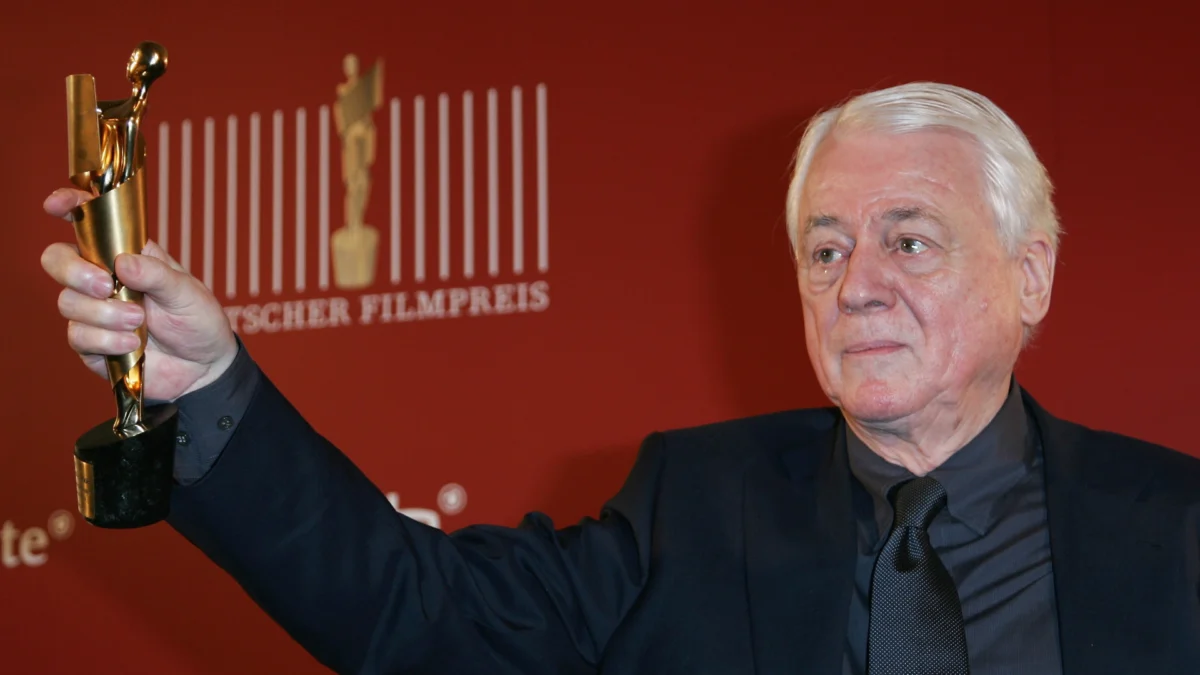
Alexander Kluge, a towering figure in German cinema whose multifaceted career profoundly shaped the nation’s artistic landscape for over six decades, has died at the age of 94. His family confirmed his passing to German media on Wednesday, marking the end of an era for a filmmaker, writer, and intellectual who consistently challenged conventions and interrogated the complexities of modern life. The cause of his death was not disclosed.
Kluge’s passing represents a significant loss not only for German culture but for the international art world, which recognized him as a singular voice. His legacy is inextricably linked to the birth and development of the New German Cinema movement, a period of groundbreaking artistic innovation that emerged in the post-war era. As one of the key signatories of the seminal 1962 Oberhausen Manifesto, Kluge was instrumental in articulating a vision for a new, auteur-driven German cinema, one that eschewed the escapist narratives of the past in favor of more critical and personal explorations of the nation’s identity and history.
A Career Defined by Innovation and Critical Acclaim
From his earliest cinematic endeavors, Kluge demonstrated a relentless drive to experiment with form and content. His 1967 debut feature, Abschied von gestern (released in the United States as Yesterday Girl), offered a poignant and unflinching portrayal of the struggles faced by a young Jewish refugee from East Germany. This powerful narrative resonated deeply on the international festival circuit, securing Kluge a Silver Lion at the Venice Film Festival, the first such postwar Italian festival prize awarded to a German director. This early triumph signaled his emergence as a significant voice on the global cinematic stage.
Two years later, Kluge cemented his reputation with Die Artisten in der Zirkuskuppel: ratlos (Artists under the Big Top: Perplexed). This audacious and experimental work, characterized by its innovative integration of newsreel footage and interviews, delved into the societal ideals and burgeoning protest movements of the era. Its intellectual depth and formal daring earned it the festival’s highest honor, the Golden Lion, further solidifying Kluge’s status as a master craftsman and a critical observer of contemporary society.
Throughout his illustrious career, Kluge continued to produce works of remarkable depth and diversity. Starke Männer (Strongman Ferdinand), released in 1976, garnered the Fipresci international critics prize at the Cannes Film Festival, recognizing its sharp social commentary delivered through a compelling narrative. Perhaps one of his most significant collaborative efforts was Germany in Autumn (1978). This anthology film, brought to life with the contributions of fellow New German Cinema luminaries such as Volker Schlöndorff and Rainer Werner Fassbinder, provided a stark and incisive examination of far-left terrorism in Germany and the state’s subsequent response. The film’s unflinching gaze into a turbulent period of German history underscored Kluge’s commitment to confronting uncomfortable truths.
Kluge’s intellectual curiosity and his ability to synthesize complex ideas found expression in his later works as well. The nine-hour epic News From Ideological Antiquity: Marx-Eisenstein-Capital (2008) was a testament to his enduring engagement with philosophical and historical discourse. This ambitious undertaking reimagined Sergei Eisenstein’s unfinished project on Marx’s Capital, demonstrating Kluge’s capacity for grand conceptual leaps and his desire to engage with the foundational texts of intellectual history. The same year, his profound contributions were acknowledged with a lifetime achievement award from the German Film Academy, a fitting tribute to a career marked by consistent excellence and groundbreaking vision.
A Mind Shaped by Law, Philosophy, and Early Mentorship
Born in 1932 in Halberstadt, Germany, Kluge’s intellectual journey began in the realm of jurisprudence. He earned a doctorate in law and initially practiced as a lawyer, a background that undoubtedly informed his analytical approach to filmmaking and his keen understanding of societal structures. His formative years also saw him deeply engaged with the Frankfurt Institute for Social Research, where he came under the tutelage of the influential German philosopher Theodor W. Adorno. Adorno’s mentorship proved pivotal, shaping Kluge’s intellectual trajectory and instilling in him a critical framework for understanding the interplay of culture, society, and power.
By 1958, Kluge had begun his transition into the world of cinema, a move that would define his public career. His early experience as an assistant to the legendary German director Fritz Lang provided him with invaluable practical knowledge of filmmaking and exposed him to the established traditions of German cinema, from which he would later depart to forge his own path.
A Polymath Beyond the Silver Screen
Kluge’s influence extended far beyond the confines of filmmaking. He was a prolific and celebrated writer, contributing a vast body of work encompassing short stories, essays, and philosophical texts. His literary achievements were recognized with numerous prestigious awards, including the Georg Büchner Prize, the Theodor W. Adorno Prize, the Heinrich Heine-Preis, and the Klopstock Prize, underscoring the breadth of his intellectual contributions.
In 1987, Kluge ventured into the realm of television production, founding dctp. This company became a platform for innovative news and debate programs, including the well-regarded series 10 vor 11, News & Stories, and Mitternachtsmagazin. Through these television ventures, Kluge continued to engage with contemporary issues, fostering public discourse and bringing his unique perspective to a wider audience.
Even as he approached his 90s, Kluge remained a vibrant and active creative force. He continued to author books and curate art exhibitions, demonstrating an enduring passion for engaging with the world through various artistic mediums. His final completed work, the 2025 visual essay Primitive Diversity, explored the burgeoning field of artificial intelligence and its implications for the future of moving images. This prescient work premiered at the International Film Festival Rotterdam, a fitting testament to his lifelong commitment to exploring cutting-edge ideas and their artistic potential.
A Legacy of Interconnectedness and Critical Inquiry
Alexander Kluge was, by all accounts, a true polymath. He never viewed art, politics, or philosophy as separate entities, but rather as interconnected facets of human experience. His work consistently interrogated the complexities of modern life, the nature of memory, and the intricate dynamics of society. As a filmmaker, writer, and television producer, he left an indelible and profound mark on German culture.
The Berlin Film Festival, a venue that had long celebrated Kluge’s contributions, remembered him with deep admiration. A spokesperson for the festival stated, "Alexander Kluge was a cherished guest for decades, and his passion for filmmaking, critical thinking, and storytelling shaped German cinema and inspired generations of filmmakers." This sentiment echoes the broader impact of his work, which continues to resonate with audiences and artists alike.
Kluge’s passing marks the end of an extraordinary life dedicated to intellectual exploration and artistic innovation. His legacy will undoubtedly continue to inspire critical engagement with cinema, literature, and the enduring questions that define the human condition. The void left by his absence will be keenly felt, but the richness of his contributions ensures that his voice will continue to echo through the annals of art and thought.








