Kang Muslim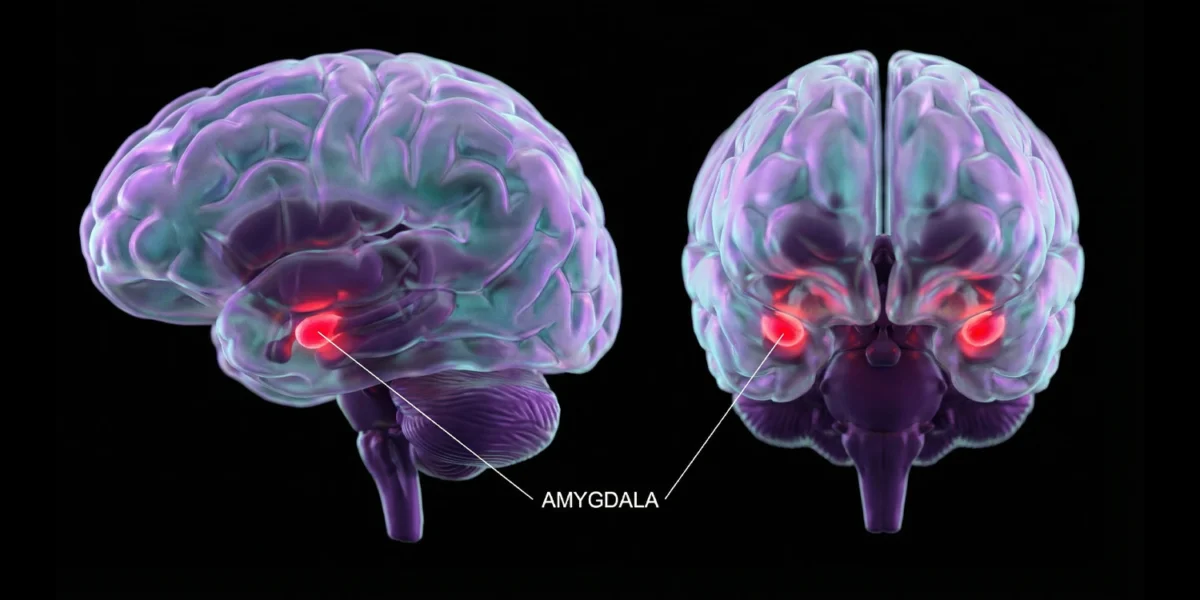
Emerging research into the neurological underpinnings of digital dependency has revealed that young adults who struggle to regulate their smartphone usage exhibit significant alterations in brain connectivity. These changes specifically involve the amygdala, a critical hub for emotional processing, and its communication with regions responsible for self-control and social cognition. The study, published in the peer-reviewed journal BMC Psychology, provides a detailed map of how these neural deviations correspond to the lived experience of emotional instability and the inability to manage negative feelings without digital intervention.
The investigation, led by Yu-Lu Wang and a team of researchers from Qiqihar Medical University and the Zhenjiang Mental Health Center in China, addresses a growing public health concern: problematic smartphone use (PSU). While PSU is not yet formally categorized as a clinical addiction in the Diagnostic and Statistical Manual of Mental Disorders (DSM-5), medical professionals increasingly recognize it as a behavioral disorder that mirrors the characteristics of substance abuse, including withdrawal, tolerance, and functional impairment in daily life.
Defining Problematic Smartphone Use and the Amygdala’s Role
Problematic smartphone use is characterized by an obsessive relationship with mobile technology that disrupts sleep, work, academic performance, and interpersonal relationships. For many, the device serves as a primary tool for "mood repair"—a psychological strategy where individuals use digital distractions to escape from stress, anxiety, or boredom.
At the center of this behavior lies the amygdala, an almond-shaped cluster of nuclei located deep within the temporal lobes. The amygdala is the brain’s "alarm system," responsible for detecting threats, processing memories associated with emotional events, and initiating the "fight or flight" response. In a neurotypical brain, the amygdala maintains a balanced dialogue with the prefrontal cortex and other regulatory regions to ensure that emotional responses are proportionate to the situation. However, the study suggests that in those with PSU, this dialogue is fundamentally disrupted.
Research Methodology and Participant Profiling
To investigate these neural patterns, the research team recruited 72 healthy college students between the ages of 18 and 25. This demographic was chosen specifically because the young adult brain is in a critical stage of late-stage development, particularly in the frontal regions that govern impulse control and executive function.
The participants were divided into two groups based on their scores on the Smartphone Application Dependence Scale (SADS), a validated psychological tool used to measure the severity of digital reliance.
- Problematic Smartphone Users (PSU Group): 37 students who demonstrated high levels of dependency, withdrawal symptoms, and life interference due to phone use.
- Control Group: 35 students who exhibited healthy, moderate usage patterns.
Following the initial screening, all participants underwent resting-state functional magnetic resonance imaging (rs-fMRI). Unlike task-based fMRI, which monitors the brain while a subject performs a specific action, rs-fMRI tracks spontaneous fluctuations in blood oxygen levels while the subject is at rest. This allows neuroscientists to observe "functional connectivity"—the degree to which different brain regions activate in synchrony, indicating they are working as part of a unified network.
Chronology of Digital Addiction Research
The context of this study is rooted in a two-decade evolution of behavioral science. In the late 1990s, researchers first identified "Internet Addiction Disorder" as a potential consequence of the digital revolution. By the 2010s, with the ubiquity of smartphones, the focus shifted from general internet use to the "always-on" nature of mobile devices.
Earlier neuroimaging studies had already established that the amygdala is hyperactive in individuals with clinical depression and generalized anxiety disorder. The work by Wang and colleagues builds upon this timeline by moving beyond mere activity levels to map the complex web of connections—the "connectome"—that defines how the emotional brain communicates with the regulatory brain in the context of mobile technology.
Key Findings: The Mapping of Neural Imbalance
The fMRI data revealed a stark contrast in brain architecture between the PSU group and the control group. These differences were localized in how both the left and right amygdala interacted with various nodes of the brain.
Enhanced Connectivity and Social Hyper-Sensitivity
For the right amygdala, problematic users showed significantly stronger functional connections to the right temporal pole. This region is a major component of the social brain, involved in processing complex social stimuli and emotional memories.
Researchers hypothesize that this heightened connectivity reflects an increased sensitivity to social rewards and cues. In the digital age, this translates to a heightened emotional reactivity to social media notifications, "likes," and messages. For a problematic user, the brain may become over-tuned to these digital signals, making it nearly impossible to ignore the device.
Weakened Self-Regulation and Introspection
Conversely, the right amygdala in the PSU group showed weakened connectivity to the right thalamus and the left precuneus. The precuneus is a central node of the Default Mode Network (DMN), which is active during self-reflection, daydreaming, and internal thought processing.
A breakdown in communication between the emotional amygdala and the reflective precuneus suggests a diminished capacity for introspection. This might explain why problematic users find it difficult to recognize the harm their habits are causing or to engage in the "self-talk" necessary to put their phones down.
Cognitive Control and the Left Amygdala
The left amygdala displayed its own set of abnormalities, showing increased linkage to the right inferior frontal gyrus (IFG). The IFG is heavily involved in response inhibition—the ability to stop a planned action.
While increased connectivity to a control center might seem positive, researchers often interpret this as a "compensatory mechanism." The brain may be working overtime to try and inhibit the urge to use the phone, but the emotional drive from the amygdala is so strong that the regulatory systems are eventually overwhelmed.
The Cerebellum: A New Player in Emotion
One of the most striking findings of the study was the consistently weakened communication between both sides of the amygdala and the cerebellum. While the cerebellum was historically viewed strictly as a center for motor coordination and balance, modern neuroscience has identified its role in the "Cerebellar Cognitive Affective Syndrome."
The study found that lower connectivity between the amygdala and the cerebellum correlated directly with higher scores on the smartphone dependence scale. This suggests the cerebellum plays a much larger role in stabilizing emotional states than previously thought, and its "decoupling" from the amygdala may be a hallmark of behavioral addiction.
Supporting Data and Statistical Correlations
The researchers paired the brain scans with the Difficulties in Emotion Regulation Scale (DERS). The data showed a clear statistical bridge between the biological and the psychological:
- Impulse Control: Students with the weakest connectivity between the amygdala and the cerebellum reported the highest inability to control their impulses when experiencing negative emotions.
- Emotional Clarity: High PSU scores were associated with a lack of "emotional clarity," or the ability to understand exactly what one is feeling.
- The Feedback Loop: The team concluded that these neural patterns create a self-reinforcing cycle. An individual feels a negative emotion; their brain’s weakened regulatory systems fail to process it; the individual reaches for a smartphone for a dopamine hit; the amygdala-centered reward path is strengthened, and the regulatory path is further weakened.
Expert Analysis and Implications for Public Health
The implications of this study extend beyond the laboratory. Public health experts suggest that we may be witnessing a fundamental shift in the neurobiology of the "digital native" generation.
"The findings suggest that problematic smartphone use is not just a ‘bad habit’ but a state of neural imbalance," says the research team. This imbalance—characterized by an overactive emotional center and an underactive regulatory system—mirrors the brain states seen in substance use disorders.
From a clinical perspective, this research supports the development of targeted interventions. If the problem is a "decoupling" of the amygdala and the cerebellum, perhaps therapies that focus on mindfulness and cognitive-behavioral techniques could help "re-wire" these connections. Furthermore, the study highlights the importance of "digital hygiene" in early adulthood, emphasizing that the brain’s plasticity during these years makes it both vulnerable to addiction and capable of recovery.
Limitations and Future Directions
Despite the depth of the findings, the researchers acknowledge several limitations. The study was cross-sectional, meaning it captured a "snapshot" of the participants’ brains at one point in time. This makes it impossible to determine causality: Does heavy smartphone use change the brain, or are people with these specific brain patterns more likely to become addicted to smartphones?
Additionally, the sample size of 72, while sufficient for a specialized fMRI study, is relatively small for broad demographic generalizations. The focus on college students also means the results might not apply to older adults whose prefrontal cortices are fully matured, or to children whose brains are even more plastic.
The research team has called for longitudinal studies that follow participants over several years. Such research would track how brain connectivity evolves as smartphone habits change, potentially providing the definitive evidence needed to classify PSU as a formal clinical diagnosis.
As society continues to integrate mobile technology into every facet of existence, the work of Wang and his colleagues serves as a cautionary map of the digital landscape. It suggests that while smartphones offer a world of connection, they may simultaneously be disconnecting the internal networks that allow us to regulate our own emotions and maintain our psychological equilibrium.