
 Johny Marice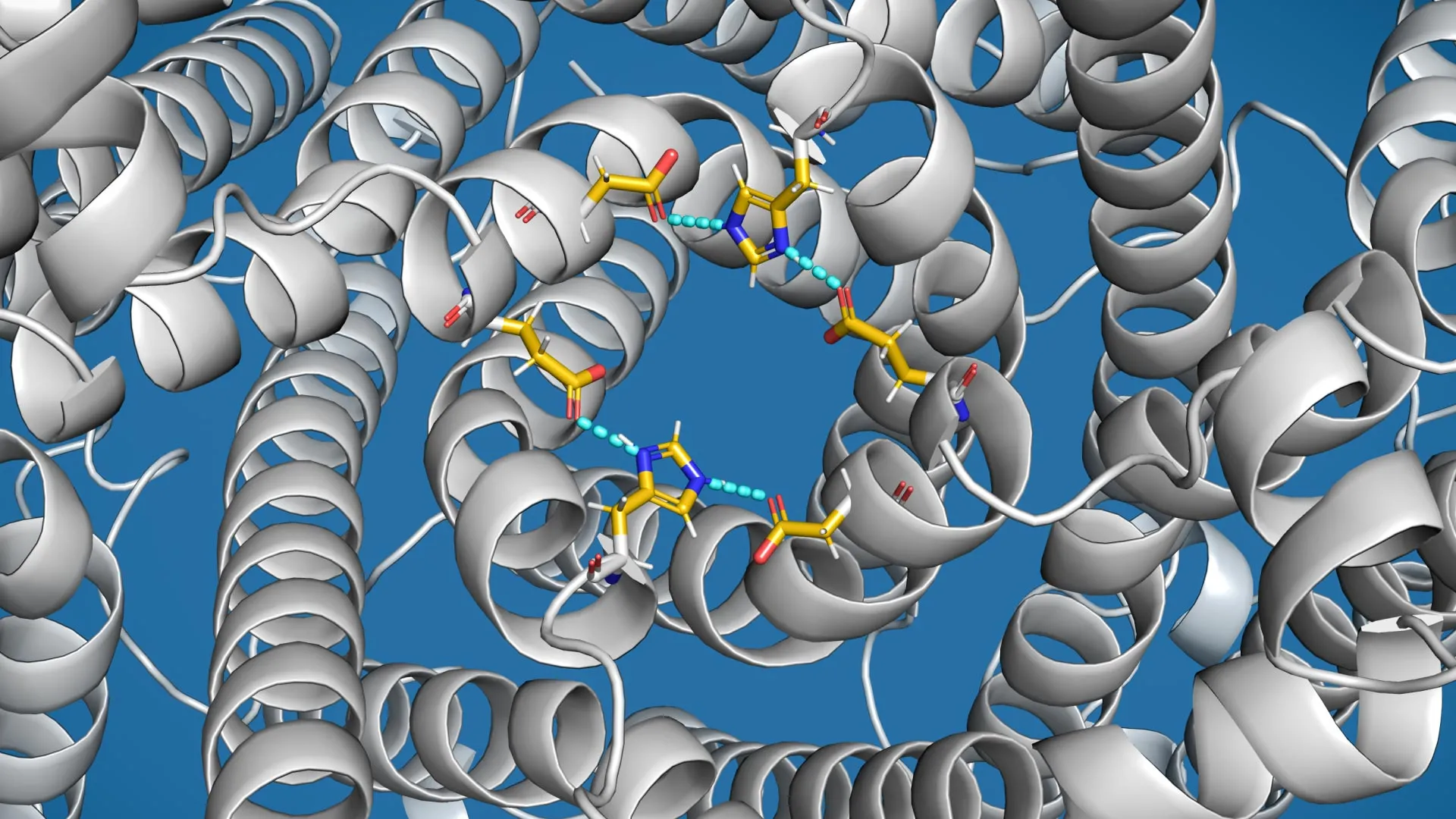
Researchers have uncovered how a mysterious ion channel helps cells break down waste, opening new possibilities for treating Parkinson’s disease. This groundbreaking discovery, published in the prestigious journal Proceedings of the National Academy of Sciences (PNAS), illuminates the intricate mechanisms governing cellular waste management and points toward novel therapeutic strategies for neurodegenerative disorders.
The Cellular Overflow Valve: TMEM175 and Lysosomal Acidity
The study, a collaborative effort involving scientists from Bonn-Rhein-Sieg University of Applied Sciences (H-BRS), LMU Munich, TU Darmstadt, and Nanion Technologies, centers on the long-debated function of the ion channel TMEM175. Led by Professor Christian Grimm of LMU Munich and Dr. Oliver Rauh of H-BRS, the team has provided definitive evidence that TMEM175 acts as a critical safeguard within lysosomes, the cell’s primary recycling centers. These tiny, membrane-bound organelles are responsible for degrading cellular debris, worn-out proteins, and pathogens. For this vital process to occur efficiently, lysosomes must maintain a highly acidic internal environment, a delicate balance regulated by the precise concentration of protons (H+).
Lysosomal acidity, measured on the pH scale, is crucial for the activity of hydrolytic enzymes that break down complex molecules. A specialized proton pump actively transports H+ ions into the lysosome, lowering its pH. However, the study reveals that TMEM175 plays a pivotal role in preventing this environment from becoming excessively acidic, acting akin to an overflow drain in a sink. This "overflow" function is essential for maintaining cellular homeostasis and preventing damage.
"Just like sinks and bathtubs have overflow drains to prevent spills, human cells appear to have a similar built-in safeguard," explained Dr. Rauh in a statement provided to the press. "Our findings reveal that inside lysosomes, this channel acts like an overflow valve, preventing the environment from becoming too acidic."
A Decade of Mystery: Tracing the Path of TMEM175
The journey to understanding TMEM175 has been a protracted one, spanning several years of dedicated research. Initially, the protein’s precise location and function within the cell remained elusive, reflected in its generic nomenclature: transmembrane protein 175. Early research hinted at its involvement in cellular processes but lacked the definitive functional characterization. As scientific inquiry progressed, a growing body of evidence began to link dysfunctions in lysosomal pathways to aging and a spectrum of neurodegenerative diseases, most notably Parkinson’s disease. This growing association intensified the focus on TMEM175, with researchers suspecting its role in these debilitating conditions.
The breakthrough came with the realization that TMEM175 is not merely a structural component but an active ion channel, capable of facilitating the passage of charged particles across the lysosomal membrane. However, a significant point of contention persisted: whether TMEM175 primarily transported potassium ions (K+) or protons (H+), and how these ionic movements influenced cellular function in both healthy and pathological states.
"I’ve worked on many ion channels, and TMEM175 is by far the strangest of them all," Dr. Rauh elaborated. "When we started on the project around six years ago, it was assumed that TMEM175 was a potassium channel. Its function was completely unknown."
The Patch Clamp Revelation: TMEM175 as a Dual-Action Channel
The pivotal experiments, primarily conducted using the sophisticated patch clamp technique, were instrumental in resolving the long-standing debate surrounding TMEM175’s transport capabilities. This advanced method allows scientists to measure the electrical currents flowing through single ion channels or small groups of channels in cell membranes. Professor Christian Grimm, an expert in these electrophysiological techniques, guided the team in applying this methodology to the lysosomal membrane.
"Most of the experiments were conducted using the patch clamp method," Professor Grimm stated. "This method allowed the team to analyze how the channel behaves under different conditions."
The results were conclusive and paradigm-shifting. The patch clamp experiments demonstrated that TMEM175 is not a selective channel for a single ion type. Instead, it exhibits a dual functionality, transporting both potassium ions and protons. This dual transport mechanism is central to its role in pH regulation within the lysosome. Crucially, the researchers discovered that TMEM175 acts as a pH sensor. It actively monitors the acidity of the lysosomal interior. When the pH drops below a certain threshold, indicating excessive proton accumulation, TMEM175 intervenes by facilitating the outward flow of protons, thereby mitigating hyperacidity.
"We’ve now been able to demonstrate that TMEM175 not only conducts potassium ions, but also protons, and is thus directly involved in the regulation of pH — that is, the proton concentration — in the interior of lysosomes," Dr. Rauh confirmed.
This discovery challenges previous assumptions and paints a more nuanced picture of lysosomal function. The ability of TMEM175 to sense and respond to changes in proton concentration highlights its sophisticated role in maintaining cellular equilibrium.
Implications for Parkinson’s Disease and Neurodegeneration
The link between lysosomal dysfunction and neurodegenerative diseases, particularly Parkinson’s, has been a growing area of scientific investigation for years. Parkinson’s disease is characterized by the progressive loss of dopaminergic neurons in the substantia nigra region of the brain, leading to motor symptoms such as tremors, rigidity, and bradykinesia. A hallmark of Parkinson’s pathology is the accumulation of misfolded and aggregated proteins, primarily alpha-synuclein, within neurons. Lysosomes are the primary cellular machinery responsible for clearing such protein aggregates.
When lysosomal function is compromised, either due to genetic mutations or age-related decline, the cell’s ability to remove toxic protein build-up is severely hampered. This accumulation can trigger inflammatory responses, oxidative stress, and ultimately, neuronal death. The current study strongly suggests that mutations or defects in the TMEM175 channel can impair lysosomal pH regulation, directly contributing to this cascade of events.
"When mutations disrupt this channel, pH regulation is impaired. As a result, proteins are not properly degraded, which can lead to the death of nerve cells," the study authors explained. "Previous research has linked problems in lysosomal function to aging and neurodegenerative diseases such as Parkinson’s. Our study establishes that the ion channel TMEM175 plays a decisive role here."
The implications of this research are profound. By identifying TMEM175 as a critical regulator of lysosomal acidity and waste breakdown, scientists now have a concrete molecular target for therapeutic intervention. Strategies aimed at restoring or enhancing TMEM175 function could potentially improve the clearance of toxic protein aggregates in neurons, thereby slowing or even preventing the progression of Parkinson’s disease and other related neurodegenerative disorders.
A Foundation for Future Therapies
The research team emphasizes that their findings lay crucial groundwork for future therapeutic developments. "Our findings create an important foundation for a better understanding of functional processes in lysosomes and the function of the TMEM175 channel, which was contested before now," the authors concluded. "At the same time, our insights into the protein TMEM175 offer a promising target structure for the development of drugs to treat or prevent neurodegenerative diseases like Parkinson’s."
The development of drugs that can modulate TMEM175 activity could take several forms. One approach might involve developing small molecules that can stabilize the channel, enhance its proton conductance, or correct mutations that impair its function. Another avenue could explore gene therapy techniques to deliver functional copies of the TMEM175 gene to affected cells.
Timeline of Discovery (Inferred Chronology):
- Early Stages (Pre-2015): TMEM175 identified as a transmembrane protein with unknown function. Initial research begins to link lysosomal dysfunction to neurodegenerative diseases.
- Mid-2010s: Growing interest in TMEM175 due to its association with neurodegenerative diseases, particularly Parkinson’s. Researchers confirm it as an ion channel but debate its primary transported ion.
- Circa 2017-2018: Dr. Oliver Rauh and Professor Christian Grimm initiate a focused research collaboration to elucidate TMEM175’s function.
- 2018-2023: Extensive experimental work, primarily utilizing the patch clamp technique, is conducted by researchers at H-BRS, LMU Munich, TU Darmstadt, and Nanion Technologies. This period involves rigorous testing of TMEM175’s transport properties under various pH conditions.
- Publication (PNAS): The culmination of years of research, the PNAS paper is published, definitively detailing TMEM175’s role as a dual potassium and proton channel that acts as a pH sensor and overflow valve in lysosomes. This publication marks a significant turning point in understanding cellular waste management and its implications for neurodegenerative diseases.
Broader Impact and Future Directions
The implications of this discovery extend beyond Parkinson’s disease. Lysosomal dysfunction is implicated in a wide array of other conditions, including Alzheimer’s disease, Huntington’s disease, lysosomal storage diseases, and even aspects of aging and cancer. Therefore, a deeper understanding of TMEM175’s role could pave the way for therapeutic interventions in a broader spectrum of human health challenges.
The research also underscores the importance of fundamental research in uncovering cellular mechanisms. For years, TMEM175 remained a molecular enigma. The persistence and ingenuity of the research team have transformed our understanding of this crucial cellular component.
Future research will likely focus on several key areas:
- Detailed Structural Analysis: Elucidating the three-dimensional structure of TMEM175 will provide invaluable insights into its mechanism of action and guide the design of targeted drugs.
- In Vivo Studies: Translating these findings from cell cultures and isolated membranes to animal models of neurodegenerative diseases will be crucial for validating the therapeutic potential of targeting TMEM175.
- Biomarker Development: Identifying specific biomarkers related to TMEM175 dysfunction could aid in early diagnosis and monitoring of disease progression.
- Exploration of Other Neurodegenerative Diseases: Investigating the role of TMEM175 in other neurodegenerative conditions beyond Parkinson’s is warranted.
The collaborative spirit demonstrated by the multinational research team, bringing together expertise from different institutions and industry partners like Nanion Technologies, highlights the power of interdisciplinary approaches in tackling complex scientific challenges. This breakthrough serves as a beacon of hope for millions affected by neurodegenerative diseases, offering a tangible pathway toward new and more effective treatments. The humble ion channel, once a mystery, now stands as a potential key to unlocking healthier cellular function and combating devastating neurological conditions.








