Ana Megawati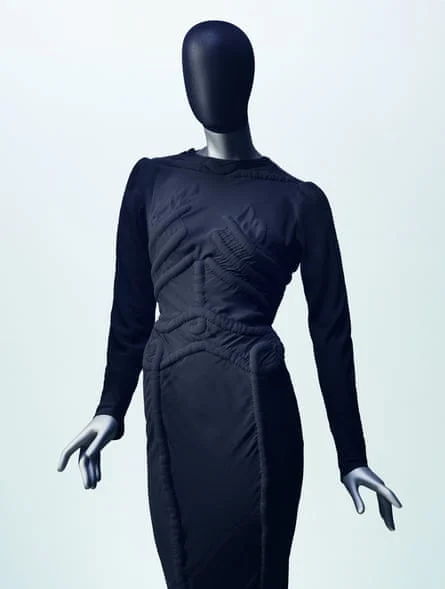
The Victoria and Albert Museum (V&A) in London has opened its doors to a spectacular spring exhibition, "Schiaparelli: The House of Surrealism," a lavish and immersive journey into the eccentric, artistic, and profoundly influential world of Elsa Schiaparelli. Far from a conventional retrospective, the show is a vibrant, at times unsettling, and consistently captivating exploration of a designer who defied categorization, blurring the lines between haute couture and fine art. From buttons shaped like naked mermaids and prancing horses to garments adorned with silk carrots and unshelled peanuts, gilded elephant trunks, drums, and masks, the V&A’s presentation is a meticulously curated tumble down the sartorial rabbit hole, revealing the enduring legacy of a visionary whose creative spirit continues to resonate almost a century later. This exhibition reasserts Schiaparelli’s place not merely as a fashion designer, but as a groundbreaking artist in her own right, whose audacious designs and collaborative ethos predated many contemporary approaches to celebrity and brand building.
Elsa Schiaparelli’s Vision: Wit, Not Just Pretty
Born into an aristocratic Roman family in 1890, Elsa Schiaparelli possessed a spirit of rebellion and an innate inclination towards the unconventional from an early age. Unlike her contemporary Coco Chanel, who championed practicality and understated elegance, Schiaparelli designed clothes to be witty, provocative, and intelligent, rather than simply pretty. This philosophy is the pulsating heart of the V&A exhibition, which expertly guides visitors through galleries that feel less like a static display of historical garments and more like an invitation to a lively 1930s Parisian cocktail party. Here, one can almost imagine Schiaparelli herself, alongside her avant-garde circle of friends, including surrealist titans Salvador Dalí and Jean Cocteau, engaged in spirited conversation, visual puns, and knowing in-jokes. The atmosphere is bracingly innovative, mildly unsettling, and never dull, capturing the vibrant intellectual ferment of interwar Paris.
Schiaparelli’s creative process was deeply rooted in the surrealist movement, which sought to unlock the power of the unconscious mind and challenge conventional perceptions of reality. Emerging in Paris in the 1920s, Surrealism, championed by figures like André Breton, aimed to liberate human imagination by exploring dreams, the irrational, and the subconscious. Schiaparelli transposed this artistic ideology directly onto the female form, transforming everyday objects and abstract concepts into wearable art. A shoe, for instance, famously becomes a hat, defying its utilitarian purpose and embracing pure sculptural fantasy. Bones, typically hidden within the body, eerily protrude from the outside of a dress, an anatomical inversion that questions the very structure of fashion. A telephone dial, a mundane instrument of communication, is ingeniously reimagined as a compact mirror, blurring the boundaries between functionality and aesthetic play. These transformations are not mere novelties but profound statements on perception, desire, and the subversive potential of clothing. The exhibition juxtaposes these iconic pieces with artworks by her collaborators, such as a Man Ray painting of a lit candle wearing a harlequin coat, setting the stage for a jacket that sprouts gold palm trees at the shoulders on a nearby mannequin. The effect is wild, yet undeniably cohesive, showcasing Schiaparelli’s mastery in translating surrealist principles into tangible, impactful fashion.

Reclaiming Her Artistic Status: Beyond the Seamstress
Coco Chanel, Schiaparelli’s fierce contemporary and, in modern parlance, frenemy, famously dismissed her as "that Italian artist who makes clothes." While intended as a barbed critique, implying that Schiaparelli lacked the true practicality of a fashion designer, the V&A exhibition brilliantly reframes this label as a profound compliment, stripping away its waspish undertones. The exhibition’s central argument, articulated by V&A curators, is clear: Schiaparelli was not merely a fashion designer who associated with surrealist artists; she was an artist in her own right, using fabric, form, and silhouette as her canvas. This re-evaluation positions her at the forefront of the avant-garde, an originator rather than simply an interpreter of artistic trends.
A compelling piece of evidence supporting this assertion is the inclusion of Salvador Dalí’s iconic lobster telephone, displayed prominently next to the equally famous Lobster Dress. This dress, a white organza evening gown featuring a large red lobster painted by Dalí, was famously worn by Wallis Simpson, the Duchess of Windsor, for a photoshoot by Cecil Beaton in Vogue in 1937. Simpson, known for her daring fashion choices, embraced the surrealist garment, elevating it to an icon of defiance and artistic expression. Crucially, the dress, a direct collaboration between Schiaparelli and Dalí, predated Dalí’s own lobster telephone sculpture by a year, firmly establishing Schiaparelli as an instigator and equal partner in these surrealist explorations, rather than merely a fashion interpreter. This chronological detail is vital, demonstrating her role in generating artistic concepts that transcended the immediate application to clothing.
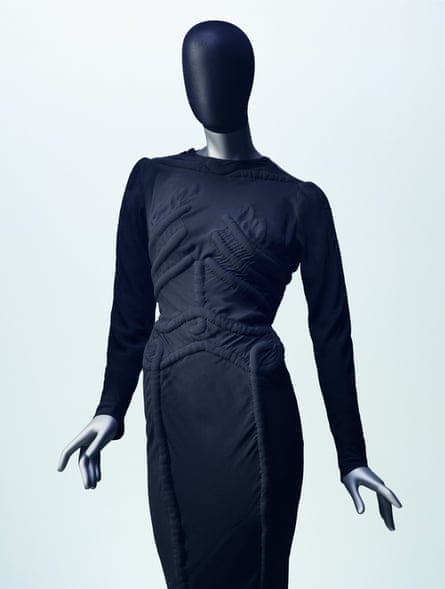
Another striking example is her 1938 Skeleton Dress, a black crepe gown with padded ribs and a spine of cotton wadding eerily protruding from the fabric, creating a macabre yet elegant x-ray effect. Adjacent to this masterpiece is a letter from Dalí to Schiaparelli, which reads: "Dear Elsa, I like the idea of ‘bones on the outside’ enormously." This handwritten note unequivocally credits Schiaparelli with the original concept, solidifying her position as a conceptual pioneer within the surrealist movement. These instances, alongside a Picasso portrait of the artist Nusch Éluard, mesmerized by her Schiaparelli outfit with a horseshoe hat and painted on the spot, underscore the deep reverence artists held for her innovative vision. Her collaborations extended to Jean Cocteau, who designed embroideries for her, and Man Ray, who captured her creations in striking photographic works.
A Childhood Steeped in Surrealism
Schiaparelli’s inherent connection to surrealism appears to have been woven into her very being from childhood. Born into an intellectual and aristocratic Roman family — her father was an orientalist scholar and curator, and her uncle, Giovanni Schiaparelli, was a renowned astronomer who discovered the canals of Mars — she was exposed to a world of academia, imagination, and unconventional thought from an early age. She pursued studies in philosophy, further shaping her intellectual curiosity and inclination towards abstract concepts. In her candid memoir, Shocking Life, she recounts a formative anecdote from her youth that vividly illustrates her distinctive way of seeing the world. Feeling plain and overshadowed by her beautiful older sister, the young Elsa sought a radical solution: she collected seeds from the prettiest garden flowers and, in an act of profound, childlike surrealism, planted them in her mouth, nose, and ears. Her earnest hope was that she would bloom "like a heavenly garden," transforming her perceived plainness into a living, blossoming artwork. While the experiment, as she wryly notes, "didn’t work, it just made her cough," it reveals a nascent, unfiltered understanding of metamorphosis and a desire to challenge physical norms that would later define her fashion philosophy. This early episode highlights a mind already thinking differently, instinctively drawn to the fantastical and the transformative.
The Ascent of a Fashion Maverick
Schiaparelli’s journey to becoming a fashion titan was far from conventional. Her initial foray into adulthood saw her move to London in her early twenties, where she married Count Wilhelm de Kerlor, a Theosophist lecturer. The marriage, however, was tumultuous and short-lived, marked by Kerlor’s infidelity and eventual abandonment. By her thirties, Schiaparelli found herself in Paris, divorced and with a baby daughter, Gogo, to support. It was this personal adversity that spurred her unlikely entry into the world of haute couture, an industry she initially knew little about.
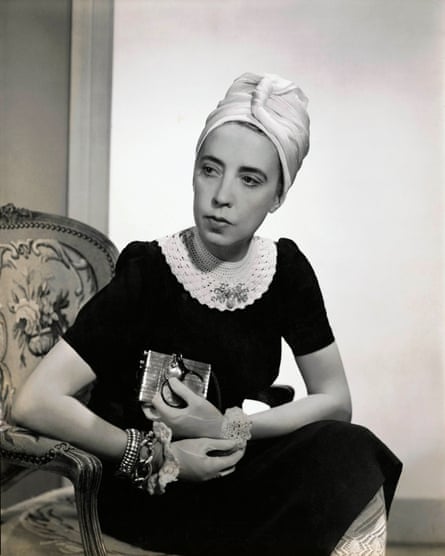
She launched her fashion career in the late 1920s with a collection of knitwear, specifically trompe l’œil sweaters. These innovative garments featured knitted "optical illusions" that cleverly suggested a bow, a cravat, or a waistcoat, creating a playful deception of dimension and detail. The immediate success of these sweaters, which offered both comfort and intellectual whimsy, quickly garnered attention from fashion critics and Parisian society alike. Her "Bowknot" sweater became an instant hit, appearing in Vogue and establishing her as a designer of unique vision. Within a few short years, her burgeoning fashion house had expanded dramatically, employing a staff of 400. Vogue magazine, recognizing her undeniable talent and unique vision, lauded her as "the designer of the most exciting clothes in Paris." The exhibition’s opening room sets the scene with a powerful photograph of Schiaparelli in her studio in Place Vendôme, Paris, dressed in a dark suit and lace-up brogues. Through the window, Napoleon on his column is visible, creating a potent visual dialogue that leaves the viewer pondering who, between the formidable designer and the iconic emperor, appears more commanding.
Branding, Shock, and Performance Art
Schiaparelli, affectionately known as "Schiap" to her inner circle, revelled in the element of shock and surprise. This audacious spirit became a cornerstone of her brand identity. Her signature color, a vivid, almost aggressive fuchsia, was christened "shocking pink" and became synonymous with her house, a daring departure from the muted palettes often favoured by her contemporaries. The color was not just a hue; it was an attitude, a statement. Its name was derived from the packaging of her first perfume, "Shocking," launched in 1937, which came in a bottle sculpted by Leonor Fini in the shape of Mae West’s torso. Her retail spaces, too, were extensions of her surrealist vision. For a time, her shop window famously displayed a taxidermied pink polar bear, an unexpected and provocative tableau designed to halt passers-by and challenge their perceptions of luxury and display. Even in death, her branding remained consistent: when she passed away in 1973, 19 years after retiring, she was buried in her iconic shocking pink.
Schiaparelli’s approach to fashion was inherently performative, a precursor to the modern red-carpet spectacle and the blurring of lines between clothing and art installation. Long before the era of social media-driven celebrity fashion moments or the Met Gala’s theatrical extravaganzas, Schiaparelli was crafting garments designed to provoke reaction and spark conversation. A compelling example is the coat she designed for Jane Clark, wife of the esteemed art historian Kenneth Clark, to wear to the coronation of King George VI in 1937. This elegant garment featured a single, striking button at the bosom: a gleaming, naked mermaid. This bold, whimsical detail transformed a formal occasion into an opportunity for subtle subversion and artistic expression, demonstrating that fashion as performance art did not, in fact, originate with the Kardashians or the annual Met Gala, but had a much richer, more avant-garde lineage rooted in Schiaparelli’s vision. Other notable creations included the "Tear Dress" with its trompe l’œil rips and the "Desk Suit," featuring pockets designed to resemble desk drawers.
The Modern Revival: Daniel Roseberry’s Visionary Stewardship
Schiaparelli’s legacy as a prescient character, one who seamlessly collaborated across diverse cultural disciplines to explore her creativity and promote her brand almost a century ahead of her time, is further illuminated by the brand’s current revival. Following years of dormancy after Schiaparelli herself closed the couture house in 1954 due to changing post-war tastes and the rise of Dior’s New Look, the brand was re-launched in 2014 by its new owner, Diego Della Valle, head of the Tod’s Group. Daniel Roseberry, an American designer, was appointed as its creative director in 2019, tasked with rekindling the house’s unique spirit. It is to Roseberry’s enormous credit that his contemporary pieces, thoughtfully interspersed throughout the V&A exhibition alongside archival works, not only hold their own but also amplify the original spirit of the house.
Roseberry has demonstrated a profound understanding of Schiaparelli’s unique aesthetic and philosophical underpinnings. He "gets it"—the humor, the glamour, the eroticism, and the inherent surrealism that defined the brand’s founder. He has masterfully leaned into the "oddness," what he eloquently describes as "the pebble in the boot" – that singular, slightly uncomfortable, yet utterly captivating detail that elevates a garment from mere clothing to a conversation piece. This delicate balance, maintaining the "spine of clear thinking" while allowing for audacious creative flourishes, prevents the jokes from dissolving into mere comedy and instead reinforces the artistic integrity of the designs. In interviews, Roseberry has often spoken of his reverence for Schiaparelli’s archive, stating his desire to "reimagine what surrealism means for today."
His tenure has been marked by a series of viral, red-carpet moments that have introduced Schiaparelli to a new generation. A younger audience, accustomed to engaging with fashion through platforms like TikTok and Instagram, will undoubtedly delight in seeing the dress in which Bella Hadid caused a global sensation at the Cannes Film Festival in 2021. This remarkable piece featured a