Jono Maryono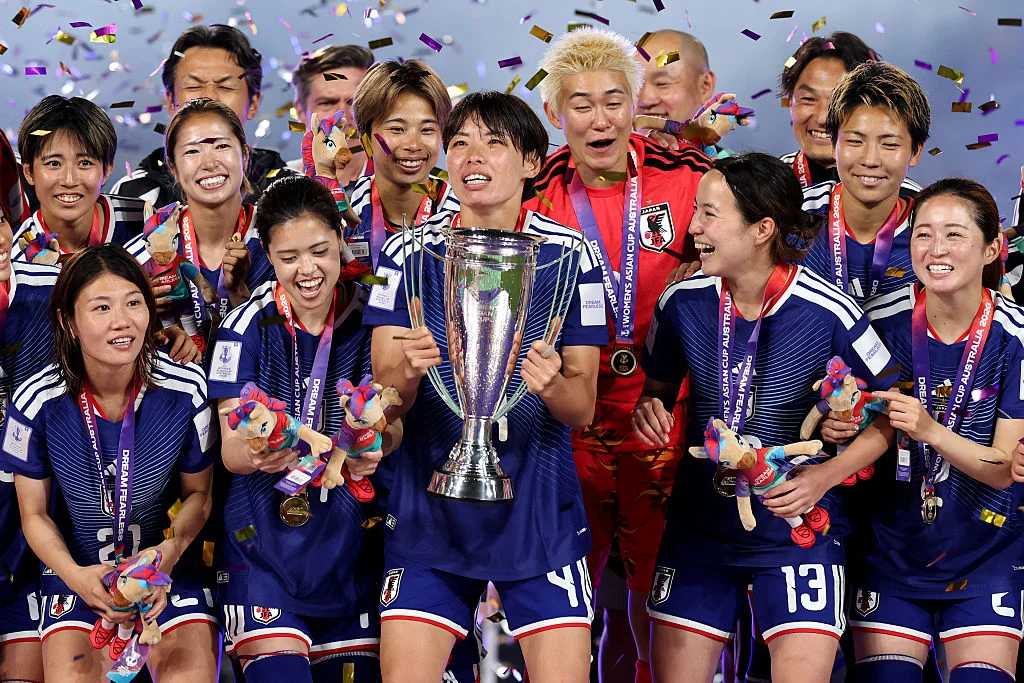
In a pulsating encounter that etched itself into the annals of women’s football history, Japan secured their third Women’s Asian Cup title in four editions, triumphing 1-0 over hosts Australia in front of a record-shattering crowd of 74,357 at Stadium Australia in Sydney. The decisive moment came in the 17th minute, courtesy of a spectacular long-range strike from Maika Hamano, a Tottenham Hotspur star, whose audacious effort proved to be the sole difference between the two formidable sides. This victory not only adds another prestigious continental trophy to Japan’s cabinet, following their triumphs in 2014 and 2018, but also solidifies their dominance in Asian women’s football. Notably, both of those previous finals were also contested against Australia, underscoring the enduring rivalry between these two footballing powerhouses.
A Landmark Tournament Culminates in Historic Attendance
The final itself was the crescendo of a Women’s Asian Cup that has been lauded as a resounding success, not just on the field but also in its ability to capture the imagination of the public. The tournament, which doubled as a crucial qualifying event for the FIFA Women’s World Cup in Brazil next year, saw an unprecedented surge in fan engagement. Over 350,000 spectators passed through the turnstiles across all matches, a figure that represents a colossal six-fold increase on the previous tournament record set in China in 2010. The final’s attendance of 74,357 fans at Stadium Australia also set a new benchmark for a single match within the tournament’s history, a testament to the growing popularity and appeal of women’s football in the region and beyond.
The Nadeshiko’s Invincible Run and Tactical Masterclass
Japan, affectionately known as the Nadeshiko, arrived at the final with an aura of invincibility, having navigated their path through the tournament with a combination of fluid attacking play and robust defensive organisation. Their journey to the final was characterized by overwhelming victories, including a dominant 4-1 semi-final triumph over South Korea. The team, boasting a significant contingent of players plying their trade in England’s Women’s Super League, demonstrated a cohesive unit that steamrolled opponents, accumulating an astonishing 29 goals throughout their six tournament games while conceding a mere single goal. This remarkable defensive record underscores their status as Asia’s preeminent force in women’s football.
For the final, Japan fielded an unchanged lineup from their impressive semi-final performance, a testament to the settled and effective eleven that had served them so well. Australia, conversely, made one tactical alteration, with Wini Heatley slotting into central defence, replacing Clare Hunt in the starting eleven that had orchestrated a commendable 2-1 victory over defending champions China in their semi-final clash.
A Game of Missed Opportunities and a Moment of Brilliance
From the outset, the Matildas, as the Australian national team is known, displayed composure and a clear intent to dictate the tempo of the match. Their early pressure nearly paid dividends in the 11th minute. A perfectly weighted pass from Mary Fowler threaded its way through the Japanese defence to the feet of Caitlin Foord. The Arsenal striker, finding herself unmarked inside the penalty area, had a golden opportunity to put the hosts ahead. However, her shot, aimed directly at the Japanese goalkeeper Ayaka Yamashita, lacked the necessary precision and was comfortably saved, marking a significant missed chance that would soon prove to be a costly one.
Six minutes later, Japan capitalized on their opponent’s profligacy. Maika Hamano, the dynamic midfielder from Tottenham Hotspur, found herself with space outside the penalty area. With a swift movement and an impeccable strike, she unleashed a powerful 25-yard rocket that soared into the top corner of the net, leaving the Australian goalkeeper with no chance. This moment of individual brilliance broke the deadlock and sent shockwaves through the predominantly Australian crowd.
Despite falling behind, Australia continued to press. Foord had another opportunity when she seized upon a momentary lapse in concentration and a misplaced clearance from Yamashita. However, from a tight angle, she was unable to find the target, and subsequently scuffed another shot wide just before the halftime whistle, further highlighting their struggles in converting chances.
The second half saw Japan continue to pose a constant threat. Riko Ueki of West Ham United came close to extending Japan’s lead on two occasions within as many minutes shortly after the restart, demonstrating the Nadeshiko’s ability to create and capitalize on scoring opportunities.
A Desperate Australian Push and Japan’s Resilient Defence
As the game entered its final stages, the tension escalated, and the atmosphere within Stadium Australia reached fever pitch. Australia, driven by the roar of their home crowd, threw everything they had forward in a desperate bid to find an equalizer. The Nadeshiko, however, demonstrated remarkable resilience and defensive solidity. Their backline remained steadfast, absorbing wave after wave of Australian attacks. In the 88th minute, Alanna Kennedy came agonizingly close to snatching a late equalizer, her effort testing the Japanese defence to its limits. Yet, despite the intense pressure and the mounting desperation from the hosts, Japan’s defence held firm, a testament to their tactical discipline and unwavering determination. They successfully clung on to their slender lead, securing a hard-fought and richly deserved victory.
Broader Implications and World Cup Aspirations
The Women’s Asian Cup served a dual purpose, not only crowning a continental champion but also acting as a crucial gateway to the FIFA Women’s World Cup. The six teams that progressed from the tournament – Australia, Japan, South Korea, China, North Korea, and the Philippines – have all secured their coveted berths in the global showpiece event next year. Japan’s victory, in particular, sends a powerful message to their potential World Cup rivals, reinforcing their standing as one of the world’s elite women’s footballing nations.
The record-breaking attendance figures and the overall success of the tournament are indicative of a significant and sustained growth in the popularity of women’s football across Asia and globally. This surge in interest, coupled with increased investment and media coverage, is creating a more competitive and exciting landscape for the sport. The Nadeshiko’s triumph, built on a foundation of consistent performance and strategic excellence, positions them as strong contenders for future international accolades, including the ultimate prize at the World Cup. For Australia, while the disappointment of falling short on home soil will be palpable, their strong tournament performance and qualification for the World Cup provide a solid platform for future growth and development. The rivalry between these two nations promises to continue to captivate audiences for years to come.
Historical Context of the Women’s Asian Cup
The AFC Women’s Asian Cup, first held in 1975, has a rich history that mirrors the evolution of women’s football in the region. Japan’s current triumph marks their third title, adding to their victories in 2014 and 2018. This period of success highlights a significant rise in their fortunes, transforming them from strong contenders to a dominant force. Australia, a consistent participant and a formidable opponent, has also enjoyed periods of success, having won the tournament in 2010. The recurring finals between Japan and Australia underscore their sustained presence at the pinnacle of Asian women’s football. The tournament’s growth, as evidenced by the record-breaking attendances, signifies a crucial turning point, moving women’s football from a niche sport to a mainstream attraction capable of drawing massive crowds and generating significant media attention. The successful hosting of the tournament in Australia has further amplified this momentum, showcasing the nation’s passion for the sport and its potential to inspire a new generation of female athletes.