Kang Muslim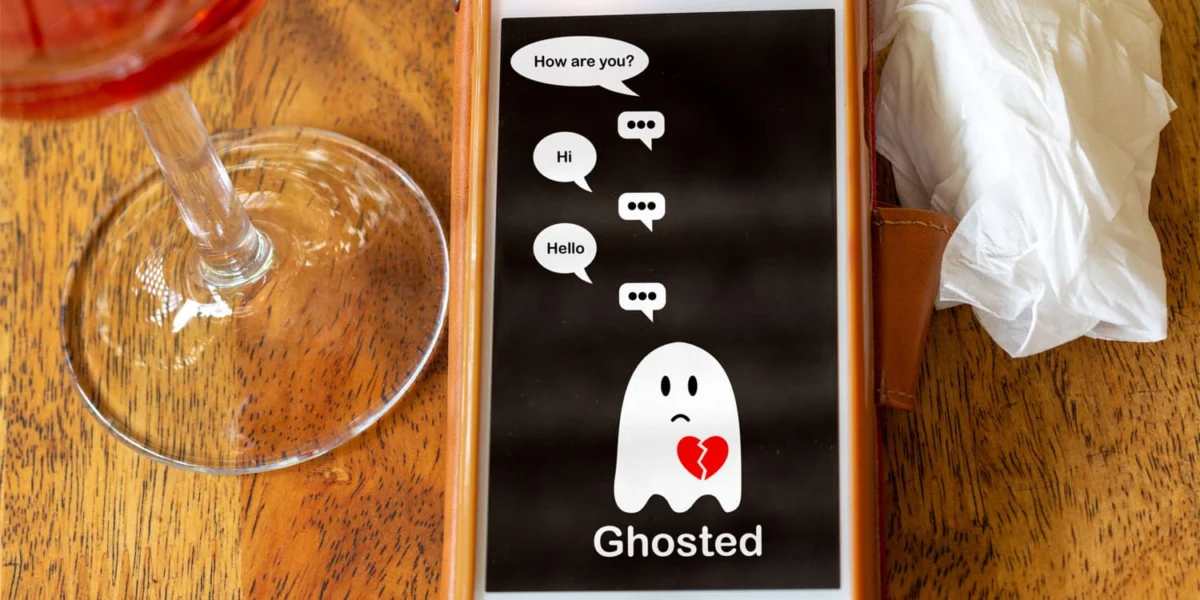
In the evolving landscape of modern romance and digital communication, the phenomenon of "ghosting"—the sudden cessation of all contact without explanation—has become a pervasive social experience. While common, the psychological toll of being left in a state of communicative limbo has remained a subject of intense debate among psychologists and social scientists. A landmark study recently published in the journal Computers in Human Behavior has provided empirical evidence that ghosting is significantly more damaging to emotional recovery than direct, explicit rejection. Led by Alessia Telari and her colleagues at the Catholic University of the Sacred Heart and the University of Milano-Bicocca, the research highlights how the absence of closure creates a persistent state of distress that prevents individuals from moving forward.
The study challenges the popular contemporary notion that "fading out" or disappearing is a gentler way to end a connection. Instead, the findings suggest that the uncertainty inherent in ghosting acts as a psychological weight, keeping the "ghostee" tethered to a situation that has no clear resolution. By tracking emotional responses in real-time over several days, the researchers were able to map the divergence between the sharp, clean break of rejection and the lingering, unresolved ache of silence.
The Context of Digital Ostracism
Ghosting is not merely a modern inconvenience; it is a form of social ostracism facilitated by technology. According to recent surveys by various relationship platforms, upwards of 70% to 80% of young adults have experienced ghosting at least once. Despite its prevalence, the internal mechanisms of how people process this silence have been difficult to study. Previous research often relied on retrospective accounts, which are frequently clouded by the "memory bias"—the tendency for individuals to rewrite their history to protect their self-esteem or to find meaning in past pain.
To circumvent these limitations, Telari’s team designed a controlled, multi-day experimental framework. The goal was to observe the "incubation" of emotional distress as it happened, rather than asking participants to look back on it weeks or months later. This approach allowed the scientists to measure the immediate impact of social exclusion on four fundamental psychological needs: belonging, self-esteem, control, and a sense of meaningful existence.
Methodology: The Telegram Experiments
The research was divided into two distinct studies to ensure the reliability of the findings. The first study involved 46 participants, aged 19 to 34, who were told they were participating in a study about digital communication. For three days, these participants engaged in 15-minute daily chats via the Telegram messaging app. Unbeknownst to them, their partners were "confederates"—research assistants following a standardized script to build rapport.
The conversations focused on low-stakes, casual topics such as hobbies, travel, and music. This "rapport-building" phase was critical, as it established a baseline level of interpersonal closeness and social expectation. On the fourth day, the participants were split into three groups:
- The Control Group: Continued normal conversations for three more days.
- The Rejection Group: Received a clear message stating the partner no longer wished to continue the conversation.
- The Ghosting Group: Received no further messages, with their inquiries left unanswered.
The second study expanded the sample size to 90 participants and extended the duration to nine days. This longer timeline was designed to observe the trajectory of emotional recovery over a more significant period. Additionally, the second study accounted for gender dynamics, pairing participants with both same-gender and opposite-gender partners to see if social expectations varied across these lines.
Chronology of Emotional Fallout
The data collected from the daily surveys revealed a clear chronological pattern of distress. In both the rejection and ghosting scenarios, the immediate reaction was identical: a sharp spike in negative emotions and a significant drop in the satisfaction of basic psychological needs. Participants in both groups reported feeling ignored and experienced a sudden blow to their self-esteem.
However, the divergence began on the fifth and sixth days. Those who had been explicitly rejected showed a consistent trend toward recovery. Because the rejection provided a "full stop," these participants were able to begin the cognitive process of rationalizing the event. By having a clear reason (or at least a clear conclusion), they could start the work of emotional detachment.
In contrast, the ghosted participants remained in a state of psychological "stasis." Their levels of distress did not diminish significantly over time. The lack of an explanation forced them into a cycle of "social monitoring," where they continually checked for messages or re-evaluated their own past behavior to find a reason for the silence. This lack of closure acted as a barrier to the natural healing process.
The Decay of Morality and the Rise of Solitude
One of the most striking findings of the second study was how the perception of the "ghoster" changed over time. While the rejected group viewed their partners negatively at the moment of rejection, their judgment stabilized as they recovered. The ghosted group, however, judged their partners’ morality with increasing severity as each day passed.
The researchers noted that the ongoing silence was interpreted as a repeated moral failure. Each day that the message remained unreturned was seen as a fresh act of social aggression. Furthermore, the ghosted participants reported an increasing desire for solitude. Unlike the rejected group, whose desire to be alone peaked and then faded, the ghosted individuals became more withdrawn over the nine-day period. This suggests that ghosting may have a "chilling effect" on an individual’s willingness to engage in future social interactions, as the unresolved nature of the event breeds a broader distrust of digital communication.
Analysis of the "Kindness Myth"
A central motivation for the study was to investigate the intuition that ghosting is a "kinder" way to let someone down. Many people who ghost justify their behavior by claiming they want to avoid hurting the other person’s feelings with a harsh rejection. The research by Telari and her colleagues effectively debunks this myth.
"When someone disappears without explanation, the uncertainty can keep people stuck wondering what happened," Telari explained. The study suggests that the "kindness" of ghosting is actually a self-serving mechanism for the ghoster, allowing them to avoid the discomfort of a difficult conversation while shifting the entire psychological burden onto the other person. From a clinical perspective, the "clarity" of rejection—even if the message is unpleasant—is far more beneficial for the recipient’s long-term mental health.
Broader Implications for Digital Well-being
The implications of this study extend beyond dating apps into the broader realm of digital citizenship. As more of our social lives move into text-based environments, the "rules of engagement" are often poorly defined. The research suggests that the "phantom pain" of ghosting is a byproduct of a communication medium that allows for easy avoidance.
For mental health professionals, these findings provide a framework for helping clients deal with digital social exclusion. Recognizing that the distress of ghosting is tied to "uncertainty-induced rumination" can help individuals focus on seeking internal closure rather than waiting for an external explanation that may never come.
Furthermore, the study highlights the importance of "communication etiquette" in the digital age. If clear communication can significantly reduce the psychological recovery time of others, there is a strong argument for promoting explicit rejection as a more ethical social standard than ghosting.
Limitations and Future Research
While the study is a significant step forward, the researchers acknowledged several caveats. The experiments were conducted in a controlled setting with relatively low emotional stakes. The participants had only known their chat partners for a few days. In real-world scenarios—such as long-term romantic relationships or deep friendships—the impact of ghosting is likely much more severe.
"Real relationships are often more complex," Telari noted. "People sometimes have contextual information that helps them interpret periods of silence, but they may also feel much more emotionally invested, which can make the experience even more distressing."
The study also focused on a specific demographic of young adults in Italy. Cultural norms regarding communication and "face-saving" vary significantly across the globe, and future research will need to determine if these findings hold true in more collectivist or different age-group contexts.
Conclusion: The Necessity of a Final Word
The research by Telari, Pancani, and Riva serves as a definitive look at the mechanics of modern social exclusion. By demonstrating that ghosting prolongs distress through the mechanism of uncertainty, the study provides a scientific basis for what many have felt intuitively: silence is not golden; it is a source of psychological friction.
As digital interactions continue to dominate human connection, the study underscores a simple but profound truth: the human brain requires endings to process beginnings. In the absence of a "goodbye," the mind remains in a state of high alert, searching for a resolution that does not exist. Providing a clear, direct message—even one that conveys rejection—is not just a matter of politeness; it is a vital act of psychological consideration that allows others to heal and move on.