Layla Zulfa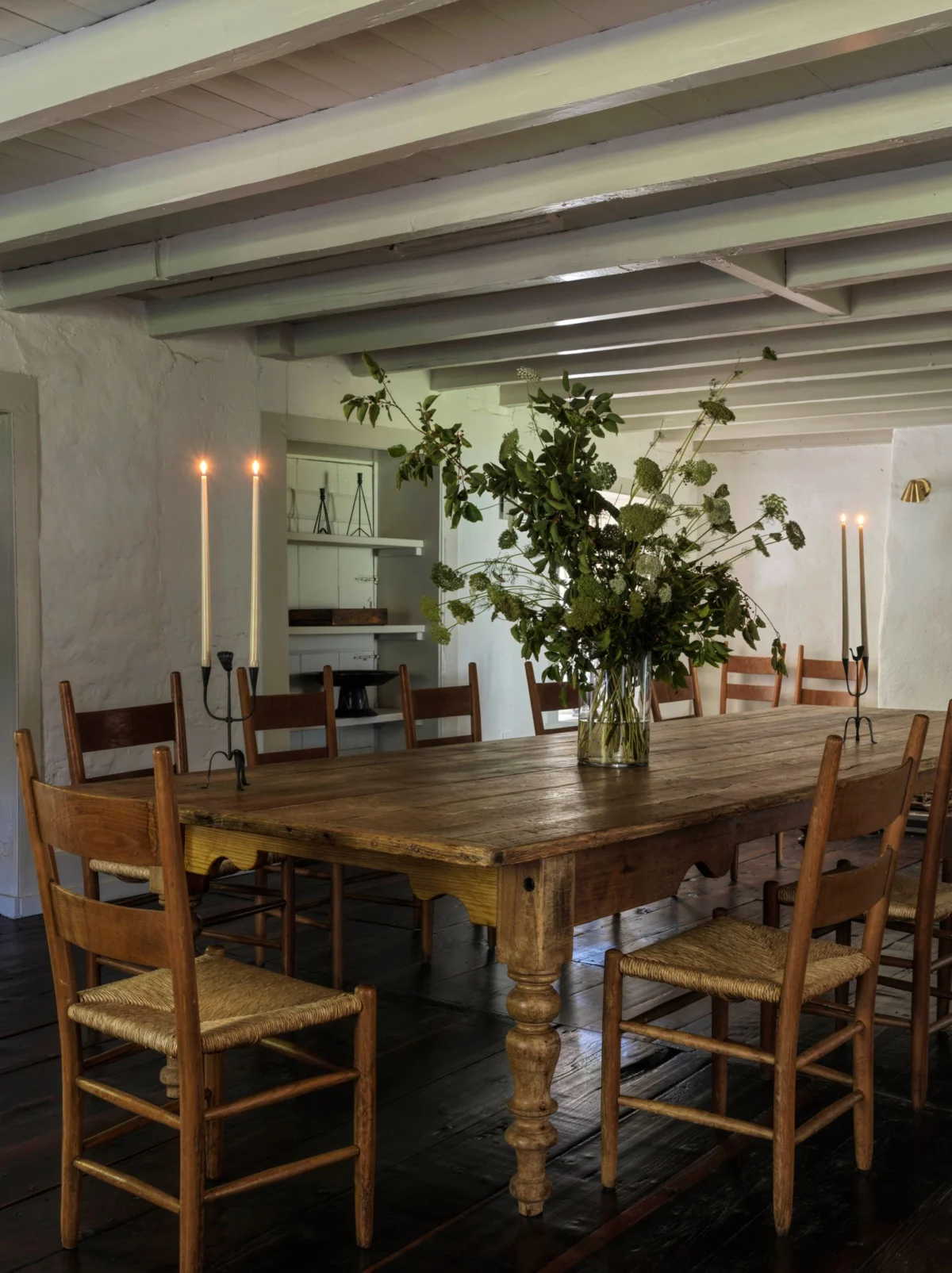
The completion of a four-year restoration and expansion project in Sonoma, California, has transformed one of the state’s oldest residential structures into a sophisticated hospitality retreat. Andrew Mariani, the visionary behind the acclaimed Scribe Winery, has unveiled the finished renovation of an 1847 adobe property that stands as a rare surviving artifact from Northern California’s pre-statehood era. The project, executed in collaboration with the multidisciplinary design firm Post Company, represents a significant contribution to the architectural landscape of the region, balancing the rigid requirements of historical preservation with the functional demands of modern luxury hospitality.

A Legacy Etched in Mud and Timber
The property’s significance extends far beyond its age. Built in 1847, the single-room adobe is a relic of the transitional period between Mexican rule and American statehood. At the time of its construction, Sonoma was the epicenter of the Bear Flag Revolt, a brief but pivotal uprising that eventually led to California becoming the 31st U.S. state in 1850. The building originally served as the residence of the town’s mayor, a figure described in historical accounts as unruly and defiant. The property’s most famous historical footnote involves the arrival of William Tecumseh Sherman—then a young Union military leader—who appeared at the adobe’s threshold to place the mayor under arrest.
For nearly a decade, Mariani held the property in a state of stasis, recognizing its potential but awaiting the right moment and partnership to execute a sensitive revival. The structure is one of only a handful of landmarked adobes remaining in the region. Unlike the wood-framed Victorian homes that would later dominate Northern California’s residential architecture, the adobe was constructed using sun-dried mud bricks and heavy timber, a method that offers natural thermal mass but requires specialized care to maintain over centuries.

The Architectural Strategy: The "Minimum" Touch
When Mariani finally moved forward with the project, he enlisted Leigh Salem of Post Company to navigate the complex intersection of history and utility. The design philosophy was governed by a commitment to "honesty," a term Mariani uses to describe the preservation of the building’s original palette, texture, and structural integrity.
"Our approach to the renovation was to keep the historic section as honest as possible," Mariani stated regarding the project’s commencement. "Basically, to do the minimum to it, to maintain its palette and texture and beauty."

However, the landmark status of the building presented a formidable architectural challenge: the original 1847 walls could not be altered, punctured, or used to support new structural loads. To transform the single-room dwelling into a functional guesthouse and event venue, an expansion was necessary, but it could not be attached through traditional means.
Post Company’s solution was the creation of a discreet, U-shaped wing tucked behind the original adobe. To maintain the building’s profile from the street, the new addition remains entirely invisible to passersby. The point of connection between the 19th-century mud bricks and the 21st-century addition is a heavy structural beam aligned with a long, narrow skylight. This "skylit seam" allows the two structures to exist in proximity while remaining physically independent, a move that satisfied both preservation regulators and the aesthetic desire for a clear distinction between old and new.

Chronology of the Transformation
The project’s evolution spanned several years and reflected changing personal and professional needs:
- Pre-2015: Mariani acquires the 1847 adobe property, located a few miles from the primary Scribe Winery vineyard.
- 2015–2020: Conceptual discussions begin. Mariani initially considers the site for a private residence but eventually pivots as his family grows to include three children.
- 2021: Formal design and construction begin in earnest. The project moves toward a hybrid model: a guest retreat for family and a high-end hospitality space for Scribe Winery events.
- 2021–2024: Construction of the new wing and careful restoration of the adobe. This includes the application of specialized finishes like tadelakt (Moroccan lime plaster) and traditional limewash.
- 2025: The project reaches completion, opening as an ancillary venue for Scribe Winery’s elite programming.
Interior Curation: A Dialogue Across Eras
The interiors of the adobe reflect a monastic, "slow design" aesthetic that emphasizes natural materials and historical resonance. The central entertaining space is anchored by a 13-foot-long vintage table sourced from the Round Top Antiques Fair in Texas. Surrounding the table are vintage chairs originally used in a Dutch church, procured through Amsterdam Modern.

Lighting plays a critical role in maintaining the "time capsule" atmosphere. The design team opted to forgo overhead fixtures in the historic section, relying instead on Hector Finch brass wall sconces and candlelight. This decision ensures that the focus remains on the dining experience and the texture of the limewashed walls—specifically, a shade called "Blondie" by Portola Paints, complemented by Farrow & Ball’s "Drop Cloth" on the ceilings.
The attic, accessible via a narrow staircase, has been converted into a lounge that serves as a literal archive of the building’s past. During the renovation, original framing was left exposed, revealing early forms of insulation that included layers of newspapers dating back over a hundred years. This space is furnished with a mix of high-design pieces, including a Noguchi pendant and a Living Divani leather sofa, creating a bridge between the 19th and 21st centuries.

The New Wing: Contemporary Context
While the adobe is the project’s spiritual center, the new wing provides the necessary infrastructure for modern lodging. It houses two bedrooms and three bathrooms, all designed with a restrained, neutral palette to avoid competing with the historic structure.
The kitchen serves as a functional hub, featuring cabinetry from the British firm Plain English. Leigh Salem selected these hand-painted Shaker-style elements for their visible brushstrokes and "element of the hand," which mirrors the artisanal nature of the original adobe construction. The kitchen-living area utilizes large, steel-framed picture windows and aged cedar siding, opening onto a spacious courtyard designed for indoor-outdoor entertaining.

Key design elements in the new wing include:
- Primary Bathroom: Finished entirely in tadelakt, a waterproof Moroccan lime plaster, featuring a freestanding Waterworks bathtub and a Workstead pendant.
- Living Area: Furnished with a Shoppe Amber Interiors sofa, Frama daybed, and a lounge chair from Casamidy in San Miguel de Allende, Mexico.
- Flooring and Rugs: A Nordic Knots rug in the living area and a custom Pottery Barn seagrass rug provide organic textures that ground the contemporary furniture.
Supporting Data and Preservation Context
The preservation of the 1847 adobe occurs at a time when Northern California is grappling with the loss of its earliest architectural history due to wildfires and urban development. According to data from the California Office of Historic Preservation, structures dating before the 1850s are exceedingly rare, particularly those built with traditional adobe methods.

Landmark properties in Sonoma County are subject to rigorous oversight. The "Secretary of the Interior’s Standards for the Treatment of Historic Properties" often dictates that new additions must be "differentiated from the old" but "compatible with the historic materials." Post Company’s use of a glass-and-steel "seam" to connect the structures is a textbook example of modern preservation theory, allowing the original building to remain a standalone "object" while expanding its footprint.
Broader Impact and Implications
The renovation of the 1847 adobe is more than a private real estate project; it is a strategic extension of the Scribe Winery brand. Since its founding in 2007 by brothers Andrew and Adam Mariani, Scribe has been a leader in the "new California" wine movement, which emphasizes regenerative farming, minimal intervention, and a lifestyle-centric approach to viticulture.

By restoring a piece of California’s foundational history, Mariani reinforces the winery’s connection to the land and its heritage. The project also reflects a broader trend in the luxury hospitality sector toward "heritage tourism," where travelers seek out authentic, historically significant environments over standardized luxury.
Industry analysts suggest that such projects increase the long-term value of viticultural estates by diversifying their offerings beyond wine production into the realms of architectural tourism and exclusive event hosting. As Sonoma continues to compete with Napa Valley for high-net-worth visitors, the preservation of unique assets like the 1847 adobe provides a distinct competitive advantage—one that celebrates the rugged, multi-layered history of Northern California.

In its final form, the property functions as a choreographed return to the past. The new wing, with its modern lines and cedar siding, acts as a supportive backdrop, ensuring that the 1847 adobe remains the project’s quiet center of gravity. It stands as a testament to the idea that the most effective way to preserve history is not to freeze it in time, but to give it a second act that honors its origins.