Prabowo Widodo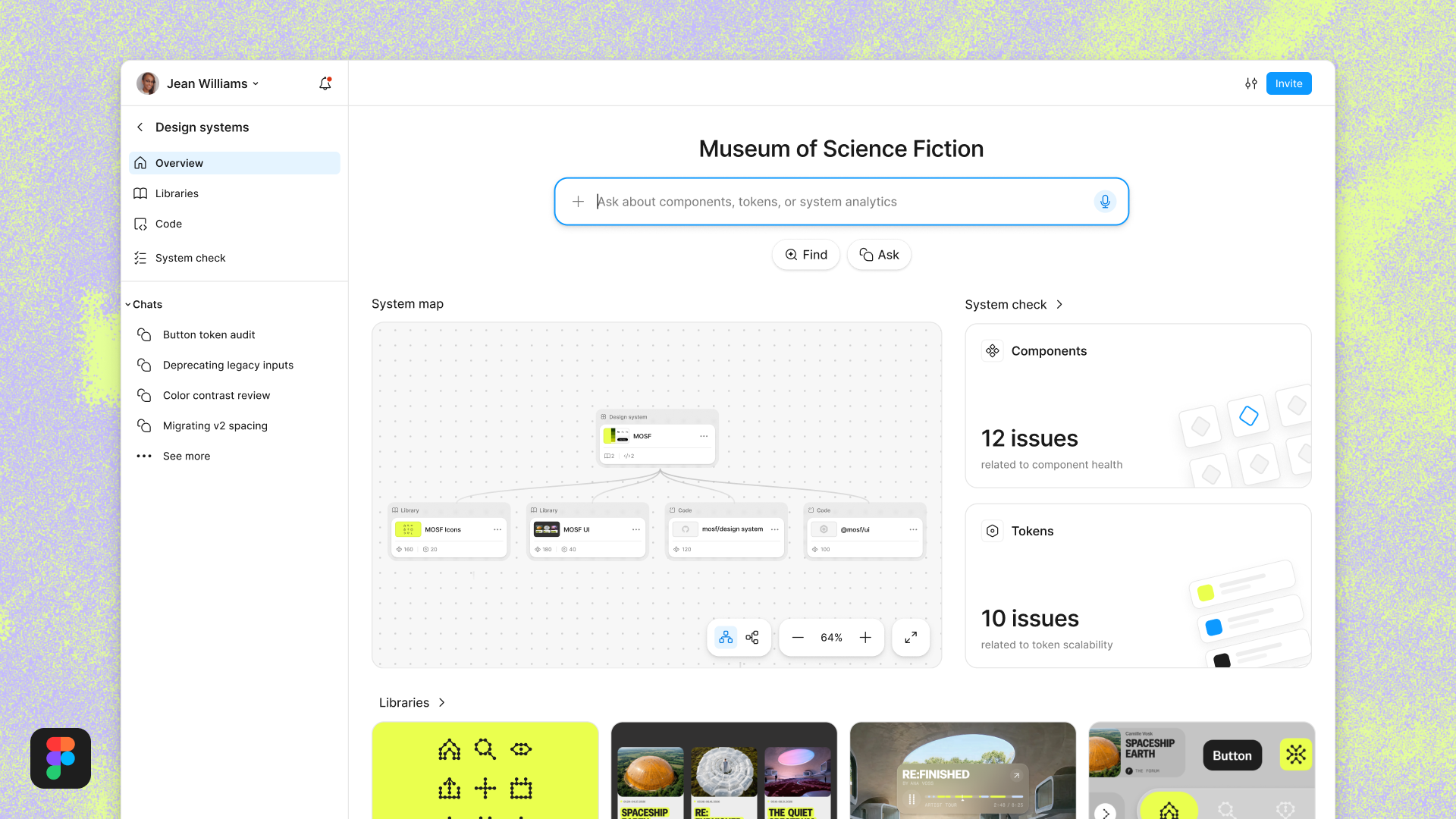
Design platform Figma used its inaugural Config event in India to unveil a suite of major product updates aimed at bridging the gap between design and development, enhancing artificial intelligence guardrails, and cementing its footprint in one of its most critical international markets. Among the headline announcements is the introduction of Figma Specs, a new Markdown-based editing tool designed to help organizations codify their design language, incorporate centralized code libraries, and maintain stricter brand consistency when working with automated generative systems.
The strategic rollout underscores Figma’s evolution from a collaborative user interface design tool into a comprehensive software development ecosystem. By integrating deeply with headless content management systems and expanding the public availability of its coding features, the company is attempting to address a fundamental bottleneck in modern engineering: the discrepancy between the volume of code generated by AI and the actual frequency of software deployment.
Harnessing AI and Steering Output with Figma Specs
The centerpiece of Figma’s latest product release is Figma Specs, a lightweight Markdown editor built directly into the platform. The feature allows product teams, developers, and stakeholders to define structural design rules, style guides, and brand languages in a simple, human-readable text format.
These specification documents can live as standalone files within a Figma project or co-exist dynamically alongside the visual canvas. Beyond functioning as a traditional text editor, Specs allows users to establish live bidirectional references to specific elements on the canvas, embed FigJam collaborative diagrams, and link directly to underlying code layers and established design systems.
The creation of Figma Specs directly addresses a growing challenge in modern software creation: the non-deterministic nature of artificial intelligence. As the platform rolled out its on-canvas AI agent to a broader user base, enterprise clients repeatedly emphasized the need for guardrails to ensure automated tools adhere strictly to brand and design guidelines. By establishing a centralized, context-rich source of truth that houses design libraries, code repositories, and structural rules, Figma Specs provides both internal team members and third-party AI agents with the rigorous context required to generate predictable, brand-compliant output.

"We see Figma as the place where software teams come to decide what they build and ship," Loredana Crisan, Figma’s chief design officer, told TechCrunch. Highlighting the changing dynamics of software engineering, Crisan noted that development teams are producing significantly more raw code than in previous years largely due to AI acceleration, yet shipping cycles have not scaled proportionally. "There are 17-times more lines of code being produced today than in the past. But when you’re looking at releases, only 1.3-times more releases. A lot of that code actually is not necessarily built to ship, but really built to discover what the product is. It’s built to design."
Broadening the Public Beta of Code Layers
Complementing the release of Figma Specs is the expansion of the company’s code layers feature, which transitions from a private beta—initially announced in June—into a public beta phase. Code layers introduce native coding capabilities directly onto the visual canvas, enabling designers and developers to build highly interactive, production-ready prototypes.
With this integration, users can prompt Figma’s on-canvas AI agent to translate static visual designs into functioning code blocks, or modify specific segments of code to instantly iterate on prototype behavior. By embedding code layers into the visual canvas, Figma aims to eliminate the friction typically found in the handoff phase between product designers and frontend developers, allowing teams to explore functional interactivity much earlier in the product lifecycle.
To further extend its ecosystem compatibility, Figma announced support for more than 20 new developer tools within its Model Context Protocol (MCP). Notable additions include Open Code, Dia, Grok Bot, and Sarvam, an emerging Indian AI startup. This expansive third-party integration strategy ensures that engineering teams can connect Figma’s design environment directly with their preferred external development frameworks and specialized regional AI models.
Deepening the Payload CMS Integration
Figma’s product roadmap also reflects its ongoing integration of Payload, an open-source headless content management system acquired by the design giant last year. At the Config event, the company demonstrated how Payload is being woven into Figma Make, a product dedicated to generating dynamic websites and managing underlying content directly from the design interface.
The acquisition has yielded significant growth for the CMS. According to company disclosures, Payload’s download volume has increased sixfold over the preceding 12 months. By uniting visual layout generation with dynamic content management via Payload, Figma is positioning its platform not merely as a prototyping tool, but as an end-to-end publishing infrastructure capable of taking digital properties from concept to live deployment.

Strategic Focus on the Indian Market
The decision to host its inaugural Config event in India highlights the strategic importance of the region to Figma’s global expansion. Late last year, the company established its first physical office in India, deploying dedicated teams across sales, partnerships, go-to-market strategies, and product support.
Market data shared by the company indicates that India has become Figma’s largest user base outside of the United States. Furthermore, the platform has achieved deep enterprise penetration in the country, counting roughly 40% of the top 100 corporations listed on the Bombay Stock Exchange among its active users.
Industry analysts view the localized Config event as a calculated effort to capture the burgeoning South Asian software engineering market, where a massive developer population and rapidly modernizing enterprise sector are increasingly adopting collaborative, cloud-first workflows.
Broader Industry Implications
Figma’s latest updates reflect a broader, structural shift across the software development industry. As generative artificial intelligence lowers the barrier to writing code and generating interface layouts, the primary constraint in software creation is shifting from technical execution to strategic alignment, system governance, and context management.
By introducing tools like Figma Specs and expanding support for code layers and headless CMS architectures, Figma is attempting to solve the "context problem" inherent in AI-assisted development. Without centralized documentation and strict rule enforcement, AI-generated designs and code frequently drift from organizational standards, resulting in fragmented user experiences and technical debt.
Providing a unified environment where Markdown documentation, visual canvases, live code layers, and content management systems converge allows Figma to exert greater control over the entire software lifecycle. If successful, these tools could redefine the standard workflow for digital product teams, transforming the design platform from a static blueprint repository into the definitive control center for digital creation.