Johny Marice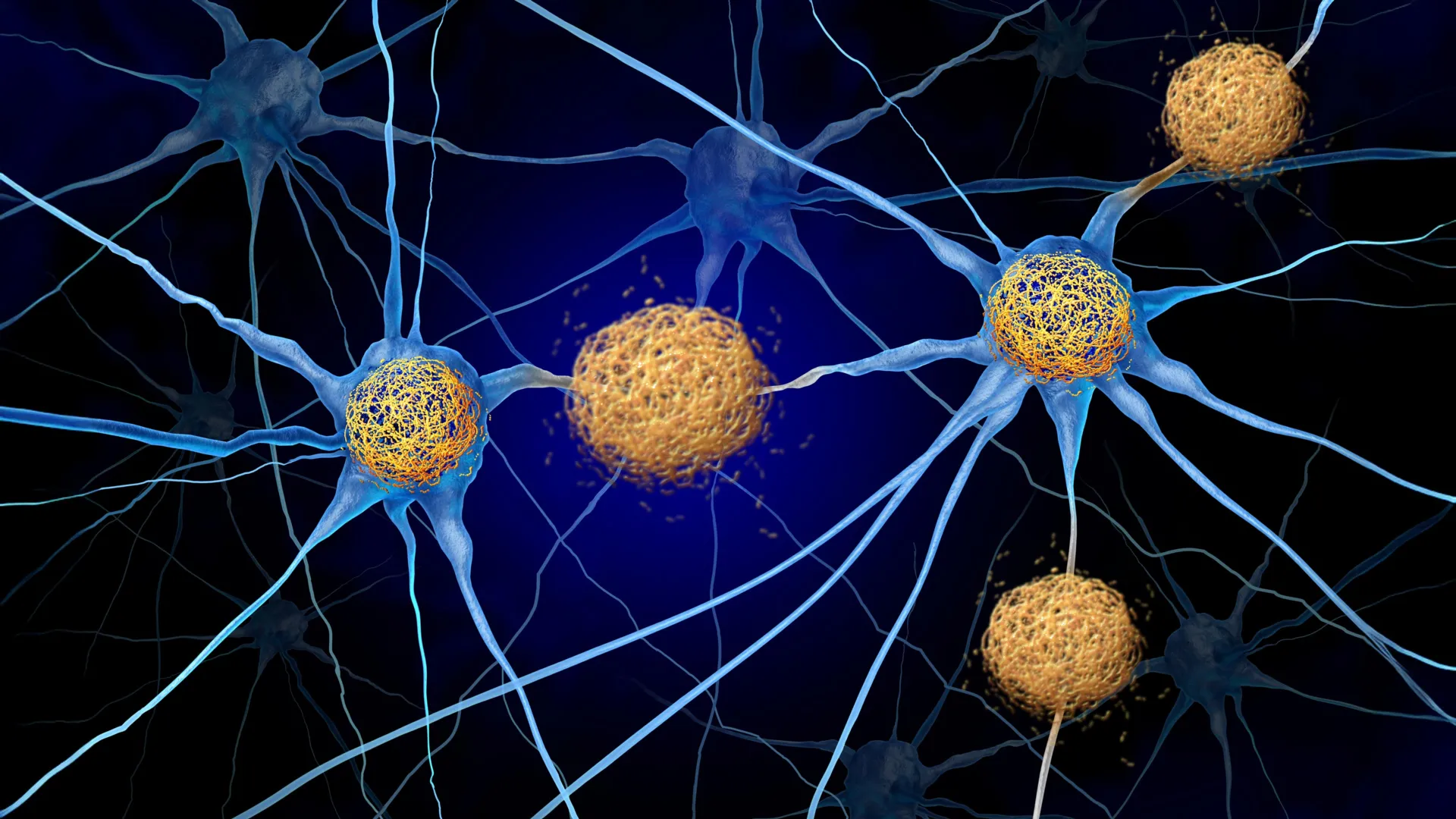
For decades, the global scientific community has operated under a singular, dominant hypothesis regarding the pathogenesis of Alzheimer’s disease: the amyloid cascade. This theory posits that the accumulation of amyloid beta peptides into harmful plaques is the primary driver of neurodegeneration. Consequently, billions of dollars in pharmaceutical research and development have been funneled into therapies designed to clear these deposits. However, a growing body of research, spearheaded by biochemist Jevgenij Raskatov at the University of California, Santa Cruz, suggests that the field may have been looking through a narrow lens, potentially ignoring a smaller, closely related peptide long dismissed as biologically inert.
The Dominance of the Amyloid Beta Hypothesis
The history of Alzheimer’s research is defined by the relentless pursuit of amyloid beta (Aβ). Since the peptide was first identified as the core component of brain plaques in the 1980s, it has occupied the center stage of clinical focus. The standard model of disease progression involves the Amyloid Precursor Protein (APP), which is embedded in the membranes of neurons. When this protein is cleaved sequentially by two enzymes—beta-secretase and gamma-secretase—it releases amyloid beta peptides of varying lengths.
Researchers have historically prioritized Aβ40 and Aβ42, the latter being particularly prone to self-aggregation into toxic, insoluble fibrils. Despite the failure of over 400 clinical trials targeting this specific pathway, the industry has remained largely tethered to the amyloid hypothesis. While recent FDA-approved antibody treatments such as Lecanemab and Donanemab have demonstrated a capacity to reduce amyloid burden, their clinical benefits are often modest, and they are frequently accompanied by significant safety concerns, including amyloid-related imaging abnormalities (ARIA) such as brain swelling and hemorrhages.
The P3 Peptide: From Innocent Bystander to Potential Culprit
In a recent commentary published in the journal ChemBioChem, Professor Raskatov argues that the scientific community has overlooked a significant player in the neurodegenerative process: the P3 peptide. Unlike amyloid beta, which is generated via the beta-secretase pathway, P3 is produced when APP is processed through the alpha-secretase pathway, followed by the same gamma-secretase enzyme.
For years, P3 was categorized as a benign byproduct. Scientific literature frequently described it as soluble and incapable of forming the hazardous amyloid structures associated with disease. However, Raskatov’s laboratory has spent the last five years systematically stress-testing these long-held assumptions. Through a series of rigorous biochemical experiments, the team has provided empirical evidence that P3 is, in fact, capable of forming fibrils—often at a rate faster than its more famous counterpart, amyloid beta.
Chronology of Research and Discovery
The shift in perspective regarding P3 did not occur overnight. It is the culmination of a multi-year effort to reconcile the observed pathology of Alzheimer’s with the limitations of current drug targets:
- 1980s–2000s: The "Amyloid Cascade Hypothesis" becomes the foundational pillar of Alzheimer’s research, cementing Aβ as the exclusive target for drug development.
- 2019–2023: Raskatov’s laboratory at UC Santa Cruz publishes three major studies indicating that P3 peptides are not only capable of aggregation but also possess intrinsic neurotoxic properties.
- 2023–2024: Independent research groups in the United Kingdom replicate and expand upon the UCSC findings, confirming that P3 interaction with Aβ may exacerbate the toxicity and accumulation patterns previously attributed solely to Aβ.
- 2024: The publication of the ChemBioChem commentary formally challenges the "innocent bystander" status of P3, proposing the term "Amyloid Alpha" (Aα) to better characterize its pathogenic potential.
Economic and Demographic Stakes
The urgency for a paradigm shift is underscored by the staggering human and economic toll of the disease. Alzheimer’s currently affects approximately 35 million individuals worldwide. As global life expectancy rises, the prevalence of the condition is projected to double by 2050. The annual global cost associated with Alzheimer’s care and treatment now exceeds $800 billion, placing an immense burden on healthcare systems and private insurers.
When juxtaposed with the low success rate of current clinical trials, these figures highlight a systemic issue: the industry may be spending billions on variations of the same target while neglecting collateral pathways. If P3 is indeed a contributor to neurotoxicity, current amyloid-clearing therapies may be leaving a crucial source of damage unaddressed, potentially explaining why these drugs fail to halt the cognitive decline associated with the disease.
A Crisis of Interpretation
One of the most alarming revelations in Raskatov’s research is the discovery of "citation drift" within the scientific community. Raskatov identified at least four peer-reviewed papers that cited his own team’s work as evidence that P3 was harmless, even though his actual findings concluded the opposite. This suggests a systemic bias, where existing narratives are so entrenched that even contradictory data are occasionally misinterpreted or ignored by authors attempting to confirm established models.
Dr. David Teplow, an emeritus professor of neurology at UCLA and a veteran of the field, noted the gravity of this situation. "This reevaluation has far-reaching consequences for both basic science and clinical research," Teplow stated. He emphasized that the scientific community is now at a critical juncture where the narrow focus on amyloid beta must be broadened to include the complex interplay between different peptide species.
Implications for Future Therapeutic Development
The implications of the P3 findings are profound. If the P3 peptide contributes to nerve cell damage—whether through its own aggregation or by interacting with Aβ—it represents an entirely new therapeutic target. Future drug design could move toward "dual-target" approaches, where inhibitors are engineered to mitigate the effects of both Aβ and P3 simultaneously.
Furthermore, the discovery mandates a re-evaluation of previous failed clinical trials. It is possible that some drugs failed not because the amyloid hypothesis was entirely wrong, but because they were incomplete. By failing to account for the role of P3, these trials may have lacked the specificity or breadth required to stop the disease’s progression.
Conclusion: A Call for Scientific Rigor
The case of the P3 peptide serves as a cautionary tale regarding the dangers of scientific dogma. When a field becomes overly fixated on a single hypothesis, it risks creating an echo chamber that discourages the exploration of alternative pathways. Raskatov’s work does not suggest that amyloid beta is irrelevant; rather, it suggests that it is one piece of a much larger, more complex molecular puzzle.
As research moves forward, the scientific community must prioritize objective, granular analysis of peptide interactions in the brain. The transition from viewing P3 as a benign byproduct to a potential neurotoxic agent is a significant step toward a more holistic understanding of Alzheimer’s disease. For millions of patients and their families, the hope is that this new line of inquiry will lead to the "fundamentally new approaches" that Raskatov insists are required to move beyond the current impasse. The road to an effective treatment remains long, but by acknowledging the "Amyloid Alpha" peptide, researchers are at least beginning to look in the right direction.