
 Kang Muslim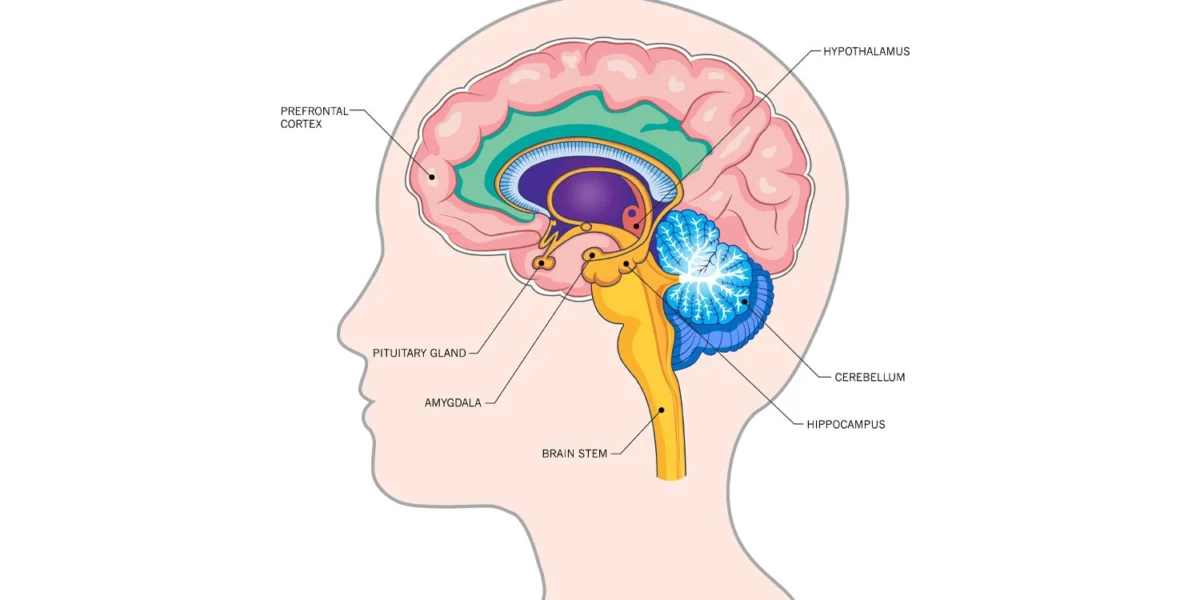
When the human brain enters a state of rest following a new learning experience, it does not simply sit idle. Instead, it embarks on a complex, automated process of mental replay, actively reviewing recent events to anchor them into long-term storage. However, a recent small-scale study published in the Journal of Cognitive Neuroscience reveals that this biological archiving system operates on a strict, compromise-driven economy. According to the research, the brain’s mental replay involves a profound trade-off: it aggressively prioritizes the general meaning, or "gist," of an event while simultaneously degrading the memory of specific sensory details. These physiological adjustments demonstrate that false memories are not merely cognitive glitches, but rather the natural, predictable byproduct of a brain designed to extract overarching themes and utility from a crowded world.
The findings offer a fresh perspective on how human memory functions, bridging the gap between computational models of neuroscience and cognitive psychology. By peering inside the human hippocampus using high-resolution neuroimaging, researchers have begun to map out the exact anatomical battlegrounds where specific details are sacrificed for the greater good of conceptual learning.
The Dual Imperative of Human Memory
At its core, human memory is constantly forced to balance two opposing, highly demanding tasks. On one hand, the brain must retain the precise details of an individual event to maintain an accurate record of reality. Remembering where you parked your car today, for instance, requires exact episodic precision. On the other hand, the brain must identify patterns and extract general rules across multiple, distinct events to predict future outcomes and navigate the world effectively. If an individual only remembered exact, isolated details without generalization, they would struggle immensely to apply lessons learned from past experiences to novel, unfamiliar situations.
Historically, classical models of cognitive neuroscience posited a clear division of labor within the brain. The hippocampus—a seahorse-shaped structure nestled deep within the temporal lobes—was traditionally viewed as a fast-acting recorder designed to capture raw, episodic experiences. Over subsequent days, weeks, and months, this structure was thought to slowly teach these memories to the neocortex, the brain’s outer layer, which is responsible for extracting statistical rules and overarching conceptual frameworks.
However, emerging computational models and cutting-edge neuroimaging challenge this rigid separation. They suggest that this division of labor—balancing rapid recording with slow generalization—may actually occur entirely within the microscopic sub-regions of the hippocampus itself.
Competitive Plasticity and the Anatomy of the Hippocampus
If the hippocampus is truly responsible for both recording hyper-specific details and orchestrating broad generalizations, it must possess an internal mechanism capable of editing memories shortly after they form. Neuroscientists point to the biological principle of competitive plasticity as the most likely method driving this phenomenon.
When a human being learns a series of related concepts, neural pathways that share common features activate simultaneously, causing those shared pathways to strengthen. Conversely, unique, isolated details that do not frequently reactivate alongside those common themes are competitively weakened.
To investigate how the human brain navigates this delicate balance, a research team comprised of Nicholas C. Hindy, Ryan Coleman, and Surya Rajan Meenakshi Selvam turned their focus toward specific sub-regions of the hippocampus. Following a learning event, the hippocampus is known to spontaneously reactivate the neural patterns associated with that experience. The researchers sought to determine whether this spontaneous reactivation merely creates a pristine, faithful copy of a memory, or if it actively transforms the memory structure itself.
The team concentrated heavily on a sub-region known as CA1. Acting as a primary output hub, the CA1 area funnels information out to other regions of the brain. Because of its unique structural position, CA1 is ideally situated to resolve the fierce neural competition that occurs between specific episodic details and broader conceptual generalizations.
Inside the Experimental Design
To observe this competitive memory editing in real-time, the research team designed a controlled experiment utilizing 24 adult participants. The study employed a classic psychological paradigm—known widely in cognitive research as the Deese-Roediger-McDermott (DRM) paradigm—which is renowned for reliably inducing false memories in human subjects.
During the experimental procedure, participants listened to lists of spoken words designed intentionally around a missing target concept. For example, a single word list might include terms such as "bed," "rest," "awake," "tired," and "snore," while deliberately omitting the central semantic theme word, "sleep."
To further parse out the data, these words were read aloud by artificial voices, effectively splitting the incoming information into two distinct informational channels. The "semantic channel" represented the overarching meaning of the words and their shared theme, while the "episodic channel" represented the concrete, low-level sensory experience of hearing a specific male or female voice utter each individual word.
While participants engaged with these auditory lists, the researchers deployed high-resolution functional magnetic resonance imaging (fMRI). Standard, traditional brain scans often lack the spatial fidelity required to differentiate the tiny sub-regions packed tightly within the human hippocampus, frequently blurring them together into a single mass. By utilizing high-resolution fMRI techniques, the research team successfully isolated the CA1 area alongside its vital neighboring sub-regions: the CA3 area and the dentate gyrus.
The Chronology of the Testing Phase
The timeline of the experimental session was tightly controlled to capture the immediate aftermath of memory encoding:
- Encoding Phase: Participants listened intently to the structured word lists, processing both the semantic themes and the specific auditory qualities (voices) of the speaker.
- Distraction and Rest Period: Immediately following the audio presentation, participants spent 90 seconds performing a simple, repetitive arithmetic task. This brief mathematical diversion kept participants mildly distracted while simultaneously allowing their brains to rest from active memorization. During this exact 90-second rest window, the researchers utilized fMRI scanning to measure how frequently the hippocampus spontaneously replayed the neural patterns associated with the preceding word lists.
- Retrieval and Testing Phase: Remaining safely inside the brain scanner, participants completed a comprehensive memory test. They were asked to indicate whether they recognized words from the lists, identify whether they falsely recognized "lure" words (the missing thematic words like "sleep" that fit the category but were never actually played), and recall the exact voice source (male or female) that spoke the genuinely recognized words.
Unpacking the Results: The Neural Trade-Off
Upon analyzing the neuroimaging and behavioral data, the research team discovered a striking inverse relationship between spontaneous brain reactivation and memory fidelity.
When the CA1 sub-region of the hippocampus replayed a memory more frequently during the 90-second rest period, participants exhibited a significantly higher probability of confidently claiming they had heard the unplayed lure words. They had effectively manufactured a false memory centered around the semantic gist.
Simultaneously, this exact same surge in neural reactivation predicted a sharp decline in accuracy when those same participants attempted to remember whether a male or female voice had spoken a specific, actual word.
Crucially, the memory of the actual words that had been played remained completely untouched by the reactivation process. The biological trade-off was highly specific: mental replay strengthened the broad conceptual theme and inflated false memory rates for thematic lures, while systematically eroding the memory of the precise sensory source details. The core words survived, but the rich, episodic texture surrounding them faded away.
Specialized Roles Within Hippocampal Sub-Regions
While the CA1 region displayed the most robust evidence of this bidirectional trade-off, the surrounding sub-regions exhibited their own distinct, specialized contributions to the memory-editing process:
- The CA3 Region: Reactivation occurring within the CA3 area was linked exclusively to a heightened rate of false memories for the overarching semantic themes. Neuroscientists widely believe that CA3 plays a foundational role in "pattern completion"—a cognitive process where the brain successfully rebuilds a full, comprehensive memory from a mere partial cue. During rest, this pattern completion mechanism appears to hyper-focus on the broader concept, inadvertently constructing false certainties.
- The Dentate Gyrus: Conversely, activity measured within the dentate gyrus correlated solely with diminished memory for the specific voices. The dentate gyrus is canonically associated with "pattern separation," which is the brain’s specialized ability to differentiate between similar, overlapping experiences and keep them distinct. When the dentate gyrus is forced to process tightly clustered, overlapping semantic themes, its capacity to safeguard precise episodic details appears to suffer.
Furthermore, the researchers mapped a distinct spatial gradient running along the longitudinal axis of the hippocampus. The anterior (front) and middle sections of the hippocampal structure were primarily associated with extracting general semantic themes and falsely endorsing related lure words. In contrast, the posterior (rear) section of the hippocampus was directly linked to the degradation of specific source details, such as the exact voice of the speaker.
Methodological Limitations and Caveats
Despite the precision of the high-resolution fMRI methodology, the study’s authors note several important limitations that temper broad generalizations.
Primarily, the study relies on correlational data. While the results demonstrate a clear statistical relationship between spontaneous hippocampal reactivation and post-rest memory performance, the current design cannot definitively prove that the neural replay directly caused the subsequent memory shifts. It remains mathematically possible that participants processed the words differently during the initial listening phase, which could have independently influenced both the nature of the brain’s replay and the subsequent memory errors.
Additionally, the rest period observed in the study was extremely brief—lasting only 90 seconds. This window captures merely the nascent, earliest moments of memory formation and consolidation. Furthermore, the fMRI scans tracked neural activity linked to entire word lists as cohesive units, rather than isolating the replay of individual, standalone words.
Broader Implications for Cognitive Science and Beyond
The implications of these findings stretch far beyond academic cognitive neuroscience, offering profound insights into human fallibility, eyewitness testimony, and the very nature of human learning.
For decades, the legal system and clinical psychology have grappled with the unreliability of human memory, particularly regarding eyewitness accounts where specific details are frequently misremembered or fabricated under pressure. This study suggests that false memories are not aberrations caused by cognitive failure or brain damage; rather, they are the baseline cost of an adaptive biological architecture designed to prioritize actionable wisdom over encyclopedic exactness. To learn effectively, the human brain must generalize. To generalize, it must generalize away the noise of specific, isolated details.
As researchers look toward the future, the scientific community emphasizes the need for longitudinal studies that track these memory trade-offs over extended periods—hours, days, and weeks—rather than mere minutes. Future investigations will likely utilize advanced computational tools to isolate individual events with even greater fidelity, charting how the human mind continually edits, refines, and rewrites its own history in the quiet moments of rest.









