
 Johny Marice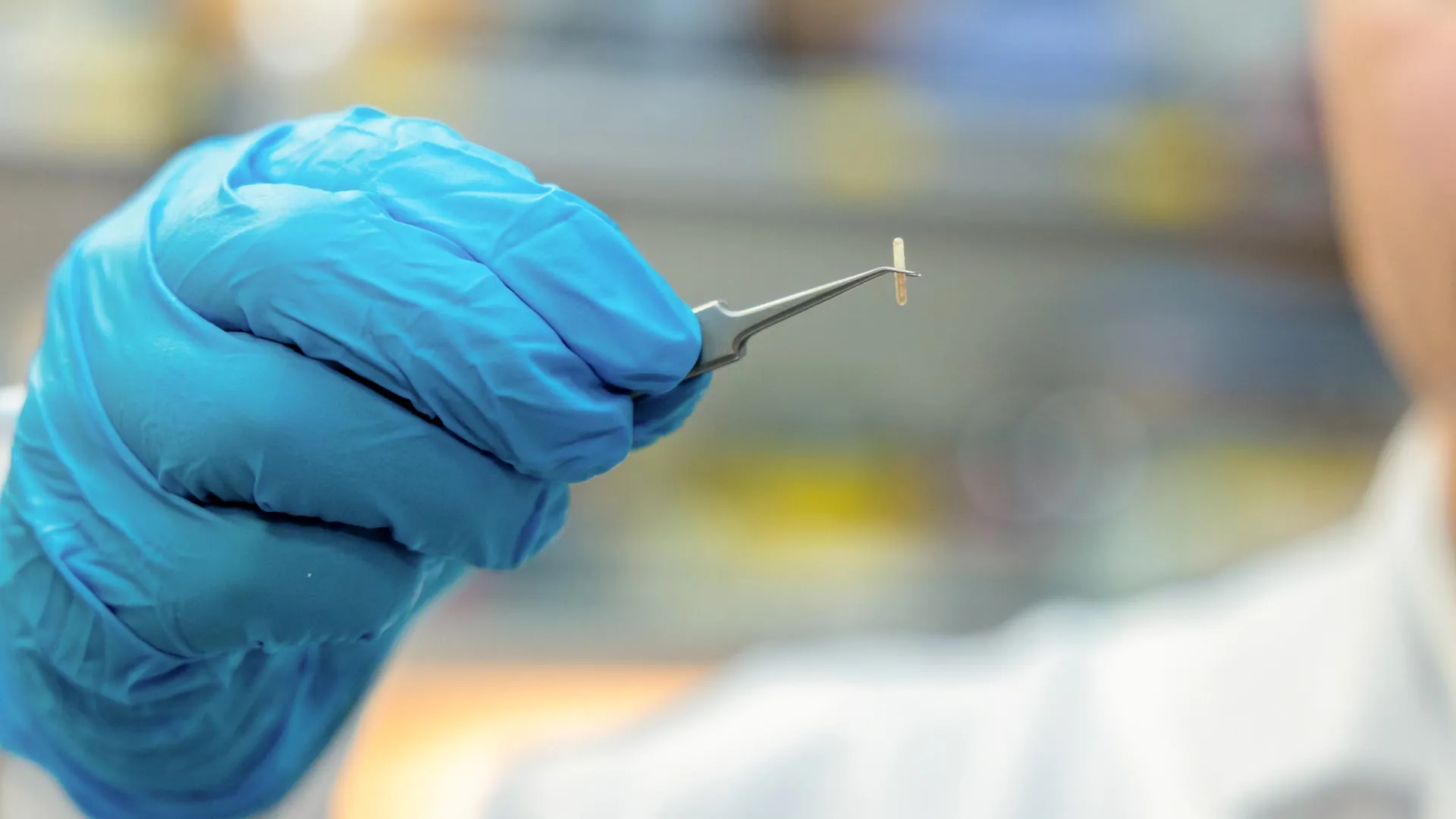
A transformative advancement in bioelectronic medicine has emerged from a collaborative research initiative between NYU Abu Dhabi and the Cleveland Clinic Abu Dhabi, where scientists have successfully engineered a miniature, injectable medical device capable of regulating nerve activity without the need for traditional, invasive surgery. This seed-sized implant, which operates without internal batteries or physical wire connections, represents a significant leap forward in neuromodulation technology. By facilitating precise, programmable nerve stimulation through a standard needle delivery system, the device offers a potential alternative for patients suffering from chronic pain and movement disorders who might otherwise require complex surgical procedures to manage their conditions.
The Technological Breakthrough: Mechanics and Design
The core innovation of this device lies in its sophisticated miniaturization and its ability to interface with the human nervous system through wireless power transfer. Roughly the dimensions of a small seed, the implant is designed to be injected into the proximity of a targeted nerve. Once positioned, it acts as a localized controller for electrical activity. Unlike conventional neurostimulators—which often involve the implantation of a pulse generator, a battery pack, and a network of leads that tunnel under the skin—this new technology relies on external wireless power.
This design architecture effectively eliminates several of the primary drawbacks associated with current neurostimulation systems, including battery failure, lead migration, and the risks of surgical site infection. The device’s functionality is governed by external hardware that can be adjusted in real time, granting both medical professionals and patients a level of control that was previously difficult to achieve without frequent hospital visits or invasive hardware adjustments. By using established imaging techniques such as ultrasound and computed tomography (CT) scans, clinicians can accurately guide the placement of the device and monitor its position long-term, ensuring that the stimulation remains targeted and effective.
Chronology and Development Timeline
The path to this breakthrough began with a multidisciplinary effort to address the inherent limitations of current neuromodulation therapies. For decades, the field of nerve stimulation has been constrained by the trade-off between device efficacy and surgical invasiveness.
- Early Conceptualization: The research team, led by Prof. Khalil Ramadi of NYU Abu Dhabi, initiated the project with a focus on "injectable bioelectronics," a burgeoning field aimed at minimizing the biological footprint of medical implants.
- Experimental Design: Over the past several years, the team focused on miniaturizing the internal circuitry while maintaining a power-reception efficiency that would allow for meaningful nerve modulation.
- Laboratory and Preclinical Validation: Throughout the development phase, the team utilized laboratory environments to test the device’s signal consistency. This was followed by in vivo trials, which confirmed that the device could successfully interface with the nervous system of a living organism, providing a proof-of-concept for its application in a complex biological environment.
- Peer-Reviewed Publication: The findings were formally presented in the journal Science Advances, marking a milestone in the transition from theoretical engineering to practical, evidence-based medicine.
Data-Driven Insights and Technical Performance
The efficacy of the device was evaluated through a rigorous series of benchmarks. According to the research data, the implant maintains consistent performance across varying physiological conditions, a critical requirement for any device intended for chronic, long-term usage. The technical success of the study hinged on the device’s ability to "activate" nerves, a process that requires a precise electrical threshold to be met without causing tissue damage or involuntary muscle contractions.
The data indicates that the device’s stimulation parameters are fully programmable. This is a significant improvement over static, non-adjustable implants, as it allows for the "fine-tuning" of treatment. If a patient’s condition evolves, or if the nerve’s response changes over time, the clinician can adjust the electrical frequency and amplitude from outside the body. This adaptability is particularly vital for chronic pain management, where the intensity of discomfort often fluctuates, and for movement disorders, such as tremors or dystonia, which may respond better to dynamic modulation patterns.
Official Perspectives on the Partnership
The collaboration between NYU Abu Dhabi and the Cleveland Clinic Abu Dhabi underscores a broader trend in global medical research: the integration of engineering schools with clinical hospitals to accelerate the "bench-to-bedside" pipeline.
Dr. Sawsan Abdel-Razig, Chief Academic Officer at Cleveland Clinic Abu Dhabi, emphasized the strategic importance of this synergy. "This collaboration reflects our commitment to advancing innovative, clinically relevant research that translates into meaningful improvements in patient care," she stated. The partnership allows engineers to test their hypotheses against the realities of patient physiology and clinical requirements, while physicians gain early access to transformative technologies that could redefine standard practice.
From the engineering perspective, Prof. Khalil Ramadi views this work as a fundamental shift in medical philosophy. "By creating a device that can be injected rather than surgically implanted, we are making these therapies simpler, safer, and more accessible, while still maintaining precise control over nerve activity," he noted. This sentiment was echoed by Dr. Mohamed Elsherif, the study’s first author, who highlighted that the technology aims to bridge the gap between non-invasive therapies—such as external TENS units, which often lack the depth or precision required for serious conditions—and high-risk surgical implants.
Broader Medical Implications and Future Outlook
The implications for the healthcare industry are significant. Chronic pain affects millions of individuals globally, and for those who do not respond to pharmacological interventions, neurostimulation is often the "last resort." However, the high costs and inherent surgical risks associated with traditional stimulators limit their adoption. A lower-barrier, injectable solution could theoretically expand access to these therapies, allowing a broader demographic of patients to manage their conditions with less disruption to their daily lives.
Furthermore, the reduction in procedure-related risks is a key metric in modern healthcare economics. Surgical implantation of traditional devices involves anesthesia, lengthy operating room times, and recovery periods, all of which contribute to the overall cost and risk profile of the treatment. An injection-based procedure could be performed in an outpatient setting, drastically reducing recovery times and potentially lowering the overall cost of long-term care for patients with chronic movement or pain disorders.
Despite these advancements, the researchers remain measured in their outlook. The current study provides a robust proof-of-concept, but the journey to human clinical application involves several more stages of regulatory approval, long-term safety studies, and efficacy trials. The researchers emphasize that while the device has demonstrated success in animal models and controlled experimental conditions, its performance in the complex, dynamic environment of a human body requires further scrutiny.
Questions regarding the long-term biocompatibility of the device—how the body’s immune system reacts to the presence of the implant over months or years—remain a focus for upcoming studies. Additionally, researchers must determine the optimal frequency of "recharging" or powering the device to ensure that patient quality of life is not compromised by the need for frequent external interaction.
Conclusion
The work produced by the team at NYU Abu Dhabi and Cleveland Clinic Abu Dhabi represents a pivotal moment in bioengineering. By successfully merging wireless power delivery with miniature, injectable architecture, the researchers have laid the groundwork for a new category of medical device. If the technology successfully transitions through clinical trials and receives regulatory clearance, it could fundamentally alter the management of neurological and pain-related conditions, moving the field toward a future where sophisticated nerve modulation is as routine as a standard medical injection. As the research team moves into the next phase of development, the medical community will be watching closely, as this innovation holds the promise of making life-changing therapy safer, more efficient, and vastly more accessible for patients around the world.









