
 Ana Megawati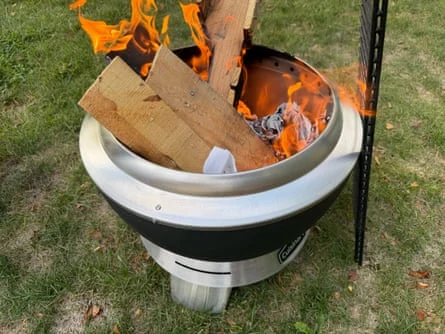
The traditional backyard campfire has long been a staple of outdoor socializing, yet it invariably comes with a frustrating caveat: the constant shifting of chairs to evade stinging, eye-watering plumes of smoke. For decades, outdoor enthusiasts accepted this atmospheric annoyance as an unalterable law of nature. However, the rise of engineered smokeless fire pits has fundamentally transformed patio culture. By utilizing advanced thermodynamic principles—specifically double-wall construction and precision-engineered airflow holes—these modern hearths burn wood and charcoal far more efficiently, drastically reducing visible smoke while maximizing warmth and usability.
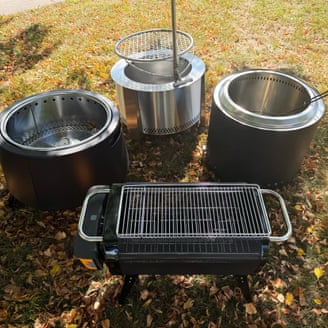
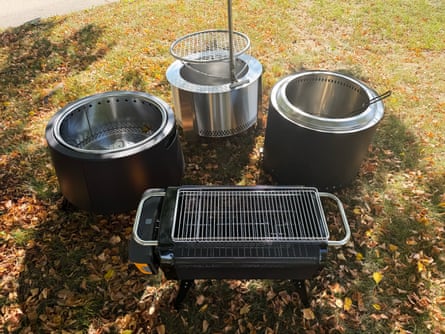
To determine which models genuinely deliver on their manufacturer promises, the Filter US recently conducted an extensive, month-long comparative evaluation. Testing six market-leading smokeless fire pits simultaneously under rigorous conditions, reviewers analyzed heat output, burn longevity, smoke emission levels, and culinary versatility. The results offer consumers a clear roadmap for selecting the ideal outdoor heating and cooking apparatus for their specific needs, separating high-performing engineering triumphs from expensive novelties.
The Mechanics of Smokeless Technology
Understanding why modern smokeless fire pits outperform traditional brick-and-mortar rings requires a brief examination of fluid dynamics and combustion physics. Traditional campfires produce dense smoke because lower layers of burning wood lack sufficient oxygen, resulting in incomplete combustion. This generates unburned carbon particulates, moisture, and volatile organic compounds that drift into the faces of surrounding guests.
Smokeless fire pits solve this problem through secondary combustion. Cool air is drawn into intake holes located at the base of the unit. As this air travels upward between the double-walled steel panels, it becomes superheated. This superheated oxygen is then forced out through specialized jets near the top rim of the fire pit, where it instantly ignites uncombusted gases and particulates escaping the primary fire below. The net result is a hotter, cleaner flame that drastically curtails visible smoke production while radiating significantly more intense thermal energy.
Methodology and Comparative Testing Parameters
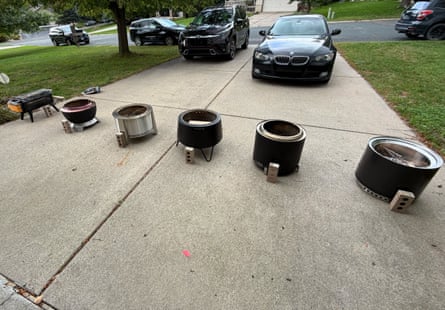
Evaluating six distinct fire pits simultaneously demanded a standardized testing environment. All units were established in a residential driveway before transitioning to a permanent cement patio for long-term observation. To ensure absolute fairness regarding fuel consumption, testers acquired six identical kiln-dried, untreated 8-foot construction boards from a commercial hardware supplier, sawing them into uniform 12-inch pieces to build consistent wood cabins for each fire pit.
Quantifying smoke output presented a unique scientific challenge. Initial attempts to utilize a digital PM2.5 particulate air quality monitor proved unreliable due to shifting ambient wind gusts. Consequently, testers reverted to the standardized Ringelmann smoke chart, grading emissions on a scale from one to five, supplemented by direct observational data regarding eye irritation for individuals seated in the immediate vicinity.
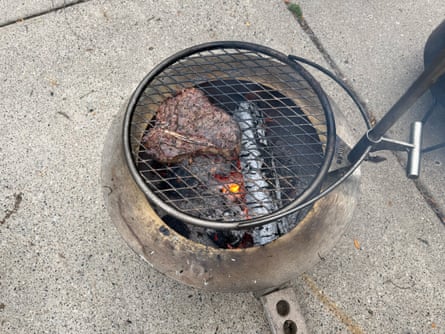
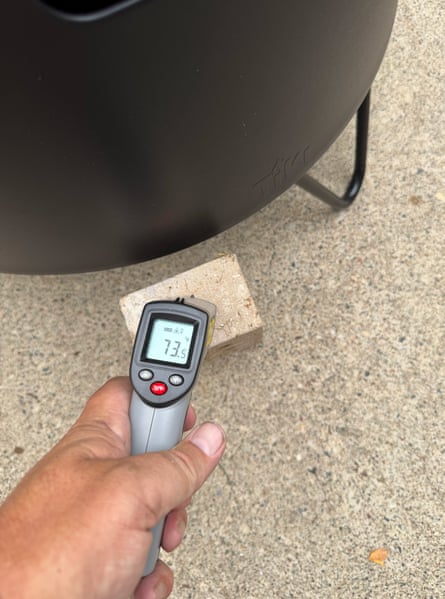
Thermal output was similarly calculated using an infrared thermometer aimed at adjacent masonry bricks positioned at uniform distances, yielding reliable ambient temperature metrics. Finally, culinary performance was assessed by grilling various cuts of meat—including T-bones and filet mignon—during peak ember phases, while burn longevity was measured from initial ignition down to a bed of fine white ash.
Performance Analysis: The Top Contenders
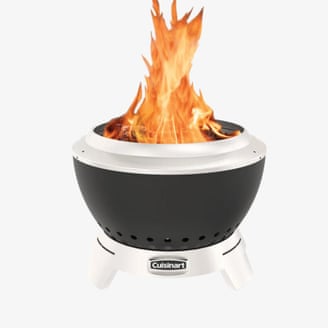
Best Overall: Cuisinart Cleanburn
Despite being the most compact and visually unassuming entry in the lineup—measuring just 19.5 inches in width and 14.65 inches in height—the Cuisinart Cleanburn emerged as the definitive overall winner after a month of intensive trials.
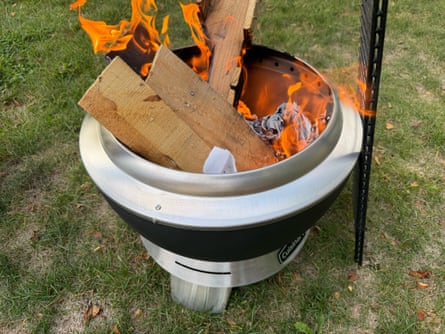
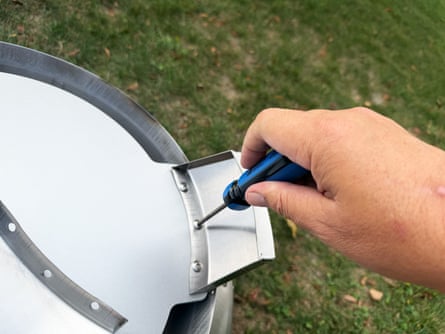
Operating at a remarkable ambient temperature peak of 93.5°F, the Cleanburn radiated significantly more heat than competing models, which routinely struggled to break the 80°F threshold. Furthermore, a single fuel load sustained a robust, steady fire for a full hour, outlasting rival units by approximately 15 minutes. On the Ringelmann smoke scale, the Cleanburn consistently scored a pristine zero or one, demonstrating that superior primary heat generation correlates directly with near-total particulate elimination. Priced affordably at $250, it offers exceptional value, though users must note that assembly requires fastening the legs with included screws.
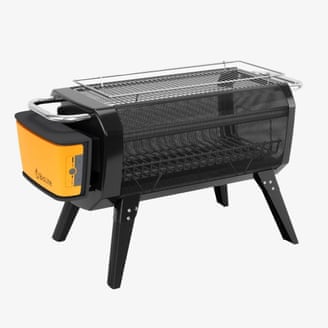
Best for Cooking: BioLite FirePit+
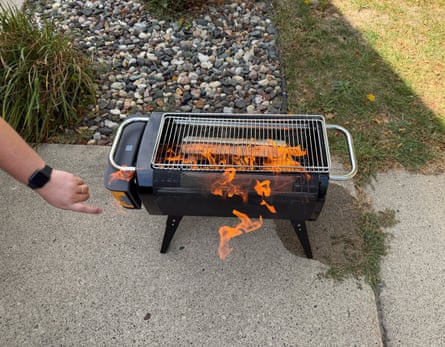
Breaking away from the traditional cylindrical design language of the smokeless category, the rectangular BioLite FirePit+ prioritizes culinary utility and visual aesthetics. Featuring mesh sidewalls on two sides, the BioLite allows guests to observe curling flames from a seated perspective rather than peering downward from above.
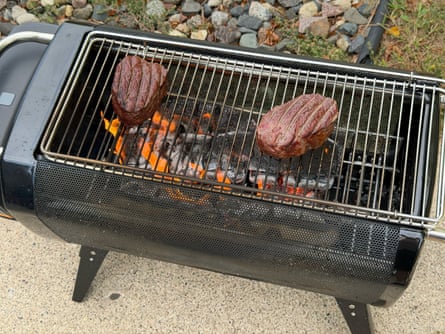
While the unit emitted slightly more smoke during initial combustion phases—ranking a two or three on the scale—its integrated, rechargeable airflow fan provides unmatched precision control over the flame intensity. The expansive rectangular cooking grate easily accommodated up to eight smash burgers simultaneously, delivering remarkably even searing with minimal charring. Radiating heat at an average of 82.5°F with a 45-minute burn time, the BioLite represents a premier choice for campers and outdoor cooking enthusiasts, retailing between $300 and $500 depending on the vendor.
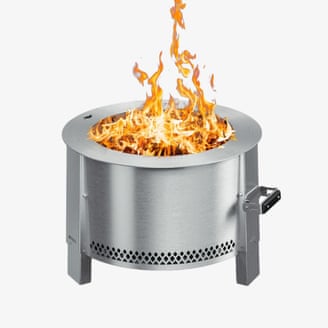
Best at Eliminating Smoke: Breeo Y Series
For consumers prioritizing maximum smoke reduction above all else, the Breeo Y Series stands out as a formidable engineering achievement. Constructed from heavy-duty stainless steel with an all-silver aesthetic, the 21-inch-wide unit consistently scored a pristine one on the Ringelmann scale, ensuring that family gatherings remained entirely free of stinging eyes.
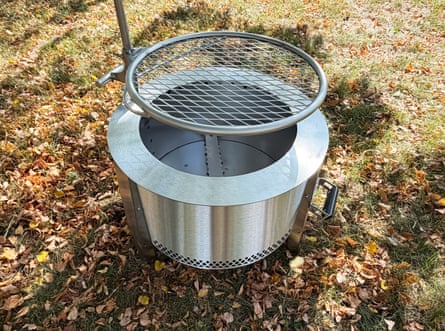
However, the Y Series presented minor drawbacks in thermal efficiency and fuel consumption. Registering an average heat output of 81°F and a 45-minute burn duration, the unit burned through logs at an accelerated rate, requiring frequent replenishment to maintain consistent flames. Weighing in at a substantial 31 pounds, it is built for durability rather than effortless portability, and carries a premium price tag of $399.
Best Looking: Tiki Social Smokeless
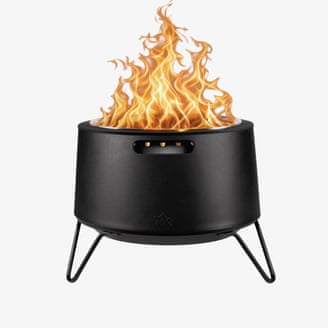
The Tiki Social Smokeless captures modern patio design trends with its sleek, all-black bowl configuration supported by three sturdy hairpin legs. Boasting an expansive 25.5-inch opening, the unit provides an exceptional view of swirling flames and makes roasting marshmallows effortless.
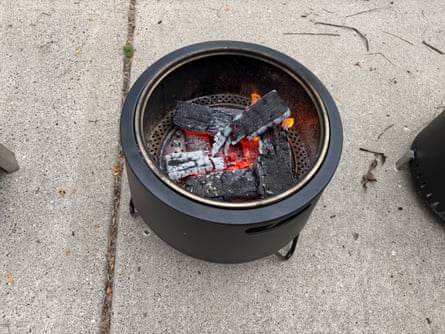
Performance-wise, however, the Tiki ranked lower in thermal radiation at 75°F and emitted moderate smoke levels, frequently scoring a two or three during extended burn sessions. Priced competitively at $180, it serves as an aesthetically pleasing centerpiece for casual patio socializing, provided users do not mind its substantial 32-pound frame.
The Safest Fire Pit: Solo Stove Bonfire
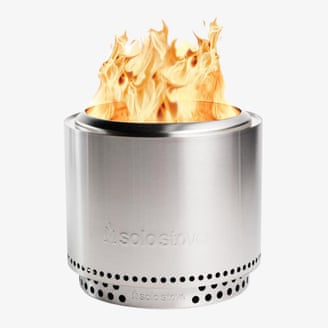
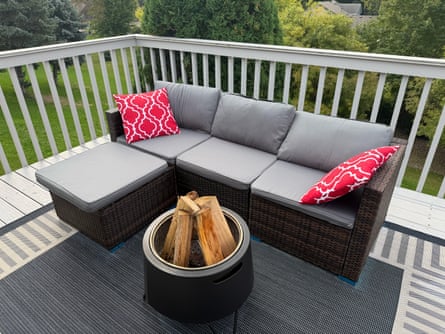
As the foundational product that popularized the modern smokeless category in 2017, the Solo Stove Bonfire remains an industry benchmark for safety and portability. Equipped with an innovative ring stand that prevents excessive heat transfer to the ground below, it provides essential protection for sensitive outdoor surfaces.
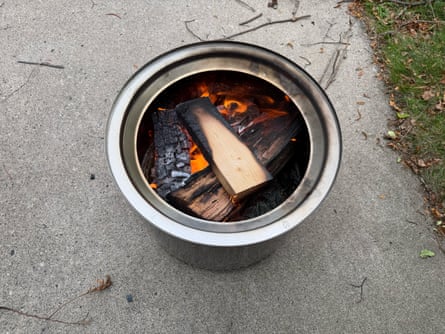
During testing, the Bonfire registered an ambient temperature of 72.5°F and maintained moderate smoke control around a score of two. While its cooking performance and heat radiation lagged slightly behind the Cuisinart and BioLite alternatives, its established reputation for reliability and safety makes its $270 price point a secure investment for traditionalists.
Budget Alternative: OutVue Fire Pit
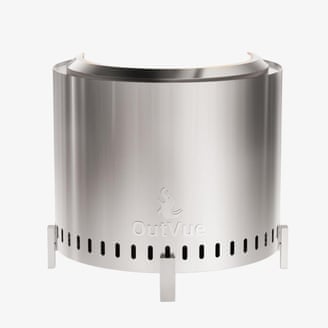
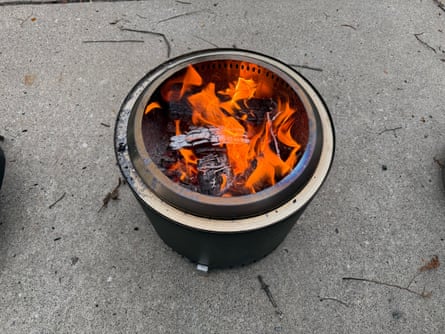
Retailing at approximately $95 on major online marketplaces, the OutVue Fire Pit functions adequately as a standard wood-burning enclosure but falls short of true smokeless performance. Emitting the highest volume of smoke among all tested units—frequently reaching three or four on the Ringelmann scale—and producing an average heat output of 74.6°F, it is best viewed as a budget-friendly conventional fire pit rather than a high-tech smoke-reduction apparatus.
Safety, Maintenance, and Industry Implications
When integrating any smokeless fire pit into a residential outdoor space, safety and maintenance protocols remain paramount. Industry experts strongly advise against operating high-temperature metal fire pits directly on unprotected wooden decks, recommending concrete pavers, stone patios, or composite decking paired with protective thermal pads instead.
Maintenance requires patience; users must allow ash and embers to cool completely for at least 24 hours before clearing the basin. While exterior soot accumulation is an inevitable consequence of open wood combustion, utilizing kiln-dried, untreated hardwoods will significantly prolong the structural integrity of the stainless steel walls and minimize environmental particulate pollution.
As consumer demand for elevated outdoor living spaces continues to expand, manufacturers are expected to refine combustion efficiency further, balancing portable convenience with residential heating power. For prospective buyers, aligning personal priorities—whether seeking maximum heat, superior cooking surfaces, or absolute smoke elimination—will ensure a rewarding investment in modern backyard leisure.









