
 Jono Maryono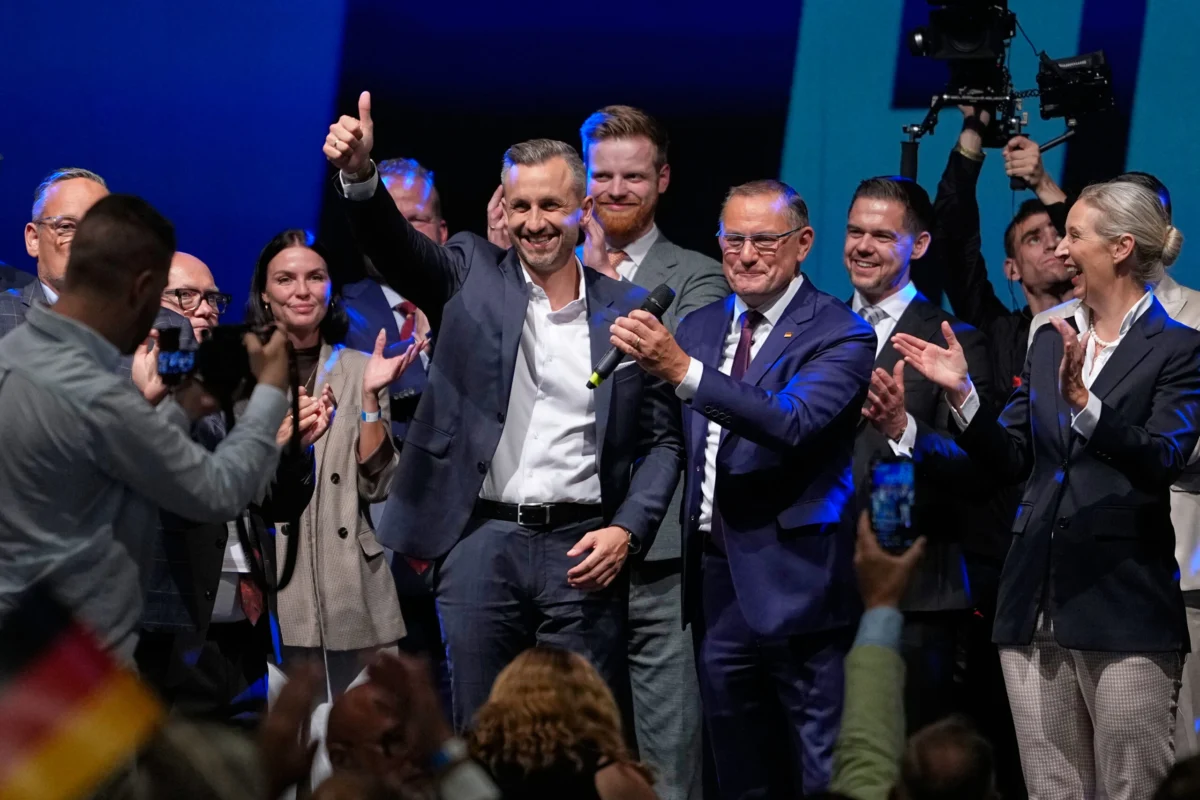
Chancellor Friedrich Merz has launched a sharp critique against what he characterizes as mounting political extremism across Germany, following a bruising sequence of regional electoral defeats that have empowered both far-right and far-left factions. Speaking in Berlin on Wednesday, the German leader acknowledged the severity of the political shifts and pledged to confront the rising polarization head-on, describing the stabilization of the nation’s democratic norms as a collective societal duty.
The chancellor’s remarks arrive at a precarious moment for his administration, which has seen its national popularity plummet amid persistent economic challenges, housing crises, and widespread voter disillusionment with mainstream politics. Over the past month, a series of state-level votes have redrawn Germany’s political map, signaling a profound erosion of support for the traditional center-right and center-left parties that have historically dominated the Federal Republic.
A Chronology of Electoral Setbacks
The recent political turmoil began in earnest with the September 6 state election in Saxony-Anhalt, a key territory in eastern Germany. In that contest, the far-right Alternative for Germany (AfD) secured a formidable victory, reshaping the regional legislative landscape. Although the party’s prime candidate, Ulrich Siegmund, fell just three seats short of securing an absolute majority, the electoral triumph propelled the party into a position of unprecedented institutional power. Just a day after the vote, a senior member of the AfD was elected president of the Saxony-Anhalt state parliament—a milestone that mainstream politicians view as a watershed moment in the normalization of far-right governance within Germany’s federalized system.
The momentum continued to shift away from the political establishment on September 20, when Berlin held its state election. In a stunning upset for Merz’s Christian Democratic Union (CDU), the far-left Left Party surged to victory, roughly doubling its previous vote share. The historic win positions the party to potentially secure the mayoralty of the capital for the first time. The Left Party, which traces its origins to the former ruling communist party of East Germany following reunification 36 years ago, capitalized heavily on public frustration regarding the soaring cost of living and chronic housing shortages in urban centers.
The Rise of the Far-Right: The AfD’s Evolution
The Alternative for Germany has undergone a significant transformation since its inception in 2013. Initially founded as a eurosceptic movement critical of European Union bailout policies, the party successfully pivoted to a hardline, anti-immigration platform during the 2015 European migration crisis, which saw roughly one million refugees—many fleeing the civil war in Syria—arrive in Germany.
Over the past decade, the AfD has solidified its status as a dominant political force, particularly across eastern Germany. Analysts attribute the party’s enduring appeal to a deep-seated sentiment of disenfranchisement among voters who feel alienated by economic globalization, cultural shifts, and the policies formulated by federal governments in Berlin. Despite a persistent cordon sanitaire maintained by traditional parties—wherein all major political factions have pledged never to enter into coalition agreements with the AfD—the party continues to expand its legislative footprint through sheer electoral plurality and normalized institutional participation.
The Left Party and the Berlin Housing Crisis
In stark contrast to the nationalist platform of the AfD, the Left Party’s recent success in Berlin was built on a populist, socio-economic platform centered on economic justice and wealth redistribution. The party’s lead candidate, 45-year-old Elif Eralp—the daughter of Turkish political exiles who fled the 1980 military coup—focused her entire campaign on the capital’s acute housing crisis.
Eralp has pledged to enact sweeping measures to curb property speculation, most notably by fulfilling the mandate of a landmark 2021 municipal referendum in which 58 percent of Berlin voters supported a proposal to nationalize private housing portfolios held by large real estate conglomerates. Proponents argue that bringing large portions of the housing stock under public ownership is the only viable remedy for skyrocketing rents, while critics warn that such interventions could stifle construction, deter private investment, and severely damage Berlin’s fiscal credibility. The prospect of a Left Party-led administration in the capital has added another layer of complexity to Chancellor Merz’s efforts to project stability and economic competence at the national level.

Plummeting Approval Ratings for Chancellor Merz
The cascading electoral losses have taken a severe toll on Chancellor Merz’s political standing. Earlier this month, a comprehensive public opinion survey conducted by Germany’s public broadcaster ARD revealed that only one in ten respondents—approximately 10 percent—were satisfied or very satisfied with Merz’s performance in office. This figure marks the lowest approval rating recorded for any sitting German chancellor since the ARD Deutschlandtrend survey was established in 1997.
Political scientists attribute this historic low to a confluence of factors, including sluggish economic growth, persistent inflation, infrastructure bottlenecks, and internal disagreements within the governing coalition regarding fiscal policy and energy transitions. For a leader who campaigned on restoring traditional conservative values and rigorous fiscal discipline, the loss of public confidence represents a critical vulnerability.
Official Responses and Institutional Warnings
Addressing the public and political stakeholders in Berlin on Wednesday, Chancellor Merz did not mince words regarding the implications of the recent electoral outcomes.
"This is a task for our society as a whole, and it is one I intend to play my part in," Merz declared during an official appearance. Highlighting the institutional shifts in regional parliaments, he warned that extremist ideologies are actively infiltrating the legislative halls of the republic.
Directly targeting voters who have chosen the far-right, Merz issued a stern warning. "Anyone who casts their vote for the AfD is playing the extremists’ game and undermining credibility," he stated. "In any case, this is incompatible with the values of my party, the CDU."
Representatives from the AfD and the Left Party quickly pushed back against the chancellor’s characterization. AfD leadership accused mainstream parties of attempting to disenfranchise millions of legitimate voters through undemocratic rhetoric and exclusionary political pacts. Meanwhile, representatives of the Left Party argued that their electoral mandate reflects a democratic uprising against neoliberal housing policies that have left working-class families struggling to secure basic shelter in major metropolitan areas.
Broader Implications and Future Electoral Tests
The dual rise of far-right and far-left parties reflects a broader fragmentation of the German political landscape, mirroring trends seen across several other Western democracies. The traditional centrist consensus, which reliably anchored post-war German politics for decades, is increasingly being squeezed from both ideological flanks.
The implications of this polarization extend far beyond regional governance. As ideological polarization deepens, forming stable governing coalitions at both the state and federal levels has become markedly more difficult, frequently leading to protracted coalition negotiations and policy paralysis.
The political pressure on Chancellor Merz and his government is unlikely to abate in the near term. The next major electoral test for the federal establishment is scheduled for April, when voters in North Rhine-Westphalia—Germany’s most populous and economically vital state—will head to the polls to elect a new regional parliament. A poor showing for the CDU in its traditional western stronghold could trigger intense internal leadership challenges for Merz, potentially redefining the trajectory of German national politics as the country looks toward the remainder of the legislative term.









