
 Ronny Sianturi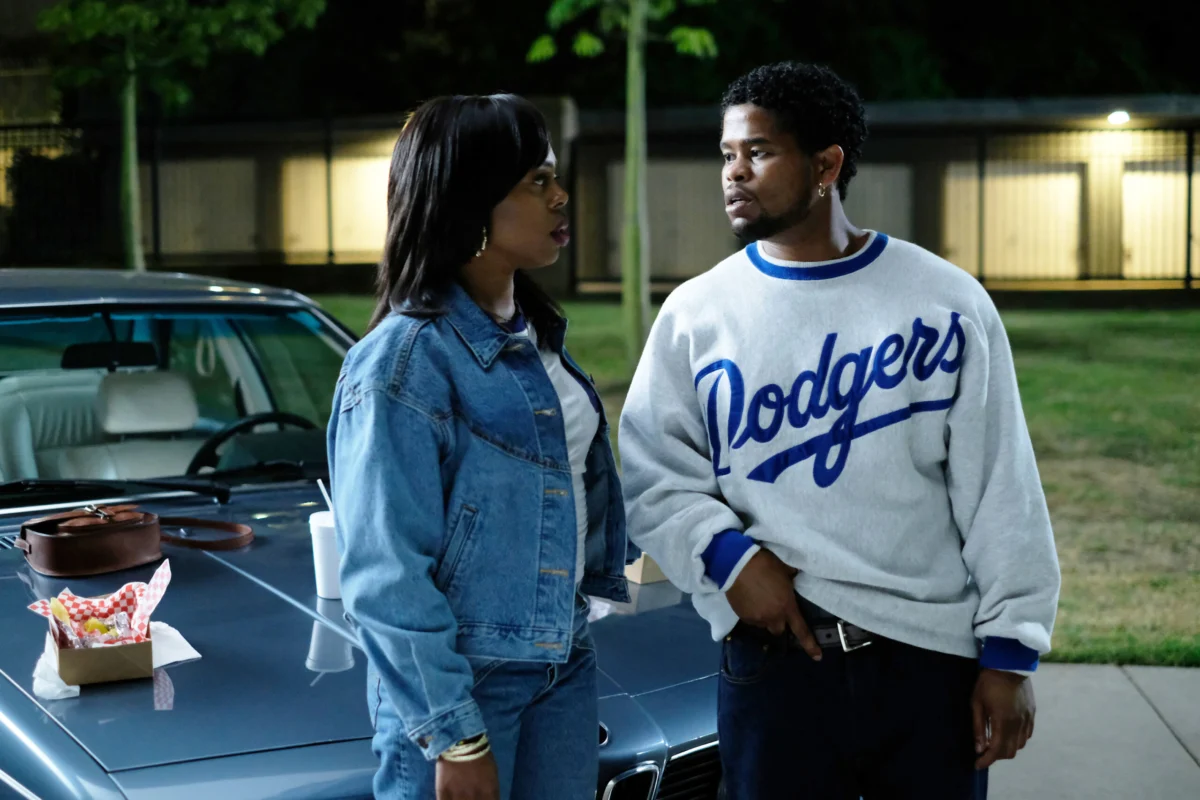
The landscape of modern television has long grappled with the complex legacy of the late-20th-century urban American experience, yet few franchises have approached this cultural mapping with the granular specificity of FX’s Snowfall universe. As the network expands its footprint with the spin-off series The Drop: A Snowfall Saga, the creative team faces the daunting task of shifting the narrative lens away from the illicit narcotics trade that defined its predecessor and toward the vibrant, turbulent birth of West Coast hip-hop during the 1990s. Spanning an eight-episode first season, the new drama bridges the gap between the devastation of the crack cocaine epidemic and the emergence of a multi-billion-dollar cultural movement that would ultimately conquer the global mainstream.
For showrunner Malcolm Spellman, stepping into the established universe required a delicate balancing act. While the original series famously chronicled the rise and tragic fall of young entrepreneur Franklin Saint—portrayed across six critically acclaimed seasons by Damson Idris—The Drop deliberately charts a different course. Set in a post-Saint Los Angeles, the narrative follows returning fan-favorite characters Wanda (Gail Bean) and Leon (Isaiah John) as they navigate a landscape scarred by systemic oppression, shifting street politics, and the relentless pulse of the music industry.
The Genesis of a Spinoff and Creative Independence
The path to bringing The Drop to the screen was neither swift nor straightforward. Development on the project spanned more than two years, during which Spellman actively wrestled with the immense shadow cast by John Singleton’s original creation. In early conceptual phases, the creative team found themselves aggressively chasing the tonal weight and narrative conventions of Snowfall, an approach that repeatedly hindered pilot production.
The breakthrough, according to Spellman, arrived only when he relinquished the compulsion to directly mirror the precursor series. Describing the realization as striking him like a bolt of lightning, the showrunner recalibrated his approach to focus on organic integration rather than forced fan service. By granting the spin-off the stylistic and emotional autonomy to establish its own identity, the writers room successfully built a narrative space where references to Franklin Saint and other foundational figures emerge naturally out of the character interactions rather than functioning as artificial promotional hooks.
This disciplined philosophy extends to the inclusion of legacy characters. Across the first five episodes of the inaugural season, viewer appearances by actors from the original series have been strictly limited to Wanda, Leon, and a notable cameo by Quincy Chad as Deon. Spellman has maintained a resolute stance against stunt casting, insisting that legacy figures must emerge organically from the episodic development process rather than being shoehorned into the plot for superficial impact. Chad’s return serves as the internal benchmark for how classic characters should legitimately intersect with the evolving chronology of the new show.
Navigating Historical Continuity: Crack Cocaine and West Coast Hip-Hop
To fully comprehend the thematic weight of The Drop, analysts and cultural historians must examine the symbiotic relationship that existed between the devastation of the 1980s crack epidemic and the artistic explosion of 1990s West Coast rap. Within the diegetic world of the franchise, these two monumental shifts are framed not as isolated historical events, but as conjoined twins that fundamentally reshaped the identity of Black America.
Before the introduction of crack cocaine, the collective narrative of marginalized urban communities was largely understood as a unified continuum of resistance against systemic oppression. The arrival of the drug trade, however, acted as a cultural nuclear bomb, splintering collective solidarity and reframing the socio-economic struggle into a narrative of hyper-individualized street enterprise. Hip-hop emerged as the immediate chronicler of this seismic shift—serving simultaneously as the soundtrack, the investigative journalism, and the cultural defense mechanism for a generation caught in the crossfire.
While Snowfall documented the macro-level destruction of the bomb detonating within the community, The Drop functions as the subsequent news report, examining the cultural shockwaves and the artistic outlets that young people forged from the wreckage. This transition allows the narrative to explore themes of resilience, community healing, and the transformative power of art without losing sight of the systemic violence that remains an inescapable part of the environment.
Character Dynamics and the Exploration of Faith
The structural anatomy of The Drop relies heavily on sharp ideological contrasts, best exemplified by the pairing of Wanda—whose journey has taken her through every extreme of street life, from homicide to personal rehabilitation and artistic ambition—with new central figures such as Lamar, played by Asante Blackk.
Lamar represents a deliberate departure from traditional television archetypes. As an aspiring music producer hailing from a deeply religious family, Lamar struggles to reconcile his artistic aspirations with a household traumatized by a tragedy involving his mother’s historical entanglement with the recording industry. This religious foundation is treated by the writers with sociological reverence rather than as a narrative caricature. Recognizing that the American church remains a central pillar of Black community life, the series embeds faith, scriptural reference, and moral conflict organically into the dialogue and family dynamics.
Furthermore, the introduction of characters such as aspiring rapper Artillery (Simmie “Buddy” Sims III) and record label executive DG (Brandon Mychal Smith) allows the series to dissect the mechanics of the burgeoning 1990s entertainment economy. Episode five of the current season dedicates its entire runtime to unraveling the truth behind Lamar’s mother’s fatal accident, providing a deliberate pacing shift that starves the audience of immediate answers before delivering a deeply resonant emotional payoff. This narrative patience underscores the production’s commitment to character depth over rapid-fire plot progression.
Audience Reception and Industry Impact
As The Drop: A Snowfall Saga continues its first-season run on FX and Hulu, industry observers and network executives are closely monitoring viewership metrics and cultural penetration. For Spellman, the primary barometer of success is not traditional critical aggregation, but the authentic resonance of the series within the communities it depicts.
Drawing on his extensive television pedigree—which includes work on major properties such as The Falcon and the Winter Soldier, Empire, and Bel-Air—Spellman has expressed profound confidence in the show’s commercial and cultural trajectory. Early digital engagement, particularly across community-driven reaction platforms and grassroots discussion spaces, indicates a robust embrace by the core audience that sustained Snowfall through its six-year run.
By anchoring its narrative in firsthand eyewitness experiences, authentic cultural debates—such as the complex historical community discussions surrounding racially charged vernacular—and a lighter, joy-infused tonal counterbalance to its predecessor’s unrelenting heaviness, The Drop has successfully carved out its own distinct territory within the prestige television landscape. As the season drives toward its climax, the series stands as a testament to the enduring viability of serialized storytelling that respects its historical roots while fearlessly charting new artistic frontiers.








