
 Ana Megawati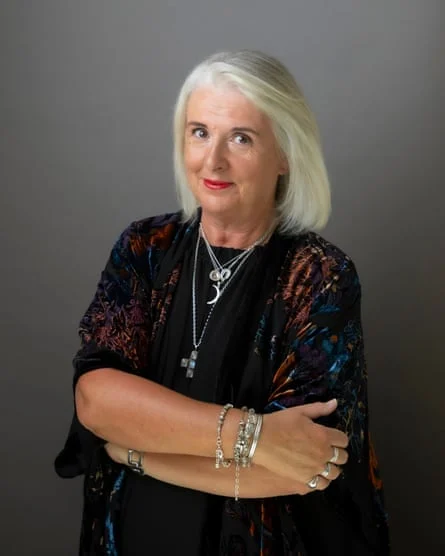
The modern workforce is frequently characterized by rapid technological disruption, corporate restructurings, and an escalating obsession with youth. Within this landscape, career longevity and mid-life reinvention have emerged as critical subjects of sociological and economic study. For decades, traditional labor markets have marginalized older job seekers, particularly women who have navigated career gaps due to domestic responsibilities or caregiving. However, a cultural counter-movement is quietly gathering momentum, spearheaded by individuals who refuse to allow chronological age to dictate their professional horizons. Among them is Barbara Scully, a Dublin-based author, broadcaster, and fledgling stand-up comedian whose journey from professional despair to theatrical success offers a compelling lens through which to examine late-stage career transitions.
At 64 years of age, Scully is currently touring Ireland with her critically acclaimed one-woman show, Because I’m Worth It. Playing to capacity audiences of up to 200 people per venue, her performance bridges the gap between comedy and social commentary. Her core message challenges contemporary societal anxieties regarding aging, particularly the multi-million-dollar anti-aging industrial complex that targets women. By reframing mid-life as a period of liberation rather than decline, Scully’s work aligns with broader cultural conversations about the value of older demographics in public life, the arts, and the economy.
A Chronology of Reinvention: The Six Careers of Barbara Scully
To understand Scully’s current success on the comedy circuit, one must examine the winding and often precarious trajectory of her professional life. Over the past several decades, Scully has traversed multiple industries, accumulating a diverse portfolio of skills that ultimately laid the groundwork for her performance career.
Her professional life began in the travel and tourism sector, where she worked as a travel agent. This initial phase was followed by a stint as a word-processing tutor, a role that required technical adaptability during the early digital transition of administrative workspaces. Following these early roles, Scully transitioned into the non-profit and charitable sector, working as a fundraiser. This position proved instrumental in developing her public speaking abilities, interpersonal confidence, and comfort with audience engagement—skills that would later serve her well on radio and the stage.
Like many women of her generation, Scully stepped away from formal employment to raise her children, taking on the demanding role of a stay-at-home parent. While this period is frequently dismissed by traditional economists as a period of inactivity, sociologists note that caregiving fosters resilience, crisis management, and emotional intelligence—attributes that frequently underpin later entrepreneurial and creative successes.
The most acute inflection point in Scully’s professional chronology occurred in her early fifties. Following a decade-long absence from the formal labor market due to childcare responsibilities, she attempted to re-enter the workforce. Despite holding a comprehensive and varied curriculum vitae, she encountered systemic hiring biases that frequently penalize older job applicants and those with employment gaps.
"The day I realised I couldn’t even get social welfare, I sat in the car on the driveway in tears, thinking: that’s it, I’m washed up, I’m done," Scully recalls.
Confronted with economic uncertainty and institutional rejection, Scully engaged in a process of self-assessment that yielded her fifth career iteration: author, columnist, and broadcaster. Channeling her energies into freelance writing, she contributed opinion pieces to prominent publications, authored the book Wise Up: Power, Wisdom and the Older Woman in 2022, and established a media presence as a regular panelist on television programs such as Midday and Elaine on Virgin Media One. Furthermore, she secured a permanent position as a co-host of the agony aunt segment on Seán Moncrieff’s program on Ireland’s national radio station, Newstalk.
Her sixth career—stand-up comedy and storytelling—commenced almost by accident in late 2022. Following the publication of her book, she was approached by organizers establishing an Irish chapter of Funny Women, an international community dedicated to supporting women in comedy. Invited initially to read a passage from her publication to publicize an upcoming event, Scully quickly recognized that a conventional literary reading would disrupt the comedic momentum of the evening. Improvising, she transformed a chapter concerning medical screening procedures—specifically smear tests—into a stand-up routine.
"I went on stage and after two or three minutes felt laughter coming back at me," she notes. "It was like rocket fuel."
By December 2024, encouraged by initial audience reception, Scully expanded the material into a full-length one-woman show. Within a year, she transitioned from modest rooms accommodating 70 people to larger theater spaces across Ireland, successfully establishing herself as a distinct commercial voice in Irish live entertainment.
Economic and Sociological Context of Aging and Employment
Scully’s narrative intersects with critical economic data regarding labor market participation among older adults. According to labor statistics across the European Union, employment rates for individuals aged 55 to 64 have risen steadily over the past two decades, driven by policy shifts raising retirement ages and demographic changes. However, qualitative studies by organizations such as the International Labour Organization (ILO) indicate that older job seekers—particularly women returning after career breaks—frequently face significant structural impediments, often referred to in recruitment literature as "ageism combined with the motherhood penalty."

Economic analysts note that the traditional linear career model—education, uninterrupted employment, retirement—is increasingly obsolete. The rise of the "squiggly career," characterized by multiple transitions, portfolio working, and late-life entrepreneurship, is becoming a structural necessity for aging populations. Scully’s trajectory from travel agent to fundraiser, writer, broadcaster, and finally comedian exemplifies this modern paradigm.
Moreover, the psychological toll of late-career displacement is well-documented. Career counselors emphasize that institutional rejection can lead to a crisis of identity, particularly for individuals whose self-worth has been tied to traditional employment markers. Scully’s pivot demonstrates the psychological efficacy of self-directed work—a strategy she credits to maternal pragmatism. "If this were one of my kids, what would I tell them? You’re going to have to make your own work," she reasoned during her lowest financial nadir.
Cultural Implications: Redefining Mid-Life and Menopause
Beyond its economic dimensions, Scully’s comedic output addresses cultural taboos surrounding aging, female visibility, and biological transitions such as menopause. For generations, cultural representations of older women in media have oscillated between invisibility and caricature. The multi-billion-dollar anti-aging industry relies heavily on cultivating anxiety regarding physical markers of time, framing aging as a pathological condition requiring aggressive remediation.
Scully’s artistic mission directly confronts this commercial narrative. Through humor, she deconstructs the societal pressures placed on women to maintain a youthful aesthetic at the expense of financial resources, mental well-being, and personal autonomy.
"I’m on a mission to try to tell women in particular not to fear getting older, to embrace it, to push back against all the bullshit about how you should be fighting ageing," Scully asserts. "The more women like me who are willing to stand up and say: ‘This is me and I am 64 and I’m not really bothered about spending my time and money and energy on trying to look younger… I’m actually spending my time and money and energy doing stuff that makes me happy.’"
Public health researchers and cultural commentators have increasingly emphasized the necessity of destigmatizing life stages past reproductive age. Menopause, historically treated as a taboo subject in both the workplace and public discourse, is being reframed by advocates like Scully as a transitional phase rather than a terminal decline. "Menopause is only a portal," Scully observes. "Once you’re through it, you’ve got this tremendous period of life."
Formative Influences and Lifelong Resilience
Scully attributes her resilience and willingness to occupy public space to her upbringing in Dublin. Growing up in a male-dominated household comprising her parents, three brothers, and frequently extended family members, she experienced early physical differentiation that forced her to develop psychological fortitude. By the age of 16, Scully stood at six feet tall (183 centimeters), prompting her brothers to nickname her "H" for heifer.
"I was never going to fit into society’s idea of how a girl should be—petite and not taking up space," she reflects. "I learned to use my voice pretty early on."
This early conditioning appears to have inoculated her against conventional social pressures regarding female conformity. Psychologists studying late-life creativity often point to a phenomenon where individuals in their sixties experience a psychological return to the uninhibited confidence of their late adolescence. Scully echoes this sentiment, observing a profound psychological continuity between her current self at 64 and her younger self at 18 or 19. "There’s that same feeling. The world’s my oyster. I can do whatever I want to do."
Future Outlook and Broader Repercussions
As demographic shifts continue to alter the population pyramids of Western nations, the cultural and economic contributions of older adults are receiving renewed institutional attention. The success of independent creators, writers, and performers over the age of 60 signals a growing commercial appetite for authentic, age-diverse content that resists homogenization.
Barbara Scully’s transition from driveway despair to theater stages across Ireland serves as an empirical case study in adaptability, resourcefulness, and psychological recovery. While her journey was born out of economic necessity and the failure of traditional employment structures to accommodate her return to the workforce, its outcome offers a blueprint for navigating late-stage career disruption.
In an era where professional failure is frequently magnified by digital permanence, Scully’s pragmatic philosophy offers a sobering and liberating counter-narrative. "Once you get to 60, you realise that failure isn’t a big deal," she concludes. "As long as nobody’s going to die, that’s grand."








