
 Prabowo Widodo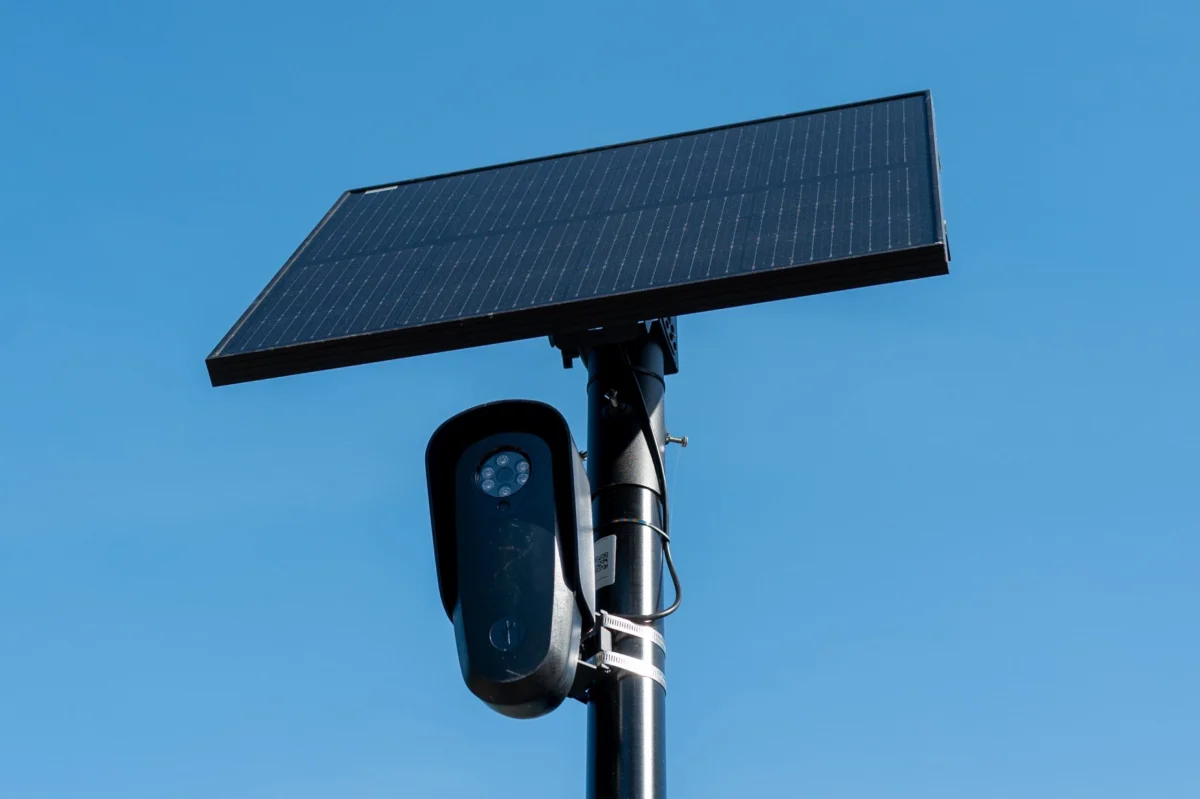
In what legal scholars are calling a landmark decision regarding digital privacy and modern policing, a federal judge in Oklahoma has ruled that a local sheriff’s deputy violated a motorist’s Fourth Amendment rights by searching an automated license plate reader database without a warrant. The ruling, handed down by U.S. District Judge Sara Hill, addresses the rising ubiquity of automated surveillance networks and marks one of the first times a federal court has formally classified the use of such databases as unconstitutional mass surveillance when deployed without judicial oversight.
The case centers on a traffic stop conducted by a Tulsa County Sheriff’s Office deputy. According to court documents, the deputy queried the Flock Safety database—a vast network of high-resolution, network-connected cameras that continuously capture and log the license plates, vehicle descriptions, and timestamps of passing motorists—to track a specific vehicle. Judge Hill noted in her opinion that the deputy possessed no reasonable, articulable suspicion or apparent justification for running the search other than the fact that the targeted automobile bore a California license plate.
Using historical location data harvested from the Flock network, the deputy subsequently justified a roadside search of the vehicle. That search yielded a significant discovery: approximately 91 pounds of methamphetamine. However, invoking the foundational legal doctrine known as the "fruit of the poisonous tree," Judge Hill ruled that because the initial data query violated the Fourth Amendment, all subsequent evidence gathered as a direct result of that unconstitutional search must be suppressed in court.
The immediate legal consequence is the potential dismantling of the prosecution’s case against the defendant. Yet, the broader implications of Judge Hill’s written opinion extend far beyond a single courtroom in Oklahoma, striking at the heart of how law enforcement agencies nationwide utilize private and semi-public surveillance infrastructure.
Understanding the Technology: How Automated License Plate Readers Work
Automated License Plate Readers (ALPRs), pioneered and commercialized by companies like Flock Safety, have transformed municipal and law enforcement surveillance over the past decade. Unlike traditional police cruisers equipped with cameras that scan plates in real-time, modern fixed ALPR networks operate passively 24 hours a day, seven days a week. Mounted on utility poles, traffic lights, and school zones, these cameras capture every passing vehicle, regardless of whether the driver is suspected of a crime.
The captured data is uploaded to cloud-based repositories where it is indexed, searchable, and often retained for extended periods. Law enforcement agencies can cross-reference this data against hotlists for stolen vehicles, missing persons, or active warrants. However, as critics and civil liberties organizations have long argued, these systems also allow police to reconstruct the historical movements of ordinary citizens over weeks or months, effectively creating a continuous digital dossier of public travel patterns.
In her ruling, Judge Hill directly addressed the unique threat posed by this technology. While acknowledging that individuals have a diminished expectation of privacy while traveling in public spaces, she emphasized that the calculus changes fundamentally when technology enables mass, indiscriminate data collection.
"This is a type of indiscriminate mass surveillance," Judge Hill wrote in her opinion. "It is not targeted on a single individual, as in Carpenter v. United States. It is a tool that collects information about all vehicles that pass by any network-connected camera at all times, and it serves up the information to law enforcement on demand."
She further noted that tracking individuals via public transit or roadway observations historically required significant expenditure of police resources, which served as a natural limitation on government surveillance. Automated systems, by contrast, remove those friction points, allowing the state to catalog whereabouts indiscriminately and retain that data indefinitely for retrospective queries.
Legal Precedent and the Shadow of Carpenter v. United States
The reference to Carpenter v. United States is central to the legal arguments surrounding modern digital surveillance. In the landmark 2018 Supreme Court decision, the high court ruled that the government generally needs a warrant to access historical cell site location information (CSLI) from telecommunications providers. The court reasoned that individuals maintain a reasonable expectation of privacy in the whole of their physical movements, even when those movements occur in public thoroughfares, because prolonged cell phone tracking reveals intimate details about a person’s familial, political, professional, religious, and sexual associations.
While the Supreme Court has not yet directly applied the Carpenter ruling to automated license plate readers or municipal surveillance networks, lower courts and civil rights advocates are increasingly drawing parallels. Legal experts suggest that Judge Hill’s decision bridges the gap between historical cell phone tracking and modern optical surveillance, signaling a judicial willingness to extend Fourth Amendment protections to comprehensive automated location tracking.
Despite its significance, legal analysts point out that Judge Hill’s ruling does not establish a binding nationwide precedent. Because it is a district court decision, it directly governs only the case at hand within its jurisdiction, and prosecutors may choose to appeal the suppression order to the Tenth Circuit Court of Appeals. Nevertheless, defense attorneys across the country are expected to cite Judge Hill’s reasoning in motions to suppress evidence gathered through warrantless ALPR queries.
A Growing National Backlash Against Flock Safety
The federal ruling arrives amid an intensifying national debate over the ethics, legality, and deployment of private surveillance networks by public safety agencies. Over the past year, Flock Safety and similar firms have faced mounting legislative and public pushback from a diverse coalition of privacy advocates, state lawmakers, and federal officials spanning the political spectrum.
In late summer, lawmakers in states such as Florida and Texas introduced measures or enacted policies restricting or outright blocking the installation and use of automated surveillance cameras on public right-of-ways, citing profound privacy concerns and a lack of statutory transparency. Civil liberties groups, including the American Civil Liberties Union (ACLU) and the Electronic Frontier Foundation (EFF), have consistently campaigned against the unchecked expansion of these databases, warning that they function as decentralized domestic spy networks without adequate legislative guardrails or judicial oversight.
The political friction reached Capitol Hill recently when Senator Bernie Sanders, an independent from Vermont, introduced the Block Flock Act. The proposed legislation seeks to bar federal agencies from purchasing, deploying, or utilizing automated license plate readers like those manufactured by Flock, framing the technology as an unprecedented infringement on constitutional privacy rights.
In response to the escalating controversy, Flock Safety leadership has attempted to navigate the shifting political landscape. Garretty Langley, the chief executive officer of Flock Safety, has publicly called for a "compromise" between public safety imperatives and individual privacy rights. Langley has acknowledged public concerns and even issued apologies in instances where law enforcement officers misused the platform to stalk or monitor individuals outside of legitimate criminal investigations.
Concurrently, corporate adjustments have mirrored the market headwinds. Facing contract cancellations, municipal pushback, and public relations challenges following various privacy controversies, reports indicate that Flock has offered voluntary employee buyouts to downsize its workforce as it seeks to stabilize its operations amidst mounting regulatory scrutiny.
Broader Implications for Law Enforcement and Privacy
The intersection of private technology companies and municipal policing has created complex regulatory gray areas. Historically, police departments purchased specialized equipment or contracted directly with forensic technology providers. Today, companies like Flock often market their products directly to homeowners’ associations, commercial property owners, and local municipalities, creating hybrid public-private surveillance ecosystems where private cameras feed data directly into law enforcement portals.
This architecture has allowed police departments to circumvent traditional budgetary approvals and public oversight processes that typically accompany the acquisition of government surveillance tools. When private entities install cameras and voluntarily grant police access to their data streams, questions regarding transparency, accountability, and constitutional protections become even more convoluted.
If higher courts ultimately validate the reasoning set forth by Judge Hill in the Tulsa case, law enforcement agencies nationwide may be forced to fundamentally overhaul their standard operating procedures regarding database queries. Requiring a warrant or a showing of probable cause before querying historical ALPR databases would introduce administrative hurdles, potentially slowing down investigative workflows that currently rely on instantaneous, on-demand data retrieval.
Conversely, proponents of automated license plate readers argue that these tools are indispensable for modern policing. Law enforcement associations frequently highlight cases where ALPR technology has successfully aided in recovering abducted children, locating fleeing felons, intercepting stolen vehicles, and solving violent crimes with unprecedented speed. They contend that placing burdensome restrictions or mandatory warrant requirements on routine database queries will cripple investigative capabilities and hinder public safety efforts.
As the legal battleground shifts from local traffic stops to federal courtrooms, the fundamental tension between technological efficiency and constitutional liberty remains unresolved. Judge Hill’s ruling serves as a stark reminder that while technology evolves at an exponential pace, the fundamental constraints of the Fourth Amendment—designed to protect citizens from indiscriminate state intrusion—remain a steadfast, if increasingly challenged, barrier in the digital age.









