
 Ronny Sianturi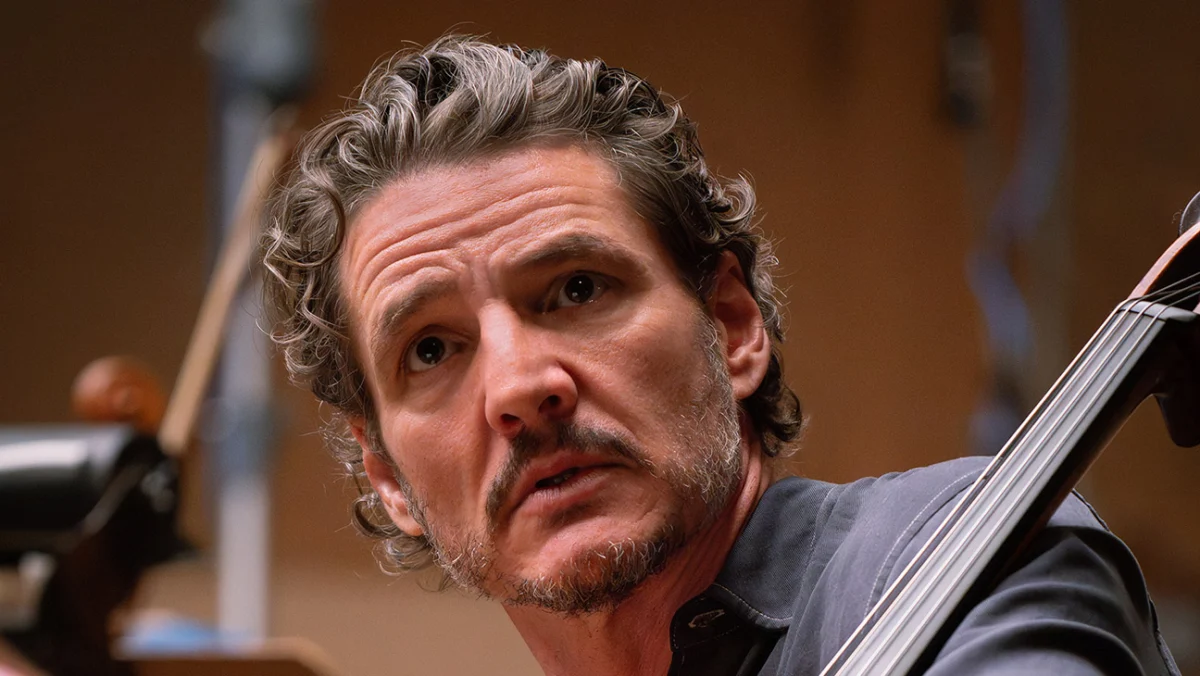
Fourteen years have passed since acclaimed writer and director Tony Gilroy last helmed a feature film. In the interim, Gilroy has spent the last three years deeply entrenched in the cinematic universe of Star Wars, serving as the creator, showrunner, and head writer for the critically lauded Disney+ series Andor. Now, Gilroy makes his highly anticipated return to the big screen with Behemoth!, a sweeping, structurally complex drama that explores the intricate, often unseen world of Hollywood’s studio scoring stages. Premiering as the Centerpiece selection of the Main Slate at the New York Film Festival ahead of its scheduled theatrical release on Friday, December 4, the film has arrived to a divisive reception, branded by critics as an ambitious yet frustrating cinematic endeavor that feels "adagio when it needs to be agitato."
Headlined by Pedro Pascal as Alex Serian, a virtuoso cellist navigating the labyrinthine ecosystem of professional studio musicians, Behemoth! boasts a star-studded ensemble cast that includes Olivia Wilde, Eva Victor, Alexa Swinton, Kaya Ralls, Erik Griffin, JoBeth Williams, Margarita Levieva, Hank Azaria, and Will Arnett. Yet, despite its polished craftsmanship, evocative cinematography by Damián García—who previously collaborated with Gilroy on Andor—and a rich tapestry of original compositions, the film struggles to unify its disparate narrative threads into a compelling whole.
The Chronology and Production Context of a Long-Awaited Return
Gilroy’s absence from feature filmmaking began following the release of his 2011 espionage thriller The Bourne Legacy. In the years that followed, the Academy Award-nominated filmmaker shifted his creative focus primarily toward television, most notably revitalizing the Star Wars franchise with the gritty, grounded storytelling of Andor. The production of Behemoth! represents a deliberate pivot back to original, character-driven adult drama, albeit one filtered through the highly specific lens of the professional classical and cinematic music industries.
Principal photography utilized legendary Los Angeles recording spaces, most notably the Barbra Streisand Scoring Studio at Sony Pictures Studios. The production timeline heavily favored capturing authentic orchestral performances, integrating advanced sound technologies such as Dolby Atmos to grant physical resonance to the music. However, the film’s post-production and editing phases appear to have favored a disjointed temporal structure, utilizing a hopscotching time line that frequently interrupts the narrative momentum. Rather than building steady dramatic tension, the script stumbles through flashbacks and flash-forwards, diluting the emotional impact of its central figures.
Narrative Architecture and Character Dynamics
At the heart of Behemoth! is Alex Serian, a musician whose professional mastery of the cello stands in stark contrast to his personal passivity. Gilroy, who earned Oscar nominations for writing and directing Michael Clayton, constructs Alex as a man perpetually relegated to the sidelines of his own existence. The narrative attempts to contextualize this passivity as the byproduct of an emotionally stifling upbringing dominated by narcissistic parents.
Flashbacks reveal a childhood in which Alex and his brother Andy were pushed into the spotlight; archival footage depicts Alex playing Bach on Johnny Carson’s iconic late-night talk show at the tender age of six. Yet, the film implies that this early nurturing of musical talent was merely a vehicle for their parents to bolster their own public reputations. The family dynamic is further fleshed out by supporting players who represent the collateral damage of artistic ambition:
- Peter Serian (Hank Azaria): The late patriarch, appearing via video cameos, whose film and television themes remain the subject of nostalgic retrospection.
- Ginnie Serian (JoBeth Williams): A renowned harpist experiencing rapid cognitive decline due to dementia, whose poignant observation of her husband—remarking that "he was a Peter who really wanted to be a Pierre"—underscores the family’s pervasive impostor syndrome.
- Andy Serian (Will Arnett): The estranged brother who rejected classical viola for a brief stint in a 1990s rock band and now hosts a podcast dedicated to their father’s legacy.
Despite these rich character outlines, critics note that the familial background fails to cohere into a fully realized mythology. Anecdotes, such as the brothers’ grandfather suffering a fatal stroke immediately after striking a high C on the trumpet on the exact same MGM scoring stage where Alex now works, remain isolated trivia rather than foundational emotional pillars.
Romantic Entanglements and Narrative Friction
Alex’s romantic history proves similarly opaque and thinly sketched. His adult life is marked by a trail of fizzled relationships spanning elite orchestra positions across Boston, Dallas, and Chicago. Among these is a profound connection to brilliant violinist Nadia, portrayed with vivid screen presence by Eva Victor. However, Nadia’s departure to marry a wealthy businessman—played by Matthew Lillard—is abruptly truncated by her death six years later.
It is at Nadia’s funeral that Alex encounters her prodigiously gifted daughter, Viviana, whose mature piano composition sparks a narrative investigation into potential paternity. This sleuthing injects much-needed momentum into the second half of the film. Alex’s paternal instincts are further explored when he mentors a bright young cellist, Bronte, played by real-life professional musician Kaya Ralls in her acting debut. The emotional core of the film finally solidifies when Alex’s professional path crosses with a 15-year-old Viviana, brilliantly played by Alexa Swinton, who steps in to complete a major movie score originally assigned to a temperamental European director portrayed by Thomas Kretschmann.
Conversely, the film’s handling of its adult female antagonists has drawn scrutiny. Olivia Wilde stars as Carol Spedding, a wealthy, married arts patron whose obsessive pursuit of Alex following the dissolution of their affair evokes classic psychological thrillers. Fuelled by implied entitlement derived from a $6 million endowment she gifted to the Chicago Symphony during Alex’s tenure, Carol’s manic outbursts—such as screeching "I bleed for you and you shun me?" after being blocked—lean into melodramatic caricature rather than nuanced psychological study.
The Behemoth! Collective and the Triumphs of the Scoring Stage
While the dramatic narrative struggles to find its footing, Behemoth! achieves undeniable brilliance whenever its camera turns toward the soundstages. The film functions as a vibrant love letter to the collaborative labor of Hollywood orchestrators, instrumentalists, and composers.
The musical landscape of the film was crafted by an unprecedented super-group billed as "The Behemoth! Collective," comprising nine highly respected modern film composers:
- Michael Abels
- Emily Bear
- Lukas Frank
- Michael Giacchino
- James Newton Howard
- Henry Jackman
- Nami Melumad
- Brandan Roberts
- Alan Silvestri
This collective contributed a staggering range of original compositions spanning dark drama, heart-pounding suspense, sweeping action, and soaring romance. Their work permeates the runtime, underpinning not only the scoring stage sequences but also diegetic and non-diegetic moments featuring art rock tracks, requiems, cartoon theme songs, harp concertos, and intricate cello etudes.
Despite this auditory feast, critics point out a missed opportunity in how the film engages with its subject matter. While Behemoth! flirts with celebrating the vital, experiential role that a great film score plays in storytelling, it never fully commits to showing the precise mechanics of marrying music to visual cuts on a screen, largely restricting such moments to blurred background monitors.
Broader Implications and Critical Reception
The debut of Behemoth! at the New York Film Festival marks a significant moment in Tony Gilroy’s storied career. Moving away from the populist, serialized television triumph of Andor back into the exacting, high-culture domain of prestige feature filmmaking, Gilroy has crafted a work that challenges audiences rather than courting easy affection.
From an analytical standpoint, the film highlights the persistent friction that occurs when narrative-driven dramas attempt to integrate specialized, technical subcultures. The authentic depiction of session musicians elevates Behemoth! into a rich sensory experience, yet the structural missteps and underwritten emotional arcs prevent it from achieving the heights of cinematic masterworks focused on classical music, such as Todd Field’s Tár or Bradley Cooper’s Maestro.
As the film prepares for its commercial release on December 4, its ultimate legacy will likely rest on its technical achievements. Bolstered by Damián García’s crisp cinematography and the groundbreaking acoustic design enabled by Dolby Atmos, Behemoth! successfully grants physical form to music on screen, even if the human drama anchoring those melodies remains frustratingly out of tune.








