
 Jono Maryono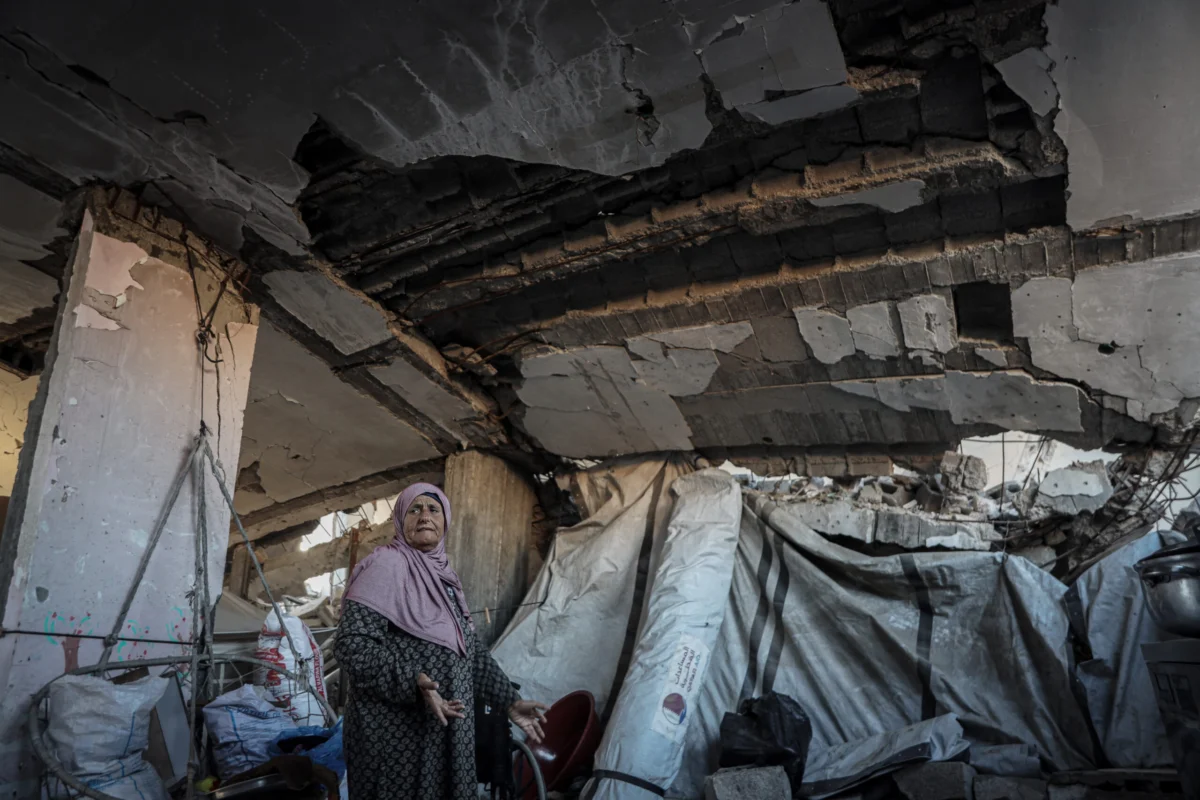
GAZA CITY — Across the devastated landscape of the Gaza Strip, thousands of displaced Palestinian families are making a daily, terrifying calculation: whether to remain inside structurally compromised, war-damaged buildings or risk exposure to the elements and further displacement in makeshift tents. Nearly three years into the ongoing conflict, severe Israeli restrictions on the import of construction materials, heavy machinery, and proper shelter supplies have created an unprecedented housing crisis. With over three-quarters of Gaza’s residential infrastructure either destroyed or heavily damaged, civilians find themselves trapped in a perilous state of limbo, forced to inhabit buildings that civil defense authorities have officially condemned as death traps.
The housing emergency is underscored by stark statistical realities. According to joint assessments conducted by the United Nations, the World Bank, and the European Union, approximately 371,888 housing units—representing 76.6 percent of Gaza’s total housing stock—had been damaged or completely obliterated as of October 2025. International humanitarian organizations estimate that a comprehensive reconstruction effort will require upwards of $71 billion over the coming decade, a process stalled indefinitely by ongoing hostilities and strict blockades on reconstruction goods. UNICEF data further indicates that roughly 84 percent of Gaza’s population, translating to more than 1.76 million individuals, currently reside in overcrowded displacement sites or dangerously inadequate shelters that offer little to no protection against impending seasonal hazards.

Chronology of Destruction and the Looming Threat of Collapse
The systemic degradation of Gaza’s built environment began in the opening weeks of the conflict in late 2023, as extensive aerial bombardments and ground operations targeted densely populated urban centers such as Beit Lahiya, Beit Hanoon, and Gaza City. As families fled northern sectors, neighborhoods across the Strip absorbed wave after wave of internally displaced persons.
By late 2024 and into 2025, structural integrity across thousands of partially standing buildings had deteriorated significantly due to blast shockwaves, shrapnel damage, and sustained exposure to rain and wind. Despite municipal warnings and visits from the Palestinian Red Crescent and Civil Defence urging evacuations, civilians continued to move into these cracked and leaning structures out of sheer desperation.
The latent danger of this widespread habitation materialized with tragic force on September 16, when a six-storey residential building in Gaza City, already weakened by prior military strikes, suffered a catastrophic, sudden collapse. The disaster resulted in the deaths of 21 people, including 12 children, sending shockwaves through a community already inured to mass casualties. Rather than prompting mass relocations, however, the tragedy served merely to amplify the psychological burden on survivors who possess no viable alternatives. Civil defense officials have since stepped up warnings, yet their directives remain largely unheeded simply because safe, alternative housing does not exist.

Voices from the Rubble: Daily Realities of Insecure Shelter
For residents like 60-year-old Masada Abu Jarad, the danger is part of the domestic landscape. Originally from Beit Lahiya in the far north, Masada’s family was forced to flee early in the war when their home district was systematically decimated. Today, she lives in an apartment in Gaza City’s Palestine Square area, where the roof has partially collapsed, leaving jagged concrete and twisted steel bars exposed to the sky. To cope with the opening, her family has pitched a tent directly underneath the ruined section of the ceiling.
"We have no options," Masada states, capturing the fatalism shared by many of her compatriots. "I want to leave, but who will give me an alternative? Even if there is a better place, tell me how I can afford to rent it."
The financial burden of renting amidst widespread economic collapse, coupled with the exorbitant costs of moving repeatedly across a heavily militarized territory, renders relocation nearly impossible. Similar anxieties grip 40-year-old Abdullah Abu Hajar, who shares a severely compromised six-storey building in the southern Remal neighborhood of Gaza City with his wife, five children, and approximately 50 to 60 other people spanning 17 families.

Official municipal notices are plastered across the exterior walls of the al-Najma building, warning passers-by of imminent structural failure. Yet, inside, residents maintain a tense vigil. Abdullah describes a nightly routine born of hyper-vigilance, where he foregoes sleep entirely to listen for the shifting of concrete, the sliding of stones, or unfamiliar creaks echoing through the weakened framework.
"I stay awake all night, keeping watch," Abdullah explains. "I can’t close my eyes. I keep just listening to sounds around me. After the September 16 collapse, I’m already on edge. But I don’t know where I can go."
Islam Hassanein, a 36-year-old mother of five residing on the third floor of another damaged building in the same neighborhood, confronts similar hazards compounded by basic sanitation failures. Having cleared out a room filled with war debris, she and her family settled into a space characterized by leaning walls and non-functional plumbing, forcing them to rely on an external bathroom facility.

"Every day, you hear the cracking," Islam notes. "People who live here tell us, ‘It’s cracking.’ Then a column fell, and they took us out of the building temporarily. If they find us a good place and provide us with a tent, we will leave from the morning. But where is this place? And where is the tent?"
The Approaching Winter Crisis and Institutional Responses
As autumn transitions into winter, the vulnerability of those inhabiting damaged structures multiplies exponentially. Heavy rains, freezing temperatures, and high winds pose an existential threat to buildings with compromised roofs, fractured exterior walls, and compromised foundations.
During the previous winter season, residents reported widespread interior flooding, forcing many to abandon their rooms temporarily for crowded communal tents. Humanitarian agencies warn that the upcoming winter will likely exacerbate respiratory illnesses, hypothermia-related health risks, and injuries resulting from secondary structural collapses.

Aid organizations and international bodies have repeatedly called upon Israeli authorities to lift severe restrictions on the importation of prefabricated housing units, tents, tarpaulins, and heavy engineering equipment required to stabilize dangerous facades or clear hazardous debris. The current policy, which restricts these essential materials, leaves local municipalities incapable of undertaking controlled demolitions or structural reinforcements.
Broader Implications for Post-Conflict Recovery
The crisis of compromised housing points to a deeper, long-term impediment to any future stabilization or peace process within the Gaza Strip. Analysts note that the psychological and physical toll of living under the constant threat of domestic collapse compounds the severe collective trauma inflicted by nearly three years of warfare, which has claimed the lives of more than 73,000 Palestinians.
Without a significant shift in border policies to allow for systematic debris removal, mass temporary housing deployment, and sustained reconstruction funding, civilian populations will remain indefinitely exposed to man-made and environmental hazards. For families like those in the al-Najma building and Palestine Square, survival continues to be measured day by day, balanced precariously between the certainty of danger within damaged walls and the impossibility of finding sanctuary elsewhere.









