Kang Muslim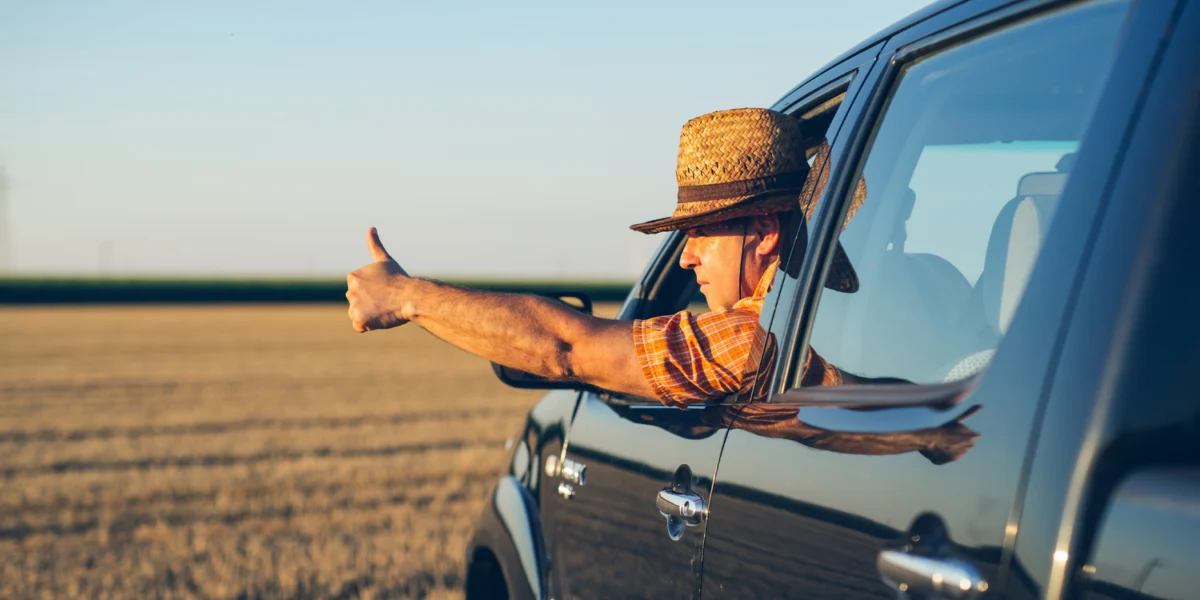
The modern American electorate navigates an increasingly polarized political landscape where the boundaries between civic life and personal culture have dissolved entirely. A landmark study recently published in Public Opinion Quarterly offers a revealing look into this phenomenon, demonstrating that voters frequently rely on a candidate’s everyday consumer choices, lifestyle preferences, and cultural habits to infer their political ideology. However, this reliance is heavily conditional; these nonpolitical identity signals primarily serve as mental shortcuts when formal, substantive policy details are missing from a campaign.
Led by Levi G. Allen, an assistant professor of political science at Indiana State University, alongside co-author Wayde Z.C. Marsh, the research highlights how deeply consumer habits have become intertwined with partisan alignment. From the type of vehicle a candidate drives to their favorite fast-food chain or recreational hobby, everyday cues now carry profound political subtext. Yet, the empirical investigation reveals a more nuanced reality: while cultural signaling is powerful in an information vacuum, it takes a backseat to traditional partisan labels and explicit policy stances when voters are given substantive information.
The Evolution of Political Shortcuts and Social Sorting
To understand the weight of these contemporary findings, political scientists look back at decades of research regarding how ordinary citizens make sense of complex democratic elections. For generations, behavioral studies have shown that voters rarely possess the time, inclination, or resources to conduct exhaustive research on every policy proposal a candidate endorses. Instead, citizens rely on cognitive heuristics—mental shortcuts—to arrive at rational voting decisions without mastering minute legislative details.
Seminal research from 1994 demonstrated that everyday voters could successfully make informed choices by leveraging simple, accessible cues rather than memorizing comprehensive policy platforms. This adaptive behavior has only accelerated in the twenty-first century. Research published in 2026 further illustrated that voters frequently utilize broad left-and-right political labels as proxy indicators for candidate platforms, even when detailed policy briefs are readily available.
Over the last two decades, however, these shortcuts have expanded beyond traditional partisan markers to encompass lifestyle choices, consumer goods, and cultural symbols. Scholars refer to this broader sociological shift as "social sorting." A 2018 study documented that Americans hold powerful, frequently exaggerated mental stereotypes concerning the demographic, social, and economic backgrounds of individuals affiliated with the Democratic and Republican parties. Over time, these stereotypes have absorbed everyday consumption habits, transforming routine choices—such as purchasing an electric vehicle versus a heavy-duty pickup truck, or frequenting an artisan coffee shop versus a rural diner—into visible badges of political allegiance.
Recognizing this dynamic, contemporary political strategists actively harness cultural imagery to broaden a candidate’s appeal. For instance, a suburban-dwelling technocrat might deliberately project working-class, rural imagery to win over skeptical constituencies who might otherwise recoil from a formal party label or an urban elite stereotype.
Investigating the Weight of Nonpolitical Cues: Experimental Design
Despite widespread assumptions that voters rely heavily on nonpolitical identity signals, empirical evidence quantifying this phenomenon had remained remarkably scarce. To bridge this gap in the literature, Levi G. Allen and Wayde Z.C. Marsh designed a rigorous sequence of three distinct online experiments aimed at measuring how heavily citizens lean on everyday cultural clues relative to explicit political information.
"There is an assumption, at times, that folks are using these non-political identity signals to make political decisions, but we really didn’t have any evidence whether or not that was true," Allen explained in an interview regarding the motivation behind the research. "This study fills that gap."
Experiment 1: The Clash of Policy and Lifestyle
The first phase of the research involved a diverse sample of 1,000 online survey respondents. Participants were asked to evaluate five distinct pairs of hypothetical political candidates. The research team supplied a comprehensive profile for each candidate, encompassing demographic details such as race and educational attainment, official party identification, and two explicit policy stances. Furthermore, the profiles incorporated nonpolitical traits, specifically the make and model of the car driven by the candidate (e.g., a Subaru versus a Ford) and their recreational hobbies (e.g., practicing yoga versus participating in NASCAR events).
The results of the first experiment challenged the notion that superficial lifestyle markers override substantive data. When confronted with comprehensive candidate profiles, respondents overwhelmingly anchored their decisions on explicit political information, such as party affiliation and core policy positions. For example, self-identified Democrats strongly favored Democratic candidates who recognized global warming as a critical crisis, while Republican participants consistently backed candidates supporting conservative policy outcomes.
Crucially, both partisan groups largely ignored the nonpolitical lifestyle clues during this phase. The data indicated that when voters have access to relevant, concrete political details, they have little need to parse a candidate’s leisure activities or automotive preferences to cast a ballot.
Experiment 2: Information Deserts and the Power of Lifestyle Cues
Recognizing that many local and low-profile elections feature campaigns devoid of robust policy debates, the researchers shifted their focus to scenarios where formal political data is absent. In the second experiment, nearly 1,000 new respondents reviewed a traditional vignette about a hypothetical congressional candidate named George Branner.
The research team manipulated the experimental variables to test two distinct conditions: whether the text explicitly stated the candidate’s political party and whether the profile featured specific lifestyle signals.
The conservative lifestyle profile described a candidate who owned a hunting supply store, wore cowboy boots, drove a Chevrolet pickup truck, and ate frequently at Chick-fil-A. Conversely, the liberal lifestyle profile portrayed a candidate who owned an organic vegan café, grabbed lattes at Starbucks, drove an electric vehicle, and patronized local arts festivals. Participants were subsequently asked to evaluate their likelihood of voting for the candidate using a 100-point sliding scale.
The findings from this second trial were striking. When the candidate’s official party affiliation was completely omitted from the text, voters utilized the lifestyle clues as functional equivalents to a party label. A candidate exhibiting conservative cultural habits secured approximately a 15-point increase in support among Republican respondents compared to a neutral candidate baseline. This boost was virtually identical to the statistical advantage gained by a candidate who explicitly identified as a Republican without any accompanying lifestyle descriptions.
Democratic voters demonstrated a symmetrical behavioral pattern. Participants identifying as Democrats penalized the conservative-signaling candidate just as severely as they penalized a candidate who explicitly declared a Republican party affiliation.
"There were two core findings that really surprised us," Allen noted. "The first is that we found when we presented respondents with a stock Republican candidate, he received the same boost among Republicans—or penalty among Democrats—as a candidate who we gave the non-political identity signals to, but not the partisan identification. In other words, the candidates who identified as a Republican fared as well as the candidates who ate at [Chick-fil-A] and wore cowboy boots."
The Complication of Cross-Cutting Cues
The second experiment also uncovered an unexpected twist: when lifestyle signals directly contradicted a candidate’s stated party label, voter behavior grew unpredictable, and traditional partisan advantages dissolved. Specifically, when a hypothetical Republican candidate exhibited distinctly liberal lifestyle habits—such as driving an electric car or frequenting an artisan cafe—the expected partisan boost from conservative voters completely vanished.
Rather than relying purely on the official party label, Republican voters appeared hesitant or conflicted, while Democratic voters showed a similarly muted or ambiguous response to mixed signals. This cross-cutting effect indicated that cultural inconsistencies possess the power to suppress or override the automatic benefits of a party brand.
"The second is that when these things became cross-cutting, e.g., we had a candidate who identified as a Republican but had liberal identity signals, the results washed out," Allen observed. "We aren’t quite sure what is going on there, whether it indicates a type of moderate Republican, or triggers some sort of out-group antipathy, but Democrats responded in kind. Future research will be dedicated to addressing this."
Experiment 3: Streamlining the Cues
To refine their measurements and isolate the most potent cultural symbols, the research team conducted an initial pretest to identify which specific consumer brands and pastimes Americans most strongly associate with each political party. The preliminary data revealed that a Toyota Prius, Starbucks coffee, and being a National Basketball Association (NBA) fan were perceived as the strongest Democratic signals. Conversely, a Ford F-150 pickup truck, Chick-fil-A, and NASCAR fandom stood out as the most robust Republican signals.
Armed with this streamlined set of cultural markers, the researchers launched a third experiment involving 1,046 participants. This final phase tested these specific lifestyle cues alongside a candidate’s party affiliation and a single policy stance.
Mirroring the outcomes of the first experiment, the results were mixed when explicit political details and nonpolitical identity signals competed directly for the voter’s attention. However, the data robustly reaffirmed a central takeaway: cross-cutting lifestyle clues consistently blunt the force of a candidate’s formal party affiliation, serving as a friction point that disrupts predictable partisan voting patterns.
Broader Implications for Political Communication and Campaigns
The implications of these findings extend far beyond academic behavioral science, offering critical insights for campaign strategists, political journalists, and media analysts tracking the health of modern democracies.
The overarching conclusion of the research is clear: the average American voter does look at lifestyle indicators—such as vehicle choice, dietary habits, and recreational hobbies—to deduce political ideology, but this behavior is strictly confined to contexts where substantive policy information is missing.
"The average American voter will use what car a candidate drives, or the hobbies they have, but only in the absence of real policy information," Allen summarized. "In other words, if that is all you give folks, they can still make a decision based off of that."
This dynamic aligns closely with prior behavioral research. For instance, studies published by PsyPost in 2023 demonstrated that individuals make remarkably stubborn, automatic assumptions regarding an individual’s broad ideological commitments based on minimal everyday behaviors alone. While that earlier body of work focused primarily on interpersonal evaluations among everyday peers rather than high-stakes political candidates, both fields of inquiry confirm a shared psychological mechanism: humans possess an inherent drive to categorize others politically using nonpolitical behavioral evidence when information is sparse.
Methodological Limitations and Future Research Directions
As with any empirical investigation in the social sciences, the study’s authors acknowledged several important methodological limitations that should be taken into account when interpreting the results.
First, the experimental designs necessarily utilized somewhat exaggerated candidate profiles to ensure that survey respondents took note of the embedded lifestyle clues. In real-world electoral politics, actual candidates are rarely defined so neatly or starkly by their coffee orders, footwear, or choice of automobile. Real campaigns involve multifaceted media environments, candidate debates, and intensive public scrutiny that may dilute or contextualize these isolated cultural markers.
Second, the reliance on online survey panels, while standard practice in modern political science, may not perfectly replicate the complex, high-pressure decision-making processes that occur inside a physical voting booth on Election Day.
Despite these caveats, the study opens several promising avenues for future academic inquiry. Researchers plan to investigate how nonpolitical identity signals interact with traditional demographic variables—such as race, gender, religious affiliation, and socioeconomic status—to shape public opinion. Additionally, future projects aim to untangle the psychological mechanisms behind cross-cutting cues to determine whether mixed signals signal genuine ideological moderation or simply trigger voter confusion and out-group hostility.
Ultimately, as political polarization continues to reshape the civic landscape, the research underscores the growing permeability between private consumer habits and public political life. In an era where everyday choices serve as silent ballots, understanding these psychological shortcuts is essential to comprehending how modern citizens navigate the ballot box.