Ronny Sianturi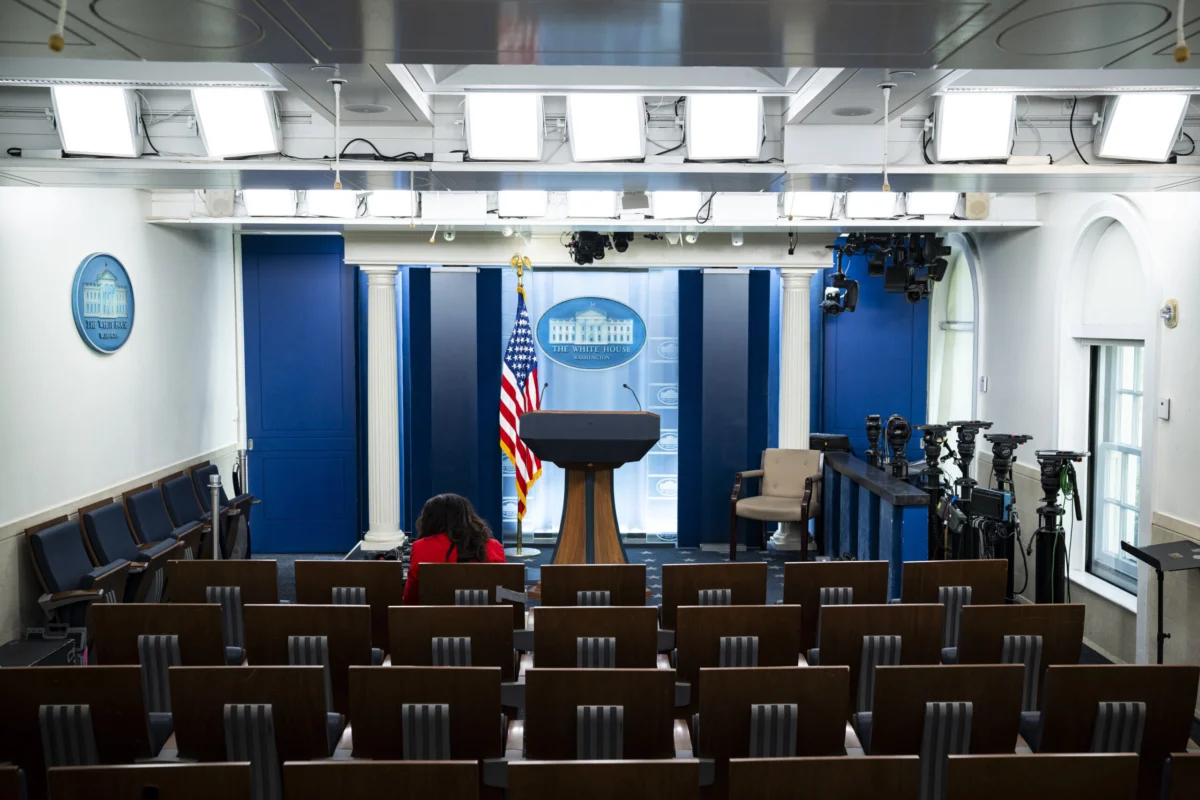
The legal battle lines between the modern American press and the executive branch have been drawn once again, culminating in a high-stakes lawsuit filed against the Trump administration by CNN, MS NOW, and Politico. The joint legal action was formally lodged in response to the sudden and sweeping revocation of press credentials for journalists representing all three prominent news organizations, effectively locking them out of the White House complex and severely impeding their ability to cover the president, his cabinet, and White House operations.
The abrupt bans, announced via social media and subsequently enforced at security checkpoints, have sparked immediate alarm among constitutional scholars, press freedom advocates, and media organizations worldwide. Plaintiffs argue that the executive branch has overstepped its legal authority by attempting to penalize media outlets for unfavorable coverage, framing the move as an existential threat to the First Amendment and the public’s fundamental right to an independent press free from government censorship or retribution.
The Escalation and Enforcement of the Ban
The crisis began unfolding late last week when President Donald Trump utilized his preferred digital platform to announce that his administration was officially revoking the press credentials of CNN, MS NOW, and Politico. The announcement created immediate confusion and logistical chaos within the White House press briefing room and surrounding offices, where production crews, correspondents, and technical staff from the targeted outlets were actively working on assignment.
By Saturday morning, the presidential decree translated into concrete enforcement action. Journalists and technical personnel arriving for their shifts at the White House complex discovered that their physical hard-passes and digital access credentials had been deactivated. Security personnel at the gates denied entry, confirming that the administration was fully enacting the ban.
The timing of the revocation was particularly disruptive. CNN had been scheduled to serve as the primary television press pool organization on Monday. In this critical operational role, the network’s camera crews, producers, and reporters act on behalf of the entire television news industry to document the president’s movements, meetings, and public statements. On Monday, President Trump was slated to board Air Force One for a high-profile diplomatic trip to New York City. The itinerary included high-stakes bilateral meetings with New York City Mayor Zohran Mamdani and French President Emmanuel Macron on the sidelines of the United Nations General Assembly. Barring CNN from the pool effectively severed the collective press apparatus’s standard operational procedures, forcing other networks to scramble or altering the transparency of the presidential delegation’s movements.
Legal Strategy and Constitutional Arguments
To combat the administration’s actions, the three news organizations united to file a comprehensive federal lawsuit. The legal team is spearheaded by renowned First Amendment litigator Ted Boutros, a veteran of high-profile constitutional battles involving executive overreach and media rights.
In their initial filings, the plaintiffs pulled no punches, declaring that the ban represents a direct, unfiltered assault on the bedrock principles of the United States Constitution.
"This morning, we notified the government that we are filing a lawsuit today to protect our First Amendment rights and defend the principle that the government does not decide what the press reports or publishes," the three news outlets stated in a joint press release issued early Monday morning. "Without notice or process, the White House revoked our journalists’ credentials because it objected to our reporting. Left unchallenged, this threatens press freedom and the public’s right to independent journalism free from government interference."
The lawsuit argues that the administration’s actions violate both the First Amendment—which guarantees freedom of the press and uninhibited public debate—and the Fifth Amendment’s Due Process Clause, which protects established liberty and property interests. News organizations and their accredited reporters maintain a recognized legal interest in the physical and operational access granted by White House credentials, an access privilege that cannot be arbitrarily stripped away on a whim without warning, formal notice, or procedural recourse.
To substantiate their claims, the plaintiffs invoked landmark Supreme Court jurisprudence. The lawsuit extensively cites the revolutionary 1964 ruling in New York Times Co. v. Sullivan, which established the "actual malice" standard for public officials suing for defamation. More importantly, the legal team highlighted the high court’s timeless observation regarding the nature of American democracy: that the First Amendment reflects "a profound national commitment to the principle that debate on public issues should be uninhibited, robust, and wide-open, and that it may well include vehement, caustic, and sometimes unpleasantly sharp attacks on government and public officials."
The Rationale and Defense Offered by the White House
During an impromptu appearance in the Oval Office, President Trump offered little pretense regarding the motivation behind the ban, openly admitting that the decision was a direct response to cumulative media coverage over the course of his political career. Rather than citing a specific security violation, breach of decorum, or journalistic retraction, the president justified the extraordinary measure by pointing to what he characterized as a persistent pattern of negative and partisan reporting.
The lawsuit meticulously records the president’s own justifications, noting that Trump explicitly labeled it "wrong" to "allow people to write purposely negative stories." The administration’s public posture leaned heavily into grievances regarding coverage that the president considers "one-sided" and "never good." In a moment that underscores the extraordinary nature of the dispute, the lawsuit highlights that the president himself casually referred to his unprecedented directive as the "ban on the free press" during internal and public discussions.
Furthermore, administration officials acknowledged that the move would inevitably face intense judicial scrutiny. Reports indicate that the president expressed awareness that the policy would be challenged in federal court, flippantly suggesting that the ultimate outcome would hinge entirely on which judge was randomly assigned to oversee the case.
Historical Precedents: A Troubled Legacy of White House Access Battles
While the current coalition lawsuit involving CNN, MS NOW, and Politico represents a multi-agency escalation, the Trump administration is no stranger to legal battles concerning media access. The friction between executive power and journalistic oversight has been a recurring theme in modern American politics, with several notable precedents setting the legal framework for the current dispute.
During his first term in office, President Trump’s administration famously revoked the hard press pass of CNN chief White House correspondent Jim Acosta following a tense, televised back-and-forth during an East Room press conference. In response, CNN and Acosta swiftly filed a federal lawsuit alleging violations of the First and Fifth Amendments. U.S. District Judge Timothy J. Kelly ultimately ruled in favor of CNN, issuing a preliminary injunction that ordered the White House to immediately restore Acosta’s press credentials. Judge Kelly’s ruling hinged on the crucial determination that the White House had failed to provide due process, noting that the arbitrary revocation procedures violated constitutional protections.
Similarly, other major news organizations have found themselves locked in administrative battles with executive agencies over editorial autonomy and terminology. Notably, the Associated Press (AP) previously pursued legal action after being barred from covering specific governmental events and press gaggles. That dispute erupted when the AP’s internal style guide policy declined to adopt the administration’s preferred nomenclature for a specific body of water—insisting on international geographic standards rather than the administration’s coined moniker, the "Gulf of America." These precedents establish a clear judicial pattern: while the executive branch maintains broad discretionary authority over property management within the White House complex, it cannot weaponize access credentials as an instrument of viewpoint-based discrimination or political censorship.
Broader Implications for American Democracy and the Media Ecosystem
The ramifications of this legal showdown extend far beyond the day-to-day operations of the White House press corps. Media analysts and legal scholars warn that if an administration is permitted to unilaterally ban mainstream news organizations simply because it dislikes their editorial stance, the fundamental dynamic of government accountability in the United States faces severe degradation.
A free press serves as an indispensable proxy for the American public, asking difficult questions, investigating administrative policies, and providing independent verification of government claims. When specific outlets are locked out of the executive mansion, the flow of vital information is restricted, creating a two-tiered information ecosystem where only compliant or favored viewpoints are granted physical proximity to power.
As the lawsuit proceeds through the federal court system, legal observers anticipate rapid motion practice, likely centering on whether the plaintiffs can secure a preliminary injunction to restore their credentials while the broader constitutional questions are litigated on their merits. Given the expedited nature of press access disputes and the precedent set during the Acosta litigation, the judiciary will once again be tasked with defining the precise boundaries of executive discretion versus constitutional press freedoms in the digital age.
For the moment, correspondents from CNN, MS NOW, and Politico continue to report on the presidency from outside the gates of the White House complex, relying on digital feeds, remote briefings, and off-site sources to keep the public informed, even as their legal team prepares to defend the foundational tenets of American journalism before a federal judge.