Jono Maryono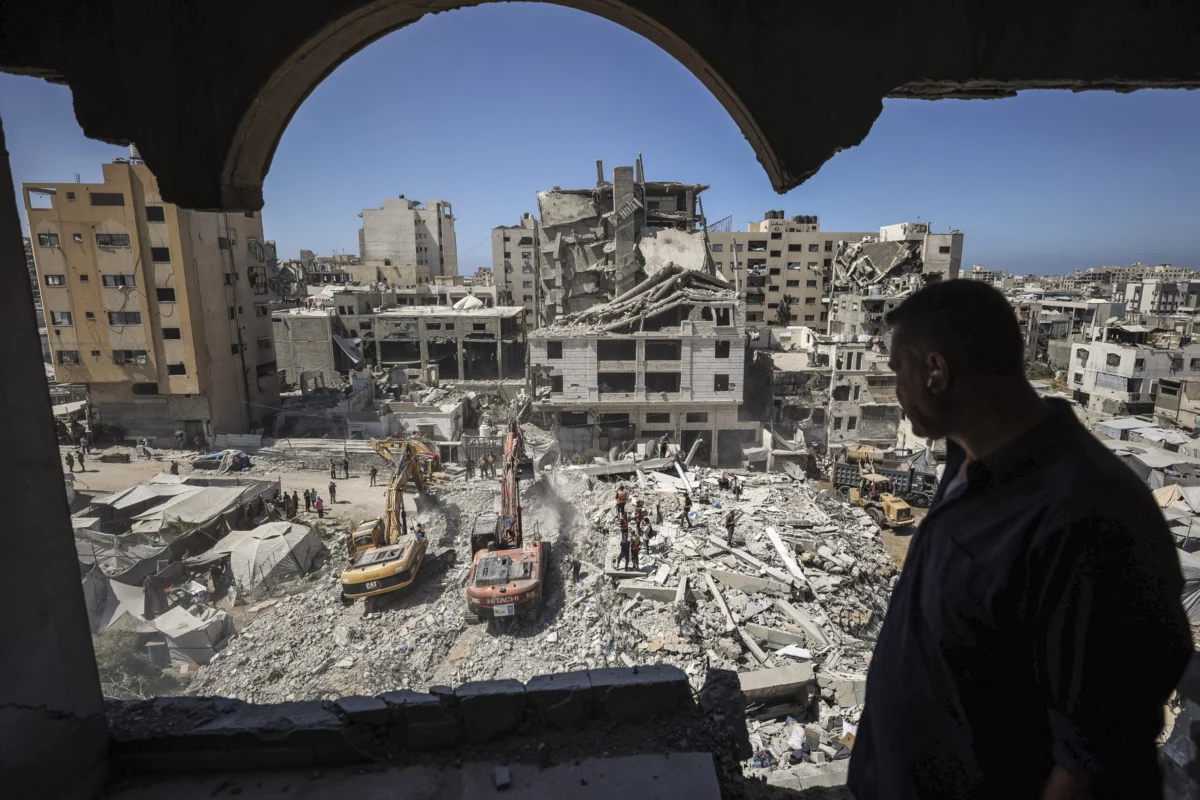
The humanitarian crisis in the Gaza Strip has intensified dramatically following a wave of separate military attacks targeting central refugee camps and urban areas, while health officials issue dire warnings that the enclave’s medical infrastructure is facing an imminent and total collapse. The latest military escalations underscore the relentless nature of the ongoing conflict, compounding the immense suffering of a civilian population already grappling with displacement, severe supply shortages, and a devastated urban landscape.
According to reports from the Palestinian Wafa news agency, an Israeli air strike targeted a motorcycle in the densely populated Sheikh Radwan neighborhood, located west of Gaza City. The strike resulted in the death of one Palestinian and left multiple others injured, with a young child reported to be in critical condition. This incident is part of a persistent pattern of aerial and ground bombardments that have continued unabated despite previous diplomatic efforts to establish a lasting cessation of hostilities.
Simultaneously, the Israeli military opened heavy fire on the Nuseirat and al-Bureij refugee camps situated in the central Gaza Strip. These strikes directly impacted makeshift tents and temporary shelters housing displaced families, causing numerous injuries among civilians who have been forced to flee their homes multiple times. The attacks on these vulnerable encampments highlight the acute danger faced by civilians across the entire coastal strip, where safe havens have become virtually nonexistent.
Chronology of Escalation and Recent Incidents
The trajectory of the conflict in recent months has been marked by continuous violations and high casualty rates, defying international appeals for restraint. Since the announcement of a phased ceasefire framework in October 2025, ongoing Israeli military operations within the besieged enclave have resulted in the deaths of at least 1,381 people. These post-ceasefire casualties add to a catastrophic cumulative toll that began with the escalation of hostilities in October 2023.
Data compiled since the onset of the war indicates that military actions have killed at least 73,795 Palestinians and wounded an additional 174,869 individuals. The overwhelming majority of these casualties consist of civilians, including a disproportionate number of women and children, trapped inside an enclave subjected to a stringent and prolonged blockade.
The days leading up to the latest strikes witnessed a series of particularly lethal incidents. Earlier in the week, a controversial "double-tap" air strike in Gaza City claimed the lives of a local paramedic and a 15-year-old schoolboy. Israeli military spokespersons maintained that the operation was directed at neutralizing Hamas operatives, yet humanitarian organizations and local monitors continuously emphasize the devastating collateral impact such strikes have on civilian life-savers and youth.
Compounding the crisis of direct violence, infrastructural failures driven by months of sustained bombardment continue to claim civilian lives independently of active fire. On Wednesday, a heavily damaged residential building in Gaza City suffered a catastrophic structural collapse, resulting in the deaths of at least 21 people, among them 12 children. The Palestinian Civil Defence agency reported immense difficulties in conducting search-and-rescue operations to recover bodies from beneath the heavy debris. These rescue efforts were critically hampered by severe Israeli restrictions on the importation of heavy machinery, specialized excavation tools, and structural reinforcement materials required to stabilize or safely demolish compromised buildings.
Unprecedented Strain on Children and Families
The psychological and physical toll on the youngest residents of Gaza remains a central concern for international humanitarian agencies. Last month, the United Nations Children’s Fund (UNICEF) released alarming data indicating that, on average, at least one child is killed every single day in the Gaza Strip even after the nominal announcement of the ceasefire framework.

Humanitarian assessments reveal that displaced families are now systematically confined to approximately one-third of the total geographic area of the enclave. Within these congested zones, populations are forced to shelter among pulverized concrete, twisted metal, and sprawling mountains of uncleared solid waste. The absence of basic sanitation infrastructure, coupled with overcrowding, has drastically elevated the risk of waterborne and communicable diseases, leaving millions of vulnerable residents without adequate protection against the elements.
Health Sector on the Brink of Total Collapse
The operational capacity of Gaza’s remaining medical facilities has deteriorated to unprecedented lows. On Wednesday, the Gaza Ministry of Health issued an urgent, categorical warning stating that the health system is on the verge of "total collapse." This crisis is primarily driven by the strict limitations imposed by Israeli authorities on the entry of essential medical supplies, pharmaceuticals, surgical equipment, and, crucially, the fuel required to power hospital generators and emergency fleets.
With electrical grids largely destroyed and intermittent fuel supplies failing to meet baseline institutional demands, hospitals and clinics are routinely forced to ration power. Critical care units, neonatal incubators, and emergency surgical suites operate under constant threat of sudden shutdowns. Medical professionals inside the enclave report performing complex procedures without adequate anesthesia, antibiotics, or clean water, turning hospitals into environments of triage where preventing mortality is severely constrained by systemic resource deprivation.
International Response and Humanitarian Concerns
The continuous military engagements and the systematic degradation of civilian infrastructure have drawn sustained condemnation and deep concern from international bodies, human rights organizations, and diplomatic missions. Global aid organizations argue that the current volume of humanitarian assistance entering the enclave represents only a fraction of what is required to stabilize the health sector and address widespread food insecurity.
United Nations agencies and independent observers have repeatedly called for an immediate, unconditional lifting of restrictions on humanitarian cargo, heavy equipment, and medical personnel. Analysts note that without a comprehensive and genuinely enforced ceasefire accompanied by the unfettered flow of aid, the risk of secondary humanitarian catastrophes—including widespread disease outbreaks and mass starvation—remains critically high.
Implications for Regional Stability and Future Recovery
The long-term implications of the ongoing crisis extend far beyond the immediate casualty counts and infrastructural ruins. The near-total destruction of Gaza’s urban fabric, housing stock, educational institutions, and healthcare network implies that any future reconstruction process will require decades of international coordination, billions of dollars in financial investment, and robust security guarantees.
Furthermore, the persistent cycle of targeted strikes, refugee camp bombardments, and infrastructural failures entrenches a profound psychological trauma across generations of Palestinians in the enclave. As diplomatic initiatives struggle to solidify a sustainable cessation of violence, the immediate priority for humanitarian actors remains focused on securing emergency access corridors to prevent further loss of life among a population that finds itself increasingly cornered, underserved, and exposed to continuous military action.