Jono Maryono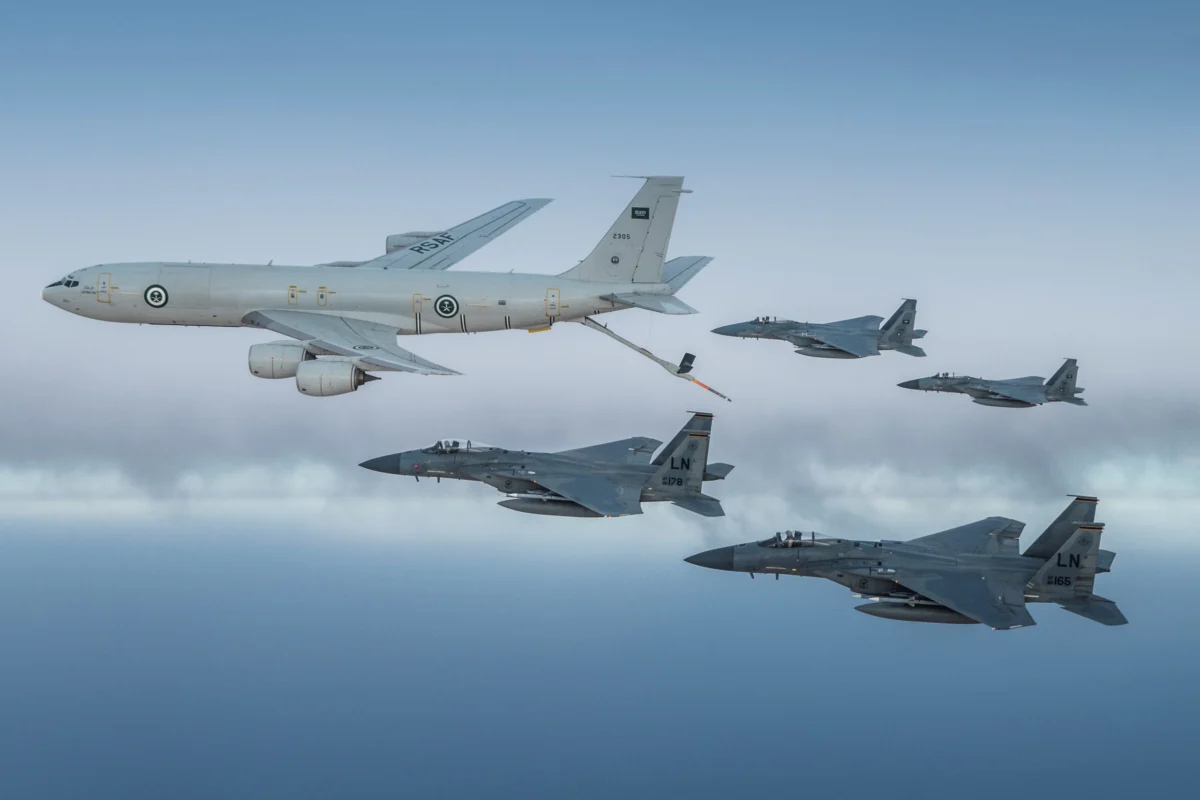
The Houthi declaration of intent to block Saudi shipping and vessels bound for Saudi ports in the Red Sea represents a significant escalation in regional tensions, moving beyond mere rhetorical posturing to a tangible threat against vital economic arteries. This move is widely interpreted as Iran’s latest gambit to test Saudi Arabia’s strategic patience, leveraging one of its most capable regional proxies. The gamble is particularly dangerous given Riyadh’s decade-long commitment to avoiding a wider regional conflict, a stance driven by a deliberate strategic choice to preserve stability and focus on its ambitious economic transformation agenda. Iran, finding itself unable to compete with Saudi Arabia’s ascendant regional trajectory through conventional means, has increasingly resorted to proxy warfare, maritime coercion, and economic intimidation, with the Houthis serving as the principal instrument of this strategy.
The Strategic Calculus of Maritime Coercion
Tehran’s strategy appears aimed at exerting pressure on Saudi Arabia from both its eastern and western maritime gateways – the Strait of Hormuz and the Bab al-Mandeb Strait, respectively. By threatening shipping in these critical chokepoints, Iran seeks not outright military victory, but rather economic disruption. The objective is to undermine investor confidence, jeopardize energy exports, and project an aura of instability onto the Middle East’s largest economy. This strategy carries profound implications far beyond the immediate region. Saudi Arabia remains the world’s largest crude oil exporter, the leading producer within OPEC, and crucially, the sole nation possessing sufficient spare production capacity to stabilize global energy markets during crises. This capacity was notably demonstrated during earlier phases of regional instability through its 7 million barrels per day East West Pipeline, a vital infrastructure that bypasses the Strait of Hormuz. Sustained disruption of Saudi exports would inevitably ripple through international shipping, insurance markets, global inflation, and the broader world economy.
Iran’s Preparations for Escalation
In anticipation of this escalation, Iran reportedly attempted to re-establish a direct air bridge between Tehran and Sana’a. These flights were not merely about diplomatic reconnection; they represented a potential direct logistical corridor for the rotation of operational planning advisors, missile specialists, drone technicians, and intelligence officers into Houthi-controlled territories. Such an air corridor would have facilitated the transfer of not only equipment but also crucial operational expertise and command capabilities, significantly enhancing the Houthis’ offensive potential.
It is within this context that the Royal Saudi Air Force’s (RSAF) strike on Sana’a International Airport gains significant strategic weight. The strike was not merely about preventing a specific aircraft from landing; it was a deliberate action aimed at thwarting Iran’s efforts to establish a permanent logistical architecture capable of sustaining a more sophisticated proxy campaign against Saudi Arabia’s maritime and economic interests. This proactive measure underscores Riyadh’s understanding of the interconnectedness of Iran’s proxy network and its strategic objectives.
The Evolving Saudi Military Posture
Tehran’s calculations appear to be increasingly reliant on outdated assumptions regarding Saudi military capability. The Saudi-led Joint Forces Command (JFC) has undergone a significant transformation over the past decade. The force that initially intervened in Yemen in 2015 bears little resemblance to the integrated coalition operating today. Years of hard-learned lessons from operational experience have forged a formidable military apparatus characterized by persistent intelligence gathering, fused command-and-control systems, precision strikes, advanced air and missile defense, and sophisticated cyber operations.
These capabilities no longer function as disparate military combatant commands. Instead, they operate as a unified decision-making architecture, capable of drastically compressing the timeline between intelligence collection and operational execution. This transformation is not confined to the Saudi armed forces alone. The JFC now comprises over 650,000 personnel drawn from Saudi Arabia and allied nations, including Yemeni forces, Pakistani contingents, Sudanese units, and symbolic formations from the Gulf Cooperation Council (GCC). Operating within a unified operational framework, their principal advantage lies not merely in numerical strength but in their ability to synchronize military effects across multiple domains while maintaining operational tempo and centralized escalation control.
Demonstrations of Enhanced Capability
The maturity of the JFC was demonstrably evident during the RSAF’s swift campaign to restore control over southern Yemen in January, an operation that concluded in less than a week. This campaign was built upon an advanced command and control (C2) fused architecture that supports persistent intelligence, electronic warfare, precision targeting, and synchronized maneuver. The operation showcased a level of operational sequencing and command integration previously unseen in earlier phases of the Yemen conflict.
A similar level of C2 maturity was displayed during Iran’s coordinated missile and drone attacks launched from Iranian territory and from allied formations in Iraq. In response, the RSAF executed synchronized precision strikes across multiple theaters of operation while effectively maintaining centralized escalation control, demonstrating a robust and integrated response capability.
Broader Geopolitical Ramifications
The broader consequences of Saudi Arabia’s enhanced operational performance extended beyond the immediate battlefield. The kingdom’s demonstrated military maturity helped create the conditions for Pakistan to broker an unofficial ceasefire between Saudi Arabia and Iran. This also reinforced a new deterrence equation, wherein further direct Iranian military pressure carried significantly greater operational and political risks. Tehran’s subsequent caution was not solely a product of diplomatic engagement but also a recognition that Saudi Arabia had entered a fundamentally different stage of military maturity.
The Limits of Disruption
While the Houthis can undoubtedly impose costs through their missile and drone capabilities, maritime attacks, and psychological operations, generating disruption disproportionate to their size, this is fundamentally different from sustaining a prolonged confrontation against an opponent possessing overwhelming advantages. These advantages include superior intelligence capabilities, air power dominance, control over maritime domains, and sustained operational endurance.
The Inevitability of a Comprehensive Response
Every escalation by the Houthis, therefore, increases the likelihood of a comprehensive Saudi response. Such a campaign would transcend targeting individual missile launchers or drone facilities. It would aim to dismantle the intricate command-and-control networks, logistics infrastructure, communication systems, intelligence apparatus, and operational support mechanisms that enable Houthi military operations. This is precisely why the current trajectory is so perilous.
Saudi Arabia has consistently prioritized stability over confrontation, with its overarching strategic objective being economic transformation and long-term national development. However, no sovereign state can indefinitely tolerate an Iranian-backed proxy group threatening its economy, energy infrastructure, and vital maritime lifelines.
Testing the Boundaries of Strategic Patience
Ultimately, the Houthis are not testing Saudi military capability; years of operational adaptation have already provided a definitive answer to that question. Instead, they are testing Saudi Arabia’s strategic patience. History suggests that even the most profound strategic patience has its limits. If Tehran continues to employ the Houthis as an instrument of coercion against the kingdom, Riyadh may eventually conclude that the costs of continued restraint have surpassed the costs of decisive action. Should that moment arrive, the subsequent campaign will bear little resemblance to the Yemen war of a decade ago. It will reflect years of coalition integration, bolstered by an elaborate C6ISR (Command, Control, Communications, Computers, Cyber, Intelligence, Surveillance, and Reconnaissance) architecture, strategically prepared for such an eventuality. In such a scenario, Iran and the Houthis may come to deeply regret testing the boundaries of Saudi Arabia’s strategic patience.