Ferry Irwandi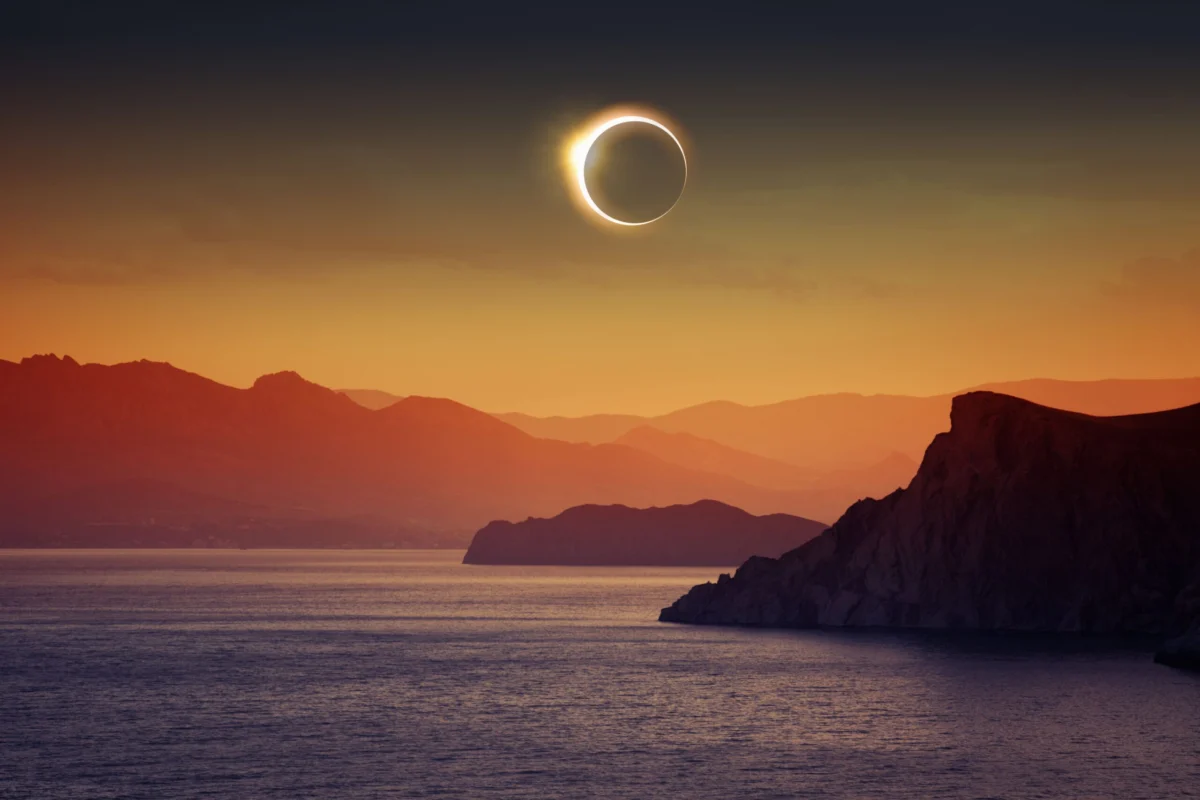
On August 12, 2026, Spain will host one of the most significant celestial events of the 21st century as a total solar eclipse traverses the northern and central regions of the country. This event marks the first time in over a century that a total solar eclipse has been visible from the Iberian Peninsula, placing Spain at the center of the global astronomical community. The path of totality, a corridor approximately 290 kilometers wide where the moon completely obscures the sun, will cover roughly 40% of Spain’s landmass. From the rugged Atlantic cliffs of Galicia to the Mediterranean shores of Valencia and the Balearic Islands, millions of residents and international travelers are expected to witness a rare "sunset eclipse," an atmospheric phenomenon where the sun reaches totality just before dipping below the horizon.
The Mechanics and Rarity of the 2026 Total Solar Eclipse
A total solar eclipse occurs when the moon’s orbit brings it directly between the Earth and the sun, casting a deep shadow known as the umbra. For those positioned within the path of totality, the day briefly turns into night, temperatures drop, and the sun’s outer atmosphere—the corona—becomes visible to the naked eye. While partial solar eclipses occur relatively frequently, the opportunity to view a total eclipse from a specific geographic location is exceedingly rare, often occurring only once every 375 years on average for any given spot.
The 2026 event is particularly noteworthy due to its timing and trajectory. The eclipse will begin its journey over the Arctic Ocean, passing Greenland and Iceland before making landfall in northern Spain. Unlike the 2024 North American eclipse, which occurred during the middle of the day with the sun high in the sky, the Spanish eclipse will take place during the "golden hour." Totality is scheduled to occur between 8:26 p.m. and 8:32 p.m. local time, depending on the specific coordinates of the observer. Because the sun will be positioned low on the west-northwest horizon (at an altitude of approximately 2 to 10 degrees), the visual effect will be magnified by atmospheric refraction, potentially creating a larger-than-life appearance of the eclipsed sun.
A Precise Chronology of Totality
The shadow of the moon will enter Spain through the northwestern region of Galicia and move southeast with incredible velocity. The following timeline outlines the progression of totality across major Spanish hubs:
- Galicia (A Coruña and Cape Ortegal): Totality begins at approximately 8:27 p.m. local time. This region will be the first to experience the shadow, with Cape Ortegal offering one of the longest durations of totality on the mainland.
- Asturias and Cantabria (Gijón and Santander): The shadow moves across the northern coast moments later. In Santander, viewers at El Puntal beach will see the sun eclipsed over the Bay of Biscay.
- The Basque Country and La Rioja (Bilbao and Logroño): Totality reaches these regions around 8:29 p.m. The mountainous terrain of the Picos de Europa may offer dramatic vistas, though observers must ensure their view of the horizon is not obstructed by peaks.
- Aragon and Castile and León (Zaragoza and Burgos): As the eclipse moves into the vast central plains, the duration of totality remains significant, and the flat landscape provides an ideal unobstructed view of the horizon.
- Valencia and the Mediterranean Coast: Totality arrives at the eastern coast around 8:31 p.m. In the city of Valencia, the eclipse will occur just minutes before sunset, creating a race against time for photographers.
- The Balearic Islands (Mallorca, Menorca, and Ibiza): The path of totality concludes its journey across Spanish territory in the Mediterranean. On the island of Mallorca, the sun will set while still partially or fully eclipsed, a phenomenon known as an "eclipsed sunset."
Major metropolitan centers like Madrid and Barcelona fall just outside the path of totality but will still experience a 99% partial eclipse. While 99% sounds nearly total, astronomers emphasize that the difference between a partial and total eclipse is "the difference between day and night." In these cities, the sky will darken significantly, but the solar corona will not be visible, and eye protection must be worn at all times.
.jpg)
Scientific Significance and the "Iberian Trio"
The 2026 eclipse is not an isolated event but the first of three major solar spectacles hitting the region in quick succession. Astronomers have dubbed this period the "Iberian Trio." Following the August 2026 total eclipse, a second total solar eclipse will pass over southern Spain and North Africa on August 2, 2027. This will be followed by an annular solar eclipse—where the moon is too far from Earth to fully cover the sun, creating a "ring of fire"—on January 26, 2028.
This concentration of eclipses is statistically extraordinary and has prompted the Spanish government and various scientific institutions to begin long-term planning. The 2026 eclipse offers a unique laboratory for solar physicists. Because the eclipse occurs at sunset, scientists can study how the cooling of the atmosphere during totality interacts with the natural cooling of dusk. Furthermore, the 2026 event coincides with the peak of the Perseids meteor shower. The sudden darkness of the eclipse, followed by the onset of night in one of the sunniest months of the year, is expected to provide world-class conditions for observing meteors in the hours following the solar event.
Strategic Viewing and Geographic Challenges
The "sunset" nature of this eclipse presents a specific challenge: the low angle of the sun. In a typical midday eclipse, the sun is high above trees and buildings. In August 2026, any obstruction on the west-northwest horizon—a mountain range, a forest, or a high-rise building—could completely block the view of totality.
Coastal regions with western exposures are currently seeing the highest demand for accommodations. In Galicia, the Tower of Hercules in A Coruña provides a historic backdrop with a clear view over the Atlantic. In Cantabria, beaches like Playa de Langre offer wide-angle views of the horizon.
On the Mediterranean side, the situation is more complex. In Valencia, the coastline faces east, meaning the sun will set behind the city and its mountains. To combat this, local boating outfitters are preparing "eclipse cruises" to take viewers several miles offshore, providing an unobstructed view back toward the mainland. In the Balearic Islands, the northern coasts of Mallorca and Menorca are being identified as prime locations where the sun will appear to sink into the sea while shrouded in the moon’s shadow.
Economic Impact and Astrotourism
The tourism industry in Spain is bracing for a massive influx of "eclipse chasers." Data from previous eclipses, such as the 2017 and 2024 events in the United States, suggest that total solar eclipses generate hundreds of millions of euros in local economic activity. Hotels in the path of totality, particularly in smaller cities like Burgos and Teruel, are already reporting inquiries and bookings for August 2026.

Regional governments are viewing the eclipse as an opportunity to promote "astrotourism" and diversify the tourism sector beyond the traditional "sun and beach" model. Organizations like the Starlight Foundation, which certifies dark-sky preserves in Spain, are working with municipalities to ensure that street lighting is managed during the event to enhance the visual experience. There is also a significant push to direct visitors toward "España Vaciada" (Empty Spain)—the sparsely populated rural interior—where the lack of light pollution and wide-open plains offer some of the best viewing conditions in Europe.
Safety, Logistics, and Environmental Responsibility
Public safety remains a primary concern for officials. Looking directly at the sun, even during a 99% eclipse, can cause permanent retinal damage. Only during the brief window of totality—when the sun is 100% covered—is it safe to look without protection. The Spanish Ministry of Health and local educational boards are expected to launch awareness campaigns regarding the use of ISO 12312-2 certified eclipse glasses.
Logistically, the influx of travelers into rural areas poses a risk to local infrastructure. Many of the best viewing spots are in ecologically sensitive areas or small villages with limited road capacity. Authorities are urging visitors to follow "Leave No Trace" principles to protect Spain’s natural landscapes. There are also ongoing discussions regarding the impact on Spain’s solar energy grid; during the 2015 eclipse in Europe, power grid operators had to manage a sudden drop and subsequent surge in solar power generation, a task that will be even more critical in 2026 given Spain’s high reliance on renewable energy.
A Cultural Milestone
Beyond the science and the economy, the 2026 total solar eclipse is a cultural milestone. For many Spaniards, it will be a once-in-a-lifetime experience shared across generations. Local festivals, musical performances timed to totality, and educational workshops are being planned across the northern half of the country.
As the moon’s shadow sweeps from the Atlantic to the Mediterranean, it will link diverse regions—Galicia, Asturias, Cantabria, the Basque Country, Castile and León, Aragon, Valencia, and the Balearics—in a single moment of cosmic alignment. For those six minutes on a warm August evening, the eyes of the world will be on the Spanish horizon, witnessing the rare and haunting beauty of a sun that disappears just as it prepares to set.