Ferry Irwandi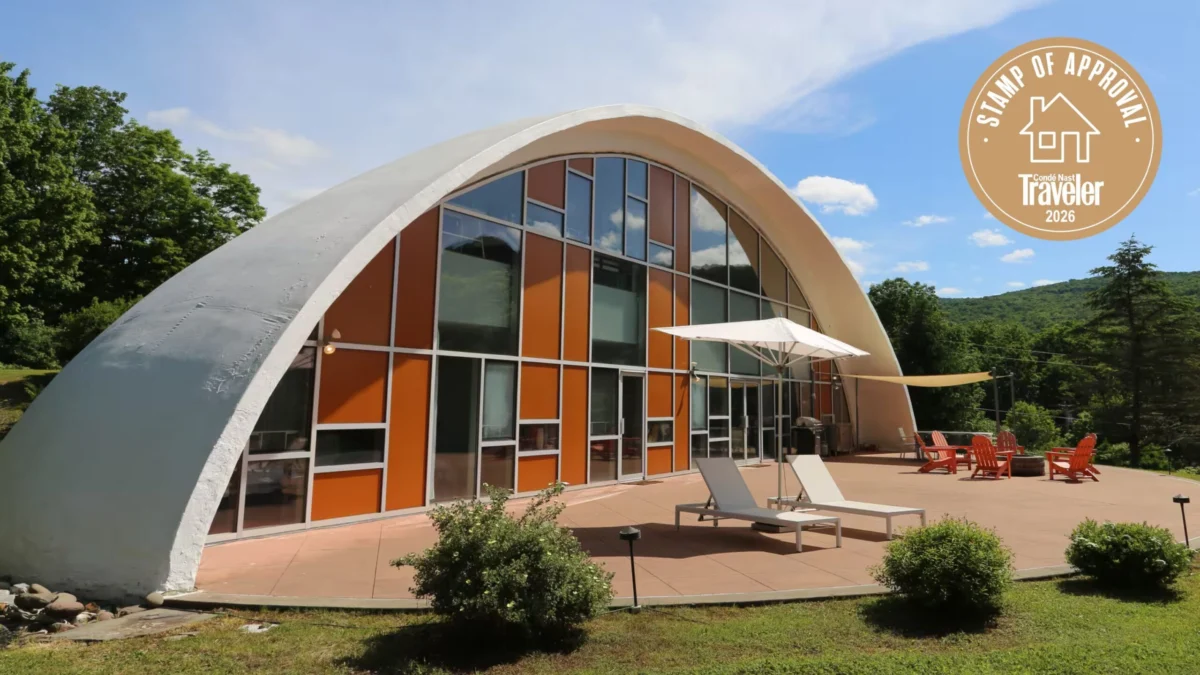
The Shell House, a distinctive monolithic dome residence located in Roxbury, New York, represents a significant intersection of experimental 20th-century architecture and the modern short-term rental economy. Situated on five private acres within the Catskill Mountains, the property has transitioned from a visionary private retreat into one of the most sought-after vacation rentals in the United States. Known for its retro-futuristic aesthetic and panoramic mountain views, the structure serves as a primary example of how specialized architectural sites are being preserved and repurposed through the hospitality industry.
Architectural Origins and the Vision of Seymore Rutkin
The history of the Shell House began in 1997 when Seymore Rutkin, a prominent New York architect, conceptualized a dwelling that would serve both as a personal retreat and a prototype for the "single-family home of the future." Rutkin was a proponent of the monolithic dome—a structural form cast in a single piece of concrete or similar material. These structures are recognized by architectural historians for their extreme durability, energy efficiency, and ability to withstand natural disasters, including high winds and heavy snow loads common in the Appalachian region.

Rutkin’s design for the Shell House utilized a half-moon or hemispherical shape, intended to blend into the undulating topography of Delaware County while providing a protective envelope against the elements. The architectural highlight of the original build was the integration of a massive glass curtain wall. This 25-foot expanse of floor-to-ceiling windows was oriented to maximize solar gain and provide uninterrupted views of the surrounding five-acre meadow and distant Catskill peaks. Following Rutkin’s passing, the property was acquired by new owners in 2007, who sought to maintain the structural integrity of the dome while modernizing its interior functionality.
The 2018 Modernization and Design Evolution
In 2018, the Chicago-based design firm DAAM was commissioned to execute a comprehensive renovation of the Shell House. The objective was to transform the original artist’s retreat into a high-end, midcentury-modern residence capable of accommodating large groups. The renovation focused on enhancing the open-concept living space while preserving the "quirky" elements that defined Rutkin’s original vision.
The interior design strategy emphasized a "retro-cool" aesthetic, incorporating antique cameras, curved furniture, and custom woodwork. The kitchen was redesigned to include hanging pendant lighting and porthole-style windows built into the backsplash, reinforcing a nautical or "under-sea" theme that contrasts with the mountainous exterior. A focal point of the interior is the spiral staircase, which leads to a lofted fourth bedroom. This loft serves as a semi-autonomous floor, featuring two queen beds, a dedicated workspace, and a full bathroom, though its design retains an open connection to the living area below.

By the late 2010s, the Shell House had gained significant digital traction, eventually becoming the most "wishlisted" Airbnb property in the state of New York. This status highlighted a broader consumer trend toward "experiential" travel, where the accommodation itself becomes the primary destination rather than merely a secondary logistical requirement.
Property Specifications and Operational Capacity
The Shell House is engineered to accommodate up to 11 guests, making it a rare asset in the Catskills market for large-group reunions and multi-family gatherings. The layout is divided into distinct zones to balance communal activity with private retreat:
- Living and Dining: A massive central hall anchored by the 25-foot window wall and a custom wood dining table designed for communal meals.
- Sleeping Quarters: Three bedrooms are located in a dedicated wing on the main floor, each featuring unique design motifs. The fourth bedroom is the aforementioned loft space.
- Exterior Amenities: The property includes a 2,000-square-foot outdoor deck equipped with a stone firepit, dining setups, and shaded loungers.
- Grounds: Five acres of private land featuring sugar maples and frequent sightings of local wildlife, including deer and bald eagles.
From an operational standpoint, the property is managed to provide a full-service experience. The hosts provide specialized amenities ranging from baby gates for families to high-end glassware and bathroom products. Notably, the home does not utilize a traditional air conditioning system, relying instead on the thermal mass of the dome and strategic ventilation (opening windows at night and closing blinds during the day) to manage temperatures during the summer months.

Economic and Tourism Context in the Catskills
The success of the Shell House is inextricably linked to the broader economic revitalization of the Catskills. Historically a premier vacation destination in the mid-20th century, the region experienced a period of decline before rebounding as a hub for "upstate" tourism driven by residents of the New York City metropolitan area. Located just under three hours from Manhattan, Roxbury and its surrounding towns have seen a surge in property values and short-term rental demand.
Tourism data indicates that Delaware County has become a primary beneficiary of the "drive-to" travel trend. The proximity to outdoor recreation, such as Belleayre Mountain and Plattekill Mountain for skiing, as well as hiking trails and fishing spots, ensures year-round occupancy for well-positioned rentals. The Shell House contributes to this local economy by directing guests to regional businesses, including Oakley’s Wood-Fired Pizza in Arkville and The Old Mill in Roxbury.
Furthermore, the village of Fleischmanns, located near the property, has seen a resurgence of small-scale commercial activity, including vintage boutiques and specialty cafes like Doolittle’s. This ecosystem of unique architecture and localized commerce creates a feedback loop that sustains high-end tourism in rural New York.

Chronology of Key Events
- 1997: Construction of the Shell House by architect Seymore Rutkin as a "home of the future."
- 2007: The property is sold to the current owners following Rutkin’s death.
- 2007–2017: The property serves primarily as an artist retreat and private residence.
- 2018: DAAM completes a major renovation, shifting the aesthetic toward midcentury modernism and preparing the home for the luxury rental market.
- 2020–2022: The property sees a surge in popularity during the pandemic-era shift toward secluded, domestic travel.
- 2024: The Shell House maintains its status as a landmark rental, facilitating multi-generational and international group gatherings.
Structural and Environmental Analysis
The Shell House represents a successful case study in the adaptive reuse of experimental residential architecture. While monolithic domes were once touted as the solution to housing shortages and climate-related structural failures, they remain a niche architectural form. The Shell House proves that the value of such structures in the modern market lies in their "Instagrammability" and the unique psychological experience of living within a non-linear space.
Environmentally, the dome’s shape provides a natural advantage in heat distribution. The lack of corners allows for more efficient air circulation, and the concrete shell acts as a heat sink, regulating internal temperatures against external fluctuations. This architectural choice aligns with modern sustainability goals, even if the building was originally designed before the current emphasis on green building certifications.
Implications for the Short-Term Rental Industry
The trajectory of the Shell House offers several insights into the future of the hospitality industry:

- Architecture as a Brand: The physical form of the building serves as its own marketing tool. In a crowded marketplace, unique geometry and historical significance provide a competitive edge that traditional luxury homes cannot match.
- The Shift Toward Group Travel: By catering to groups of 10 or more, the property addresses a gap in the market often underserved by boutique hotels.
- Preservation Through Profit: The high revenue generated by short-term rentals provides the capital necessary to maintain and preserve unconventional architectural sites that might otherwise fall into disrepair or be demolished for more conventional developments.
In conclusion, the Shell House is more than a vacation rental; it is a preserved piece of architectural history that continues to function as a living laboratory for 21st-century travel trends. Its blend of Seymore Rutkin’s 1990s futurism and DAAM’s 2018 modernism provides a blueprint for how historic properties can remain relevant and profitable in a rapidly evolving global tourism landscape. As the Catskills continue to grow as a premier destination, the Shell House remains a central pillar of the region’s unique aesthetic and economic identity.