Prabowo Widodo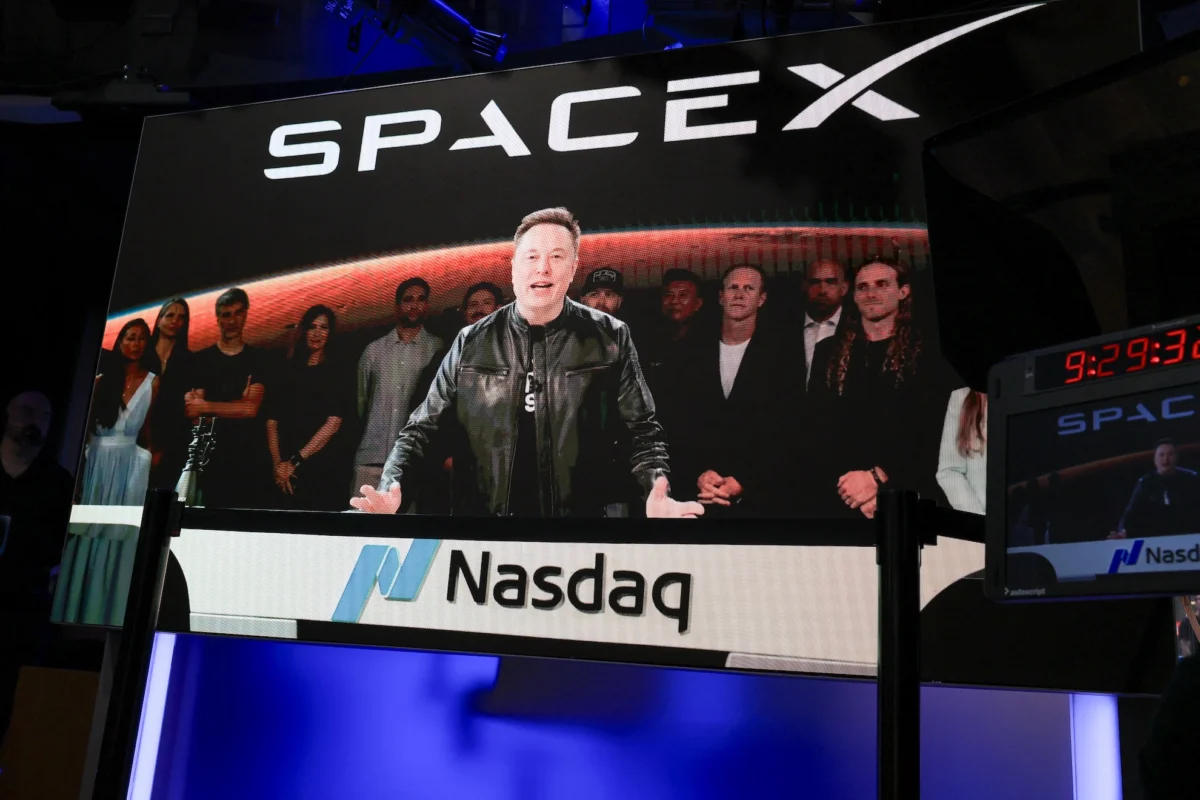
In a notable development reflecting evolving investor sentiment and the increasing influence of public figures on corporate valuations, a novel investment opportunity has emerged allowing market participants to specifically exclude companies linked to billionaire entrepreneur Elon Musk. This initiative, spearheaded by Subversive Capital, introduces two new exchange-traded funds (ETFs) designed to filter out entities founded, controlled, or primarily associated with Musk, including his flagship ventures, Tesla and SpaceX. The creation of these "Ex-Elon" ETFs comes amidst a backdrop of significant public discourse surrounding Musk’s actions, public statements, and the broader impact of his persona on brand perception and investment decisions.
The lead-up to the anticipated SpaceX IPO generated considerable media attention, focusing on the potential for early employees and investors to realize substantial financial gains, mirroring the success seen with Tesla. For years, investing in Musk’s companies, particularly Tesla (TSLA), has been a high-stakes, high-reward proposition, drawing in legions of loyal investors and a significant portion of capital in growth and large-cap mutual funds. However, parallel to this enthusiasm, a counter-narrative has steadily gained traction, fueled by a series of controversies and public statements from Musk himself. These include his often-unpredictable engagement with cryptocurrencies like Dogecoin (DOGE), his frequently contentious remarks on the social media platform X (formerly Twitter), and a widely criticized gesture made at Donald Trump’s inauguration that some interpreted as a Nazi salute. Such incidents have, for a segment of the investing public, transformed Musk from a visionary innovator into a polarizing figure whose personal brand carries significant, and for some, unacceptable, reputational risk. It is this burgeoning negative sentiment that Subversive Capital aims to address, identifying an untapped market for investors seeking to align their portfolios with their personal values, even if those values mean actively avoiding one of the world’s most influential business magnates.
The Genesis of "Ex-Elon" Investing
The concept of "Ex-Elon" investing crystallized through the efforts of Subversive Capital, an exchange-traded fund creator known for its unconventional and often politically-charged investment products. The firm, operating under the brand Subversive Markets Lab LLC, formally registered two new ETFs through Tidal Trust I, as first reported by Bloomberg. These funds, distinct from traditional mutual funds in their ability to be traded like individual stocks on an exchange, are explicitly designed to offer broad market exposure while systematically excluding companies intertwined with Elon Musk. This move signifies a growing trend in the financial industry where investment products are tailored not just for sector-specific exposure or risk profiles, but also for socio-political alignment or the avoidance of specific entities deemed problematic by certain investor segments.
For the average investor, disentangling from Musk-associated companies has become increasingly challenging. Both Tesla and SpaceX hold significant weight in major market indices. Tesla, a long-standing component of the S&P 500, is a staple in countless index funds and actively managed portfolios. SpaceX, following its recent inclusion in the Nasdaq 100 and its presence in FTSE Russell and MSCI indexes, now also features prominently in funds tracking these benchmarks. This pervasive presence means that a diversified investor relying on broad market index funds or popular growth-oriented mutual funds would almost inevitably hold a stake in Musk’s enterprises, regardless of their personal inclination. The new Ex-Elon ETFs offer a surgical solution to this dilemma.
Deconstructing the Ex-Elon ETFs: Nasdaq-100 Ex-Elon and S&P 500 Ex-Elon
The two newly registered ETFs are officially named the Nasdaq-100 Ex-Elon Enterprises ETF (ticker: QQNE) and the S&P 500 Ex-Elon Enterprises ETF (ticker: SPNE). Their prospectuses, filed with the U.S. Securities and Exchange Commission (SEC), clearly outline their investment objective: to provide capital appreciation through exposure to a broad universe of large-capitalization U.S. equity securities, specifically excluding "the equity securities of companies that are founded, controlled, or led by Elon Musk, or with which Mr. Musk is otherwise primarily associated." As of the prospectus date, the primary excluded enterprises are Tesla (TSLA) and Space Exploration Technologies Corp. (SPCX). While Musk’s other ventures like Neuralink and The Boring Company are not yet publicly traded, the language of the funds’ mandate suggests that any future publicly listed company becoming "primarily associated" with Musk could also be excluded. This forward-looking clause ensures the ETFs maintain their "Musk-free" profile even as his entrepreneurial empire potentially expands into new public markets.
The creation of these funds is not merely a financial engineering exercise; it is a direct response to a perceived demand. The explicit exclusion of companies based on the personal brand and actions of an individual leader marks a significant, albeit niche, evolution in thematic investing. Traditionally, thematic ETFs focus on trends like clean energy, artificial intelligence, or specific demographic shifts. The Ex-Elon funds, however, represent an "anti-thematic" approach, allowing investors to opt out of an entire category of influence, rather than opting into a specific one.
Elon Musk’s Public Persona and Investor Apprehension
To understand the rationale behind these ETFs, one must delve deeper into the specific controversies that have shaped public and investor perception of Elon Musk.
- DOGE and Cryptocurrency Volatility: Musk’s frequent and often whimsical pronouncements regarding Dogecoin, a meme-inspired cryptocurrency, have had a demonstrable impact on its market value. His tweets have caused significant price swings, leading some to view his influence as destabilizing and irresponsible, particularly for retail investors who might interpret his comments as financial advice. This behavior, while entertaining to some, raised concerns about market manipulation and the potential for a single individual to sway asset prices with little accountability.
- X (formerly Twitter) and Free Speech Debates: Since acquiring Twitter and rebranding it as X, Musk has positioned himself as a champion of "absolute free speech." However, this stance has been accompanied by content moderation policy changes, the reinstatement of controversial accounts, and personal endorsements of certain political views, alienating advertisers and users alike. His public engagement on the platform is often combative and has drawn criticism for promoting misinformation or hate speech, further polarizing public opinion and raising questions about the corporate governance and ethical standards of his associated companies.
- The Inauguration Gesture: The infamous gesture made by Musk at Donald Trump’s inauguration, which some observers interpreted as resembling a Nazi salute, caused immediate widespread condemnation and outrage. While Musk’s camp dismissed the interpretation, the image lingered, contributing to a perception of insensitivity or even ideological alignment that many investors find deeply troubling and inconsistent with their personal values.
- Other Controversies: Beyond these specific instances, Musk has faced scrutiny for his management style, his legal battles with critics and regulators, and various other public gaffes. Each incident, cumulatively, has chipped away at a segment of public trust and investor goodwill, creating a demand for investment products that allow individuals to divest from the "Musk premium" or, conversely, the "Musk discount" associated with his often-controversial actions.
These episodes underscore the growing importance of environmental, social, and governance (ESG) factors in investment decisions. While the Ex-Elon funds are not explicitly labeled ESG, they tap into a similar vein of values-based investing, allowing investors to express a preference or aversion based on the social impact and leadership conduct of associated entities.
Subversive Capital’s Track Record of Unconventional ETFs
Subversive Capital is no stranger to creating ETFs that push the boundaries of conventional investing. Prior to the Ex-Elon funds, the firm garnered attention for its unique approach to "investing like the oligarchy." One of its notable products allowed investors to mirror the stock holdings of Democratic members of Congress and their spouses, while another tracked the portfolios of their Republican counterparts. These funds, while having a serious underlying investment thesis about political insider trading, also carried a distinct "tongue-in-cheek" quality, appealing to a specific type of investor looking for unconventional strategies or ways to engage with market narratives.
This history suggests that the Ex-Elon ETFs, while legitimate financial instruments, also serve as a commentary on the current market landscape and the outsized influence of individual personalities. Subversive Capital appears adept at identifying and capitalizing on cultural and political currents within the financial world, offering products that are both functionally viable and conceptually provocative. This strategic positioning allows them to tap into niche markets driven by specific ideological or ethical considerations, thereby carving out a unique space in the crowded ETF market.
Broader Market Implications and Investor Sentiment
The introduction of the Ex-Elon ETFs, with their tickers QQNE and SPNE, raises several questions about their potential performance, investor uptake, and the broader implications for the investment industry.
- Investor Appetite: Will investors "pile into" these funds? The answer likely depends on the strength of the negative sentiment towards Musk, the funds’ marketing effectiveness, and their actual performance. While a significant portion of the market remains bullish on Tesla and SpaceX, a vocal and growing segment of investors may be eager for an alternative. This could include institutional investors with strict ESG mandates, or individual investors who simply find Musk’s public behavior antithetical to their values.
- Performance Comparison: It remains to be seen whether these Ex-Elon funds will outperform or underperform their standard Nasdaq 100 and S&P 500 counterparts that include Tesla and SpaceX. The exclusion of two high-growth, high-volatility stocks could lead to different risk-return profiles. If Tesla and SpaceX continue their strong performance, the Ex-Elon funds might lag. Conversely, if Musk’s controversies or company-specific challenges lead to underperformance for TSLA or SPCX, the Ex-Elon funds could potentially benefit from their absence. This dynamic makes them an interesting case study in the impact of individual companies and personalities on broader index performance.
- The "Annoyance Factor": The original article hints at the possibility that these funds could "annoy" Elon Musk, given his well-documented hostility towards traders who have shorted Tesla in the past. While these ETFs are not short-selling vehicles, they represent a collective, albeit indirect, vote of no confidence or at least a conscious disassociation. The symbolic weight of funds explicitly designed to avoid his companies might indeed be perceived as a challenge or an affront by a figure known for his strong reactions to criticism.
- Future of Thematic and Anti-Thematic Investing: The Ex-Elon ETFs could herald a new wave of "anti-thematic" investment products. If successful, we might see funds designed to exclude other controversial figures, industries, or companies based on specific ethical, political, or social criteria. This would represent a significant evolution from traditional ESG investing, moving beyond broad categories to target specific entities or individuals whose public actions influence investor decisions. It highlights a growing desire among investors for greater control over the ethical and social footprint of their portfolios.
- Challenges and Considerations: While innovative, these funds are not without potential challenges. The active management required to continually monitor Musk’s associations and adjust holdings, as well as the potential for tracking error relative to their benchmark indices, are factors for investors to consider. Furthermore, the long-term viability and appeal of such niche funds will depend on sustained investor interest and competitive performance.
In conclusion, the launch of the Nasdaq-100 Ex-Elon Enterprises ETF and the S&P 500 Ex-Elon Enterprises ETF by Subversive Capital marks a fascinating juncture in the financial markets. It underscores the profound influence of individual leaders on corporate brands and investor sentiment, moving beyond traditional financial metrics to encompass a leader’s public persona and controversial actions. By offering a legitimate, regulated mechanism for investors to consciously avoid Elon Musk’s sphere of influence, these ETFs cater to a growing demand for values-aligned investing, reflecting a market that is increasingly sensitive to the broader societal impact of the companies it supports. Whether these funds achieve widespread adoption or remain a niche offering, they undeniably contribute to a richer, more complex narrative of how personal brand intersects with investment strategy in the 21st century.