
 Prabowo Widodo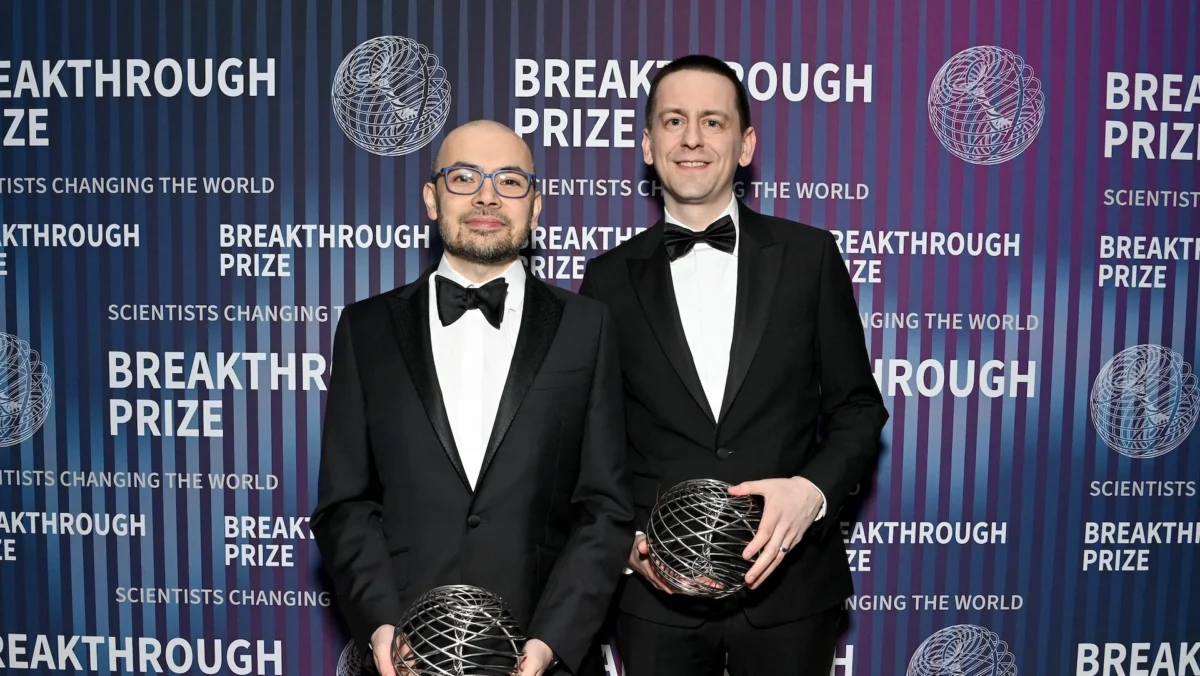
John Jumper, a recipient of the prestigious Nobel Prize in Chemistry, announced on Friday, June 20, 2026, his departure from Google DeepMind after a nearly nine-year tenure to join Anthropic, a prominent competitor in the artificial intelligence landscape. This high-profile move signifies a significant shift in the competitive sphere of AI research, underscoring the intense battle for top talent among leading technology firms.
Jumper, widely recognized for his groundbreaking work on AlphaFold, an AI system that revolutionized protein structure prediction, shared his news via a post on X (formerly Twitter). In his statement, he expressed gratitude to Google DeepMind CEO Demis Hassabis, acknowledging the "real chance" Hassabis took by allowing him to lead the AlphaFold team just six months after completing his PhD. Jumper lauded the entire Google DeepMind team for imparting invaluable lessons on conducting "great science," adding that DeepMind remains a "special place" and he looks forward to their future discoveries. The announcement has sent ripples through the AI and biotechnology sectors, prompting discussions about its implications for both companies and the broader scientific community.
The Legacy of AlphaFold and a Nobel-Winning Breakthrough
John Jumper’s departure is particularly noteworthy given his pivotal role in the development of AlphaFold, an AI model that fundamentally transformed the field of structural biology. AlphaFold, a project initiated and nurtured within Google DeepMind, achieved what was once considered a grand challenge in biology: accurately predicting the three-dimensional structure of proteins from their amino acid sequences. This capability is critical because a protein’s function is intimately linked to its precise 3D shape, and understanding these structures is foundational to drug discovery, enzyme engineering, and understanding disease mechanisms.
Prior to AlphaFold, determining protein structures was a laborious and expensive process, often relying on experimental techniques like X-ray crystallography, NMR spectroscopy, or cryo-electron microscopy. These methods could take years and significant resources for a single protein. AlphaFold, first publicly demonstrated with remarkable accuracy in 2020 and further refined, provided a computational solution that could predict structures with atomic precision, often matching or exceeding experimental results. The release of the AlphaFold Protein Structure Database, containing over 200 million predicted structures, has since become an invaluable resource for researchers worldwide, accelerating scientific discovery across countless biological and medical disciplines.
The profound impact of AlphaFold led to Jumper and Demis Hassabis being jointly awarded the Nobel Prize in Chemistry in 2024. The Nobel Committee cited their work as a "defining moment for molecular biology," emphasizing how AlphaFold "has opened up a new chapter in science, dramatically accelerating research into everything from drug discovery to the development of new enzymes." This recognition solidified AlphaFold’s status as one of the most significant scientific achievements of the 21st century, placing Jumper among the pantheon of scientific innovators. His leadership of the AlphaFold team from its early stages, navigating complex computational and biological challenges, established him as a visionary in the convergence of AI and life sciences.
Anthropic’s Strategic Acquisition and Vision
Jumper’s decision to join Anthropic represents a significant strategic win for the San Francisco-based AI safety startup. Founded in 2021 by former OpenAI research executives Dario Amodei and Daniela Amodei, Anthropic has rapidly ascended to become a leading player in the generative AI space, known for its focus on AI safety, alignment, and its conversational AI models, Claude. The company has distinguished itself by prioritizing "responsible AI" development, aiming to build AI systems that are helpful, harmless, and honest.
Anthropic’s mission statement emphasizes the development of "safe and beneficial AI," a principle that might resonate deeply with a scientist of Jumper’s caliber, particularly given the increasing ethical considerations surrounding powerful AI systems. While Jumper’s previous work focused on a specific scientific application of AI, the underlying principles of developing robust, reliable, and interpretable AI models could find new expression within Anthropic’s broader safety-oriented research agenda. His expertise in building complex, high-impact AI systems for scientific discovery could prove invaluable as Anthropic explores new frontiers beyond large language models, potentially venturing into areas where AI can assist in understanding and mitigating risks in complex systems, including biological ones.
The company has secured substantial funding from major investors, including Google, Amazon, and Salesforce, reflecting strong market confidence in its approach and technology. The addition of a Nobel laureate like Jumper not only bolsters Anthropic’s research capabilities but also significantly enhances its scientific credibility and public profile, signaling its ambition to attract the very best minds in AI research. While Jumper’s specific role at Anthropic has not yet been detailed, his move is expected to inject a new dimension of scientific rigor and innovation into the company’s research efforts, potentially expanding its focus into novel applications of AI that align with its safety-first philosophy.
The Shifting Sands of AI Talent: An Industry-Wide Phenomenon
Jumper’s departure is not an isolated incident but rather indicative of a broader trend of intense talent migration within the hyper-competitive artificial intelligence industry. The race to develop and deploy advanced AI models has ignited an unprecedented demand for top researchers, engineers, and scientists, leading to a dynamic and often volatile talent market.

Earlier this week, another key figure from Google DeepMind, Character AI co-founder Noam Shazeer, also announced his departure, opting to join OpenAI. Shazeer, known for his contributions to the Transformer architecture—a foundational technology for modern large language models—represents another high-profile loss for Google’s AI division. These successive departures of influential figures within a short span highlight the ongoing "AI talent war" where leading companies like Google DeepMind, OpenAI, and Anthropic are vying fiercely for the limited pool of world-class experts.
The motivations behind such moves are multifaceted. Beyond competitive compensation packages, researchers are often drawn by opportunities to work on cutting-edge problems, lead new initiatives, or align with a company’s specific mission and culture. The appeal of a smaller, rapidly growing company like Anthropic, with its distinct safety focus and less bureaucratic environment, could be a significant draw for a researcher seeking a new challenge or a different kind of impact. Similarly, OpenAI, with its aggressive development of general-purpose AI and recent high-profile partnerships, offers a compelling environment for others.
For Google DeepMind, the loss of a Nobel laureate and a key developer like Shazeer poses a challenge, particularly as the company continues to integrate its various AI initiatives under the Google umbrella. Bloomberg reported that Jumper was also a "key member of Google’s team developing coding tools," an area where the company has reportedly struggled to commercialize its offerings effectively. This suggests potential internal pressures or strategic misalignments that might be contributing to these talent exits. The retention of top talent is crucial for sustained innovation, and these movements underscore the fluidity of the AI research landscape.
Implications for Google DeepMind and the Future of AI Research
The exit of John Jumper, particularly after a Nobel Prize-winning achievement under Google DeepMind’s banner, undoubtedly creates a void. While Google DeepMind boasts a vast and talented research contingent, the departure of a figurehead associated with such a monumental scientific breakthrough can impact morale, perception, and potentially the trajectory of specific research programs. Google DeepMind has been at the forefront of AI research for over a decade, producing groundbreaking work in areas like AlphaGo, generative AI (Gemini), and various scientific applications. However, the commercialization of some of its advanced research has sometimes proven challenging, as alluded to by the Bloomberg report regarding coding tools.
Jumper’s move raises questions about the future leadership and direction of Google DeepMind’s protein folding and broader scientific AI initiatives. While AlphaFold’s code and databases are publicly available, the continued innovation and expansion of such complex scientific AI systems require sustained leadership and novel theoretical insights. DeepMind has a strong track record of nurturing talent and fostering a culture of scientific excellence, and it will likely continue to invest heavily in its AI for science programs. However, the loss of a key architect like Jumper might prompt a strategic reassessment or a renewed focus on other burgeoning areas of AI research.
Moreover, the competition for AI talent extends beyond individual researchers to entire research teams and intellectual property. The ability to attract and retain the brightest minds is a direct indicator of a company’s potential for future breakthroughs. Google DeepMind’s leadership, including Demis Hassabis, will be under pressure to demonstrate continued innovation and ensure that the company remains an attractive destination for top-tier AI talent amidst the aggressive recruitment efforts of rivals.
Broader Impact on Scientific Discovery and Responsible AI
John Jumper’s transition to Anthropic carries broader implications for the intersection of AI, scientific discovery, and responsible technology development. His expertise in applying complex AI models to fundamental scientific problems—specifically in biology—could open new avenues for Anthropic. While Anthropic is primarily known for its large language models and AI safety research, the principles of building robust, reliable, and interpretable AI are universal. Jumper’s experience in ensuring the scientific validity and practical utility of AlphaFold could be invaluable as Anthropic seeks to apply its safety-first approach to increasingly powerful and potentially sensitive AI applications, including those in scientific and biomedical domains.
The move also highlights the increasing trend of interdisciplinary convergence, where AI is not just a tool but a transformative force across various scientific fields. The success of AlphaFold has demonstrated the immense potential of AI to accelerate scientific progress, from understanding the basic building blocks of life to designing new materials and medicines. As AI models become more sophisticated, their application in complex scientific domains will inevitably raise new ethical and safety considerations. A Nobel laureate with a deep understanding of both cutting-edge AI and scientific rigor could play a crucial role in guiding the responsible development of such powerful tools.
Furthermore, this talent migration underscores the evolving landscape of AI development, moving beyond pure research to a more integrated approach that considers ethical implications, societal impact, and commercial viability hand-in-hand. The competitive nature of the industry ensures that innovation will continue at a rapid pace, but the destinations chosen by luminaries like Jumper also signal where the most compelling and impactful work is perceived to be happening. His choice to join a company explicitly founded on principles of AI safety and alignment could inspire other leading scientists to consider how their work contributes not only to technological advancement but also to the creation of beneficial and trustworthy AI systems for humanity.
In conclusion, John Jumper’s move from Google DeepMind to Anthropic marks a pivotal moment in the ongoing saga of AI talent and innovation. It underscores the intense competition for leading researchers, the evolving strategic priorities of major AI labs, and the increasing significance of responsible AI development in shaping the future of technology and scientific discovery. As Jumper embarks on this new chapter, the AI community will keenly observe how his Nobel-winning expertise will contribute to Anthropic’s mission and further advance the frontier of artificial intelligence.








