Ronny Sianturi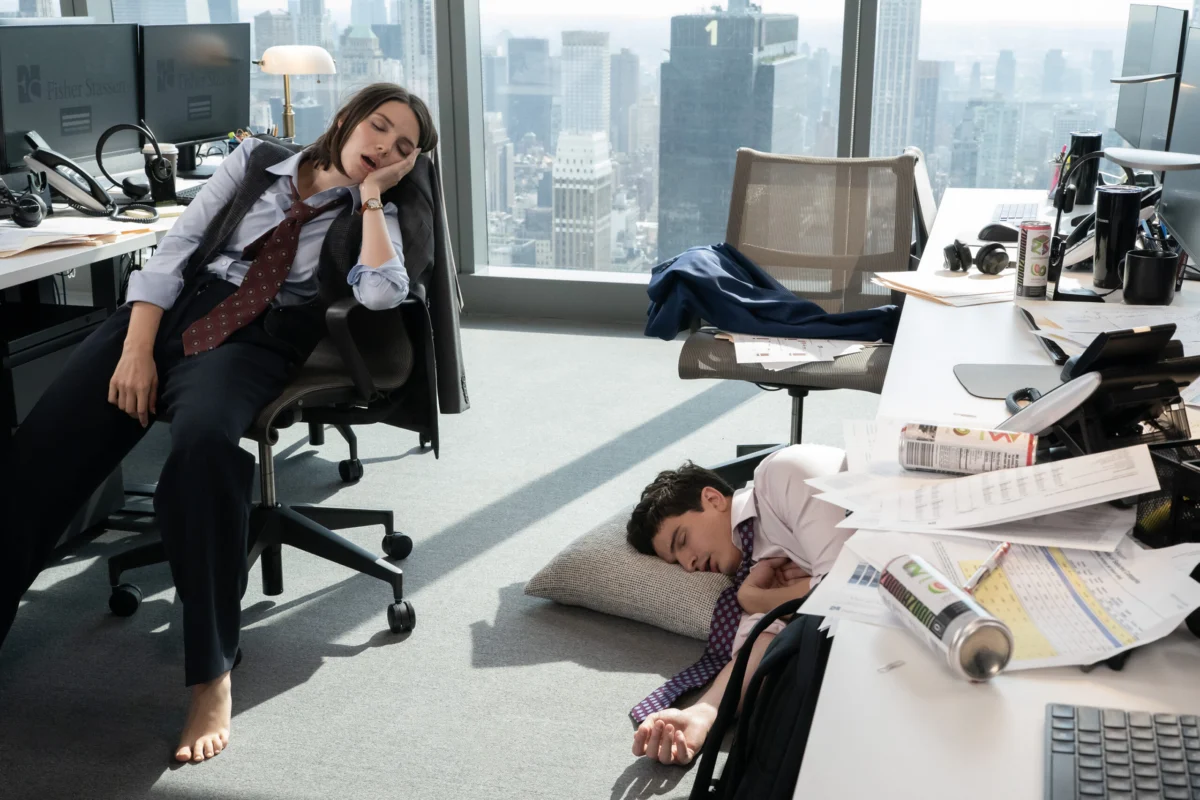
Mindy Kaling’s latest venture into the realm of romantic comedies, "Not Suitable for Work," has landed on Hulu, aiming to capture the hearts of a generation that grew up with the comfort of shows like "Friends," "New Girl," and "How I Met Your Mother." The series, created by Kaling, presents a familiar yet somewhat anachronistic blueprint: young adults navigating the complexities of big city life, early career struggles, and the inevitable romantic entanglements. While its core formula is a proven recipe for engaging television, "Not Suitable for Work" leans heavily into a nostalgic sensibility that, for better or worse, positions it as a throwback to an earlier era of television, even as it purports to represent contemporary Gen Z experiences.
The foundational premise of "Not Suitable for Work" is straightforward and enduringly appealing. Set against the backdrop of a New York City that likely exists more in the realm of television fantasy than reality – featuring impossibly spacious and affordable apartments – the narrative centers on two young women residing across the hall from three young men. This proximity naturally fosters romantic tensions, with crushes flitting between the characters, though often at inopportune moments. In a touch that further underscores the show’s retro feel, all the main characters are presented as strictly heterosexual, a departure from the more fluid and diverse romantic landscapes often depicted in contemporary programming.
The ensemble cast is a key strength, populated by fresh faces who, while not yet household names, possess a palpable charm and relatability. Ella Hunt, known for her role in "Dickinson," stars as AJ, a junior financial analyst grappling with demanding work hours. Avantika, who recently impressed audiences in the 2024 remake of "Mean Girls," plays Abby, an assistant to a high-profile celebrity stylist. Nicholas Duvernay, a familiar face from "The White Lotus," portrays Kel, a medical school dropout pursuing an acting career while working as a substitute teacher. Jack Martin, previously seen in "La Brea," takes on the role of Josh, the son of a network CEO who has leveraged his connections to secure a position as a production assistant on an investigative news program. Rounding out the male contingent is Will Angus as Davis, also a junior financial analyst alongside AJ, and Jay Ellis, who appears as their demanding boss.
A Throwback to the 2000s in a 2020s Setting
Despite its contemporary setting in present-day New York City, "Not Suitable for Work" offers a vision of love and career that feels decidedly rooted in the late 20th and early 21st centuries. This nostalgic bent, while potentially offering a comforting escape for viewers, creates a curious disconnect. For a show ostensibly about Gen Z, its depiction of young adult life in the 2020s feels remarkably, and at times jarringly, Millennial. The show’s creator, Mindy Kaling, known for her ability to capture the zeitgeist of young adulthood, seems to be drawing from her own formative experiences or a curated selection of past television tropes.
This disconnect is most evident in the show’s engagement with contemporary realities. While the characters are navigating their early careers and are ostensibly single and looking to mingle, the ubiquitous presence of dating apps is conspicuously absent from the narrative. Similarly, the realities of the modern gig economy, content creation as a viable income stream, or the pervasive anxieties surrounding the entry-level job market are largely overlooked. Instead, the characters’ struggles are framed within a more traditional, albeit still challenging, career ladder. One character’s regret over a tattoo acquired during the One Direction craze, a band that disbanded in 2016, serves as a subtle but significant marker of the show’s temporal displacement.
Navigating Early Career Woes
The day-to-day lives of the main characters are characterized by the common indignities of entry-level employment. Davis and AJ endure grueling 80-hour workweeks under the supervision of a demanding boss. Abby’s role as an assistant involves a litany of thankless tasks for her celebrity stylist employer. Kel juggles substitute teaching with his burgeoning acting aspirations, while Josh, the “nepo-baby,” navigates his PA position, seemingly shielded from the harshest realities of the job market by his familial connections.
This focus on early-career struggles, while relatable, lacks the specific cultural touchstones that define contemporary Gen Z experiences. Unlike series such as FX’s "The Bear" or HBO’s "Industry," which delve into the high-stakes, often ethically ambiguous worlds of finance and culinary arts with a sharp, modern edge, "Not Suitable for Work" opts for a more generalized, almost timeless portrayal of professional ambition and frustration. Shows like FX’s "The Bear," which premiered in 2022, or HBO’s "Industry," which debuted in 2020, have successfully captured the anxieties and aspirations of younger generations through specific, culturally relevant narratives. "Not Suitable for Work," in contrast, feels like a more generalized, almost idealized vision of young professional life.
Glimmers of Modernity, Ultimately Unfulfilled
On the rare occasions when "Not Suitable for Work" attempts to incorporate more current concerns, these storylines often feel underdeveloped and ultimately unsatisfying. Kel’s audition for a role involving AI motion capture, a nod to the burgeoning field of digital performance, is an example of this. Similarly, Josh’s task of debunking Reddit conspiracy theories surrounding his boss, the Anderson Cooper-esque Wes Dryden (portrayed by Victor Garber), touches upon the pervasive nature of online misinformation but fails to develop into a compelling narrative arc. These fleeting moments of contemporary relevance highlight the show’s broader tendency to shy away from fully embracing the complexities of the present day.
The Comfort of Familiarity
Where "Not Suitable for Work" falters in its contemporary relevance, it compensates with an abundance of comfort-food familiarity. The show’s greatest asset is undoubtedly its ensemble cast, whose palpable chemistry creates an immediate sense of camaraderie and invites viewers to settle in alongside them. This is particularly evident in the portrayal of the three male friends and their unique tradition of "Steak and Tears." This ritual, where they treat each other to upscale dinners to commiserate over bad news, offers a refreshingly positive depiction of male friendship and emotional vulnerability, a welcome counterpoint to narratives of male loneliness.
The series also displays a genuine affection for its characters, even when their choices are questionable or their ambitions seem misguided. This warmth is crucial for endearing viewers to a cast that includes figures like Josh, whose reliance on his father’s influence is a recurring theme. Jack Martin imbues Josh with a certain softness that suggests his heart is in the right place, making his privileged position more palatable. The character of Davis, however, presents a more challenging proposition. His earnest romanticism occasionally veers towards a bitterness that, in a more contemporary setting, might be linked to online subcultures, though these are absent from the show’s universe. Will Angus’s energetic performance, while often fitting, sometimes feels geared towards a broader, more slapstick comedy than the nuanced tone "Not Suitable for Work" otherwise strives for.
Romantic Entanglements Drive the Narrative
The central focus on the characters’ romantic lives provides a significant engine for the show’s narrative momentum. The intricate web of romantic entanglements, characterized by messy overlaps and dramatic twists, generates the kind of juicy plot points that would undoubtedly ignite a flurry of activity in a real-life group chat. AJ, in particular, finds herself at the center of a particularly complex romantic web, juggling not one, not two, but three significant potential love interests over the course of the season’s nine episodes. While this emphasis on romantic relationships offers immediate dramatic fodder, it raises questions about the show’s long-term sustainability. If the romantic entanglements eventually become exhausted, the series will need to rely more heavily on the strength of its friendship and group dynamics to maintain viewer engagement. However, should "Not Suitable for Work" secure a second season, there is ample room for these foundational relationships to deepen and evolve.
A Fond Farewell to a Bygone Era
Ultimately, "Not Suitable for Work" is a show that is remarkably easy to watch. Its likable ensemble, coupled with sharply written jokes and a consistent, even tone, avoids excessive edginess, profundity, or sentimentality. The series’ ability to achieve this smooth, effortless viewing experience stems, in part, from its characters’ apparent lack of significant, long-lasting consequences for their actions. For viewers seeking a gritty, realistic portrayal of modern young adulthood, this may prove to be a drawback. However, for those yearning to escape into a comforting fantasy world – one that perhaps never truly existed, or at least, no longer exists in its depicted form – "Not Suitable for Work" offers a certain old-fashioned appeal. The series, should it be granted further seasons, has the potential to mature, perhaps by more fully embracing the contemporary landscape it so delicately skirts around, or by leaning even further into its nostalgic charm, solidifying its place as a beloved comfort watch for those who appreciate a touch of the past in their present entertainment.