Ferry Irwandi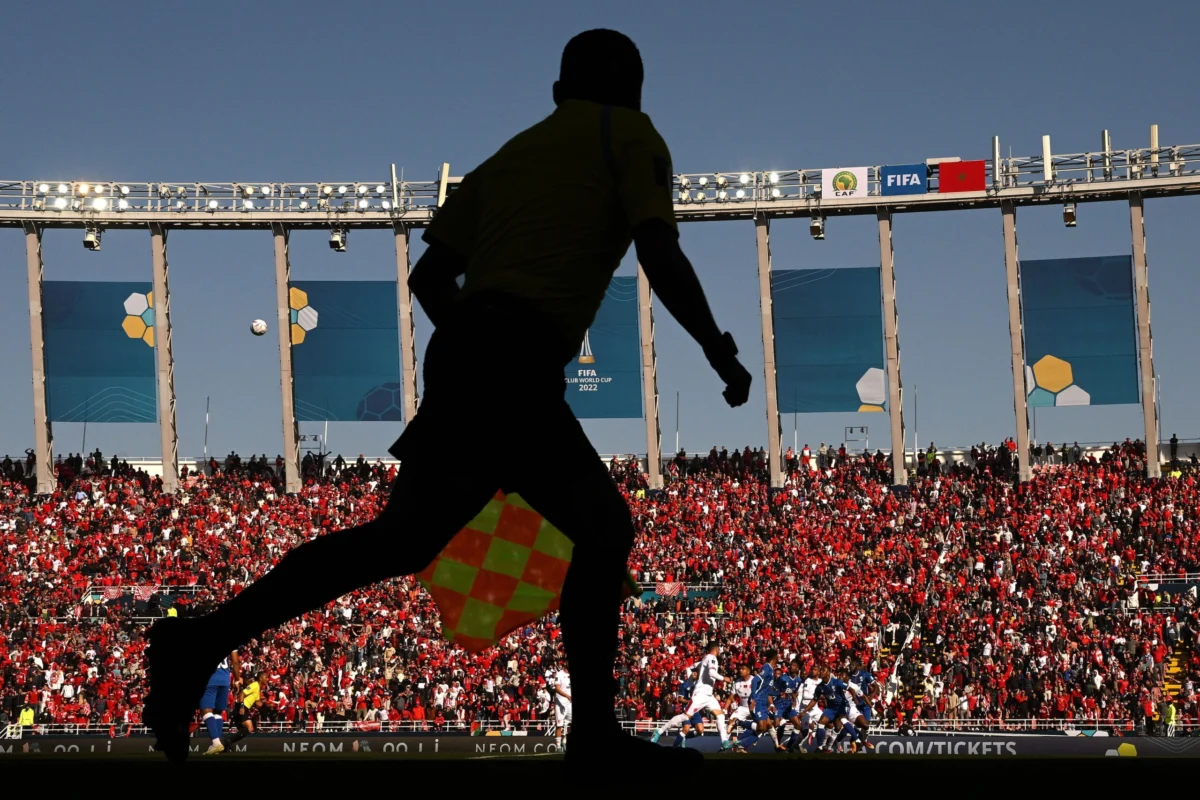
In the coastal metropolis of Casablanca, the arrival of a major soccer match is not merely a sporting event; it is a seismic shift in the city’s atmospheric pressure. Long before the opening whistle, a low-frequency roar begins to roll through the streets like a rising tide, echoing off the concrete facades of the country’s industrial capital. This auditory phenomenon is composed of rhythmic drums, the sharp piercing of whistles, and the synchronized chanting of thousands. As the sun sets, lines of cars draped in flags inch toward the Stade Mohammed V, their horns blaring in cadences that signal either a fierce loyalty to the color red or a defiant commitment to green. By the time the stadium gates open, the city of over three million residents feels as though it is on the verge of a cultural eruption.
For the people of Casablanca, soccer serves as a shared language and a vital emotional outlet in a city where ambition and daily frustration frequently collide. While the sport is a national obsession across Morocco—from the northern alleys of Tangier to the red-walled riads of Marrakech—Casablanca remains its undisputed spiritual and competitive epicenter. The city is home to two of Africa’s most storied and successful clubs: Wydad Athletic Club (WAC) and Raja Club Athletic (RCA). Their rivalry, known as the Casablanca Derby, is more than a game; it is a historical narrative of resistance, identity, and social class that has shaped the city for nearly a century.

The Historical Foundations of a Divided City
The roots of Casablanca’s soccer obsession are deeply intertwined with Morocco’s struggle for sovereignty. The two primary clubs were born out of distinct eras of the 20th century, each reflecting the sociopolitical anxieties of their time. Wydad Athletic Club was founded in 1937 during the French Protectorate. At the time, Moroccan participation in organized sports was strictly monitored and often restricted by colonial authorities. The establishment of Wydad was an act of quiet but firm defiance. Moroccan nationalists recognized soccer as a vehicle for organization and a means to reclaim public spaces from which they had been marginalized. Under the guidance of early pioneers like Mohamed Benjelloun Touimi, the club became a symbol of national dignity and a rallying point for those seeking independence.
A little over a decade later, in 1949, Raja Club Athletic was established in the working-class neighborhood of Derb Sultan. This period marked the final, volatile years leading up to Moroccan independence in 1956. Casablanca was a city defined by labor strikes, protests, and a widening wealth gap. Raja emerged from these grassroots communities, shaped by a generation navigating the pressures of rapid urbanization and colonial rule.
Historically, the two clubs developed contrasting identities that still resonate today. Wydad became synonymous with structure, national tradition, and a disciplined approach to the game. In contrast, Raja earned a reputation for "Rajaoui" flair—a creative, improvisational style of play that mirrored the rebellious spirit of its supporters. This dichotomy created a city split down the middle, where residents are famously identified as being either "dima Raja" (always Raja) or "dima Wydad" (always Wydad).

The Casablanca Derby: A Metamorphosis of the Donor
The ultimate expression of this rivalry occurs during the Casablanca Derby, held at the Stade Mohammed V, locally nicknamed the "Donor." On match day, the stadium undergoes a physical and emotional metamorphosis. The venue is divided into two distinct territories: the Curva Nord, which erupts in a tidal wave of carmine red for Wydad, and the Magana Curve to the south, which presents a shimmering wall of emerald green for Raja.
"Casablanca has one of the most passionate football cultures in the world," notes Omar Boumeshoul, a local Raja supporter. "The rivalry splits the city into two. You aren’t just a fan; your identity is tied to which curve you stand in."
The spectacle within the stands is often as significant as the action on the pitch. Moroccan "ultras" are world-renowned for their "tifos"—large-scale, coordinated visual displays involving banners, flares, and mosaics. These displays are not merely decorative; they often contain complex political allegories or messages regarding social justice. The preparation for a 90-minute derby begins weeks in advance in secret workshops across the city. Fans fund, design, and construct these massive banners themselves, viewing the stadium as a canvas for the city’s collective imagination.

The chants echoing through the Donor also carry deep social weight. Raja’s anthem, "Rajawi Falastini," and the widely recognized "F bladi delmouni" ("In my country, they wronged me") have transcended the stadium to become anthems of social commentary among Moroccan youth. For many, the stadium is the only place where their voices can be heard at such a massive, unified scale.
The 2022 World Cup and the Unification of Rivals
While the local rivalry remains fierce, the Moroccan national team’s performance at the 2022 FIFA World Cup in Qatar provided a rare moment of total unification. Morocco’s historic run—beating global powerhouses Portugal, Spain, and Belgium to become the first African and Arab nation to reach a World Cup semi-final—reshaped the landscape of Moroccan soccer.
During the tournament, the "red vs. green" animosity of Casablanca was temporarily suspended. The city spoke a single language of national pride. "Even people who argue every week about the derby were together," says Boumeshoul. "You didn’t care who someone supported; you just cared that Morocco was winning."

This success had tangible implications for the sport’s infrastructure and prestige. The Moroccan Royal Football Federation (FRMF), led by Fouzi Lekjaa, has invested heavily in academies like the Mohammed VI Football Academy, which produced stars like Achraf Hakimi and Youssef En-Nesyri. The 2022 performance validated this long-term investment and elevated Morocco’s status as a burgeoning global soccer hub.
Supporting Data and Economic Impact
The passion for soccer in Casablanca is backed by significant numbers. The Stade Mohammed V, with a capacity of approximately 45,000 to 67,000 depending on security configurations, consistently sells out for major fixtures. The economic impact of these clubs extends into the informal economy, where thousands of vendors sell merchandise, street food like sizzling kefta, and cups of mint tea.
Furthermore, the "Derby effect" has begun to attract international sports tourism. In recent years, travel agencies have reported an uptick in visitors from Europe, the Middle East, and sub-Saharan Africa flying into Casablanca specifically to witness the atmosphere of the derby. This influx of tourism is expected to grow as Morocco prepares for future international responsibilities.

The digital footprint of Moroccan soccer has also expanded. Rivalries now play out on TikTok and WhatsApp, where chants are learned and tifo designs are teased to millions of followers. This digital engagement has turned local matches into global content, further cementing Casablanca’s reputation as a "must-visit" destination for soccer purists.
Broader Impact and the Road to 2026 and 2030
As the global soccer community looks toward the 2026 FIFA World Cup in North America, Morocco is positioning itself as a central player in the sport’s future. The country’s successful bid to co-host the 2030 FIFA World Cup alongside Spain and Portugal has accelerated infrastructure projects across Casablanca. Plans for the Grand Stade de Casablanca, a massive new stadium in Benslimane with a projected capacity of 115,000, are currently underway. This venue is expected to be one of the largest in the world, intended to host the 2030 World Cup final.
These developments represent a shift from soccer as a local pastime to soccer as a pillar of national development and soft power. However, for the residents of neighborhoods like Derb Sultan or the Ancienne Medina, the heart of the game remains local. In Derb Sultan, the walls remain a gallery of green graffiti, where old men sit in plastic chairs debating lineups over "noss-noss" (half-milk, half-coffee). In the Medina, red Wydad flags still flutter from sun-bleached balconies.

The upcoming 2026 World Cup will serve as another litmus test for this culture. On June 13, when Morocco faces Brazil in a high-profile group stage match, the city’s cafes are expected to be at capacity weeks in advance. Families will transform rooftops into communal viewing spaces, and the partisan divide of the derby will once again be set aside for the national cause.
Conclusion: A City Defined by the Pitch
The soccer culture of Casablanca is a living, breathing entity that reflects the history and aspirations of the Moroccan people. From its origins as a tool of anti-colonial resistance to its current status as a global phenomenon, the sport remains the primary lens through which the city views itself. Whether it is the artistic defiance of a Raja tifo or the disciplined pride of a Wydad victory, the game provides a sense of belonging that few other institutions can offer.
As Casablanca prepares for the global spotlight of 2026 and the hosting duties of 2030, the intensity of its local scene shows no signs of waning. The "Donor" may be replaced by newer, larger stadiums, and the chants may evolve for a digital age, but the underlying pulse remains the same. In Casablanca, soccer is not just a game; it is the rhythm of the city itself—a rising tide of sound that reminds the world that here, the pitch is the ultimate stage for the story of a nation.