
 Prabowo Widodo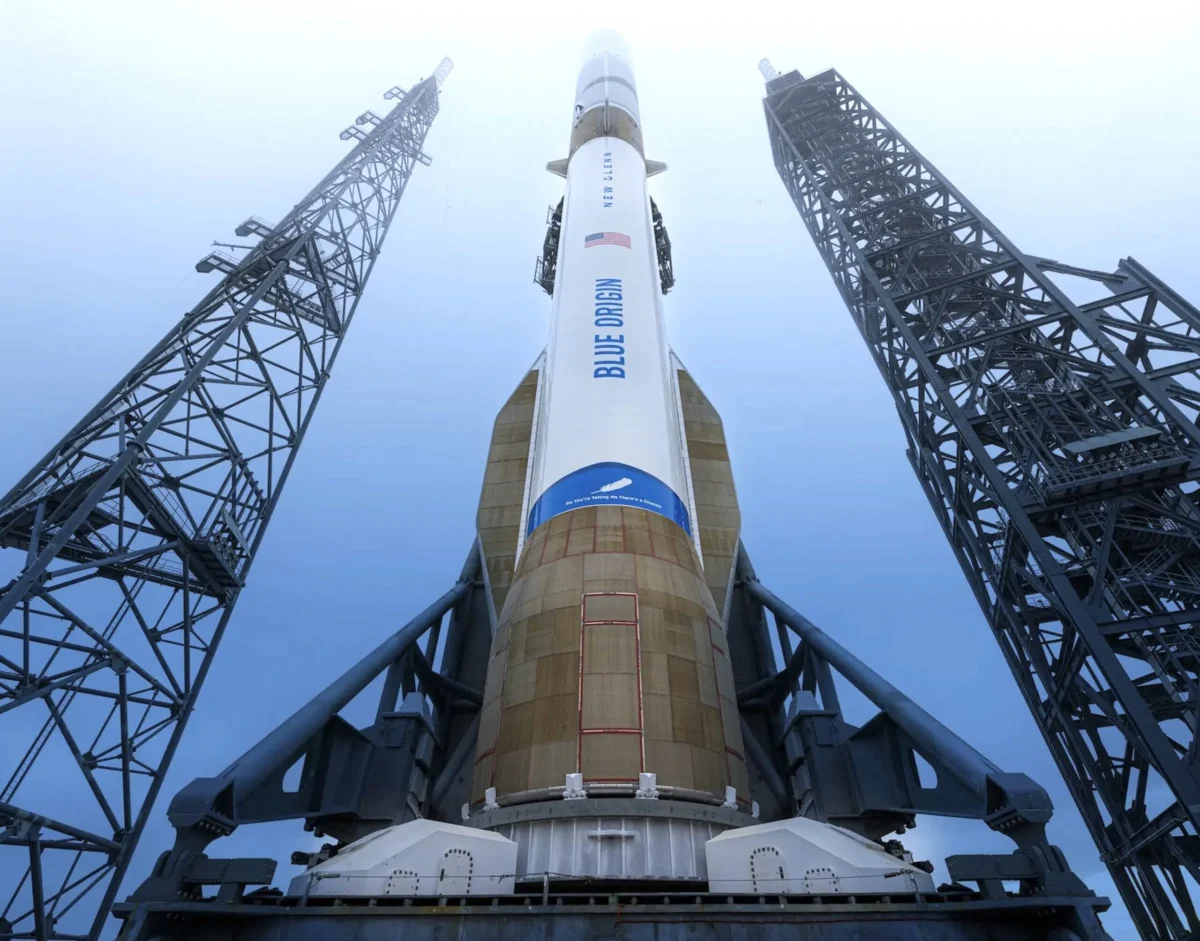
The highly anticipated New Glenn mega-rocket, a cornerstone of Jeff Bezos’s Blue Origin space enterprise, experienced a catastrophic explosion during a static fire test at its launch site in Cape Canaveral, Florida, on Thursday evening. Live streams from prominent space news outlets like NASASpaceFlight.com and SpaceFlight Now captured the fiery event, which was later confirmed by Blue Origin, marking the most significant failure in the company’s history and potentially one of the largest rocket explosions ever recorded in the United States. The incident, occurring as the rocket was likely fully fueled in preparation for its fourth anticipated launch, signals a substantial setback for Blue Origin’s ambitious orbital launch program, which aimed to challenge the dominance of rivals like SpaceX.
The Catastrophic Anomaly Unfolds
The explosion occurred during a routine but critical static fire test, a procedure designed to verify the readiness of a rocket’s engines and fuel systems by firing them at full thrust while the vehicle remains securely bolted to the launchpad. This crucial pre-launch check simulates the immense forces and thermal stresses of a liftoff without the inherent risks of an actual flight. Given that the New Glenn was being prepared for its fourth mission, which was slated to carry Amazon Leo internet satellites into orbit, it is highly probable the rocket was fully loaded with its propellants—typically cryogenic liquid oxygen (LOX) and liquid hydrogen (LH2) for its upper stage, and liquefied natural gas (LNG) and liquid oxygen for its first stage BE-4 engines. The immense energy contained within these volatile fuels contributed directly to the devastating scale of the explosion, creating a spectacle visible for miles around Florida’s Space Coast.
Blue Origin promptly confirmed the "anomaly" via an X post, assuring the public that "All personnel have been accounted for." Jeff Bezos, the founder of Blue Origin and Amazon, echoed this sentiment, confirming that all staff were "safe" and acknowledging the severity of the incident. "It’s too early to know the root cause but we’re already working to find it. Very rough day, but we’ll rebuild whatever needs rebuilding and get back to flying. It’s worth it," Bezos wrote, signaling the company’s determination to overcome this significant hurdle and emphasizing the long-term vision that underpins Blue Origin’s mission.
A Decade in the Making: The Promise of New Glenn
The New Glenn heavy-lift rocket represents a monumental investment and a decade of painstaking development for Blue Origin, Jeff Bezos’s privately funded aerospace manufacturer. Named after pioneering American astronaut John Glenn, the rocket was conceived as a direct competitor to SpaceX’s Falcon 9 and Falcon Heavy, aiming to provide a reliable, reusable, and cost-effective solution for launching large satellites, national security payloads, and eventually, crewed missions to deep space. Standing at nearly 322 feet (98 meters) tall, New Glenn is designed to be a two-stage vehicle, with its first stage powered by seven BE-4 engines (fueled by liquefied natural gas and liquid oxygen) and specifically engineered for vertical landing and reuse, much like SpaceX’s Falcon 9 booster. The second stage uses a single BE-3U engine, burning liquid hydrogen and liquid oxygen, optimized for orbital insertion.
Blue Origin’s strategic approach to space exploration has long involved a dual-path development: the suborbital New Shepard program, which has successfully carried tourists and scientific payloads to the edge of space, serving as a vital testbed for crewed flight systems and advanced propulsion; and the orbital New Glenn program, intended for heavier payloads and more ambitious, long-duration missions into Earth orbit and beyond. The catastrophic static fire explosion of New Glenn is particularly painful as it strikes at the core of the company’s long-term vision to establish a robust and competitive presence in orbital spaceflight, a critical step towards enabling humanity’s expansion into space and the realization of Bezos’s vision for millions of people living and working off-Earth. The sheer scale of the investment, estimated in the billions of dollars, underscores the profound impact of this setback.
A Rocky Path to Orbit: New Glenn’s Nascent Flight History
Prior to this catastrophic test failure, New Glenn had already embarked on a nascent, albeit mixed, operational history since its inaugural flight in January 2025. This chronology provides crucial context for understanding the challenges inherent in developing a new heavy-lift launch vehicle:
- First Flight (January 2025): New Glenn achieved orbit successfully, a critical initial milestone that demonstrated the rocket’s fundamental design and propulsion systems were capable of reaching space. However, the first stage booster, intended for recovery and reuse, experienced an anomaly and exploded before it could attempt a controlled landing on Blue Origin’s autonomous drone ship, the "Jacklyn," stationed in the Atlantic Ocean. Despite the loss of the booster, reaching orbit on the maiden flight was widely considered a strong start, validating the rocket’s core capabilities.
- Second Flight (November 2025): This mission marked a significant triumph for Blue Origin. New Glenn successfully launched twin spacecraft for NASA destined for Mars, showcasing its heavy-lift capabilities for complex scientific missions. Crucially, Blue Origin also achieved its first successful vertical landing of the New Glenn booster stage, a monumental step towards proving the economic viability of reusable rocket technology and validating years of research and development into precise landing maneuvers.
- Third Flight (April 2026): Building on the success of the second mission, Blue Origin successfully re-flew the booster from the second mission, demonstrating its ability not only to recover but also to refurbish and reuse the first stage. The booster once again executed a flawless landing on one of Blue Origin’s drone ships. However, this mission was marred by an anomaly in the rocket’s upper stage, specifically identified as a cryogenic failure, which resulted in the inability to deliver an AST SpaceMobile satellite into its intended orbit. This led to a total loss of the mission payload, highlighting persistent challenges in the complex and sensitive systems required for orbital operations.
Just weeks before the most recent explosion, the Federal Aviation Administration (FAA) had cleared New Glenn to fly again, following a thorough investigation into the upper stage failure of the third mission. This clearance underscored the regulatory body’s satisfaction with Blue Origin’s corrective actions and safety protocols, making the subsequent catastrophic explosion during a static fire test even more jarring and unexpected.
Industry Reactions and Regulatory Oversight
The explosion quickly drew reactions from across the aerospace industry and governmental bodies, underscoring the interconnected nature of the space sector. Elon Musk, CEO of rival SpaceX, offered a concise but empathetic message on X: "Most unfortunate. Rockets are hard. I hope you recover quickly." His words acknowledge the inherent difficulties, risks, and shared challenges in rocket development and operation, a sentiment widely understood and shared within the competitive yet collaborative space community.
NASA Administrator Jared Isaacman issued a statement indicating that the agency would "work with our partners to support a thorough investigation of this anomaly, assess near-term mission impacts, and get back to launching rockets." NASA maintains a vested interest in Blue Origin’s success, having contracted the company for various critical components of its Artemis lunar missions, including the Human Landing System (HLS) program, and for scientific payloads. The FAA, the primary regulatory body responsible for commercial space launch safety in the United States, confirmed its awareness of the incident and reported "no impact to air traffic," indicating that the explosion was contained to the immediate launch complex and did not pose a broader public safety risk beyond the site. The FAA will play a crucial and legally mandated role in overseeing Blue Origin’s failure investigation, ensuring its thoroughness, and ultimately determining the cause of the failure before any future New Glenn launches can be considered.
On a local and national political level, Congressman Mike Haridopolos (R-FL), who represents the district encompassing Cape Canaveral, expressed his gratitude that "no reported injuries" occurred and thanked "first responders, engineers, and launch crews who acted quickly." He also noted his conversation with NASA Administrator Isaacman regarding the incident, highlighting the significant local economic and national strategic importance of space operations on the Florida coast.
Implications for Key Space Programs and Market Competition
The catastrophic failure of the New Glenn rocket carries significant implications for several high-profile space initiatives and Blue Origin’s competitive standing:
- Amazon Project Kuiper (Leo Satellites): This upcoming fourth mission was slated to be the first of 24 launches contracted by Amazon for its Project Kuiper, a burgeoning satellite internet constellation designed to compete directly with SpaceX’s Starlink. While Amazon confirmed that no Leo satellites were onboard during the test, the extended grounding of New Glenn will inevitably delay the deployment schedule for Kuiper. Amazon had recently touted New Glenn as a "reusable, heavy-lift rocket" capable of rapidly building out its global network, making this setback particularly ill-timed for the e-commerce giant’s ambitious space ambitions. Project Kuiper’s success hinges on a rapid, reliable, and cost-effective launch cadence, and this incident forces Amazon to re-evaluate its reliance on Blue Origin, potentially leading to diversification of launch providers or significant delays in its operational timeline.
- NASA Artemis Missions: Blue Origin is a key partner in NASA’s ambitious Artemis program, which aims to return humans to the Moon and establish a sustainable lunar presence. The company is involved in developing lunar landers and other critical infrastructure. Just earlier this week, NASA highlighted Blue Origin’s expected role in the program, underscoring its importance to the national space agenda. Administrator Isaacman’s promise to "provide any impacts to the Artemis and Moon Base programs as it becomes available" underscores the potential for this failure to ripple through the lunar exploration timeline. Delays in Blue Origin’s development, production, or operational readiness could directly affect NASA’s ability to meet its aggressive Artemis schedule and strategic goals.
- National Security Launches: Blue Origin has also been vigorously vying for lucrative national security launch contracts from the Pentagon, competing for a share of missions vital to U.S. defense and intelligence. Reliability and a consistent launch schedule are paramount for securing and maintaining these contracts under the highly competitive National Security Space Launch (NSSL) program. This major failure could significantly undermine confidence in New Glenn’s operational readiness and potentially impact Blue Origin’s ability to secure or maintain such critical government contracts in a market where trust and proven performance are paramount. The company had planned as many as 12 New Glenn launches this year, a target now rendered unattainable.
- Competitive Landscape: The incident intensifies the already fierce competition in the commercial space launch market, dominated by SpaceX. Blue Origin has invested heavily in New Glenn as its primary offering for the heavy-lift sector. This setback provides SpaceX, and other emerging players like United Launch Alliance (ULA) with its Vulcan Centaur rocket, an opportunity to consolidate market share and potentially absorb contracts that Blue Origin might have secured. The long-term reputational impact, while difficult to quantify immediately, will be a significant factor in future customer acquisition.
The Road Ahead: Investigation and Rebuilding
The immediate priority for Blue Origin will be a comprehensive and exhaustive investigation into the root cause of the "anomaly." This process, typically overseen by the FAA and involving a multidisciplinary team of engineers, will meticulously analyze all available telemetry data, review manufacturing and assembly records, conduct forensic examinations of any recoverable wreckage from the launch site, and simulate potential failure scenarios. Such investigations are notoriously complex and time-consuming, often taking many months, if not over a year, to definitively pinpoint the exact sequence of events and technical failures that led to the catastrophic explosion.
The incident underscores the brutal realities of rocket science. Despite advanced engineering, rigorous testing, and billions of dollars in investment, spaceflight remains an endeavor fraught with inherent risks. Failures, while devastating in the short term, are also crucial learning opportunities that have historically driven innovation and improved safety across the aerospace industry. Blue Origin now faces the immense challenge of rebuilding damaged hardware, reassessing its engineering and operational procedures, and, most importantly, restoring confidence among its customers, regulatory bodies, and the public. Jeff Bezos’s declaration that "we’ll rebuild whatever needs rebuilding and get back to flying. It’s worth it," encapsulates the long-term perspective often required in the space industry, where setbacks are viewed as temporary obstacles on the path to greater achievements. The resilience of the company and its unwavering commitment to safety and innovation will be severely tested in the months and years to come as it strives to bring the New Glenn back to flight and fulfill its ambitious vision for humanity’s future in space.









