Danny Garick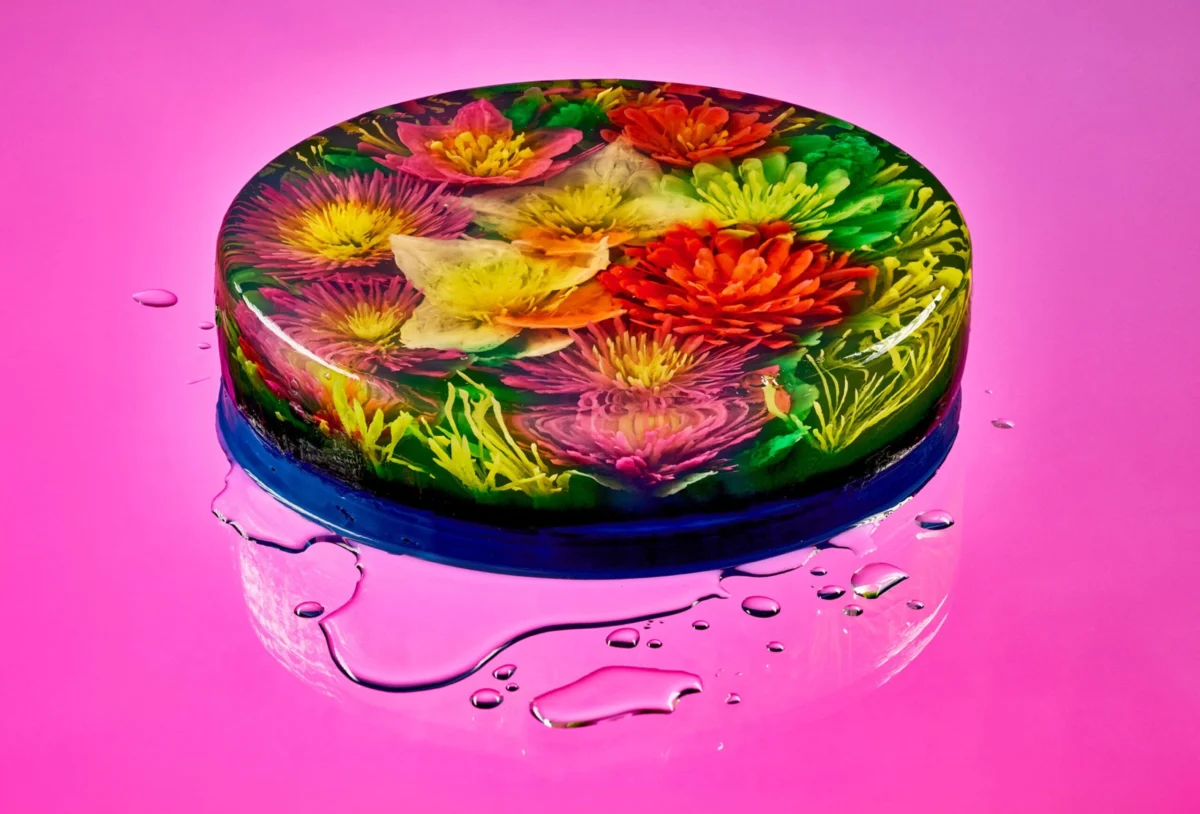
In the competitive landscape of the New York culinary scene, the intersection of traditional heritage and avant-garde technique often yields the most compelling results. Thu Buser, a Brooklyn-based chef and culinary artist, has emerged as a prominent figure in this space, transforming the traditional Vietnamese dessert known as rau câu into a medium for high-level sculptural art. By utilizing medical-grade syringes as paintbrushes and agar-agar as a canvas, Buser has elevated a domestic staple into a sophisticated display of botanical precision and flavor complexity. Her work represents a broader trend in the global gastronomic community where regional home-style dishes are meticulously deconstructed and rebuilt using modern artistic sensibilities.
Rau câu, a jelly-based dessert traditionally made from agar-agar—a hydrocolloid derived from red algae—has long been a fixture of Vietnamese celebratory feasts and casual gatherings. In its most common form, the dessert consists of thin, alternating layers of flavor such as coconut milk, coffee, or pandan. However, Buser’s approach eschews the standard linear layering in favor of three-dimensional internal sculptures. Using a technique that requires both surgical precision and spatial intuition, she injects flavored liquids into a clear jelly base to create intricate floral patterns. These "blooms" are suspended within a transparent dome, resulting in a product that functions as much as a visual centerpiece as a culinary item.
The Technical Foundation of 3D Jelly Art
The process of creating these stylized desserts is rooted in the specific physical properties of agar-agar. Unlike animal-based gelatin, which is derived from collagen, agar-agar is a plant-based substance that remains stable at room temperature and possesses a higher melting point, approximately 85 degrees Celsius (185 degrees Fahrenheit). This thermal stability is crucial for Buser’s work, as it allows the clear base to hold its structural integrity while warm, flavored liquids are injected into it.
Buser’s methodology involves a "bottom-up" construction. The artist begins with a perfectly clear, solidified dome of agar-agar. Using a syringe and various specialized needle tips, she punctures the base from the underside. Because she is working from the bottom of the mold, the final appearance of the floral arrangement is hidden from her view during the creation process. This "blind" execution demands an exceptional degree of muscle memory and spatial awareness. Each "staccato jab," as she describes it, represents a petal or a leaf, and the pressure applied to the syringe determines the spread and saturation of the color.
The flavors Buser selects are a blend of traditional Vietnamese profiles and modern global influences. Electric green coconut-pandan, yellow yuzu-lychee, and fuchsia coconut-ube provide the color palette for her work. These ingredients are not merely for aesthetic appeal; they are chosen for their ability to remain vibrant and distinct within the clear suspension. The use of natural juices and extracts ensures that the flavor profile remains as refined as the visual presentation.
Chronology and Evolution of the Craft
The evolution of Buser’s craft can be traced back to her childhood, where she observed her mother preparing traditional batches of rau câu. In the Vietnamese context, the preparation of this dessert is a time-intensive labor of love, often requiring hours of cooling and layering. For Buser, these early observations formed the foundation of her understanding of the medium’s limitations and possibilities.
The transition from traditional layering to 3D injection art reflects a broader movement that gained momentum in Southeast Asia—particularly in Vietnam, Malaysia, and Thailand—during the early 21st century. While the 3D jelly art technique likely originated as a niche hobbyist craft, it has increasingly been adopted by professional pastry chefs who see it as an opportunity to merge sculpture with patisserie. Buser moved to Brooklyn and brought this specialized skill set to a Western audience, where the demand for "experience-based" and visually striking food has reached an all-time high.
Buser’s specific style has evolved from the delicate, realistic pinks of traditional orchids toward a more "maximalist" aesthetic. Her current work often features neon hues and expressively ruffled, undulating variations that challenge the viewer’s perception of what a dessert should look like. This shift toward the "uncanny" and the "alien" marks her departure from purely representational art into the realm of expressive culinary abstraction.
Supporting Data and Market Context
The rise of artisanal desserts like Buser’s jelly art is supported by significant shifts in the global food and beverage market. According to recent market research, the global artisanal bakery and dessert market is projected to grow at a compound annual growth rate (CAGR) of approximately 4.5% over the next five years. Consumers are increasingly seeking products that offer "visual theater," a trend heavily driven by social media platforms such as Instagram and TikTok.
In the United States, the "visual food" economy has led to a 20% increase in the value of aesthetically unique desserts compared to traditional counterparts. Chefs who can offer a "surprise" or a "reveal" element—such as Buser’s mystery arrangements that are only seen once the mold is removed—are particularly well-positioned in this market. Furthermore, the use of agar-agar aligns with the growing demand for plant-based and vegan-friendly dessert options. As a seaweed derivative, agar-agar is naturally gluten-free and vegan, making it an attractive alternative to traditional gelatin for a health-conscious and ethically minded demographic.
Professional and Community Reactions
The response to Buser’s work from the culinary community has been largely one of fascination with her technical proficiency. Food critics have noted that while many "Instagrammable" foods sacrifice flavor for appearance, Buser’s use of high-quality extracts like yuzu and ube maintains a high gastronomic standard.
Within the Vietnamese-American community, Buser’s work is seen as a form of cultural preservation through innovation. By taking a traditional childhood memory and transforming it into a high-art form in Brooklyn, she is bridging the gap between immigrant heritage and modern American culinary trends. "You surprise yourself every single time," Buser has remarked, a sentiment that resonates with other culinary artists who find that the unpredictability of the medium is what keeps the craft engaging.
Industry professionals have also pointed out the logistical challenges of Buser’s work. Unlike cakes or pastries that can be mass-produced, each of Buser’s jelly domes is a unique, hand-crafted piece. The "blind" injection method means that no two pieces are identical, which adds a layer of exclusivity to her products. This artisanal approach is often cited as a counter-movement to the industrialization of the food industry.
Broader Impact and Implications
The work of Thu Buser has implications that extend beyond the kitchen. It serves as a case study in how traditional cultural practices can be adapted to survive and thrive in new geographic and social contexts. In the broader world of food science, the precision required for 3D jelly art is being looked at with interest by those studying the rheology of hydrocolloids. The way the liquid "ink" interacts with the solid "canvas" of the agar base provides practical insights into the behavior of gels under pressure.
Furthermore, the "maximalist" aesthetic championed by Buser reflects a shift in modern design. For years, the culinary world was dominated by minimalism and clean lines. Buser’s "riot of fuchsia" and "kaleidoscope of electric green" suggest a return to bold, expressive colors and complex, organic shapes. This reflects a wider societal move away from the "millennial minimal" toward a more vibrant and diverse visual language.
As culinary schools begin to incorporate more specialized techniques from across the globe into their curricula, it is likely that 3D jelly art will become a more recognized discipline within the pastry arts. Buser’s success in Brooklyn demonstrates that there is a significant market for desserts that challenge the boundary between the edible and the ornamental.
In conclusion, Thu Buser’s reimagining of rau câu is a testament to the power of patience, precision, and cultural synthesis. By mastering the syringe and the agar-agar dome, she has created a new category of dessert that honors her Vietnamese roots while pushing the limits of modern culinary art. Her work remains a striking example of how the most traditional ingredients can, in the hands of a dedicated artist, become something entirely transformative and new. The final arrangement, a mystery until the very end, serves as a metaphor for the creative process itself: a disciplined journey into the unknown that results in a moment of genuine surprise and beauty.