Reynand Wu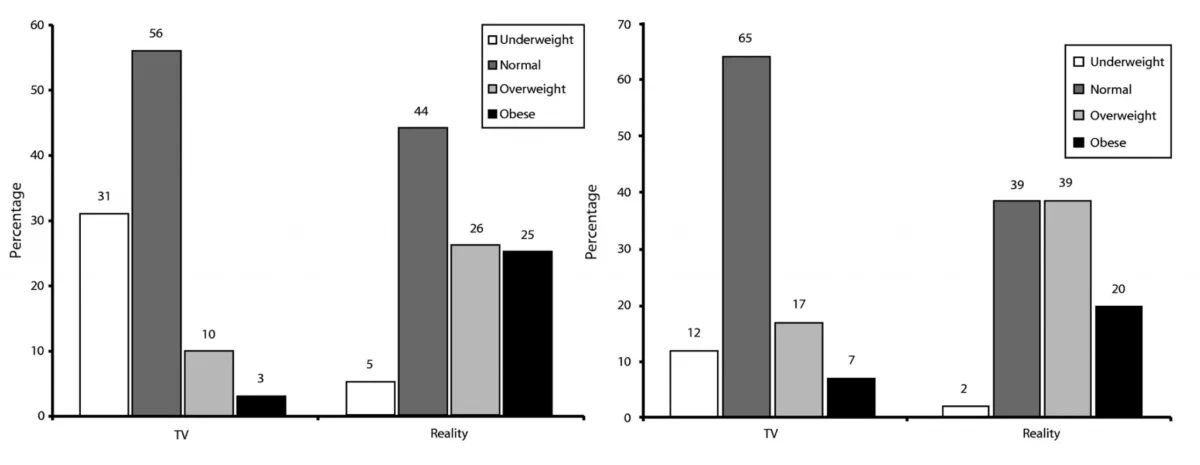
Television, a ubiquitous medium shaping societal perceptions, consistently distorts, mocks, and marginalizes individuals with larger bodies, reducing them to caricatures whose stories and identities are frequently underdeveloped and deemed inconsequential. This pervasive pattern contributes to a narrow definition of beauty, primarily equating it with thinness, and has profound implications for audience self-perception and broader societal attitudes towards weight. Research consistently underscores this detrimental trend, revealing a significant disparity in how different body types are represented and valued on screen.
A foundational study by Tzoutzou et al., for instance, illuminated the stark reality of appearance-based compliments in television narratives. Across their analysis, all 36 compliments pertaining to women’s appearance were exclusively directed at thin women. Not a single positive message regarding physical attractiveness was extended to a woman of average or overweight body type. For male characters, the pattern was strikingly similar, with only one overweight character receiving a positive appearance-related comment. This data unequivocally demonstrates a systematic bias, reinforcing the notion that external beauty solely resides within the confines of a thin ideal and explicitly excludes anyone who deviates from this narrow definition. Viewers, particularly those who do not conform to this dominant body standard, are left to internalize these messages, often leading to diminished self-esteem and a struggle to feel positive about their own bodies. The consistent negative or absent portrayal of larger bodies on screen directly impacts how audiences perceive themselves and others, fostering a culture of body dissatisfaction.
The Underrepresentation and Caricaturization of Larger Bodies
Beyond the qualitative absence of positive affirmation, the representation of fat people on television is not only overwhelmingly negative but also significantly underrepresented compared to real-world demographics. Studies dating back decades, such as those by Brownell et al. in 2003, have highlighted a substantial discrepancy between the body types seen on screen and those prevalent in the general population. Comparing female body types on television versus reality in 1999-2000, Brownell et al. found a stark contrast: a disproportionately high number of thin female characters compared to their actual prevalence, and a severe underrepresentation of average and overweight women. The same pattern was observed for male characters, where the media’s depiction leaned heavily towards thinner physiques, failing to mirror the diversity of male body types in society. This statistical imbalance creates a distorted reality for viewers, suggesting that larger bodies are anomalies rather than a natural part of human diversity.
The dehumanizing pattern of portraying fat individuals extends deeply into their character development, or rather, the lack thereof. Fat characters are frequently relegated to one-dimensional roles, serving as comedic relief or outright villains, thereby preventing the development of complex narratives and nuanced identities. In comedy, for instance, the humor often comes at the expense of fat women. Research indicates that overweight women are approximately twice as likely to be the target of a joke compared to their thinner counterparts. Their roles tend to be smaller, their romantic relationships less frequent or non-existent, and their interactions with other characters marked by fewer positive exchanges. This form of "punching down" comedy reinforces negative stereotypes and normalizes the ridicule of individuals based on their weight.
The villainization of fat characters is another deeply entrenched trope. A study by Himes and Thompson found that in 64% of the most popular children’s videos, obesity was explicitly equated with negative traits such as evil, unattractiveness, unfriendliness, and cruelty. Iconic examples from children’s media, such as Ursula from The Little Mermaid or the Queen of Hearts from Alice In Wonderland, vividly illustrate this phenomenon. These characters, often depicted with exaggeratedly large bodies, serve as antagonists, thereby forging a strong, often subconscious, connection between fatness and negative moral qualities in the minds of young, impressionable viewers. This narrative device effectively demonizes larger bodies, portraying them as inherently flawed or malevolent, rather than simply ignoring them. The consequence is that fat characters become less human, less relatable, and less deserving of empathy compared to other characters who are afforded full, intricate backstories and emotional arcs.
Historical Context and Evolution of Body Ideals in Media
The roots of these skewed media portrayals can be traced back through decades of evolving beauty standards and industry practices. In the golden age of Hollywood, while certain stars possessed curves, the overall trend leaned towards idealized figures. Post-World War II, the rise of consumer culture and the increasing influence of advertising began to solidify a "thin ideal" often linked to health, success, and desirability. By the latter half of the 20th century, particularly with the advent of fitness crazes and diet culture, the media’s representation of the "ideal" body became increasingly slender, often to an unattainable degree for the average person.
The 1980s and 1990s saw a surge in fitness culture and diet fads, further entrenching the thin ideal. Television sitcoms and dramas began to feature predominantly thin casts, and when larger characters appeared, they were often confined to specific, often stereotypical, roles: the "funny fat friend," the "unlucky in love" character, or the "gluttonous" individual. This era also solidified the "before and after" narrative in commercials, implicitly linking weight loss with happiness and social acceptance, thus reinforcing negative biases against larger bodies.
In the 21st century, despite growing awareness of body positivity and health at every size movements, mainstream media has been slow to fully adapt. While some progress has been made, particularly with the emergence of more diverse casting in certain productions, the underlying biases persist. The prevalence of digital manipulation in media, including airbrushing and body shaping, further exacerbates the problem by presenting an impossible standard of perfection that even the actors themselves cannot naturally achieve.
Profound Effects on the Audience: Psychological and Social Implications
The consistent negative portrayal of fat individuals in television programming carries significant and demonstrable consequences for audiences, particularly concerning their self-esteem and body image. Research by Fouts and Burggraf revealed that as little as 30 minutes of television viewing can influence how a young woman perceives her own body, potentially leading to various external and internal struggles. This rapid internalization of media messages underscores the potent influence of television in shaping personal identity and body satisfaction.
The Tzoutzou et al. study further highlighted this connection, noting that young girls often acknowledge the media’s direct influence on their desire to be thin and conform to the prevailing beauty standard. This desire can manifest in frequent dieting, a common precursor to disordered eating patterns. Many eating disorders are rooted in the pursuit of unrealistic body standards, an image relentlessly transmitted and reinforced by mass media. The constant bombardment with images of thinness as the epitome of beauty can foster body dysmorphia, anxiety, and depression among viewers who feel unable to meet these unattainable benchmarks.
Beyond body image issues, these misrepresentations can instill a fear of social judgment and discrimination. Viewers may internalize the belief that they will be subjected to the same sexist or prejudiced treatment they witness on screen if they do not conform to the societal body norm. This fear can lead to behaviors aimed at avoiding perceived stigma, such as restrictive dieting, excessive exercise, or social withdrawal, even if these actions are detrimental to their physical and mental health. The implication is clear: television not only reflects societal biases but actively shapes and reinforces them, creating a self-perpetuating cycle of weight stigma and body dissatisfaction.
Furthermore, the impact extends beyond individual psychological distress to broader social implications. When media consistently links fatness with negative traits or comedic ridicule, it subtly legitimizes and normalizes weight-based discrimination in real life. Viewers, especially younger ones, may develop implicit biases, leading to prejudiced attitudes or behaviors towards larger individuals in their daily lives. This contributes to a society where fat individuals often face discrimination in employment, healthcare, and social interactions, mirroring the demeaning portrayals they see on screen.
Industry Perspectives and Calls for Change
The persistence of these skewed portrayals often stems from a complex interplay of factors within the entertainment industry. Historical casting norms, driven by perceived audience preferences and advertising pressures, have long favored specific body types. Some industry insiders might argue that they are simply reflecting existing societal biases, or that casting a diverse range of body types is not always "commercially viable" – an argument increasingly challenged by successful productions featuring diverse casts. There is also the challenge of breaking ingrained narrative habits, where "fat" is often used as a shorthand for character traits like laziness, lack of self-control, or comic incompetence, rather than developing nuanced personalities.
However, there is a growing movement within the industry and among advocacy groups to challenge these outdated practices. Showrunners, writers, and casting directors are increasingly being urged to consider the ethical implications of their creative choices. Organizations dedicated to promoting body positivity and challenging fatphobia are actively campaigning for more authentic, respectful, and diverse representation. They emphasize the need for:
- Diverse Storylines: Characters of all body types should be given complex narratives, romantic interests, professional competence, and emotional depth, moving beyond tokenism or stereotypes.
- Authentic Portrayals: Representations should reflect the true diversity of human bodies, not just the idealized few.
- Positive Affirmation: Characters with larger bodies should receive positive affirmation and be celebrated for their intelligence, kindness, humor, and attractiveness, without their weight being the central focus of their identity or the butt of jokes.
- Behind-the-Scenes Diversity: Increasing diversity among writers, directors, and producers can lead to more nuanced and empathetic storytelling from the outset.
The Path Forward: Towards Inclusive Storytelling
Television, at its core, is a medium meant for enjoyment, escape, and connection. However, for a significant portion of the audience, this enjoyment is tainted by the constant judgment and misrepresentation of bodies that do not conform to an arbitrary, thin ideal. The feeling of being scrutinized or unrepresented by the very shows meant for relaxation is counterproductive to the medium’s purpose. All bodies deserve to see themselves reflected on screen, not as punchlines or villains, but as fully realized, valued individuals contributing meaningfully to narratives.
The shift towards inclusive storytelling is not merely a matter of political correctness; it is a matter of public health, social equity, and artistic integrity. By embracing a broader spectrum of body types and developing characters that defy harmful stereotypes, television has the power to dismantle deeply ingrained biases, foster greater self-acceptance, and cultivate a more empathetic and inclusive society. The burgeoning body positivity movement, amplified by social media, is creating a demand for media that truly reflects the world we live in, celebrating diversity rather than shaming difference. The future of television lies in its ability to be a space where every viewer, regardless of their body type, can feel seen, valued, and entertained without reservation.