Kang Muslim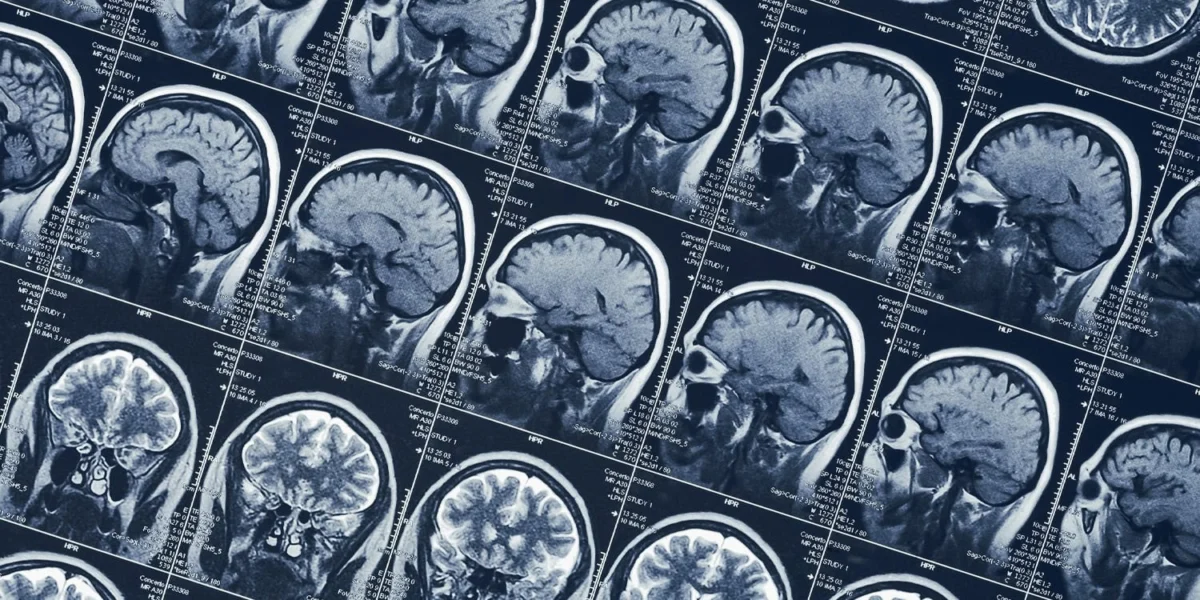
The frontiers of neuroscience have long been captivated by the mechanisms of human consciousness, particularly those states that deviate from ordinary waking awareness. A groundbreaking neuroimaging study recently published in the journal NeuroImage has provided an unprecedented look into the brain of an individual capable of voluntarily entering a transcendental visionary state. This rare, non-ordinary state of consciousness (NOC) was characterized by a fundamental reorganization of brain connectivity, where sensory inputs were suppressed in favor of heightened internal cognitive control and vivid, self-generated imagery. Led by Gabriel Della Bella and a team of international researchers, the study utilized functional magnetic resonance imaging (fMRI) to map the neural architecture of a self-induced trance, offering a unique window into how the human mind can simulate psychedelic-like experiences without the use of pharmacological agents.
Understanding Non-Ordinary States of Consciousness
Non-ordinary states of consciousness encompass a broad spectrum of mental conditions that differ significantly from the standard waking state in terms of cognition, perception, and the sense of self. These states can be triggered by various stimuli, including deep meditation, sensory deprivation, extreme physical stress, or the consumption of psychoactive substances such as psilocybin or LSD. Common features of these experiences include an altered perception of time, intensified visual or auditory imagery, and a phenomenon known as "ego attenuation," where the boundaries between the individual and their environment begin to blur.
While some NOCs are viewed through a pathological lens, such as those occurring during psychotic episodes, many cultures throughout history have valued and cultivated these states for spiritual, creative, or healing purposes. The "transcendental visionary state" is a specific subset of these experiences, often described as an encounter with a "higher reality." Participants frequently report seeing intricate geometric patterns, symbolic entities, or expansive landscapes that feel more authentic than the physical world. Historically, studying these states has been difficult because drug-induced experiences introduce chemical variables that can obscure the brain’s natural mechanics, and meditative states often lack the vivid, "visionary" intensity found in the study’s subject.
The Subject: A Unique Case of Self-Induced Trance
The focal point of this research is a 37-year-old woman identified in the study as AVP. Notably, AVP is also listed as a co-author of the paper due to her extensive role in providing detailed introspective reports, a method known as micro-phenomenology. AVP is a self-taught practitioner who developed the ability to enter a visionary state intuitively during her adolescence. By age 24, she had mastered the ability to reproduce a specific visual phenomenon at will, eventually refining the process into a stable, reproducible trance state.
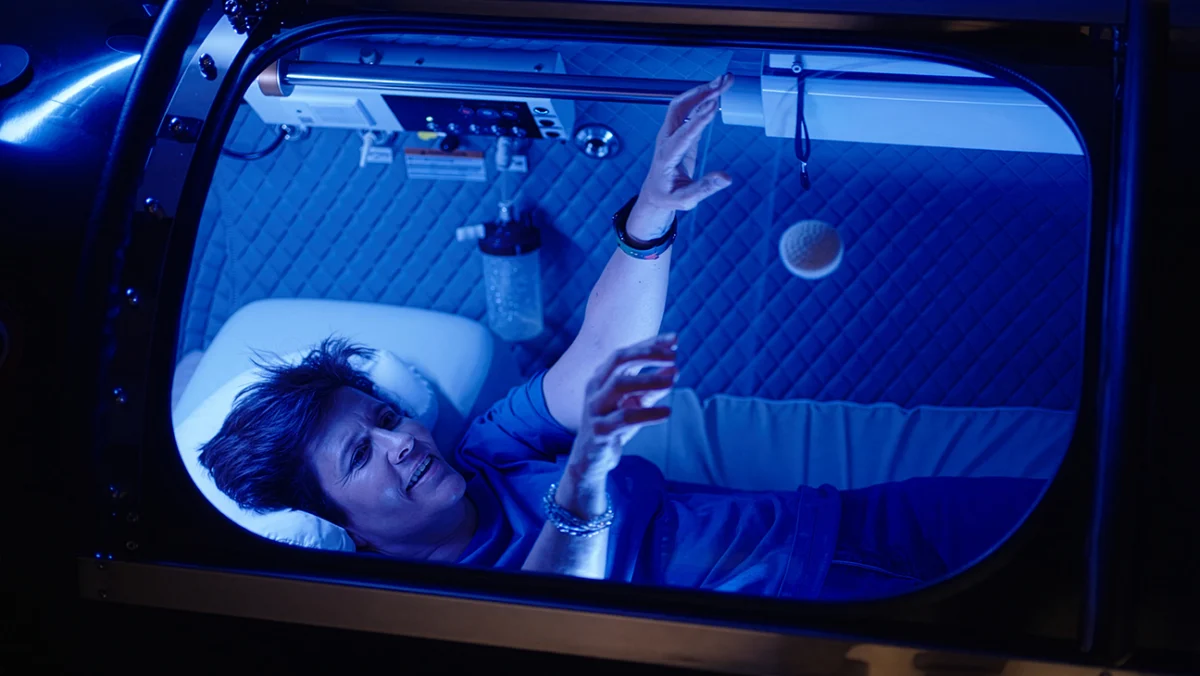
AVP’s neurocognitive profile is further distinguished by mild grapheme-color synesthesia, a condition where letters or numbers are consistently associated with specific colors. In her case, this lifelong trait may contribute to the vividness of her internal imagery. During the study, AVP was not involved in the technical data analysis or the formulation of the core hypotheses, ensuring that her subjective reports remained independent of the researchers’ expectations. Her ability to enter the state on command while remaining perfectly still within the confines of an fMRI scanner provided the researchers with a rare opportunity to capture high-quality data over 20 separate sessions spanning five months.
Methodology and Chronology of the Experience
To ensure the scientific rigor of the case study, the researchers compared AVP’s brain activity against a control group of 10 age-matched women. These control participants were instructed to close their eyes and imagine vivid visual scenes, simulating the effort of visualization without the specialized ability to enter a transcendental state.
The sessions followed a strict chronological sequence, allowing the researchers to track the transition from normal awareness to the deep trance. Each session began with a "Baseline" phase, where AVP engaged in ordinary, wandering thoughts. Following this, she initiated the "Transition" phase, an effortful period requiring active focus. During this stage, AVP reported a specific sequence of internal events: her dark visual field would be replaced by a violet hue, followed by the appearance of a yellow-violet hexagonal lattice. She described this as a state of "double consciousness," where she remained aware of the physical MRI scanner while simultaneously perceiving a structured, floating pattern in the air around her.
As she crossed the threshold into the "Transcendental Visionary State," her experience stabilized. The effort of the transition gave way to a sense of profound serenity and unity. In this state, her perception of time shifted toward an "eternal present," a continuous flow without the usual segmentation of past and future. The hexagonal network and rhythmic violet pulses remained the most stable features of her experience across all 20 sessions, providing a consistent phenomenological anchor for the neuroimaging data.
Neuroimaging Results: A Brain Reorganized
The fMRI data revealed that AVP’s brain underwent a radical reorganization during the visionary state, a shift that was entirely absent in the control group. The most striking finding was the massive reduction in connectivity between the visual cortex and the rest of the brain. During the trance, the visual cortex became "uncoupled" from the auditory, sensorimotor, and thalamic regions. This effectively isolated the brain’s visual processing center from external sensory input, creating a private "theatre" where internal imagery could dominate without interference from the outside world.
Simultaneously, the somatomotor-dorsal network—responsible for processing bodily sensations and movement—disengaged from the language and auditory cortices. This neurological decoupling matched AVP’s subjective reports of losing the sensation of her physical body and experiencing a blurred boundary between her self and the space around her.
However, this was not a state of general brain deactivation. While sensory networks were suppressed, the "higher-order" networks showed increased activity and integration. Specifically, the frontoparietal control network and the salience network—areas of the brain associated with internal focus, cognitive control, and the monitoring of internal states—showed significantly increased coupling with the precuneus and the posterior cingulate cortex. These regions are central to the "Default Mode Network," which is involved in self-referential thought. This increased connectivity explains why AVP remained lucid, in control, and capable of remembering the experience in detail, unlike the often chaotic and uncontrollable nature of drug-induced "ego death."
Statistical Complexity and Entropy
Beyond network connectivity, the researchers analyzed the "entropy" and "complexity" of the brain signals. Entropy in neuroscience refers to the level of randomness or "noise" in brain activity. Interestingly, during the peak of the transcendental state, AVP’s brain showed lower entropy but higher statistical complexity. This suggests that her brain activity was not becoming more random, but rather more structured and information-rich.
The transition from baseline to the visionary state involved a period of high variability, indicating that the brain must temporarily destabilize its normal "waking" networks to settle into a new, reorganized configuration. Once the state was fully entered, the brain achieved a new type of stability—a coherent yet radically different mode of operation. This return to a structured state of high complexity is a hallmark of "flow" states and deep meditative absorption, but the intensity of the visual reorganization in AVP’s case suggests a much more profound shift than typical meditation.
Analysis of Implications and Broader Impact
The implications of this study are manifold, touching upon clinical psychology, philosophy of mind, and the future of neuro-rehabilitation. First and foremost, the study proves that the human brain possesses the inherent capacity to generate "psychedelic" experiences through purely endogenous (internal) means. This challenges the long-held belief that such profound alterations of reality require external chemical triggers.
For the field of mental health, these findings suggest that the therapeutic benefits associated with psychedelic states—such as increased openness, reduced anxiety, and a sense of interconnectedness—might eventually be accessible through specialized mental training. If the neural "pathways" to these states can be identified and mapped, as they were in this case study, it may be possible to develop non-pharmacological interventions for conditions like treatment-resistant depression or PTSD.
Furthermore, the study highlights the importance of "neurophenomenology"—the practice of combining objective brain data with deep, subjective reporting. By treating AVP’s internal descriptions as essential data points rather than mere anecdotes, the researchers were able to correlate specific network changes with specific mental events, such as the appearance of the hexagonal lattice or the loss of bodily sensation.
Limitations and Future Research
Despite the significance of the findings, the researchers caution that this is a case study of a single, highly unique individual. AVP’s lifelong synesthesia and her decades of self-taught practice make her an outlier in the general population. It remains unclear whether the specific patterns of connectivity observed in her brain—such as the isolation of the visual cortex—would be identical in another individual entering a similar state.
Future research will need to involve a larger and more diverse cohort of "expert" practitioners, such as long-term meditators, shamans, or individuals with similar self-taught abilities. Scientists also hope to investigate whether these states can be induced in "ordinary" individuals through techniques like neurofeedback, where a person is shown their brain activity in real-time and trained to modulate it.
The paper, "The Neurophenomenology of a Self-Induced Transcendental Visionary State: A Case Study," serves as a landmark in the study of human consciousness. It demonstrates that the boundaries of our perceived reality are far more flexible than they appear, and that the "keys" to unlocking transcendental experiences may reside within the complex architecture of the brain itself. As neuroscience continues to map these internal landscapes, the line between the "ordinary" and the "transcendental" continues to fade, revealing a mind capable of extraordinary self-transformation.