Reynand Wu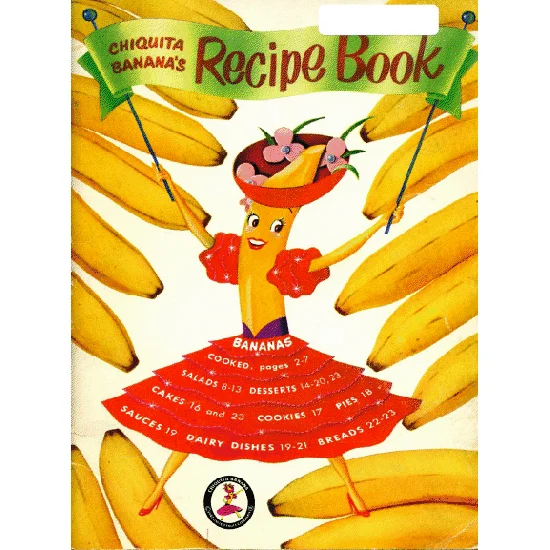
Over the course of the past year, M&M’s mascots have found themselves at the epicenter of a swirling public discourse, dominating news cycles, social media feeds, and even featuring prominently in Super Bowl commercials. What began as a seemingly innocuous brand refresh by confectionery giant Mars Wrigley escalated into a global conversation about corporate responsibility, gender representation, and the deeply entrenched anxieties surrounding evolving societal norms. The controversy underscores a broader cultural struggle, where even beloved candy characters become battlegrounds for ideological clashes, revealing underlying tensions regarding femininity, masculinity, and the role of brands in shaping social narratives.
A Chronology of Controversy: From Sneakers to Spokescandy Suspension
The saga began in January 2022 when Mars Wrigley announced a significant redesign of its iconic M&M’s characters, specifically targeting the female mascots in a stated effort to promote "more inclusive marketing." The brown M&M, traditionally portrayed in high heels, saw her footwear updated to a more practical, lower-heeled design. More notably, the green M&M, long characterized by her distinctive go-go boots and often perceived as the most overtly "sexy" of the group, traded her knee-high footwear for a pair of sneakers. These changes, Mars Wrigley explained, were part of a broader global commitment to creating a world where everyone feels they belong, emphasizing the characters’ personalities over their physical attributes.
The initial rollout of these revamped characters was met with a swift and unexpectedly vitriolic backlash. The changes, particularly to the green M&M, ignited a firestorm across various media platforms. Conservative commentators, led by figures such as Tucker Carlson of Fox News, quickly seized upon the rebranding as emblematic of what they termed "woke" corporate overreach and an attack on traditional values. Carlson famously decried the changes, stating, "M&M’s will not be satisfied until every last cartoon character is deeply unappealing and totally androgynous." This sentiment resonated with a segment of the public who viewed the alterations as an unnecessary capitulation to progressive ideologies, stripping the characters of their established identities.
Beyond conservative media, a different strain of critique emerged from some corners, including pop culture commentators. For instance, a Rolling Stone article titled, "Let the Green M&M Be a Nasty Little Slut," penned by senior writer EJ Dickson, expressed frustration from a feminist perspective, arguing, "The green M&M has spent decades building her brand as a horny, sexy bitch, and for what? For her creators to give her Larry David footwear in the name of feminism?" This perspective, while different from Carlson’s, also lamented the perceived loss of the character’s established persona, albeit from a position critical of the nature of the "inclusivity" rather than the concept itself.
The controversy simmered throughout 2022, reigniting with force in September when Mars Wrigley introduced a new M&M character: Purple. Designed to represent "acceptance and inclusivity," Purple was notably curvier and portrayed with an earnest, self-assured personality. Her debut, however, only further fueled the ongoing "culture war." Tucker Carlson once again took to the airwaves, reigniting his criticism with remarks such as, "The green M&M got her boots back, but apparently is now a lesbian maybe? And now there’s a plus-sized, obese purple M&M." These comments, laden with judgmental and often derogatory undertones, pushed the debate beyond footwear to encompass body image, sexual orientation, and perceived gender identity, all projected onto anthropomorphic candy characters.
The sustained intensity of the backlash, particularly from high-profile media figures, eventually led Mars Wrigley to make a dramatic announcement in January 2023. Citing the desire to "take a pause" from the controversy and acknowledging that their efforts to bring people together had instead proven divisive, the company temporarily suspended its iconic spokescandies. In their place, the brand announced Maya Rudolph, the acclaimed comedian and actress, would serve as their new spokesperson, humorously declaring her role to be one of "America’s new Chief of Fun." While presented as a temporary measure to de-escalate tensions, the decision highlighted the immense pressure corporations face when navigating socially charged terrain.
Mars Wrigley’s Intentions and the Broader Corporate Push for Inclusivity
Mars Wrigley, like many global corporations, has increasingly emphasized diversity, equity, and inclusion (DEI) initiatives as core components of its brand strategy and corporate social responsibility. The company stated that the M&M’s redesign was driven by consumer research indicating a desire for characters that better reflect a diverse audience and promote a sense of belonging. In a public statement, the company noted that the changes aimed to "create a world where everyone feels they belong and society is inclusive," positioning the M&M’s characters as symbols of "self-expression and the power of community."
This move aligns with a broader trend in the advertising and marketing industry, where brands are increasingly under pressure from consumers, employees, and investors to demonstrate a commitment to social values. Data from various market research firms consistently indicate that younger generations, particularly Gen Z and millennials, are more likely to support brands that align with their values and actively promote social causes. For Mars Wrigley, a company with a global reach and diverse consumer base, evolving its mascots to be more representative could be seen as a strategic imperative to maintain relevance and appeal to a changing demographic. The intention was to modernize the brand’s image, moving away from potentially outdated or stereotypical representations of gender.
The Backlash: Ideological Underpinnings and the "Culture War" Framework
The intensity of the backlash, particularly from conservative media, reveals deeper ideological currents at play. Critics like Tucker Carlson framed the M&M’s changes not as an act of corporate social responsibility, but as a symptom of a broader "woke" agenda perceived to be eroding traditional societal structures and values. The specific focus on the female M&M’s footwear and the interpretation of the new Purple character as "plus-sized" or "lesbian" points to a strong resistance to changes in gender norms and perceived challenges to heteronormative, patriarchal ideals.
This perspective views any deviation from traditional feminine archetypes—such as the overtly sexualized female character—as an attack on masculine identity and a discomfort with shifting power dynamics. The outrage can be understood as part of a larger "culture war," where seemingly trivial cultural artifacts become proxies for battles over identity, morality, and social change. In this context, the M&M’s mascots became a convenient, tangible symbol for broader anxieties about gender fluidity, body positivity, and the perceived decline of "traditional" masculinity and femininity.
Sociological Dimensions: The Male Gaze and Emphasized Femininity
The M&M’s controversy offers a poignant case study for examining sociological concepts like the "male gaze" and "emphasized femininity." The original article rightly points out that M&M’s has historically employed a marketing strategy that sexualized its female spokescandies. For decades, the green M&M, in particular, was depicted in ways that aligned with conventional standards of attractiveness, often in provocative poses or scenarios. This hypersexualization was not only evident in their attire but also in commercials featuring the green M&M pole dancing, stripping, or engaging in other overtly sexual acts, frequently with the male M&M’s shown ogling her in the background.
This pervasive depiction reinforces the concept of the male gaze, a term coined by feminist film critic Laura Mulvey. It describes the way women are depicted in visual arts and literature from a masculine, heterosexual perspective, presenting women as passive objects of male sexual desire. When female characters, even animated candy, are consistently portrayed primarily for the visual pleasure of a male audience, it normalizes and perpetuates the idea that women’s primary value lies in their physical appearance and their ability to appeal to men.
The backlash against the M&M’s redesign can be understood as a reaction against the perceived challenge to emphasized femininity. This sociological concept refers to a set of traditional feminine norms and behaviors that are designed to accommodate men’s sexual desires and reinforce existing gender hierarchies. Emphasized femininity encourages women to be nurturing, compliant, and physically attractive in ways that are pleasing to men, thereby legitimizing patriarchal power structures. When the female M&M’s characters became less conventionally "sexy" or departed from these traditional tropes—by wearing sneakers instead of boots, or by being curvier—those who subscribe to hegemonic masculinity felt threatened. Their anger, as the original article highlights, stemmed from a perceived affront to their sexual expectations, even with regard to fictional characters. This response underscores how deeply ingrained these gendered expectations are, often manifesting as hostility towards women who deviate from prescribed roles or appearances.
Historical Precedent: Gendered Marketing in Food Products
The M&M’s situation is not an isolated incident in the history of food product marketing. The sexualization and gendering of commercial food products have a long and often problematic history. A prominent example is the Chiquita Banana. Debuting in the 1940s, Miss Chiquita Banana was the world’s first branded fruit, and her persona was overtly racialized and sexualized to appeal to the American market. Her femininity was exaggerated through flirtatious winking, eye-rolling, frilly dresses, and lipstick. This anthropomorphic character was designed to evoke a specific, often stereotypical, image of exotic allure, associating the fruit with a sensuous, feminine persona that was deemed attractive to consumers of the era.
Similar marketing tactics have been observed across various product categories, where female characters, whether human or animated, are used to imbue products with qualities of desirability, domesticity, or allure. This strategy often leverages existing gender stereotypes, reinforcing societal expectations about women’s roles and appearances, thereby embedding these norms within consumer culture. The M&M’s controversy, therefore, is a contemporary manifestation of a long-standing practice, albeit one now encountering increased scrutiny in an era of heightened social awareness.
Impact on Consumers and Youth: The Dangers of Hypersexualization
The hypersexualization of women in media, including in advertising and through mascots, carries significant and well-documented harm, particularly for young people. Adolescents, constantly exposed to a media environment saturated with sexualized imagery, are at risk of internalizing the idea that women are primarily sex objects. When girls and young women repeatedly see their bodies objectified and their value tied to their physical attractiveness, they can develop body image issues, reduced self-esteem, and a distorted sense of self-worth. They may internalize the belief that their primary purpose is to fulfill male sexual desires, leading to increased self-objectification and anxiety if they do not conform to unrealistic societal standards of beauty.
Research consistently indicates a correlation between media sexualization and negative psychological outcomes in girls, including increased body shame, self-surveillance, and eating disorders. When even the candy children consume is sexualized, it sends a powerful, albeit often subconscious, message about gender roles and expectations. The outrage directed at M&M’s for simply changing a shoe or introducing a curvier character, therefore, is not merely "ludicrous" as a standalone event. It is a potent indicator of the deep-seated societal pressures on women to conform to specific gender norms and appearances, and the fierce resistance encountered when these norms are challenged. This environment teaches children that a woman’s appearance, specifically her adherence to a sexualized ideal, is a public commodity subject to intense scrutiny and criticism.
Corporate Strategy and the "Culture War" Crossfire
Mars Wrigley’s decision to temporarily suspend its spokescandies and replace them with Maya Rudolph highlights the precarious position corporations find themselves in when attempting to navigate complex social issues. While the company initially aimed for inclusive marketing, the backlash demonstrated the difficulty of pleasing all segments of a diverse consumer base, especially when cultural issues become highly politicized. The brand’s move to a human spokesperson was a pragmatic attempt to step out of the crossfire, prioritizing brand stability over continued engagement in a divisive public debate.
However, this temporary retreat also raises questions about the long-term commitment of corporations to their stated DEI goals when faced with significant public pressure. While some may view it as a sensible business decision, others might interpret it as a capitulation to conservative voices, potentially undermining the very message of inclusivity Mars Wrigley sought to convey. The incident serves as a stark reminder that in an increasingly polarized society, every corporate decision, no matter how seemingly minor, can be interpreted through an ideological lens, dragging brands into broader "culture wars" whether they intend to or not.
The M&M’s mascot controversy, while centered on animated candy characters, reveals profound societal tensions regarding gender, identity, and representation. It underscores the enduring power of the male gaze and emphasized femininity in popular culture and the significant backlash that can arise when these norms are challenged. For young people, the stakes are particularly high, as these seemingly trivial debates contribute to a broader media landscape that shapes their understanding of self-worth and societal expectations. The episode calls for a deeper reflection on how brands contribute to these narratives and the responsibility of public figures to engage in constructive dialogue rather than perpetuating harmful stereotypes for rhetorical gain. The vicious cycle of sexualizing women, mascots or not, for profit must be brought to an end, and prominent figures need to realize that the oppression of others is not a punchline but a serious societal issue with real-world implications.