Kang Muslim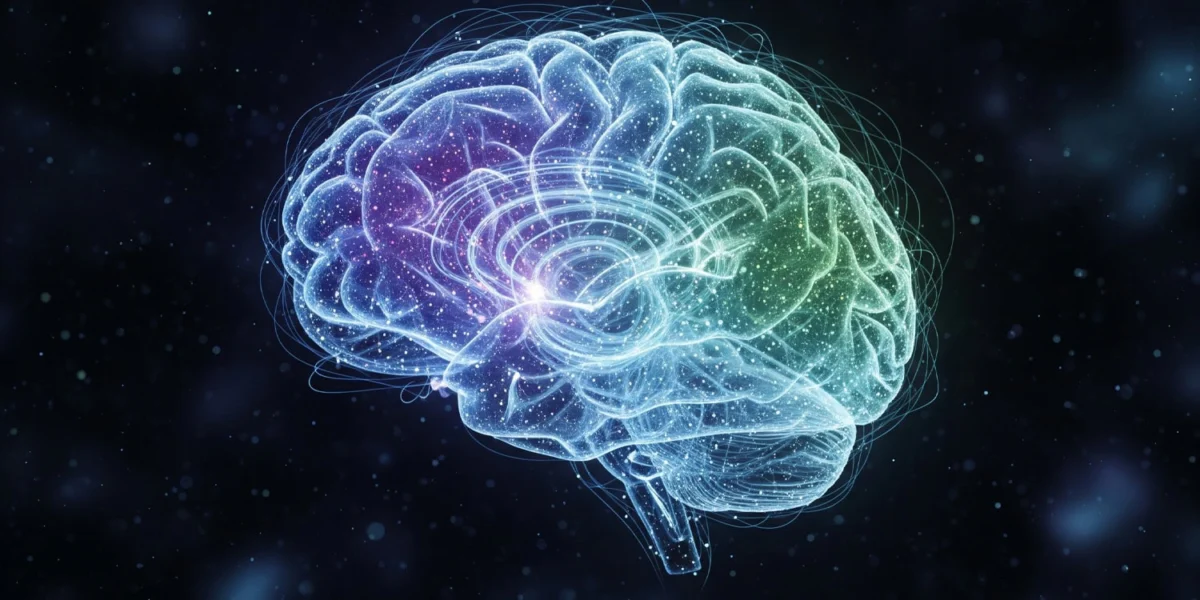
The human brain functions as a sophisticated network of interconnected regions, communicating through electrical and chemical signals to regulate everything from mood to executive decision-making. Recent neuroscientific research has unveiled a complex interaction between cannabis use and depression, suggesting that the presence of depressive symptoms significantly alters the way cannabis affects brain connectivity. A study published in the journal Drug and Alcohol Dependence indicates that while chronic cannabis use is often associated with a state of heightened global connectivity, the co-occurrence of depression acts as a dampening force, resulting in a less efficient and less integrated neural architecture.
This research, led by scientists at the University of Texas at Dallas, highlights a critical "intersectionality" between substance use and mental health. The study provides a biological framework for understanding why individuals who use cannabis while experiencing depression may face unique cognitive and neurological challenges. By utilizing advanced neuroimaging techniques and mathematical modeling, the research team has mapped the "topology" of the brain—essentially the structural and functional map of how different regions interact—to reveal that the two conditions do not merely exist side-by-side but actively reshape the brain’s communication pathways in tandem.
The Biological Mechanism: The Endocannabinoid System and Mood
To understand the implications of this study, it is necessary to examine the endocannabinoid system (ECS), a complex cell-signaling system identified in the early 1990s. The ECS plays a vital role in regulating a range of functions and processes, including sleep, mood, appetite, memory, and reproduction. It consists of endocannabinoids (molecules made by the body), receptors (to which endocannabinoids and plant-based cannabinoids bind), and enzymes that break them down.
Depression has long been linked to deficits in ECS signaling. Specifically, the regulation of stress and emotional response is heavily dependent on the balance of these signals. Cannabis contains exogenous cannabinoids, such as THC, which interact directly with the brain’s CB1 and CB2 receptors. When a person uses cannabis, these external compounds "flood" the system, altering the natural signaling balance. The researchers hypothesized that because depression already impacts the ECS, the introduction of cannabis would produce different neurological outcomes in depressed individuals compared to those without the disorder.
Study Methodology and the Application of Graph Theory
The research team, led by Che Liu, a postdoctoral researcher at the University of Texas at Dallas and a member of the Neuroimaging of Reward Dynamics (NiRD) Lab, analyzed a robust dataset comprising 395 adults between the ages of 18 and 55. This sample was drawn from four distinct research sites to ensure a diverse and representative population. The participants were divided into two primary groups: 223 frequent cannabis users (defined as weekly use and confirmed by positive urinalysis) and 172 non-using controls.
To measure depression, the team utilized the Beck Depression Inventory-II (BDI-II), a 21-question multiple-choice self-report inventory that is one of the most widely used psychometric tests for measuring the severity of depression. Participants also provided detailed histories of their alcohol and nicotine consumption to control for confounding variables.
The core of the study involved resting-state functional magnetic resonance imaging (fMRI). Unlike task-based MRI, which looks at the brain while a subject is performing a specific action, resting-state fMRI captures the brain’s "baseline" activity—the communication that occurs when a person is awake but not focused on an external stimulus. To analyze this data, the scientists employed "graph theory," a mathematical approach that treats the brain as a network of "nodes" (brain regions) and "edges" (the connections between them). This allows researchers to calculate "global efficiency," which measures how easily information travels across the entire brain, and "local efficiency," which looks at communication within specific clusters or neighborhoods of the brain.
Findings: The Paradox of Cannabis and Connectivity
The data revealed a striking contrast between cannabis users and the control group. In individuals who used cannabis but reported low levels of depression, the researchers observed higher global efficiency and shorter "path lengths" between brain regions. This suggests a state of hyper-connectivity, where the brain is communicating more rapidly and broadly across long distances. This group also showed increased localized connectivity in three vital networks:
- The Salience Network: Responsible for detecting and filtering important stimuli and recruiting relevant functional networks.
- The Frontoparietal Network: Involved in high-level executive functions, attention, and decision-making.
- The Subcortical Network: A group of structures deep within the brain involved in reward processing, emotion, and primitive instincts.
However, the introduction of depression symptoms fundamentally changed this landscape. As BDI-II scores increased among the cannabis users, the "efficiency" gains associated with cannabis use began to erode. The heightened global integration seen in the non-depressed cannabis group weakened significantly. Essentially, depression appeared to counteract the stimulatory effect cannabis had on the brain’s network topology, leading to a more fragmented and less integrated system.
The "Threshold Effect" and Frequency of Use
One of the most unexpected findings of the study was the lack of a "dose-response" relationship regarding the interaction between depression and cannabis. While the researchers found that smoking more frequently did increase connectivity in the cannabis-only group, the frequency of use did not change how depression moderated those effects.
"We were surprised to find that while depression symptoms moderated the effects of cannabis use status on the brain, it didn’t seem to matter how often a person used cannabis," stated Che Liu. This led the team to propose a "threshold effect." This theory suggests that once a person reaches a certain baseline of regular cannabis use, the interaction with depressive symptoms is triggered, and higher doses or more frequent use do not necessarily worsen the specific communication deficit observed. This is a significant finding for public health, as it suggests that even "moderate" regular users who struggle with mood disorders may experience altered brain function.
Historical Context and the Self-Medication Hypothesis
The study arrives at a time of shifting legal landscapes and social perceptions regarding cannabis. As of 2024, cannabis has been legalized for recreational or medical use in a majority of U.S. states and several countries globally. This has led to a surge in use among adults, many of whom report using the drug to manage symptoms of anxiety and depression—a phenomenon known as the "self-medication hypothesis."
Historically, research into cannabis and depression has yielded conflicting results. Some epidemiological studies suggest that heavy use can precipitate depressive episodes, while others suggest that individuals with pre-existing depression are simply more likely to seek out the drug for its temporary euphoric or numbing effects. The UT Dallas study provides a biological middle ground, showing that regardless of which came first, the combination of the two creates a unique neurological state that is distinct from either condition in isolation.
Implications for Mental Health Treatment
The findings have profound implications for the clinical treatment of both substance use disorders and clinical depression. If cannabis use and depression interact to create a less efficient brain network, traditional treatments for depression—such as Cognitive Behavioral Therapy (CBT) or Selective Serotonin Reuptake Inhibitors (SSRIs)—may perform differently in regular cannabis users.
Furthermore, the study suggests that clinicians must take a more integrated approach to diagnosis. Treating depression without addressing cannabis use, or vice versa, may fail to account for the specific topological changes occurring in the patient’s brain. The "less integrated" brain network found in the cannabis-plus-depression group could potentially correlate with difficulties in emotional regulation and executive function, making it harder for these individuals to engage in the very behaviors required for recovery.
Limitations and the Path Forward
While the study is groundbreaking in its use of graph theory to map these interactions, the authors noted several limitations. Most notably, the study was cross-sectional, meaning it captured a snapshot in time. This prevents the researchers from establishing causality—they cannot definitively say whether cannabis use caused the depression-related changes or if a certain brain structure makes an individual more prone to both cannabis use and depression.
Additionally, the majority of the participants in the study exhibited "mild" depressive symptoms. The researchers expressed a need for future studies to include individuals with clinical Major Depressive Disorder (MDD) to see if the dampening effect on brain connectivity becomes even more pronounced as the severity of the mental health condition increases.
Che Liu and the NiRD Lab team intend to pursue longitudinal studies to track these changes over several years. "We aim to conduct longitudinal studies that track individuals who use cannabis over time to better understand the cause-and-effect relationship," Liu explained. The team also hopes to move beyond resting-state scans to observe how the brain functions during specific tasks, such as reward processing or emotional regulation, to see how these topological changes manifest in daily behavior.
Conclusion: A New Understanding of Co-morbidity
The research marks a significant step forward in the field of neuropsychiatry. By moving beyond a simple "good vs. bad" binary regarding cannabis, the study highlights the nuanced ways in which our internal mental state dictates how external substances affect our biology.
As cannabis becomes more accessible, understanding these "intersectional" effects is paramount. The study serves as a reminder that the brain is a dynamic system where various factors—substance use, mental health, and biological signaling—interact in a delicate balance. For those at the intersection of cannabis use and depression, the science suggests that their brain is navigating a unique and challenging landscape, one that requires specialized understanding and targeted care.