Reynand Wu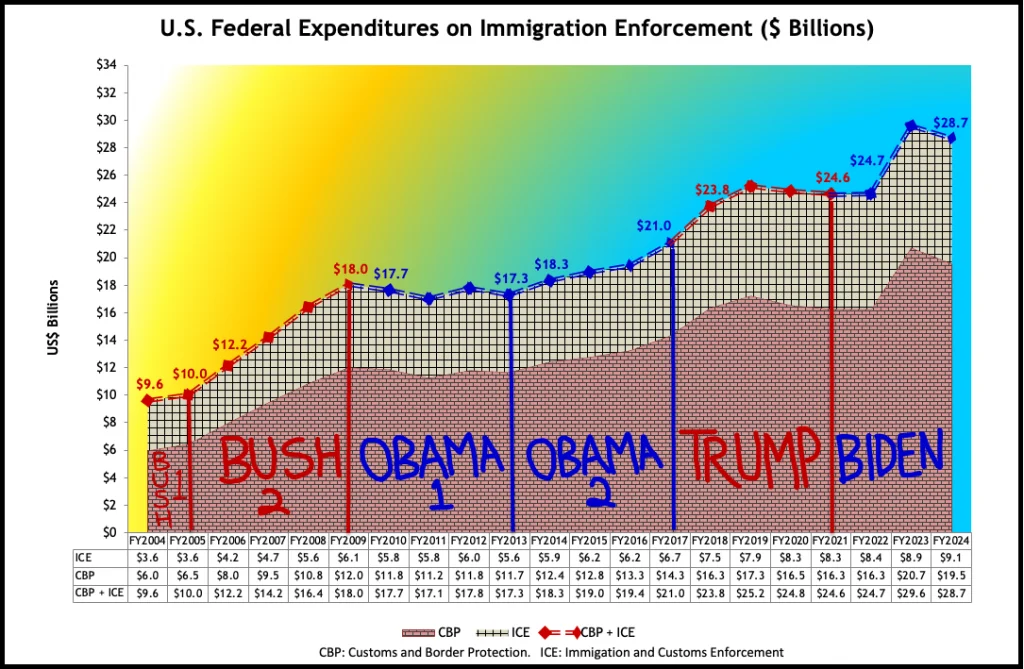
The construction and maintenance of state borders are not merely geographical demarcations but complex endeavors born from political conflict, nationalist narratives, and disparate economic systems, crucially underpinned by substantial public financial investment. While political rhetoric and public policy often seek to naturalize these boundaries, their origins are frequently arbitrary and violent, serving multifaceted social and economic functions beyond simply marking territory. Borders actively differentiate political systems, delineate between "insiders" and "outsiders," and establish economic disparities through varied trade relations, national currencies, and divergent value regimes.
The Post-9/11 Paradigm Shift: Securitization and the Birth of DHS
The modern architecture of U.S. border enforcement, particularly along the US-Mexico frontier, underwent a profound transformation in the wake of the September 11, 2001, terrorist attacks. The discourse of anti-terrorism became inextricably linked with border regulation, leading to an unprecedented securitization of national boundaries. This pivotal moment culminated in the establishment of the Department of Homeland Security (DHS) through the Homeland Security Act of 2002, signed into law by President George W. Bush. This monumental reorganization merged 22 federal agencies, consolidating various functions related to border protection, immigration, emergency response, and cybersecurity under a single umbrella.
Central to this new enforcement paradigm were two key agencies: Customs and Border Protection (CBP) and Immigration and Customs Enforcement (ICE). CBP, which proudly identifies itself as "one of the world’s largest law enforcement organizations," states its primary mission is "to detect and prevent the illegal entry of individuals into the United States" and "maintain borders that work." Similarly, ICE asserts its mission is "to protect America from the cross-border crime and illegal immigration that threaten national security and public safety." These mandates explicitly frame border management through a national security lens, justifying significant budgetary allocations for apprehension, detention, and deportation efforts. Prior to 9/11, border enforcement was largely handled by the Immigration and Naturalization Service (INS) and the Border Patrol, with a focus that, while growing, lacked the comprehensive, integrated, and heavily militarized approach that would characterize the DHS era. The creation of DHS marked a definitive shift from a primarily law enforcement and immigration management model to one dominated by national security concerns.
A Chronicle of Escalation: Two Decades of Unprecedented Spending
An examination of federal spending on immigration enforcement and border security over the past two decades reveals a consistent, dramatic upward trend, often defying partisan rhetorical differences. Since fiscal year 2004, U.S. governments, under both Republican and Democratic administrations, have collectively invested an astonishing total of $409.4 billion of public funds into these operations. This figure, unadjusted for inflation, underscores a deeply entrenched bipartisan commitment to border securitization.
The budget for these agencies has nearly tripled, soaring from $9.6 billion in FY2004 to an estimated $28.7 billion in FY2024. Even when adjusted for inflation to 2024 dollars, the increase is substantial, moving from approximately $17.5 billion to $28.7 billion, demonstrating a real and sustained growth in resource allocation. Of the total $409.4 billion spent, CBP accounts for the lion’s share at $275 billion, dedicated to patrolling, inspections, and infrastructure, including border walls and advanced surveillance technology. ICE, responsible for interior enforcement, detentions, and deportations, received $134.4 billion.
The timeline of this escalating expenditure can be traced through several presidential administrations:
- George W. Bush (2001-2009): Following the creation of DHS, the Bush administration presided over the initial surge in border security funding. Post-9/11 fears propelled significant investments, culminating in the Secure Fence Act of 2006, which authorized the construction of hundreds of miles of fencing along the U.S.-Mexico border. During his two terms (Bush 1: FY2004-FY2005, Bush 2: FY2006-FY2009), Republican presidents approved approximately $178.9 billion in spending, averaging $17.9 billion annually. This period established the foundational infrastructure and operational scale for future expansions.
- Barack Obama (2009-2017): Despite campaigning on promises of comprehensive immigration reform and a more humane approach, the Obama administration continued, and in many ways expanded, the "enforcement-first" strategy. While rhetorical differences emerged, the budgetary commitment remained robust. His administration oversaw record numbers of deportations and further investment in border technology and personnel, even as it attempted to navigate legislative paths for reform that ultimately failed. During his two terms (Obama 1: FY2010-FY2013, Obama 2: FY2014-FY2017), Democratic presidents approved approximately $230.5 billion, averaging $21.0 billion annually, surpassing the annual average of their Republican predecessors. This period saw the continued deployment of drones, ground sensors, and an increase in Border Patrol agents.
- Donald Trump (2017-2021): The Trump administration made border security a cornerstone of its political agenda, famously pledging to "build the wall." This period saw further aggressive enforcement measures, including family separations and the use of emergency declarations to redirect funds for wall construction. While his administration continued the trend of high spending, it was largely a continuation of the financial trajectory established in previous years, albeit with a renewed emphasis on physical barriers. Spending during his term was integrated into the overall Republican average previously noted.
- Joe Biden (2021-Present): The Biden administration entered office promising a departure from the previous administration’s hardline policies. However, in practice, the budgetary commitment to border enforcement has shown little sign of abatement. Despite initial pauses on wall construction, the administration has faced immense pressure at the border, leading to a continuation of robust funding. In a notable development in October 2023, President Biden’s administration waived no fewer than 26 federal regulations to construct a border wall segment in Texas, a move that critics immediately drew parallels to his Republican predecessor, Donald Trump. This decision, seemingly made in advance of the 2024 presidential election, further underscores the bipartisan consensus on physical border infrastructure.
The Data Visualization: A Fenced Budget
The provided data visualization effectively illustrates these trends, depicting the annual budgets of CBP and ICE in the form of a fenced border wall. The "brick wall" represents CBP’s annual budget, while the "fence above" signifies ICE’s annual budget. Sections of the wall "graffitied" with presidential terms — Bush 1, Bush 2, Obama 1, Obama 2, Trump, and Biden — offer a clear chronological breakdown. The "red and blue barbed wire" symbolizes the combined annual budgets, with red indicating budgets approved by Republican presidents and blue by Democratic presidents. Numeric labels above the barbed wire provide the combined budget figures at the beginning and end of each presidential term, vividly illustrating the consistent escalation.
This visual representation powerfully conveys the core finding: while Democratic and Republican presidents often express rhetorical differences on immigration policy – with Democrats frequently articulating a more pro-immigrant stance – the practical reality of federal funding for border policing reveals a striking partisan consensus. The data gives "the lie to the political performativity of partisan differences," showing that Democratic presidents have been no less, and often more, enthusiastic in funding border enforcement on an annual average basis than their Republican counterparts.
Broader Impact and Implications: Beyond the Budget Sheet
The monumental financial investment in U.S. border enforcement carries far-reaching implications, extending beyond mere budgetary figures to touch upon economic, social, political, and environmental spheres.
Economic Implications: The consistent allocation of billions of dollars has fostered what many analysts refer to as a "border industrial complex." This ecosystem includes private contractors involved in building physical barriers, manufacturing surveillance technology (drones, sensors, cameras), and providing detention services. The privatization of detention centers, in particular, has become a multi-billion-dollar industry, creating a powerful economic incentive for continued enforcement and detention. While this spending creates jobs within specific sectors, critics argue it represents a significant diversion of public funds that could otherwise be invested in education, healthcare, infrastructure, or community development programs. Furthermore, the militarization of the border can disrupt traditional cross-border economies and trade relationships that have historically supported communities on both sides.
Social and Human Rights Implications: The securitization of the border has profound human costs. Increased funding for apprehension, detention, and deportation has led to a surge in enforcement actions, contributing to family separations, prolonged detentions, and a climate of fear in immigrant communities. Humanitarian crises at the border, particularly concerning asylum seekers and vulnerable populations, are exacerbated by an enforcement-first approach that often prioritizes deterrence over due process and humanitarian aid. The expansion of border infrastructure and the deployment of more agents can also lead to the militarization of border communities, altering their social fabric and increasing tensions. Advocacy groups regularly highlight these concerns, arguing that the focus on enforcement often overshadows the human rights of migrants and asylum seekers.
Political Implications: The enduring bipartisan consensus on border funding, despite divergent rhetoric, points to a deeper political dynamic. The article suggests this disconnect is rooted in the "fundamental contradictions of bourgeois liberal democracy," implying that elected representatives, while ostensibly representing the public will, often cater to the interests of powerful economic, political, and racial elites. Border security, in this context, becomes a potent political tool, particularly during election cycles, allowing politicians to project an image of strength and control, even if the underlying policy remains largely consistent across administrations. The inability of progressive agendas within the Democratic Party to significantly de-securitize the border or de-carcerate the immigration system highlights the entrenched nature of this consensus. The Biden administration’s decision to waive environmental regulations for wall construction, mirroring Trump’s actions, serves as a stark illustration of how political expediency and perceived national security imperatives can override ideological commitments, particularly in the lead-up to elections.
Environmental Impact: The construction of physical barriers along the border has significant environmental consequences. Walls often cut through sensitive ecosystems, disrupting wildlife migration patterns, fragmenting habitats, and potentially leading to species loss. Construction activities themselves can cause soil erosion, damage natural landscapes, and contaminate water sources. The waivers of environmental regulations, as seen under both the Trump and Biden administrations, further underscore the prioritization of border infrastructure over ecological preservation.
Conclusion: A Deeply Entrenched Commitment
The evidence unequivocally demonstrates that U.S. border enforcement is a massive, continuously expanding enterprise, fueled by a deeply entrenched and bipartisan financial commitment. What began as a post-9/11 national security imperative has evolved into a multi-billion-dollar annual expenditure, tripling in two decades. The consistent growth in funding, irrespective of the political party in power, reveals a profound disconnect between political rhetoric and practical policy implementation. This sustained investment in border securitization carries significant economic, social, human rights, political, and environmental implications, shaping not only the physical landscape of the nation’s borders but also its values, its economy, and its relationship with the global community. The "border is a budget," and that budget continues to grow, underscoring a complex reality where national security narratives, economic interests, and political pressures converge to maintain and escalate one of the world’s most heavily funded border regimes.