Kang Muslim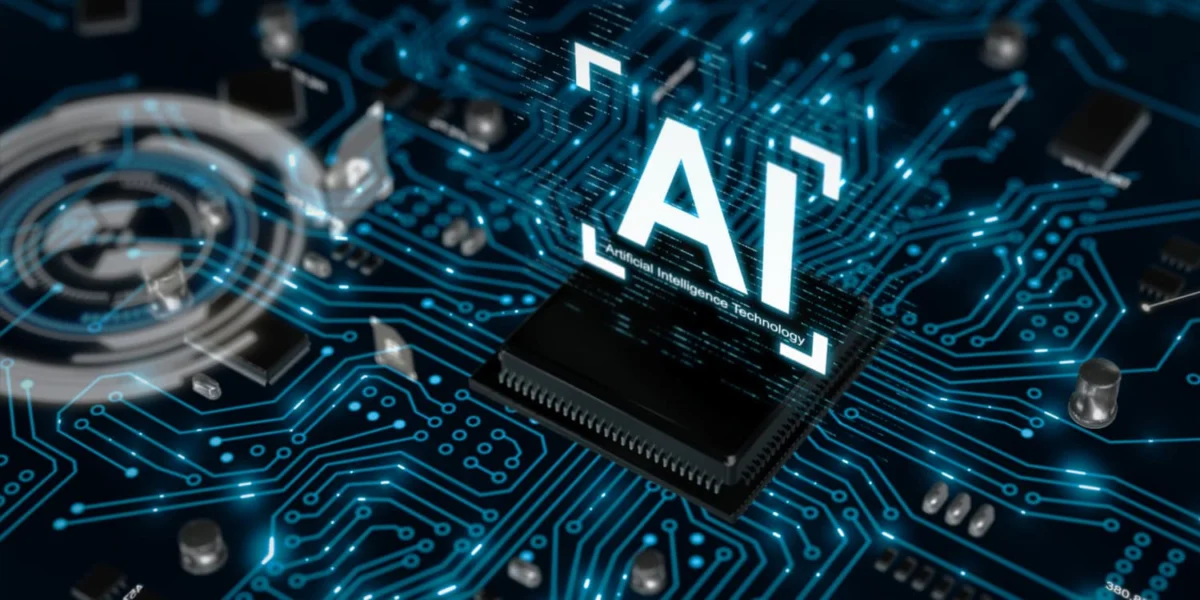
The rapid integration of artificial intelligence into the recruitment and admissions processes has triggered a significant shift in human behavior, as individuals increasingly alter their self-presentation to satisfy perceived algorithmic preferences. According to a comprehensive study published in the Proceedings of the National Academy of Sciences (PNAS), candidates who are aware they are being evaluated by an automated system tend to suppress their emotional and intuitive traits, opting instead to project an exaggeratedly analytical and logical persona. This phenomenon, termed the "AI assessment effect," raises critical questions regarding the validity of modern hiring tools and the potential for systemic inaccuracies in talent acquisition.
The research, led by Jonas Goergen of the Institute of Behavioral Science and Technology at the University of St. Gallen, alongside colleagues Emanuel de Bellis and Anne-Kathrin Klesse, suggests that transparency mandates—while ethically necessary—may inadvertently trigger strategic behavioral changes. As organizations move toward high-efficiency, automated screening processes, the very act of disclosing the use of AI may be distorting the data these systems are designed to collect.
The Regulatory Landscape and the Rise of Automated Screening
The shift toward algorithmic evaluation is driven by a dual pressure: the need for organizational efficiency and the emergence of strict transparency regulations. In recent years, hiring managers and university admissions offices have been inundated with record-breaking volumes of applications. To manage this load, many have turned to video interview software, personality assessments, and automated resume screeners. These tools promise to standardize the evaluation process, theoretically removing human bias and identifying the most qualified candidates through data-driven metrics.
Simultaneously, legislative bodies have recognized the high-stakes nature of these tools. The European Union’s Artificial Intelligence Act stands as a landmark piece of legislation, categorizing employment and education as "high-risk" areas that require clear disclosure when algorithmic systems are in use. Similarly, New York City’s Local Law 144 requires employers to notify candidates if automated employment decision tools (AEDTs) are being utilized.
While these laws aim to protect candidates from "black box" decision-making, the PNAS study highlights an unintended psychological consequence. When people know a machine is the gatekeeper to a major life milestone, such as a new career or a prestigious degree, they engage in intense "impression management." However, unlike the impression management used with human recruiters—which might involve appearing personable or likable—the strategy for AI is rooted in a specific set of assumptions about how computers think.
The Psychological Mechanism: Lay Beliefs and Machine Rationality
The core of the AI assessment effect lies in what psychologists call "lay beliefs." These are the common, often oversimplified assumptions that the general public holds about how a particular system or entity operates. In the context of technology, a dominant lay belief is that machines are purely rational, logical, and mathematical. People tend to view AI as an entity that processes hard data and facts while remaining entirely devoid of emotional intelligence, intuition, or the ability to understand human nuance.
The research team hypothesized that applicants would mirror these perceived traits. If a candidate believes the "judge" is a cold, calculating processor, they will attempt to appear like a cold, calculating applicant. This leads to a strategic suppression of "soft skills"—such as empathy, creativity, and intuition—in favor of "hard skills" like logical reasoning and analytical problem-solving. The study aimed to determine if this shift was a conscious choice and how deeply it affected the accuracy of the resulting evaluations.
Methodology: A Multi-Stage Investigation Across 12 Experiments
To investigate this phenomenon, the research team conducted a massive series of 12 separate experiments involving more than 13,000 participants. The investigation followed a logical progression from real-world observation to highly controlled laboratory simulations.
Phase 1: Real-World Data and Field Testing
The researchers began by analyzing data from Equalture, an employment software firm. They surveyed over 1,400 job seekers who had recently completed game-based skills assessments. The results showed a clear correlation: candidates who suspected a high degree of algorithmic involvement reported making the most significant adjustments to their natural behavior.
Following this, the authors launched a pilot field study on the freelancing platform Upwork. They posted job advertisements for an event planner—a role that typically requires a balance of logic (logistics) and intuition (interpersonal skills). Applicants were split into two groups: one told a human would review their application, and the other told a machine would do so. When asked to describe their work style on a numerical scale, those in the "machine" group rated themselves as significantly more analytical and less intuitive than their counterparts in the "human" group, despite applying for the exact same position.
Phase 2: Controlled Simulations
To eliminate external variables, the team moved to a lab setting using a fictional admissions scenario for "Horizon University." Participants were randomly assigned to face either a human or an AI reviewer. The findings remained consistent: those facing the machine reported approaching tasks with a rigid, logical mindset, deliberately downplaying their intuitive side. Follow-up surveys confirmed that this behavior was driven entirely by the belief that the machine would value analytical traits above all else.
Phase 3: Incentive-Based Tasks
The researchers then introduced financial incentives to see if the behavior held true when real rewards were at stake. Participants applied for an exclusive research pool that offered cash payments. They were asked to rank eight personal attributes. When a machine was the evaluator, logical attributes were consistently pushed to the top, while intuitive traits were relegated to the bottom. In contrast, those facing human evaluators provided a much more balanced and holistic self-description.
Data Analysis: The Magnitude of Distortion
The study’s findings suggest that the AI assessment effect is not merely a subtle shift but a significant distortion that can change the outcome of an entire selection process. By comparing participants’ baseline "true selves" (established through neutral surveys) with their "machine-assessed personas," the researchers found a wide gap.
A mathematical simulation based on the experimental data revealed a startling statistic: more than 25% of the individuals who would meet a strict "logical" cutoff score under a machine assessment would fail to meet that same cutoff if they were evaluated by a human. This suggests that AI systems are not necessarily identifying the most analytical people; rather, they are identifying the people most willing or able to appear analytical.
The research also identified specific demographics that are more susceptible to this effect. Younger cohorts, who have grown up in a digital-first world, showed a stronger tendency to adapt their behavior for machines. Additionally, individuals with a high "fear of negative evaluation"—those more prone to anxiety about being judged—were significantly more likely to distort their self-presentation when facing an automated system.
Mitigating the Effect: The "Emotional AI" Intervention
One of the most revealing parts of the study involved manipulating the participants’ lay beliefs. In a separate experimental variation, the researchers asked participants to imagine a highly advanced AI capable of deep emotional understanding and empathy. They were prompted to write down reasons why a machine might be superior at reading human feelings.
When participants were nudged to view the machine as "emotionally capable," the AI assessment effect completely vanished. The exaggeration of logical skills ceased, and in some instances, participants actually presented themselves as more intuitive than the human-control group. This indicates that the behavior shift is not a reaction to the machine itself, but rather to the preconceived notion of what a machine is.
The team also tested a hybrid "Human-in-the-Loop" model, where participants were told an AI would conduct the first screening but a human would make the final decision. While this reduced the severity of the behavior shift, it did not eliminate it. Applicants still felt a pressure to "get past the machine" by emphasizing analytical traits, even if they knew a human would eventually see their file.
Broader Implications for Organizations and Society
The findings present a profound challenge for the HR and technology sectors. If candidates are providing artificial versions of themselves, the data collected by automated systems becomes inherently flawed. This creates a "validity crisis" for organizations.
For example, a healthcare provider looking for a compassionate nurse or a non-profit seeking an empathetic social worker may use AI to screen thousands of applicants. If those applicants all suppress their empathetic traits to appear more "rational" for the computer, the organization may end up hiring individuals who are poorly suited for the actual demands of the job.
Furthermore, this effect could have long-term implications for workplace diversity and culture. If only those who are adept at "gaming" the algorithm or who naturally fit the "analytical" stereotype pass the initial screening, organizations risk creating a homogenized workforce that lacks creativity and emotional depth. Preliminary data from the study also suggested that candidates might downplay their willingness to take risks or their ethical considerations when faced with a machine, potentially filtering out innovative or principled thinkers.
Future Research and the Evolution of Generative AI
The researchers noted that their study focused primarily on the logic-versus-intuition spectrum, but they believe other personality dimensions are likely affected. As AI becomes more integrated into public services—such as determining eligibility for government benefits or loan approvals—it is crucial to understand if people similarly alter their behavior to fit perceived "algorithmic worthiness."
The rise of generative AI, such as advanced conversational chatbots, may also change the landscape. As machines become more human-like in their interactions, the public’s lay beliefs about "machine rationality" may evolve. If people begin to perceive AI as being capable of nuance and conversation, the AI assessment effect might diminish or take on a different form.
In conclusion, while AI offers undeniable benefits in terms of scale and speed, the "AI assessment effect" serves as a warning that human psychology remains a complex variable in the digital equation. Organizations are encouraged to reconsider how they frame their use of AI, perhaps by emphasizing the system’s ability to recognize a broad range of human traits, or by maintaining a more prominent human presence throughout the evaluation process to ensure that the "true self" of the candidate is not lost in the code.