Ronny Sianturi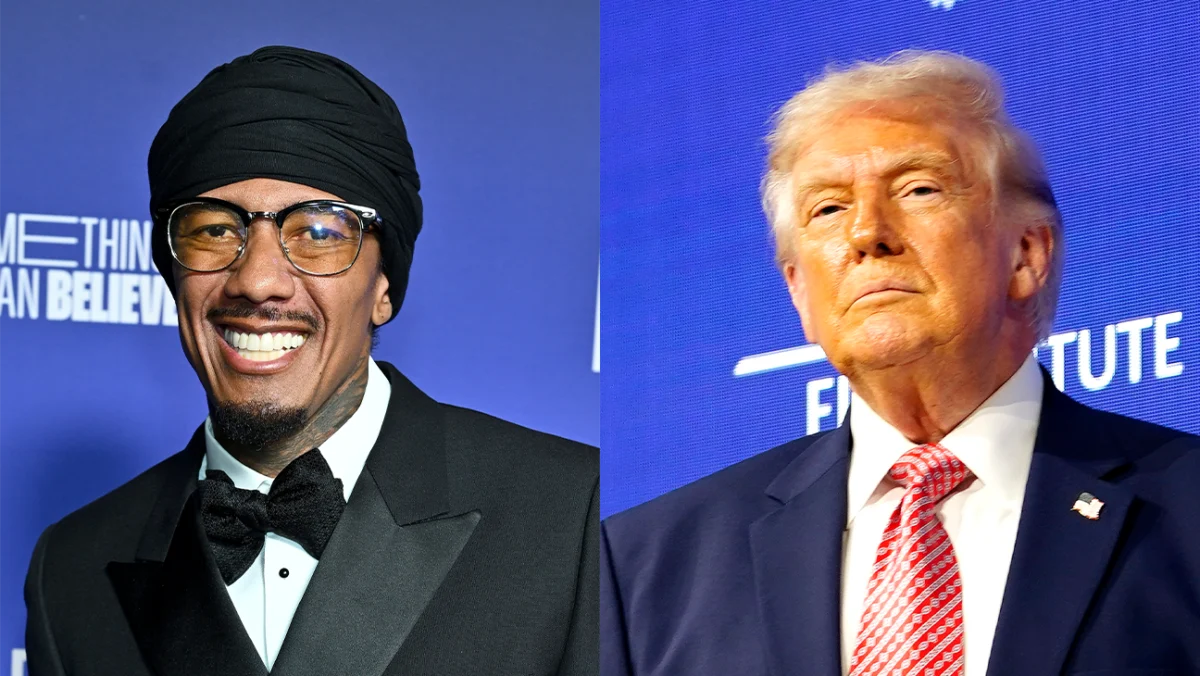
In a recent episode of his show Big Drive, comedian and producer Nick Cannon articulated a strong, albeit controversial, endorsement of former President Donald Trump, sparking considerable discussion about political alignments and historical narratives within the Black community. During a conversation with model Amber Rose, Cannon not only expressed his alignment with certain conservative viewpoints but also directly stated, "I fuck with Trump," detailing his reasons for supporting the former president’s policies and approach. This declaration comes amidst a broader conversation on the show about the perceived efficacy and historical roles of the Democratic and Republican parties, particularly concerning Black voters.
Cannon’s Political Stance and Historical Claims
Cannon’s endorsement of Trump was framed within a critique of the Democratic Party, which he characterized as "the party of the KKK." This assertion, while historically rooted in the post-Civil War era where many former Confederates and white supremacists were Democrats, overlooks the significant evolution of both parties since that period. Rose echoed similar sentiments, suggesting that the Democratic Party "don’t care about Black people, don’t care about people of color and the Republicans do." Cannon, agreeing with Rose, elaborated on his perspective, stating, "People don’t know that the Democrats are the party of the KKK. People don’t know that the Republicans are the party that freed the slaves." He further emphasized his detachment from traditional party lines, citing W. E. B. Du Bois’s notion that there is effectively "one evil party with two different names."
The historical context of these claims is complex. The Ku Klux Klan was indeed founded in 1865 by Confederate veterans, a group that largely comprised Democrats in the post-Reconstruction South. For a significant period, the Democratic Party in the South was the dominant force of white supremacy. Conversely, the Republican Party was founded in the 1850s by anti-slavery activists, and Abraham Lincoln, a Republican, signed the Emancipation Proclamation in 1863, a pivotal step toward abolishing slavery. However, the political landscape has dramatically shifted over the past century and a half. The Civil Rights Movement of the 1950s and 1960s saw a realignment of political loyalties, with many Black voters transitioning from the Republican Party to the Democratic Party, which championed civil rights legislation.
Cannon’s comments also touched upon Trump’s second term, which he described as "cleaning house" and fulfilling promises. He likened Trump’s immigration policies to a "club" with a " $5 million bottle service fee to get into the country," a statement that appears to reference Trump’s more stringent immigration proposals and border security measures. This sentiment suggests an appreciation for Trump’s disruptive approach to established political norms and his focus on border control, often framed as prioritizing national interests.
Amber Rose’s Voting Rationale
Amber Rose, who joined Cannon on Big Drive, also shared her political perspective, aligning herself with Trump’s policies. She stated that she is "not married to any party" but voted for Donald Trump in the 2024 U.S. presidential election because, in her view, "he was definitely by far the better option for us." Her rationale appears to stem from a belief that Trump’s policies offered a more beneficial outcome for her community compared to the alternative. This perspective challenges the widely held assumption that Black voters overwhelmingly support the Democratic Party, highlighting a segment of the Black electorate that finds appeal in Republican platforms, particularly under Trump’s leadership.
The 2020 election saw a slight but notable increase in Trump’s support among Black voters compared to 2016, according to various exit polls and analyses. While the majority still voted for Joe Biden, the trend indicated a growing dissatisfaction with the Democratic Party among some demographics within the Black community. Factors cited for this shift include economic concerns, a perception that Democratic policies have not sufficiently addressed systemic inequalities, and an appeal to Trump’s populist messaging and business-oriented approach.
Analysis of Political Realignment and Historical Narratives
Cannon’s remarks, particularly his invocation of historical party affiliations, highlight a growing trend of questioning traditional political allegiances, especially within minority communities. The "Great Migration" of Black Americans from the rural South to Northern cities, beginning in the early 20th century, initially aligned many with the Republican Party due to its historical association with emancipation. However, the New Deal era and the Civil Rights Movement under Democratic leadership led to a significant shift.
The current political climate, however, is characterized by a fragmentation of voting blocs. As Cannon suggests, some voters are prioritizing specific policy outcomes or leadership styles over strict party identification. His use of historical context, while factually incomplete in its simplified portrayal of modern party platforms, taps into a narrative that some find resonant, suggesting a historical betrayal or neglect by the Democratic Party and a potential for renewed focus on traditional values or economic opportunities under Republican leadership.
The implication of Cannon’s and Rose’s statements is that the monolithic voting patterns often attributed to the Black community are becoming increasingly diverse. Voters are engaging with political discourse on their own terms, evaluating candidates and parties based on perceived self-interest, policy impact, and ideological alignment. This trend suggests that both major parties will need to adapt their outreach strategies and policy proposals to resonate with a broader spectrum of voters within the Black electorate.
Broader Impact and Implications
The public statements made by Nick Cannon and Amber Rose are significant not only for their endorsement of a figure often viewed as polarizing but also for their re-framing of historical political narratives. These discussions on Big Drive underscore a larger societal conversation about race, politics, and identity. By questioning the established historical roles of the Democratic and Republican parties, Cannon and Rose are contributing to a broader dialogue that encourages critical examination of political ideologies and their impact on different communities.
The willingness of public figures like Cannon and Rose to openly discuss their support for Donald Trump, even using provocative language, signals a potential shift in how political endorsements are perceived and received. It challenges the notion of a uniform "Black vote" and emphasizes the individuality of political thought within diverse communities. The implications of such discourse are far-reaching, potentially influencing voter sentiment, party strategies, and the overall tenor of political debate in the lead-up to future elections. As the political landscape continues to evolve, understanding these nuanced perspectives becomes increasingly crucial for a comprehensive analysis of American politics.