Kang Muslim
The Discrepancy Between Objective and Subjective Status
To understand the findings, it is essential to distinguish between objective socioeconomic status (SES) and subjective socioeconomic status. Objective SES is a measure of tangible assets: annual income, years of formal education, and occupational prestige. However, psychologists have long noted that these metrics do not always align with how an individual feels about their place in society. Subjective SES represents an individual’s perception of their rank relative to others in their immediate community or nation.
This self-perceived ranking can be influenced by social circles, local cost of living, and personal expectations. A person with a moderate income living in an affluent neighborhood may perceive themselves as lower-class, while someone with the same income in a rural setting might feel like a member of the elite. The PLOS One study highlights that it is this internal "ranking" that serves as a primary driver of political behavior. When individuals feel they occupy a high rung on the social ladder, they are statistically more likely to engage in "moderate" political activities, such as voting, providing feedback to government agencies, or following political news online.
The Psychological Gateway of Social Justice
A central finding of the research is that a high subjective social status does not lead to political engagement in isolation. Instead, it is mediated by a "perceived sense of social justice." This concept, rooted in System Justification Theory, suggests that humans have an inherent desire to view the social, economic, and political systems they live under as fair, legitimate, and stable.
According to the study, individuals who perceive themselves as high-status are significantly more likely to believe that their society distributes resources and opportunities equitably. This belief in a "just world" acts as a psychological reward, motivating the individual to participate in and uphold the system that has ostensibly rewarded their merit. Conversely, those who feel they are at the bottom of the social hierarchy often experience a "justice deficit." They may view the system as rigged or fundamentally unfair, leading to a sense of alienation. This alienation often manifests as political apathy, as the individual concludes that participating in a "broken" system is a futile exercise.
Materialism as a Cognitive Modifier
The most innovative aspect of Zhao’s research is the role of materialism in moderating these perceptions. Materialism is defined in the study as the importance an individual attaches to the acquisition and possession of material goods as a route to happiness and a metric of success. The researchers broke materialism down into three distinct facets:
- Material Centrality: The extent to which a person places the acquisition of wealth at the center of their life.
- Material Happiness: The belief that possessions and consumption are the primary sources of satisfaction.
- Material Success: The use of wealth as a yardstick to measure one’s achievements in life.
The data revealed that for individuals with low materialistic values, their personal wealth had very little impact on whether they viewed society as fair. These individuals appeared to judge social justice based on broader ethical or communal standards rather than their own bank accounts. However, for highly materialistic individuals, the link between personal wealth and the perception of societal fairness was remarkably tight.
When a materialist feels wealthy, they view the world as a perfectly functioning meritocracy. But when a materialist feels economically insecure, their worldview shifts dramatically toward the cynical. They are more likely to perceive the entire social structure as unjust, leading to a rapid withdrawal from civic duties. The study suggests that because materialists often neglect "intrinsic" needs—such as social connection and autonomy—in favor of "extrinsic" goals like money, their emotional stability is entirely dependent on their financial status. When that status is low, their connection to society at large dissolves.
Methodological Framework and Data Analysis
The research team conducted a comprehensive survey of 1,306 university students across various regions in China. The choice of a student population allowed the researchers to control for age and educational background while focusing on the psychological precursors to political engagement.
Measuring Subjective Status
The participants were presented with the "MacArthur Scale of Subjective Social Status," a visual tool depicting a ten-rung ladder. They were asked to place themselves on the rung that best represented their standing relative to others in society. This tool has been validated in numerous cross-cultural studies as a reliable indicator of psychological well-being and social identity.
Assessing Political Participation
Civic engagement was measured through a frequency scale of various activities. These included:
- Contacting local government officials with suggestions or complaints.
- Participating in community-level decision-making processes.
- Consuming political content via institutionalized websites and news outlets.
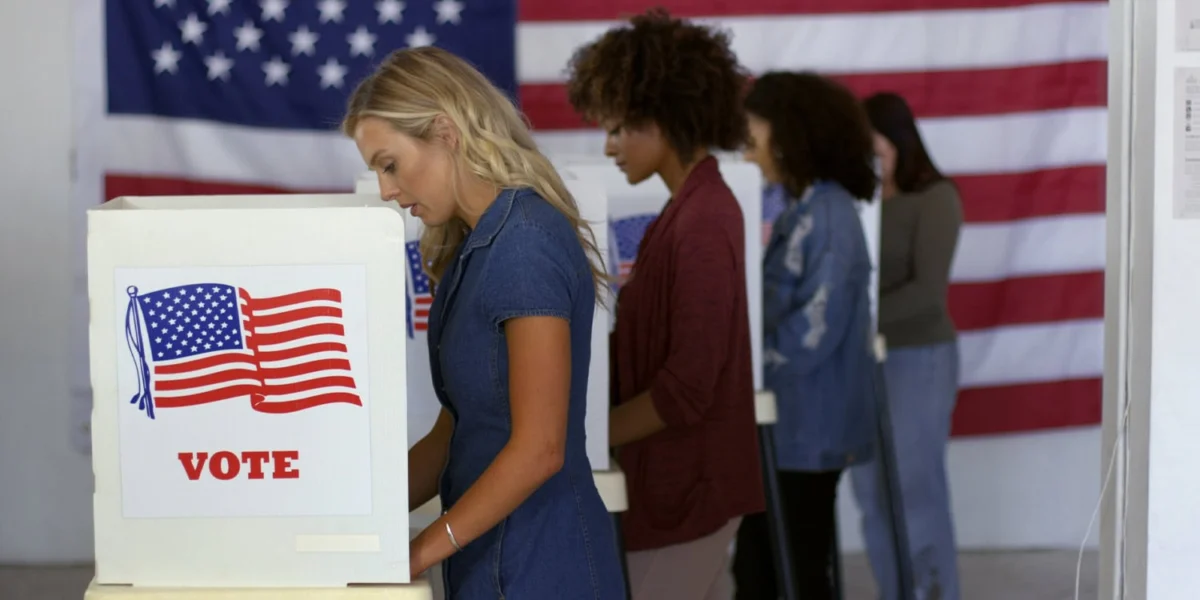
- Voting in local or school-based elections.
Statistical Correlation
The analysis utilized structural equation modeling to determine the pathways between variables. The results confirmed a "positive correlation" between subjective status and political participation (r = 0.18, p < 0.001). More importantly, the indirect effect of social justice was significant, confirming that the belief in a fair system was the "bridge" through which status influenced action.
Chronology of Related Research
The PLOS One study builds upon decades of evolving theories in political psychology:
- 1970s-1980s: Resource Mobilization Theory. Early researchers argued that political participation was purely a function of resources. The wealthy participated because they had the time, education, and connections to do so.
- 1990s: System Justification Theory. Psychologists like John Jost began exploring why people in disadvantaged positions sometimes support the status quo. This theory provided the foundation for understanding the "social justice" mediator in the current study.
- 2010s: The Rise of Materialism Studies. Research began to link high materialism to lower levels of empathy and civic-mindedness, setting the stage for Zhao’s team to explore how materialism interacts with class perception.
- 2024: The Zhao Study. By integrating status, justice, and materialism into a single model, this latest research provides a more nuanced view of the "psychology of the disenfranchised."
Broader Implications and Societal Impact
The implications of this study are significant for policymakers and community organizers. If political withdrawal is driven by a perceived lack of social justice—exacerbated by materialistic values—then simply providing "more information" about voting is unlikely to increase turnout among the lower classes.
Instead, the research suggests that re-engaging marginalized citizens requires addressing the "justice gap." When individuals feel that the system does not reward effort or that the "ladder" is inaccessible, they psychologically "check out" to protect their self-esteem. Furthermore, the study points to a cultural challenge: the rising tide of materialism. As societies become more consumer-driven, the risk of political alienation grows. If citizens only value their society when they are winning the "material game," the stability of civic institutions becomes tied to volatile economic cycles.
Limitations and Future Directions
While the study offers a robust psychological profile, the authors acknowledge certain limitations. The reliance on a Chinese student population means the results are situated within a specific cultural context. China is often characterized by a "collectivist" culture, where maintaining social harmony is a primary value. In this environment, political participation is often viewed as a duty to the state or community.
In contrast, in Western "individualistic" cultures, a sense of social injustice often leads to increased political activity in the form of protests, strikes, and grassroots activism. In the United States or Europe, those who feel the system is unfair may not withdraw; they may instead seek to disrupt it. The PLOS One study focused primarily on "moderate" or institutionalized participation, leaving the door open for future research into how materialism influences "confrontational" political engagement.
Additionally, the cross-sectional nature of the survey provides a snapshot in time. Researchers hope to conduct longitudinal studies in the future to see how a person’s political engagement changes as their financial status fluctuates over several years.
Conclusion
The findings from Zhirui Zhao and colleagues serve as a reminder that the health of a democracy or any political system is inextricably linked to the psychological state of its citizens. When wealth is viewed as the sole metric of success, and the system is only viewed as "fair" by those at the top, the result is a fractured body politic. By identifying the mediating roles of social justice and materialism, this research provides a roadmap for understanding the deep-seated roots of political apathy and the psychological conditions necessary for a truly engaged citizenry.