Prabowo Widodo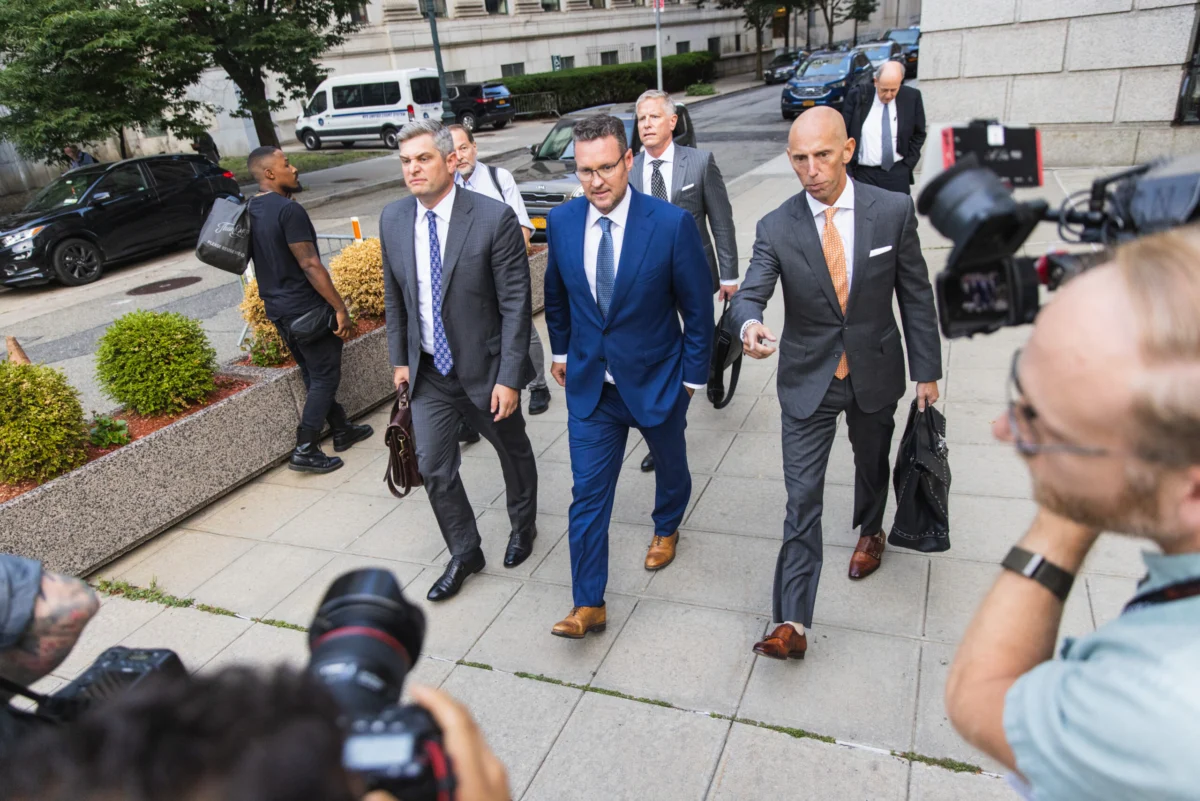
Almost exactly one year after the highly publicized legal proceedings surrounding Nikola founder Trevor Milton, the controversial entrepreneur has re-emerged with an ambitious new venture: a foray into the autonomous aviation sector. Following his conviction for securities fraud in 2022 and subsequent sentencing, Milton has reportedly acquired SyberJet Aircraft, an aerospace firm with a storied but challenging history, with the stated aim of developing cutting-edge AI-powered light jets. This latest endeavor, detailed in a recent Wall Street Journal report, marks a significant and unexpected pivot for Milton, who previously spearheaded the electric and hydrogen-powered truck startup Nikola, a company that ultimately faced bankruptcy and a severe erosion of its initial valuation. His strategy for this new aviation play involves familiar tactics: bringing in former Nikola personnel, actively seeking investment from the Middle East, particularly Saudi Arabia, and engaging in substantial lobbying efforts. Milton himself has acknowledged the monumental scale of this undertaking, reportedly stating that developing autonomous planes will be "10 times harder than Nikola ever was."
A New Chapter After Nikola’s Tumultuous Ride
Trevor Milton’s journey from visionary founder to convicted felon captivated the business world, offering a cautionary tale of unchecked ambition and alleged deception. Founded in 2014, Nikola Corporation rapidly ascended to prominence, promising to revolutionize the transportation industry with its electric and hydrogen fuel cell-powered trucks. The company’s narrative, fueled by Milton’s charismatic presentations and audacious claims, resonated with investors eager to back the next Tesla. Nikola went public in June 2020 through a special purpose acquisition company (SPAC) merger, briefly achieving a market capitalization exceeding $30 billion, even surpassing established automotive giants like Ford at one point. The hype surrounding Nikola was immense, driven by conceptual designs and prototypes that suggested imminent breakthroughs in sustainable heavy-duty transport.
However, this meteoric rise was abruptly halted in September 2020 when Hindenburg Research, a forensic financial research firm, published a scathing report titled "Nikola: How to Parlay An Ocean of Lies Into a Partnership With the Largest Auto OEM in America." The report meticulously detailed numerous allegations of fraud, including claims that Nikola had staged promotional videos to appear as if its prototype trucks were operational, when in fact they were simply rolling down hills or being pulled by other vehicles. Hindenburg also accused Milton of making misleading statements about the company’s technology, production capabilities, and strategic partnerships. The report specifically cited instances where Milton allegedly misrepresented the functionality of Nikola’s battery and fuel cell technology, claiming proprietary advancements that did not exist.
The fallout was immediate and catastrophic. Nikola’s stock plummeted, wiping out billions in shareholder value. Regulatory bodies, including the Securities and Exchange Commission (SEC) and the Department of Justice (DOJ), launched investigations. Milton, facing intense pressure, resigned as executive chairman and from the board of directors in September 2020. The legal consequences soon followed. In July 2021, a federal grand jury indicted Milton on three counts of fraud, accusing him of making false and misleading statements to investors about nearly all aspects of Nikola’s business. After a trial, Milton was convicted in October 2022 on one count of securities fraud and two counts of wire fraud, charges that carried significant penalties. In December 2023, he was sentenced to four years in federal prison, a stark conclusion to his tenure at Nikola.
Despite the conviction and sentencing, Milton’s current activities suggest a determination to return to the entrepreneurial stage. His emergence with SyberJet, almost a year after his sentencing, indicates a pivot from the heavy-duty vehicle sector to the highly specialized and regulated world of aviation. This new venture is unfolding against the backdrop of his past legal troubles, raising questions about investor confidence, regulatory scrutiny, and the inherent challenges of rebuilding a reputation in a high-stakes industry.
SyberJet Aircraft: A Troubled Legacy, A Bold Vision
Milton’s new vehicle for innovation is SyberJet Aircraft, a name that resonates with a long and complex history in the aerospace industry. SyberJet is the latest iteration of a company that traces its roots back to the Swearingen SX300 and later the SJ30 business jet program. The SJ30, a light business jet known for its impressive speed, range, and high-altitude capabilities, has been praised for its performance characteristics, including its ability to cruise at Mach 0.78 and fly at 49,000 feet. However, despite its technical merits, the program has been plagued by financial difficulties, multiple ownership changes, and production delays over several decades. Companies such as Sino Swearingen Aircraft, Emivest Aerospace, and Metalcraft Technologies have all, at various times, attempted to bring the SJ30 to sustained production and market success, often with limited results. SyberJet itself acquired the assets of the SJ30 program in 2013, with plans to modernize the aircraft as the SJ30i and later the SJ30x, incorporating new avionics and improved performance. However, these efforts also faced significant hurdles in securing certification and scaling production.
Milton and an "investment group" reportedly acquired the struggling SyberJet Aircraft late last year, signaling his intent to revitalize the company. His vision for SyberJet is nothing short of revolutionary: to design an entirely new avionics system from the ground up, with the ultimate goal of creating the "first light jet to focus on artificial-intelligence flight." This ambitious objective aims to position SyberJet at the forefront of autonomous aviation, potentially opening doors to lucrative defense contracts. The idea of an AI-driven light jet suggests capabilities far beyond current advanced autopilot systems, moving towards fully autonomous operation where artificial intelligence would manage all aspects of flight, from pre-flight checks to take-off, navigation, and landing, with minimal human intervention. This would represent a paradigm shift in general aviation and business jet travel, promising enhanced safety, efficiency, and potentially lower operational costs by reducing crew requirements.
Navigating the Complexities of Autonomous Aviation
The autonomous flight landscape is one of the most exciting and challenging frontiers in aerospace. While drones and military unmanned aerial vehicles (UAVs) have demonstrated advanced levels of autonomy, integrating AI into commercial and private passenger aircraft presents a unique set of technical, regulatory, and ethical hurdles. The global market for autonomous aircraft, encompassing cargo, passenger, and military applications, is projected to grow substantially, with some analyses forecasting it to reach over $180 billion by the 2030s. Major aerospace players like Boeing, Airbus, and numerous startups such as Joby Aviation and Archer Aviation (focused on electric vertical take-off and landing, or eVTOLs) are heavily investing in autonomous technologies, recognizing their transformative potential.
However, the path to fully autonomous flight is fraught with immense difficulties. Regulatory bodies, primarily the Federal Aviation Administration (FAA) in the U.S. and the European Union Aviation Safety Agency (EASA) in Europe, operate under stringent safety mandates. Certifying AI for critical flight systems requires unprecedented levels of reliability, predictability, and transparency. Unlike traditional software, AI systems, particularly those based on machine learning, can be opaque in their decision-making processes, making validation and verification extremely complex. Regulators demand exhaustive testing and robust safety cases to ensure that AI-driven systems can handle unforeseen circumstances, adverse weather conditions, and potential system failures without compromising safety. This often necessitates "explainable AI" (XAI) capabilities, allowing human operators and regulators to understand why an AI made a particular decision.
Technological challenges are equally daunting. Developing an AI system capable of real-time sensor fusion from multiple inputs (radar, lidar, cameras, GPS, inertial navigation), making split-second decisions in dynamic environments, and executing complex flight maneuvers flawlessly requires immense computational power and sophisticated algorithms. Cybersecurity is another critical concern; an autonomous aircraft’s reliance on digital systems makes it a potential target for cyberattacks, demanding robust protection against hacking and spoofing. Furthermore, the public’s trust in autonomous flight remains a significant hurdle. Overcoming deeply ingrained societal apprehensions about machines controlling human lives will require a flawless safety record and extensive public education.
Funding and Team Building: Echoes of Nikola?
Milton’s strategy for SyberJet reportedly includes familiar elements from his Nikola playbook, particularly concerning capital raising and team assembly. The Wall Street Journal report highlights efforts to solicit possible investors from Saudi Arabia, a region increasingly keen on diversifying its economy away from oil through significant investments in technology and future-oriented industries. Saudi Arabia’s sovereign wealth fund, the Public Investment Fund (PIF), has indeed been an active investor in global tech ventures, including electric vehicle companies like Lucid Motors. For a founder with Milton’s controversial past, seeking investment from sovereign wealth funds, which may have different risk appetites and strategic motivations compared to traditional venture capitalists or public markets, could be a pragmatic approach. However, even these investors will conduct rigorous due diligence, scrutinizing not only the technology but also the leadership’s credibility and the financial viability of the plan.
Another striking aspect of Milton’s new venture is the reported influx of "dozens" of former Nikola staff. On one hand, this could provide a team with existing rapport, familiarity with Milton’s leadership style, and a shared entrepreneurial spirit. These individuals might bring valuable experience in rapid prototyping, business development, and navigating the complexities of a startup environment. On the other hand, the association with Nikola, a company mired in scandal and bankruptcy, carries significant reputational baggage. For SyberJet, this could raise red flags for potential investors, partners, and regulators, who might view the rehiring of former Nikola employees as a perpetuation of a problematic corporate culture or a lack of fresh perspectives and robust governance. It also places additional pressure on the new team to distance itself from past missteps and demonstrate an unwavering commitment to ethical practices and transparent operations.
Milton’s reported spending of "a few hundred thousand dollars on lobbying" underscores the critical role of political and regulatory engagement in the aviation sector. Unlike the relatively less regulated automotive startup scene, aerospace is heavily influenced by government bodies. Lobbying efforts would likely focus on the FAA, seeking to influence forthcoming regulations regarding autonomous flight certification, airspace integration, and defense procurement. Navigating the labyrinthine certification processes for a new aircraft, let alone one employing groundbreaking AI technology, requires significant resources, expertise, and persistent advocacy. This investment in lobbying signals a recognition of the regulatory hurdles that lie ahead and an attempt to proactively shape the environment for SyberJet’s ambitious plans.
Expert Perspectives and Market Implications
Industry analysts and aerospace experts are likely to view Milton’s new venture with a mixture of intrigue and profound skepticism. While the vision for AI-powered light jets is undoubtedly forward-thinking and aligns with long-term trends in aviation, the execution risks are immense, compounded by Milton’s personal history. For a founder convicted of securities fraud, rebuilding investor confidence is an uphill battle. Traditional institutional investors, who prioritize robust governance and ethical leadership, may be wary of associating with a project led by Milton. This could limit SyberJet’s access to capital, forcing reliance on unconventional funding sources or private equity with a higher risk tolerance.
The "10 times harder than Nikola ever was" quote attributed to Milton offers a crucial self-assessment of the challenges. This statement reflects a fundamental difference between the automotive/trucking sector and aviation. While Nikola faced challenges in developing propulsion technology and scaling production, the core safety and regulatory frameworks for vehicles are well-established. Aviation, by contrast, operates under an unparalleled regime of safety standards, testing, and certification. Every component, every line of code, and every operational procedure in an aircraft must meet rigorous standards, often requiring years of development and billions of dollars in investment. The certification of an entirely new avionics system, particularly one incorporating AI, is an undertaking that few companies, even established aerospace giants, would attempt from scratch without decades of prior experience and a vast engineering budget.
The implications for the market are multifaceted. If SyberJet were to succeed, it could indeed disrupt the light jet market, offering new efficiencies and capabilities. However, the probability of success, given the technological, regulatory, financial, and reputational hurdles, is extremely low by conventional industry metrics. The venture serves as a fascinating case study in entrepreneurial resilience—or perhaps hubris—and highlights the persistent allure of ambitious technological disruption, even for figures with controversial pasts.
The Road Ahead: A Test of Resilience and Credibility
Trevor Milton’s re-entry into the high-tech sector with SyberJet Aircraft and his vision for AI-powered autonomous planes represents one of the most audacious comebacks in recent corporate history. The venture faces an array of formidable challenges: securing massive capital investment in the wake of a fraud conviction, developing an unprecedented AI avionics system from the ground up, navigating the world’s most stringent aviation regulations, and winning over a skeptical public and industry. The parallels to Nikola’s initial grand claims and rapid expansion are undeniable, but the stakes in aviation, where safety is paramount, are exponentially higher.
As Milton and his team embark on this ambitious journey, the eyes of the industry, regulators, and potential investors will be keenly watching. His ability to attract credible talent, secure significant funding, and, most importantly, deliver on technological promises with transparency and integrity will be the ultimate test of whether SyberJet Aircraft can truly soar, or if it will merely echo the dramatic descent of his previous enterprise. The path ahead for autonomous aviation is long and complex, and Trevor Milton’s attempt to lead a segment of it promises to be nothing short of captivating.