Layla Zulfa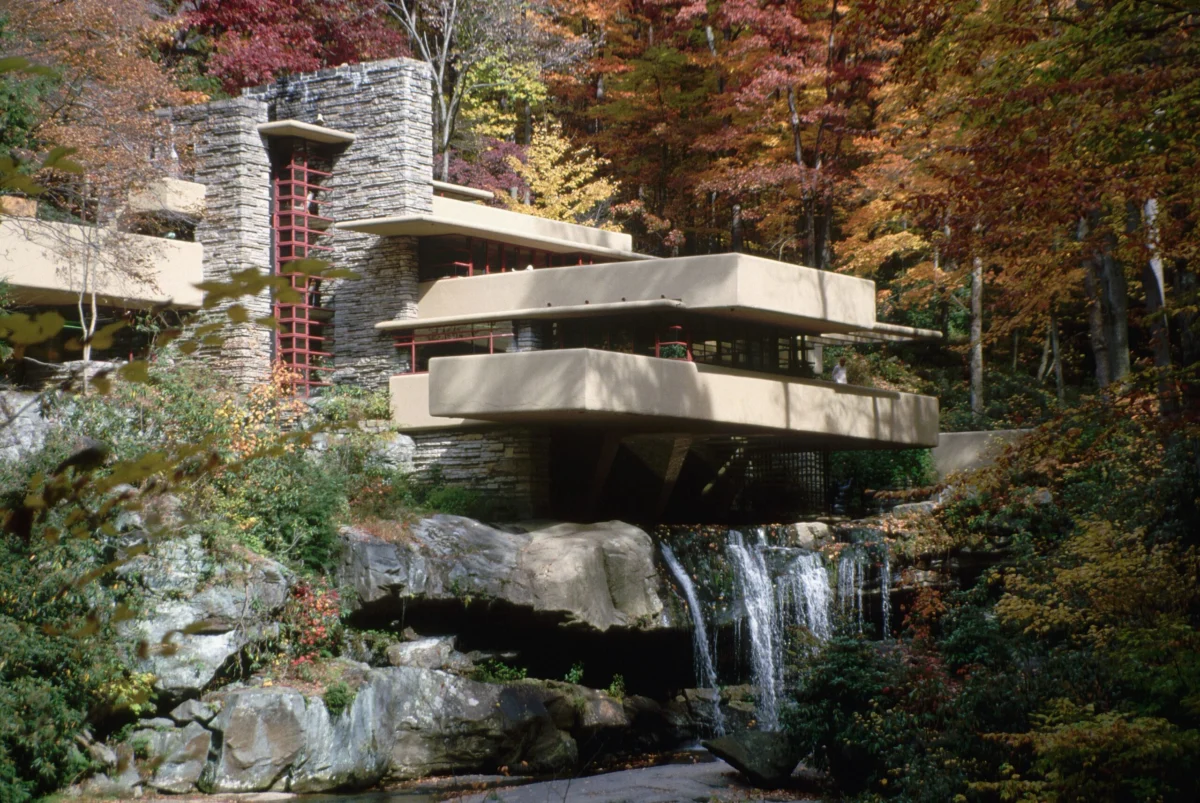
The scaffolding that has long shrouded one of the world’s most recognizable architectural landmarks has finally been dismantled, revealing the results of a meticulous three-year, $7 million preservation project at Frank Lloyd Wright’s Fallingwater. Located in the rugged Laurel Highlands of Mill Run, Pennsylvania, the residence has emerged from its most significant restorative undertaking in two decades. The Western Pennsylvania Conservancy, the nonprofit organization that has owned and operated the estate since 1963, recently announced the successful completion of the initiative, which addressed critical structural vulnerabilities while maintaining the aesthetic integrity of Wright’s 1935 masterpiece.
The project, which began in earnest in 2021, was necessitated by the persistent environmental challenges inherent to a structure built directly over a mountain waterfall. The scope of work included a comprehensive waterproofing of the building’s complex roof system, the repair of specialized concrete surfaces, and the restoration of the signature Cherokee Red steel-framed windows and doors. With the completion of these efforts, Fallingwater has reopened its doors for full-scale tours and educational programming, offering visitors an unobstructed view of the residence that many critics consider the greatest work of American architecture.
A Legacy of Organic Architecture and Engineering Ambition
To understand the magnitude of the recent $7 million investment, one must consider the radical nature of Fallingwater’s original conception. Commissioned in 1935 by Edgar J. Kaufmann, the owner of Pittsburgh’s prominent Kaufmann’s Department Store, the house was intended as a weekend retreat for the family. While the Kaufmanns initially expected a house situated across from the falls of Bear Run to provide a scenic view, Wright famously insisted that they "live with the waterfall."
Wright’s design utilized a series of reinforced concrete "trays" or cantilevers that were anchored into the natural Pottsville sandstone of the site. This allowed the house to hover precariously over the rushing water, creating a seamless integration of the built environment and the natural world—a philosophy Wright termed "Organic Architecture." Legend and historical accounts from Wright’s apprentices suggest the design was produced in a flurry of activity over just a few hours after months of procrastination, with Wright famously remarking, "I just shake the buildings out of my sleeves."
However, the very elements that make the house a visual marvel—its proximity to water, the heavy humidity of the forest, and the daring structural reaches—have made it a perpetual challenge for conservators. The recent restoration is the latest chapter in a long history of intervention required to keep the "house over the falls" from succumbing to the forces of gravity and moisture.
The Technical Scope of the 2021–2024 Preservation Project
The $7 million project was a multi-faceted endeavor aimed at both visible and invisible structural threats. According to the Western Pennsylvania Conservancy, the primary focus was the building’s envelope. The flat roofs and expansive terraces of Fallingwater, while central to its aesthetic, act as massive catchment areas for rain and snow. Over decades, the waterproofing membranes beneath the flagstone flooring of the terraces had begun to fail, leading to seepage that threatened the interior plaster and the structural steel within the concrete.
Key components of the restoration included:
- Roofing and Waterproofing: Technicians removed the historic flagstone pavers from the terraces to install modern, high-performance waterproofing membranes before carefully relaying the original stone in its exact historical configuration.
- Concrete Restoration: The house is famous for its smooth, rounded concrete edges. Exposure to the freeze-thaw cycles of Pennsylvania winters had caused "spalling," where moisture enters the concrete, freezes, and causes the surface to crack or flake off. Specialized masons repaired these sections using custom-mixed mortars that match the original texture and color.
- Window and Door Conservation: The residence features extensive glazing held in place by steel frames. These frames were meticulously scraped, treated for corrosion, and repainted in the iconic "Cherokee Red" color specified by Wright.
- Structural Reinforcement: While the massive cantilever repairs of the early 2000s remain stable, this project included minor adjustments to the masonry and support systems to ensure the building’s continued load-bearing capacity.
Justin Gunther, the director of Fallingwater and vice president of the Western Pennsylvania Conservancy, highlighted the logistical hurdles of the project in recent statements. He noted that performing repairs on a standard home is a routine matter of maintenance, but at Fallingwater, the complexity is magnified exponentially. "It’s just a little more complicated at Fallingwater because it’s a house over a waterfall," Gunther explained. "There’s a stream running underneath it; take your own house and the complications of doing repairs and multiply them by a thousand."
A Chronology of Conservation: From Construction to UNESCO Status
The history of Fallingwater is as much a history of maintenance as it is of design. Almost from the moment the Kaufmann family moved into the residence in 1937, the building began to exhibit the physical toll of its daring engineering.
- 1935–1937: Construction of the main house. Even during construction, Kaufmann’s engineers expressed concern about the amount of steel reinforcement in the cantilevers. Wright famously threatened to walk off the job if they added more steel; Kaufmann added it anyway, though even that proved insufficient over time.
- 1939: Completion of the guest house and service wing.
- 1955: The Kaufmanns documented that the main living room terraces had deflected, or tilted downward, by approximately four inches.
- 1963: Edgar Kaufmann Jr. donated the house and the surrounding 1,500 acres to the Western Pennsylvania Conservancy, ensuring its preservation for the public.
- 2001–2002: The most critical structural intervention in the house’s history occurred. Engineers determined the house was at risk of collapse due to the continued sagging of the cantilevers. A $11.5 million project introduced post-tensioning—a system of high-strength steel cables—to pull the cantilevers back into place and provide permanent support.
- 2019: Fallingwater was inscribed on the UNESCO World Heritage List as part of "The 20th-Century Architecture of Frank Lloyd Wright," a designation that recognizes its "outstanding universal value."
- 2021–2024: The current $7 million project addresses the exterior skin and moisture management systems to prevent the need for further major structural rescues in the near future.
Economic and Cultural Impact on the Laurel Highlands
The reopening of Fallingwater without the visual obstruction of scaffolding is a significant event for the regional economy of Western Pennsylvania. As a UNESCO World Heritage site, Fallingwater serves as a primary driver of tourism in the Laurel Highlands. Before the pandemic and the onset of the latest construction, the site welcomed upwards of 160,000 visitors annually from across the globe.
The presence of the house supports a broad ecosystem of hospitality, including local hotels, restaurants, and outdoor recreation businesses. The completion of the restoration ensures that the site can return to full operational capacity during the peak autumn foliage season, which is traditionally the house’s busiest time of year.
Beyond tourism, the successful restoration serves as a case study for the preservation of 20th-century "Modernist" architecture. Unlike ancient stone cathedrals, Modernist buildings often utilized experimental materials like reinforced concrete and industrial glass that were not originally designed for centuries of longevity. The techniques developed at Fallingwater provide a blueprint for other conservators worldwide who are struggling to maintain Wright’s other works or similar Modernist landmarks.
Broader Implications: Preservation in an Age of Climate Change
The $7 million project also reflects a growing awareness of the impact of climate change on historic sites. The Laurel Highlands have seen an increase in the frequency and intensity of heavy rain events over the past decade. For a house built over a stream, increased water volume and humidity pose an escalating threat.
The Western Pennsylvania Conservancy has indicated that their preservation strategy is now shifting toward long-term resilience. By upgrading the waterproofing systems to modern standards, they are preparing the house for a future where environmental stressors may be more severe than they were in the 1930s. The Conservancy also manages the surrounding 5,000-acre Bear Run Nature Reserve, recognizing that the health of the house is inextricably linked to the health of the watershed and the surrounding forest.
Public Access and Future Programming
With the restoration complete, Fallingwater has resumed its standard tour schedule. Tours are available daily, except for Wednesdays, from 8:30 a.m. to 4:30 p.m. through November 30. During the month of December, the site will transition to weekend-only operations.
The Conservancy has also expanded its educational offerings, including specialized architectural tours that focus on the engineering and preservation aspects of the house. These programs are designed to provide a deeper look at the "hidden" work that went into the $7 million project, allowing visitors to appreciate not just Wright’s aesthetic vision, but the sophisticated science required to keep that vision alive.
The completion of this three-year initiative ensures that Fallingwater remains not just a relic of the past, but a living example of the enduring dialogue between humanity and nature. As the scaffolding falls away, the house stands once again as Wright intended—a bold, horizontal composition of stone and light, harmonizing with the eternal rhythm of the falls below. For the Western Pennsylvania Conservancy and the global architectural community, the $7 million investment is more than a maintenance cost; it is a commitment to the survival of an American icon.