Jono Maryono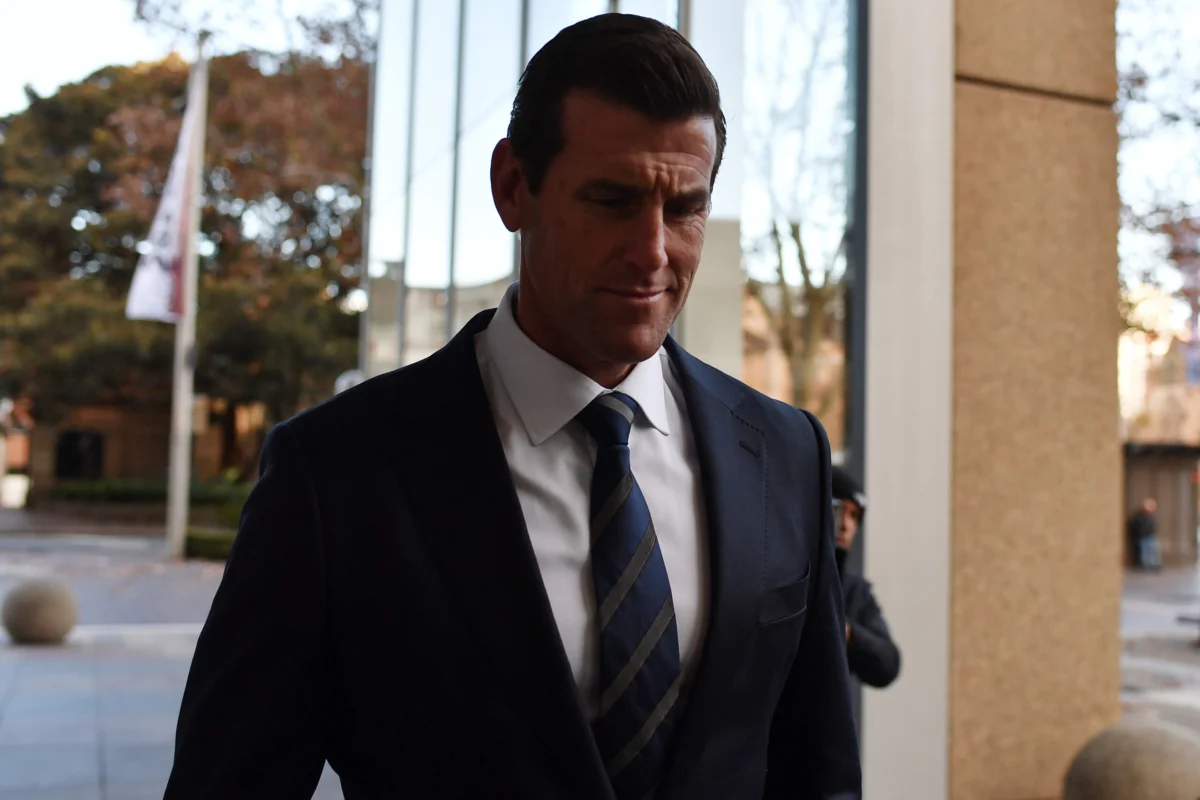
Former Australian Special Forces soldier Ben Roberts-Smith has been arrested at Sydney Airport, with authorities confirming he is expected to face multiple charges for alleged war crimes committed during his deployments in Afghanistan. The arrest marks a significant development following years of investigation and a high-profile defamation case that saw Roberts-Smith’s reputation severely tarnished. The Australian Federal Police (AFP) announced that the 47-year-old faces five counts of the war crime of murder, with the allegations pertaining to unarmed Afghan nationals who were reportedly not participating in hostilities at the time of their deaths.
The charges stem from a complex and protracted investigation initiated in 2021 by the AFP in conjunction with the Office of the Special Investigator (OSI). This independent body was established to examine allegations of serious misconduct by Australian special forces personnel in Afghanistan. The outcome of this investigation has now culminated in the arrest of one of Australia’s most decorated living war veterans.
This development follows closely on the heels of Roberts-Smith’s unsuccessful defamation proceedings. He had sued Fairfax Media (now Nine Entertainment Co.) and The Age newspaper over articles published in 2018 that accused him of being complicit in and responsible for the murder of three Afghan men. In June 2023, a Federal Court judge ruled that the journalists had not defamed Roberts-Smith, finding that the reports were substantially true. This landmark decision was upheld by the Full Court of the Federal Court of Australia in May of the previous year, effectively dismissing Roberts-Smith’s claims and validating the journalists’ reporting. The judge’s findings in the defamation case provided crucial evidence and context that likely informed the subsequent criminal investigation.
A Troubled Legacy: The Path to Arrest
The arrest of Ben Roberts-Smith brings to a head a series of serious allegations that have cast a long shadow over his distinguished military career and his public persona. A decorated soldier, Roberts-Smith served multiple tours in Afghanistan and was awarded the Victoria Cross, Australia’s highest military honour, for his actions during his fifth tour. He was widely regarded as Australia’s most decorated living war veteran, a status that has made the current charges particularly jarring for many.
The timeline of events leading to this point is extensive and fraught with controversy:
- Early 2000s: Australian special forces, including Roberts-Smith, are deployed to Afghanistan as part of the international coalition.
- 2016: Reports begin to emerge of alleged war crimes committed by Australian soldiers in Afghanistan, including unlawful killings.
- 2018: Fairfax Media (now Nine Entertainment Co.) publishes a series of investigative articles accusing Ben Roberts-Smith of war crimes, including murder, and of bullying and domestic violence. Roberts-Smith denies all allegations.
- 2018: Roberts-Smith files defamation lawsuits against Fairfax Media and The Age.
- 2020: The Australian Parliament passes legislation establishing the Office of the Special Investigator (OSI) to examine allegations of war crimes by Australian special forces in Afghanistan.
- 2021: The AFP launches a formal investigation into war crimes allegations, reportedly working closely with the OSI.
- June 2023: Justice Anthony Besanko of the Federal Court rules that the journalists who published the articles accusing Roberts-Smith of war crimes had not defamed him, finding that the reports were substantially true. This decision marked a significant blow to Roberts-Smith.
- May 2024: The Full Court of the Federal Court of Australia upholds the original defamation ruling, further solidifying the findings against Roberts-Smith.
- June 2024: Ben Roberts-Smith is arrested at Sydney Airport and is expected to face charges for alleged war crimes.
The charges, as detailed by Australian Federal Police Commissioner Reece Kershaw, specifically relate to the war crime of murder. The alleged victims are described as unarmed Afghan nationals who were not engaged in hostilities at the time of their deaths. The term "war crime" in this context refers to grave breaches of international humanitarian law that occur during armed conflict. The Geneva Conventions and their Additional Protocols define war crimes, which can include wilful killing, torture, or inhuman treatment of civilians and prisoners of war. For Australian service members, the International Criminal Court Act 1995 and the Criminal Code Act 1995 (Cth) provide the legal framework for prosecuting such offences.
Official Statements and Legal Proceedings
Commissioner Kershaw addressed the media in Sydney, providing an overview of the situation. "The AFP, in conjunction with the Office of the Special Investigator, has been conducting a complex investigation into allegations of war crimes committed by members of the Australian Defence Force in Afghanistan," Kershaw stated. "As a result of this investigation, Ben Roberts-Smith was arrested this morning at Sydney Airport. He is expected to face five counts of the war crime of murder."
The investigation’s scope and complexity were highlighted by the AFP, underscoring the significant resources and effort invested. The OSI, tasked with independently examining credible allegations of unlawful conduct or criminal offences by Australian defence personnel in Afghanistan between 2005 and 2016, has been instrumental in gathering evidence and working with law enforcement agencies.
The implications of these charges are profound, not only for Roberts-Smith himself but also for the broader narrative surrounding Australia’s involvement in Afghanistan. The revelations of alleged war crimes have been deeply unsettling for the Australian public and have raised questions about accountability within the military.
Reactions and Broader Impact
The arrest has elicited strong reactions from various stakeholders. Rawan Arraf, Executive Director of the Australian Centre for International Justice, hailed the arrest as a "significant and long-awaited step for victims and affected communities in Afghanistan." She emphasized the importance of such prosecutions for ensuring justice for Afghan victims and for Australia to uphold its international legal obligations. "The proper investigation and prosecution of alleged war crimes by members of the Australian special forces in Afghanistan are essential to ensuring justice for Afghan victims and to Australia meeting its obligations under international law," Arraf stated.
The deployment of Australian soldiers to Afghanistan was a substantial commitment, with approximately 39,000 personnel serving over two decades as part of the US and NATO-led operations against the Taliban and other armed groups. The allegations of war crimes have cast a stain on the service of many, while the protracted nature of the investigations has tested the patience of victims and human rights advocates.
The case of Ben Roberts-Smith has also drawn parallels to other whistleblowers and individuals who have raised concerns about alleged misconduct. Notably, former Australian army lawyer David McBride remains imprisoned in Australia for leaking information about alleged Australian war crimes in Afghanistan. His case has been a focal point for those advocating for greater transparency and accountability within the military. Senator David Shoebridge responded to the news of Roberts-Smith’s arrest by calling for McBride’s release, highlighting the interconnectedness of these narratives and the ongoing debate about whistleblowing and justice.
The Legal and Ethical Landscape
The prosecution of alleged war crimes by Australian soldiers is a complex legal and ethical undertaking. International humanitarian law, which governs the conduct of armed conflict, prohibits acts such as the deliberate targeting of civilians and the mistreatment of prisoners. The legal framework in Australia, including the International Criminal Court Act and the Criminal Code, allows for the prosecution of individuals for such offences, even if committed outside Australian territory.
The defamation case against the journalists, while not a criminal trial, played a crucial role in establishing the factual basis for the allegations. Justice Besanko’s detailed findings in that civil matter, which concluded that the journalists had proven their claims, provided a strong foundation for the subsequent criminal investigation. The ruling indicated that there was sufficient evidence to believe that Roberts-Smith was involved in the unlawful killings of Afghan civilians.
The implications of this arrest extend beyond the legal proceedings. They raise critical questions about military culture, oversight, and the responsibility of nations to hold their soldiers accountable for alleged atrocities. For the Afghan victims and their communities, this arrest represents a potential, albeit delayed, path towards justice and acknowledgment of the suffering they have endured. For Australia, it is a moment of reckoning with its military past and a test of its commitment to upholding international law and human rights. The upcoming court proceedings will undoubtedly be closely watched, both domestically and internationally, as they unfold.