Layla Zulfa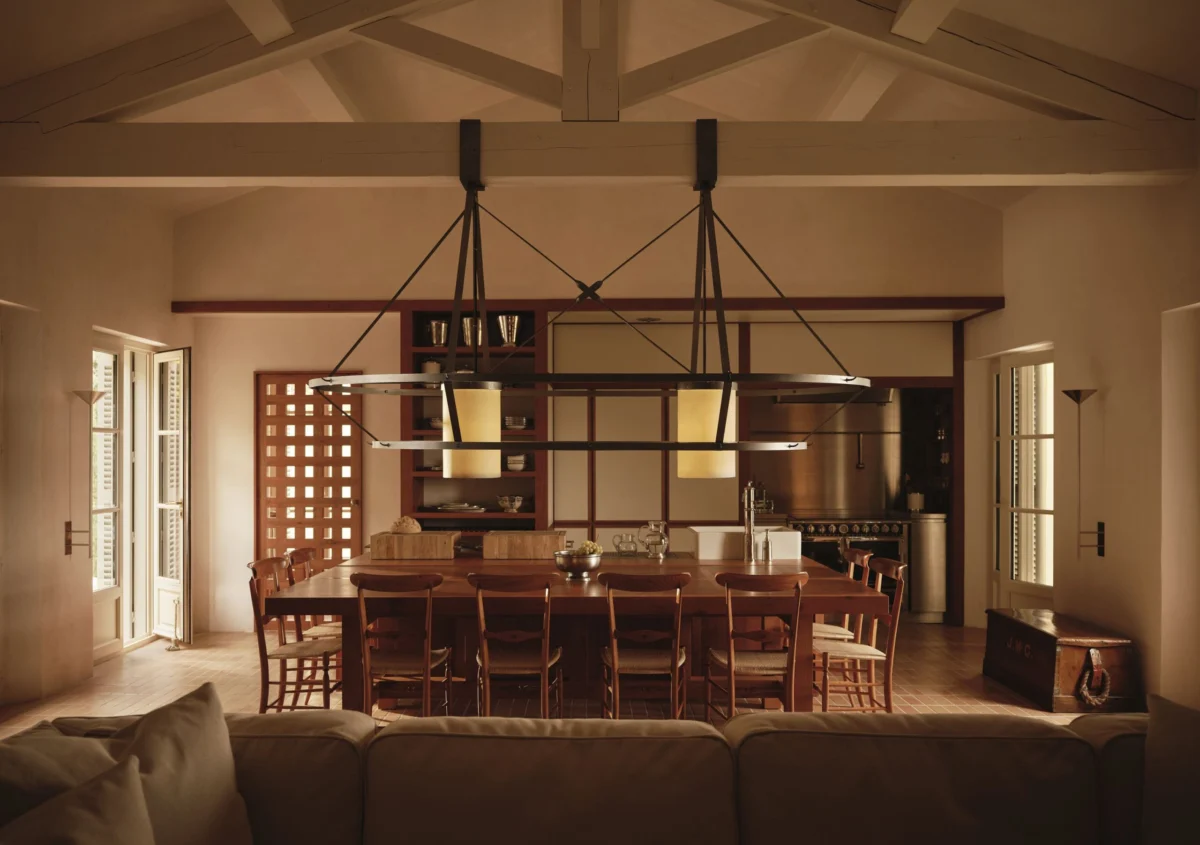
In the southern French town of Hyères, a coastal enclave long favored by the European intelligentsia and literary elite, a significant architectural restoration has recently been completed, signaling a return to historically informed, craft-driven design. The project, led by 28-year-old French architect and furniture designer Edgar Jayet, involves the comprehensive renovation of a 19th-century Mediterranean villa situated just yards from the storied Castel Sainte-Claire. The residence, which spans approximately 3,200 square feet across a main house and a detached guesthouse, represents a meticulous effort to restore "nobility" to a structure that had fallen into profound disrepair. By blending ancient Mediterranean building techniques with a curated selection of global design movements—ranging from the Wiener Werkstätte to the Bauhaus—Jayet has created a home that functions as both a sanctuary and a scholarly reflection on the history of travel and art.

The Architectural Vision and Client Context
The restoration was commissioned by a French couple seeking a permanent retreat after a decades-long career in the high-pressure environment of Parisian event production. Much like the novelist Edith Wharton, who spent the final decade of her life in the neighboring Castel Sainte-Claire, the homeowners were drawn to Hyères for its "quietude" and its unique microclimate. The project began after the homeowner encountered Jayet’s work at a regional design exhibition in Toulon, staged by the Villa Noailles—a landmark of modernist architecture visible from the property’s windows.

Jayet, whose previous acclaim centered largely on his furniture design, approached his first architectural commission with a philosophy he describes as "intellectual," aiming to embody the specific history of the surroundings. The residence was stripped to its core, leaving only the structural "skeleton" of what is believed to be an 18th or 19th-century block. The subsequent reconstruction focused on stone and traditional materials, moving away from the ephemeral nature of modern construction in favor of permanence and thermal efficiency.

Chronology of the Renovation: 2021–2024
The transformation of the property was a multi-stage process that spanned three years, involving international collaboration and the revival of rare artisanal skills.

- Phase I: Structural Reclamation (2021): The initial year was dedicated to stabilizing the original stone structure. The unassuming Mediterranean block, once the summer escape of an anonymous American expatriate, was stripped to its studs. Jayet and his team worked to integrate modern infrastructure while preserving the 14th-century medieval walls that encircle the property, some of which reach 20 feet in height.
- Phase II: Interior Materiality (2022): This period saw the application of plâtre au planche, a specialized plaster technique. Jayet hosted a master craftsman from Burgundy for four months to manually coat the ceilings, walls, and floors. This material was chosen for its linen-like qualities—retaining coolness during the intense Provençal summers and warmth during the winter months.
- Phase III: Curated Furnishing and Landscape (2023): The final stage involved the installation of bespoke furniture designed by Jayet, alongside the sourcing of historic artifacts. Simultaneously, Paludes Studio executed the landscape design, focusing on a productive garden that honors the region’s agricultural heritage.
- Completion (2024): The project was finalized as a year-round primary residence, fully integrating the main house and the guesthouse into a cohesive estate.
Materiality and Craftsmanship: The Technical Foundation
A defining feature of the Hyères project is Jayet’s uncompromising stance on material quality. The use of plâtre au planche throughout the interior provides a monochromatic, tactile backdrop that unifies the disparate historical references found in the furniture and art. Complementing the plaster is the extensive use of Salernes terra-cotta. Sourced from a Provençal village with a 7,000-year history of clay working, the terra-cotta is utilized for the living room fireplace mantel and the outdoor patio tiles.

In the primary bathroom, Jayet employed rosso masso stone, an earth-toned marble that covers nearly every surface. The attention to detail extends to the hardware; while the faucets are modern high-end fixtures from Waterworks and Lefroy Brooks, the surrounding hardware was handmade in nickeled brass. Notably, Jayet designed custom screws for the bathroom mirrors, inspired by the crown of a 1920s Cartier watch—a testament to the project’s "quietly-extravagant" vocabulary.

The Intellectual Interior: A "Retours d’Expositions"
Jayet describes the interior as a retours d’expositions (a return from exhibitions), intending to evoke the feeling of a home belonging to world travelers who have accumulated a lifetime of cultural experiences. The furniture and art selections represent a rigorous cross-section of 19th and 20th-century design history:

- Austrian and German Influence: The home features door handles designed by philosopher Ludwig Wittgenstein (originally created for his sister’s house in Vienna) and Bauhaus-era handles by Walter Gropius. Furniture by Josef Hoffmann, including the 1906 Fledermaus chair and the 1910 Elephant chair, provides a connection to the Wiener Werkstätte movement.
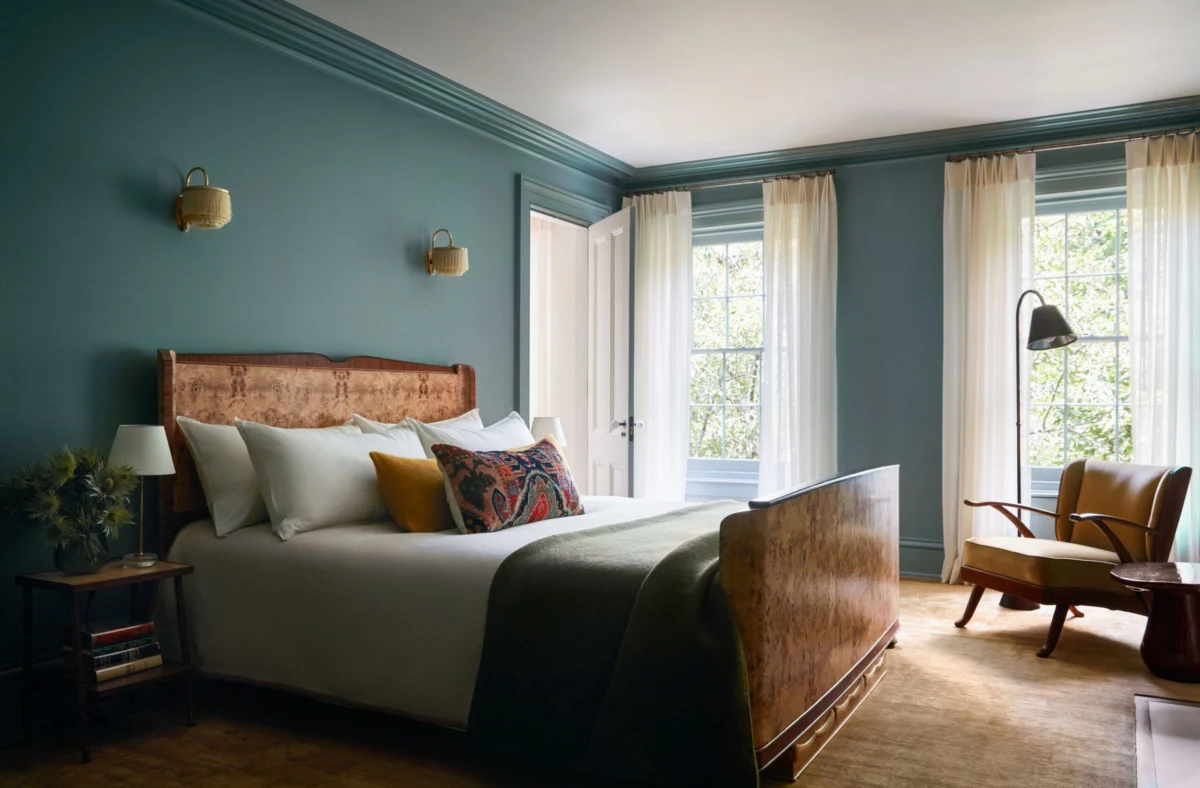
- Modernist and Deco Accents: Nightstands designed by Eileen Gray for her iconic Villa E-1027 in Cap Moderne flank the primary bed. In the guesthouse, a T. H. Robsjohn-Gibbings daybed and a 1920s School of Amsterdam desk by Metz & Co. create a space for contemplation.
- Artistic Provenance: The walls are decorated with museum-quality works, including drawings and watercolors by Henri Matisse and Paul Gauguin, and a series of oil paintings and sculptures by Aristide Maillol. A particularly poignant find is an anonymous 19th-century painting above the living room fireplace, which depicts the town of Hyères from the exact viewpoint of the house.
- Jayet’s Custom Designs: Central to the living area is the L-shaped Reinach sofa, designed by Jayet and manufactured in Paris. The sofa utilizes deadstock mahogany and is stuffed with horsehair according to ancien régime traditions, then covered in military-grade cotton canvas.
Landscape Design and Exterior Integration
The exterior of the villa is designed to be as functional as the interior. Working with Paludes Studio, Jayet ensured the garden serves as a source of both tranquility and sustenance. The grounds are populated with lemon, lime, grapefruit, pomegranate, and fig trees, which the homeowners harvest themselves using specially designed apple ladders.

In a gesture Jayet calls a "gift to the city," he installed bespoke outdoor curtains by Chiarastella Cattana on the exterior of each window. These curtains serve a dual purpose: they facilitate cross-breezes during the summer and act as visual "wall sculptures" when viewed from the medieval streets below. The lighting, designed by Mathieu Lustrerie, ensures the home integrates softly into the historic hillside at night.

Historical Context: Hyères as a Cultural Crucible
The significance of this renovation is amplified by its location. Hyères has historically served as a refuge for artists and intellectuals. In the 19th century, it was a premier health resort for the British and French aristocracy. The presence of Edith Wharton, Joseph Conrad, and Robert Louis Stevenson in the town’s history established a precedent for the "weary adventurer" seeking peace.

Furthermore, the influence of Olivier Voutier—the French naval officer who built Wharton’s home and discovered the Venus de Milo—is felt in the home’s nautical themes. Jayet incorporated an antique ship model from the White Star Line (the company behind the Titanic) and a French Navy hat from the boat Dupleix, connecting the residence to the maritime history of the nearby Toulon harbor.

Broader Implications for Modern Design
Edgar Jayet’s work in Hyères suggests a shift in the high-end residential market away from generic minimalism and toward "erudite" design. By prioritizing the most skilled craftsmen and materials with deep historical roots, the project argues that a home’s value lies in its narrative and its connection to the past.

Industry analysts suggest that this "intellectual" approach to architecture appeals to a demographic of homeowners who view their residences as extensions of their cultural capital. Jayet’s success in balancing physical comfort with historical depth indicates a rising demand for designers who are as comfortable in an archive as they are on a construction site.

The project also highlights the enduring appeal of the French Riviera as a site for architectural experimentation. From the modernist breakthroughs of Villa Noailles to the classical-modern synthesis of Jayet’s latest work, Hyères continues to be a vital center for design that respects the rhythm of the Mediterranean day—marked by the bells of the 12th-century church and the seasonal harvest of its citrus groves. For the weary adventurer, this 3,200-square-foot estate stands as a definitive example of how history can be revived to serve as a foundation for a modern, peaceful life.