Ronny Sianturi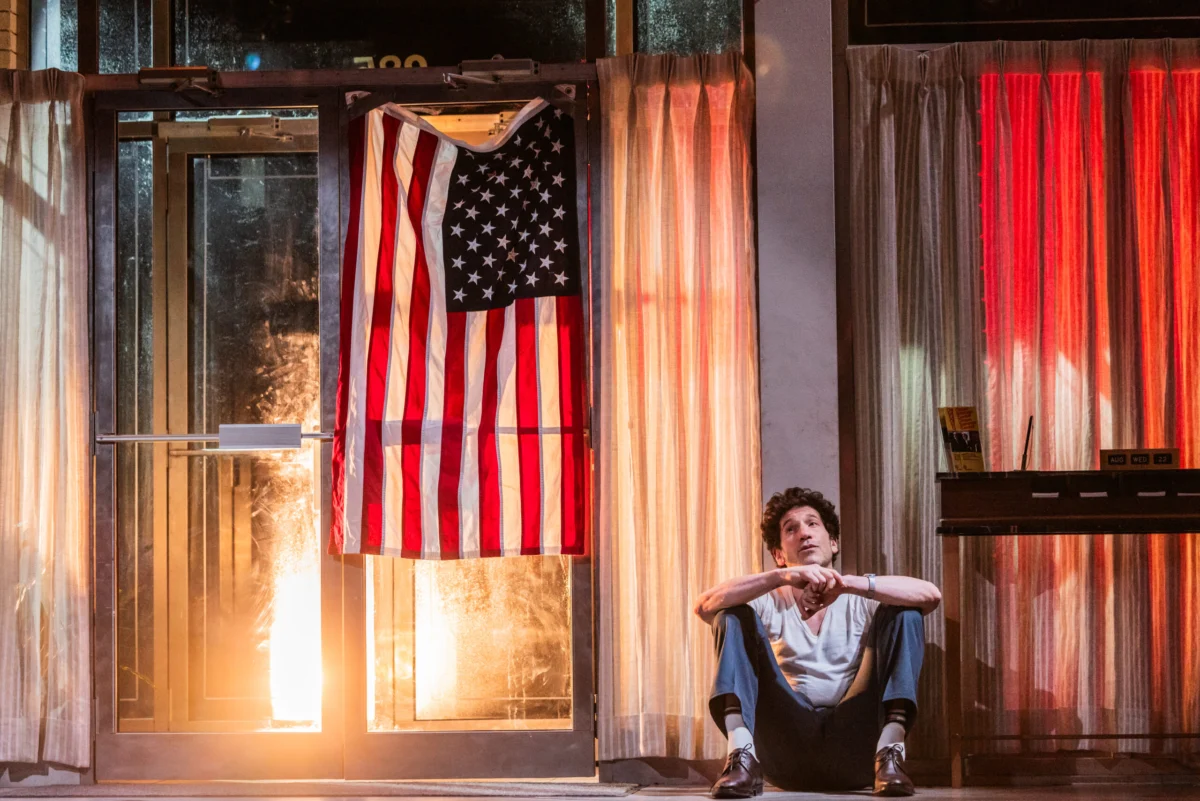
The legacy of Sidney Lumet’s 1975 cinematic masterpiece, Dog Day Afternoon, a film lauded by Vincent Canby of The New York Times for its "reportorially efficient and vivid" portrayal of desperation, is currently being tested on the Broadway stage. While Canby accurately captured the film’s blend of rueful amusement amidst dire circumstances, the new stage adaptation, penned by Pulitzer Prize-winning playwright Stephen Adly Guirgis, appears to have fundamentally misunderstood this delicate balance. Instead of channeling Lumet’s understated realism and the "murmur of furious sorrow" that permeates the original, this Broadway iteration has veered sharply into what critics are describing as an "antic comedy of bumblers and busybodies," a tonal miscalculation that strips the narrative of its profound human drama.
The film, a critical and commercial success that earned Al Pacino an Academy Award nomination and cemented its place in cinematic history, depicted the true story of John Wojtowicz, a Vietnam War veteran who, in August 1972, attempted to rob a Brooklyn bank to fund his partner’s sex reassignment surgery. What began as a seemingly straightforward heist quickly spiraled into a lengthy hostage crisis, captivating the attention of New York City and the nation. Lumet’s direction, coupled with Pacino’s electrifying performance as the increasingly desperate Sonny Wortzik, transformed the event into a searing indictment of societal failures, media sensationalism, and the systemic pressures faced by marginalized individuals. The film masterfully navigated the tension between the absurdity of the situation and the very real, often tragic, humanity of those involved.
A Stark Divergence in Theatrical Interpretation
The Broadway production, however, seems to have fixated on the "funny part" Canby alluded to, transforming a complex character study and social commentary into what many perceive as a broad, unfocused farce. Adapted by Stephen Adly Guirgis, a playwright known for his gritty portrayals of hardscrabble New Yorkers, this Dog Day is reportedly replete with "nasty jokes and weak attempts at rabble-rousing." The decision to amplify comedic elements at the expense of the original’s poignant undertones has led to significant artistic friction, with reports of clashes over tone during production, including Guirgis being temporarily banned from rehearsals. This suggests a profound disagreement about the heart of the story, a disagreement that appears to have persisted into the final product.
The initial moments of the play reportedly signal this jarring departure. In Lumet’s film, when a minor participant, Ray Ray, expresses his inability to proceed with the robbery, Sonny’s reaction is one of weary resignation. He allows Ray Ray to leave, a subtle moment that underscores the fragile human element underlying the criminal endeavor. The stage version, conversely, exaggerates this scene for cheap laughs. Ray Ray’s departure is punctuated by loud complaints of stomach issues, culminating in an onstage defecation. This choice, far from highlighting the characters’ humanity, serves to mock their incompetence, reducing them to "bozos" already "shitting the bed" – a far cry from the nuanced portrayal of individuals on the brink of becoming media pariahs.
Erosion of Nuance and Character Integrity
The play’s commitment to broad comedy continues throughout its runtime. The chief police negotiator, whose surname has been altered to "Fucco" presumably for the sole purpose of repeated crude jokes, is a testament to this superficial approach. The bank tellers, who in the film exhibit a complex range of fear and burgeoning empathy towards their captors, are reduced to caricatures: either "floozies" or "sardonic sitcom moms." This flattening of characters strips them of their individuality and their capacity for genuine emotional response, a crucial element that contributed to the film’s lasting impact.
The portrayal of Sal, the more volatile robber in the film, played with a disquieting intensity by John Cazale, has also been significantly altered. Ebon Moss-Bachrach, drawing heavily on his recent popular role, reimagines Sal as a "dumb, loose-cannon maybe-closet-case." This interpretation, while perhaps intended to inject a contemporary edginess, is seen by many as a tired rehash that sacrifices the character’s original complexity for a recognizable, albeit less compelling, archetype. This deviation from the source material has led to a pervasive question among those familiar with the film: "Wait, is this what the movie is like?" The answer, for those who rewatch Lumet’s film, is a resounding and disappointing "no."
A Questionable Artistic Vision
Stephen Adly Guirgis, whose previous works like Jesus Hopped the ‘A’ Train and Between Riverside and Crazy have been lauded for their authentic depictions of urban life and their seamless blending of drama and dark humor, would seem a natural fit for adapting Dog Day Afternoon. His established ability to capture the "argot of the city" and navigate the complexities of crime and consequence suggested a promising theatrical translation. However, in this instance, his instincts appear to have faltered dramatically. Critics suggest that Guirgis has become "sour on the people of this story," opting for mockery where compassion would have been more effective.
The treatment of Sonny’s second wife, Leon, a transgender woman who has recently attempted suicide, is particularly egregious. The film, made nearly 50 years prior, demonstrated a greater sensitivity to the complexities of Sonny and Leon’s relationship than this contemporary stage production. Leon, portrayed by Esteban Andres Cruz, is reduced to a "flighty, feisty, man-crazy sex worker," a reduction that serves as another "big gag" in a production overflowing with "crassness." This approach, which includes jokes about bank tellers’ supposed sexual encounters and marital woes, actively discourages any form of serious engagement with the characters’ struggles. The rationale behind this pervasive trivialization remains elusive.
Directional Missteps and Performance Challenges
Director Rupert Goold, known for his successful stage productions like King Charles III and his film work on Judy, appears ill-equipped to temper the play’s "sneering impulse." While Goold has demonstrated considerable talent in other contexts, this particular milieu, which demands a delicate balance of grit and humanity, seems to fall outside his strengths. The action sequences are described as "clunky, shouty jumbles," devoid of the tension that should define a hostage situation. The set design by David Korins, while impressive in its realism, is utilized with limited dynamism, primarily revolving between interior and exterior bank scenes.
More significantly, Goold appears to have steered the majority of his cast towards "the broadest of performances," prioritizing exaggerated vocalizations and volume over the "measured authenticity" that characterized Lumet’s ensemble. This directorial choice exacerbates the play’s tonal inconsistencies, transforming potentially poignant moments into grating displays.
Glimmers of Resilience Amidst the Overhaul
Despite the overwhelming critique of the production’s thematic missteps, a few performances manage to rise above the material. Jon Bernthal, as Sonny, occasionally registers as a genuine human being trapped in a desperate situation. He brings a "springy energy" that provides a welcome contrast to the play’s otherwise sagging momentum. Jessica Hecht, as head teller Colleen, combats her miscasting with "noble grace," finding moments of genuine humanity within her character’s often trite dialogue. Jon Ortiz imbues the negotiator Fucco with a "certain air of decency" that subtly echoes Charles Durning’s original portrayal.
However, it is Spencer Garrett, known for his role in Mad Men, who truly stands out. His portrayal of the FBI agent tasked with resolving the crisis is lauded for its "smarmy, officious tone." Garrett embodies the era and the specific context of the story with an authenticity that is largely absent from the rest of the cast, who are perceived as "playing to a studio audience."
The "Attica! Attica!" Moment: A Spectacle of Misunderstanding
Perhaps the most egregious misstep of the Broadway production lies in its handling of the iconic "Attica! Attica!" scene. In Lumet’s film, this moment is a powerful eruption of anti-establishment sentiment, a spontaneous cry born from the palpable tension between the desperate protagonist and the surrounding crowd, fueled by years of societal unrest and a recent, brutal prison uprising. Sonny’s chant, amplified by the fervor of the onlookers, becomes a thrilling, albeit fleeting, expression of collective rage against systemic injustice.
The Broadway adaptation, however, transforms this pivotal moment into a forced spectacle of audience participation. Bernthal, on stage, actively solicits participation, prompting the audience to repeat "Attica!" and to applaud his defiant cry of "Fuck you, NYPD!" This attempt to engineer anarchy from a Broadway audience, particularly during a matinee performance, results in an "achingly limp and awkward" display. The crucial element of earned fervor, the organic connection between Sonny and the crowd’s shared discontent, is completely lost.
This ham-fisted call-and-response fundamentally undermines the original scene’s electric power. Lumet masterfully captured a city simmering with discontent, its citizens galvanized by shared grievances against corrupt authorities. The "Attica!" chant in the film is a spontaneous outpouring of this collective frustration, a revolutionary cry that resonates with historical weight. On Broadway, however, it is reduced to a "hollow marketing slogan utterly stripped of context." The implication is that the production seeks to provide a superficial "experience" – perhaps prompting theatergoers to purchase branded merchandise rather than truly engage with the story’s deeper implications. This commodification of a moment of genuine catharsis would undoubtedly appall the Sonny of the film, and likely the hostages he held captive, as well.
The Broadway production of Dog Day Afternoon represents a profound divergence from the spirit and substance of its cinematic predecessor. By prioritizing broad comedy and forced audience engagement over nuanced character development and authentic emotional resonance, the production risks alienating audiences and misrepresenting a story that, in its original form, offered a searing and enduring commentary on societal pressures, media manipulation, and the enduring struggle for human dignity. The August Wilson Theater, currently hosting this ambitious but ultimately flawed adaptation, finds itself grappling with the challenge of translating a cinematic masterpiece into a theatrical experience that, in the eyes of many, has lost its way.
Venue: August Wilson Theater, New York
Cast: Jon Bernthal, Ebon Moss-Bachrach, Jessica Hecht, Jon Ortiz
Director: Rupert Goold
Writer: Stephen Adly Guirgis
Set Design: David Korins
Costume Design: Brenda Abbandandolo
Lighting Design: Isabella Byrd
Sound Design: Cody Spencer