Kang Muslim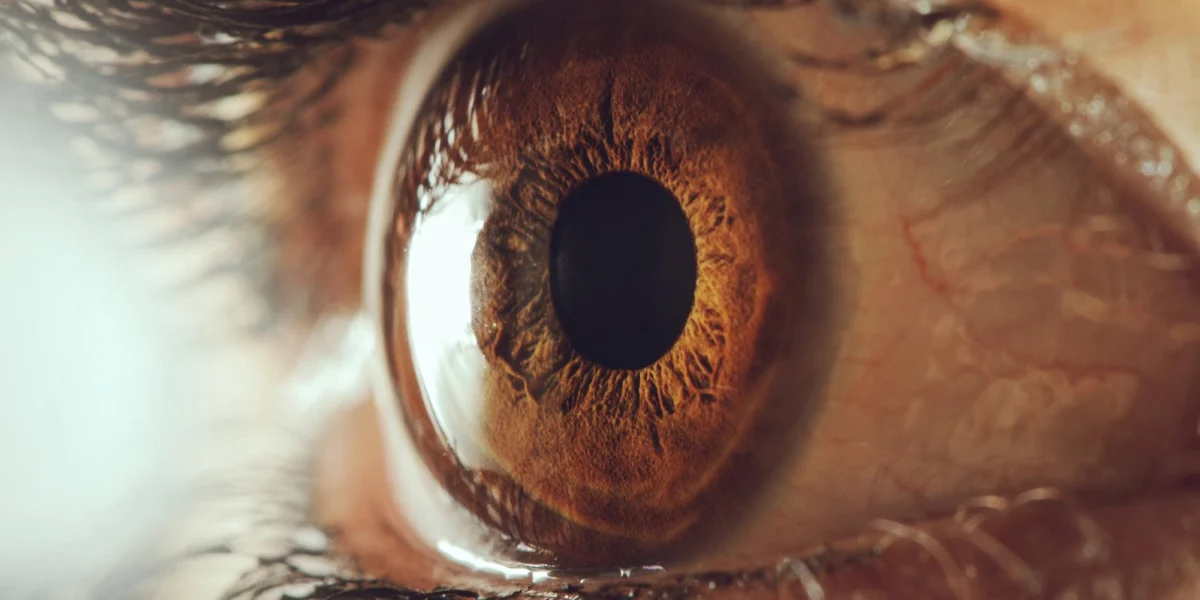
A groundbreaking study published in the journal Biological Psychology has unveiled significant new insights into the relationship between human ocular physiology and emotional states, challenging long-held assumptions about how the brain processes negative affect. Researchers from the University of Suffolk have demonstrated that specific emotions—specifically disgust, sadness, and anger—trigger distinct and sometimes opposing pupillary responses. While disgust and sadness are associated with a widening of the pupils, anger is uniquely characterized by pupillary constriction. These findings suggest that the human eye does not merely react to the intensity of a feeling, but rather adapts its visual intake based on the specific functional requirements of the emotion being experienced.
The study, led by psychologist Kate McCulloch alongside colleagues Edwin S. Dalmaijer, Gerulf Rieger, and Rick O’Gorman, sought to resolve a historical debate in the field of psychophysiology. For decades, scientists have argued over whether emotions are discrete biological categories or simply cultural labels for general states of arousal. By employing rigorous controls and focusing on self-reported emotional intensity rather than pre-assigned categories, the team provided compelling evidence that different emotions possess unique physiological "signatures."
The Biological Foundation of Pupillary Response
To understand the significance of these findings, it is necessary to examine the autonomic nervous system (ANS), which governs involuntary bodily functions. The ANS is divided into two primary branches: the sympathetic nervous system and the parasympathetic nervous system. Traditionally, pupil dilation (mydriasis) has been viewed as a hallmark of sympathetic activation—the "fight or flight" response. When a person encounters a threat or a high-arousal stimulus, the sympathetic system triggers the dilator pupillae muscle in the iris, pulling the pupil open to allow more light to enter. This physiological shift increases the field of vision, aiding in the detection of peripheral threats.
Conversely, pupil constriction (miosis) is typically associated with the parasympathetic nervous system, often referred to as the "rest and digest" system. This process involves the sphincter pupillae muscle, which pinches the pupil shut. While constriction limits the amount of light entering the eye, it significantly improves visual acuity and depth of field, allowing for sharper focus on a specific, centralized object.
Until now, most psychological research suggested that all negative emotions—anger, fear, and disgust alike—resulted in pupil dilation due to the high arousal associated with "negativity." The University of Suffolk study disrupts this narrative by showing that anger, despite being a high-arousal state, actually engages the parasympathetic-linked constriction response under certain conditions.
Methodology: Beyond Categorical Stimuli
The research was conducted in two distinct phases to ensure the reliability of the data. One of the primary criticisms of previous studies in this field is that they often relied on "categorical" assumptions—for instance, assuming that a picture of a snake would universally elicit fear. McCulloch’s team moved beyond this by requiring participants to rate their own internal states across five emotional dimensions: happiness, sadness, anger, fear, and disgust.
In the first experiment, 98 participants were exposed to 36 images and 18 audio clips. These materials were sourced from standardized databases, such as the International Affective Picture System (IAPS), which contain calibrated emotional stimuli. To isolate the effects of emotion from the effects of light, the researchers employed a "scrambled image" control. They created versions of each picture where the pixels were rearranged into an unrecognizable blur, maintaining the exact same luminance and contrast as the original. This ensured that any change in pupil size was a reaction to the meaning of the image, not the brightness of the screen.
Participants used a chin rest to minimize head movement while high-speed infrared eye-tracking cameras recorded their pupillary diameter at a rate of several dozen frames per second. After each stimulus, participants rated the intensity of their feelings on a scale of one to nine. This approach allowed the researchers to account for mixed emotions, such as a participant feeling both disgusted and sad simultaneously.
Chronology and Results of the Dual Experiments
The first experiment established a clear link between disgust and pupil dilation. When participants reported high levels of disgust, their pupils began to widen approximately two seconds after the stimulus began and remained dilated for the duration of the trial. Sadness followed a similar, though slightly less pronounced, pattern. However, the data regarding anger and fear remained inconclusive in this initial phase, likely due to the short duration of the stimuli.
To address these ambiguities, the researchers launched a second experiment involving 102 new participants. In this round, the team focused exclusively on auditory stimuli to eliminate any potential interference from visual light levels. They utilized longer, 30-second clips from movies, television, and internet videos. These clips ranged from neutral nature sounds to highly evocative recordings of people arguing, crying, or experiencing physical distress.
The results of the second experiment were transformative. With the longer duration of the audio clips, the physiological signature of anger finally emerged: a consistent narrowing of the pupils. This stood in stark contrast to disgust, which once again produced the strongest and most sustained dilation. Fear showed a late-onset dilation effect, appearing only toward the end of the 30-second clips, while happiness was associated with a mild widening of the eye.
Evolutionary Analysis: Acuity versus Sensitivity
The researchers proposed an evolutionary explanation for why anger and disgust produce opposite ocular reactions. This theory centers on the functional needs of the individual in different survival scenarios.
Anger is a "pro-social" or "approach-oriented" emotion usually directed at a specific target. Whether a human is preparing for a physical confrontation or a verbal argument, the biological priority is visual acuity. By constricting the pupil, the eye creates a "pinhole camera" effect, increasing the sharpness of the image and allowing the individual to focus intensely on the opponent’s movements or facial expressions. This is categorized as a need for high visual acuity.
Disgust, on the other hand, is an "avoidance-oriented" emotion. It evolved to help humans detect and avoid contaminants, pathogens, or predators. In a state of disgust, the priority is not to focus on a single point, but to scan the entire environment for other potential sources of danger or to find an escape route. Widening the pupils increases visual sensitivity, allowing more light in and broadening the peripheral field of view, which is essential for environmental scanning.
Implications for Psychological Science and Technology
The findings of McCulloch and her colleagues have broad implications for several fields, ranging from clinical psychology to artificial intelligence.
- Refining Emotion Theory: The study supports the "Discrete Emotions" theory, suggesting that our bodies have evolved specific, hard-wired responses for different feelings. This challenges the "Dimensional" view that emotions are merely varying degrees of pleasantness and energy.
- Affective Computing: As developers work to create AI and robotic systems that can "read" human emotions, pupillary response could serve as a more reliable metric than facial expressions, which are easily masked or faked. A system that monitors pupil size in real-time could distinguish between a user’s frustration (anger) and their revulsion (disgust).
- Diagnostic Potential: Understanding the baseline pupillary responses to emotion could eventually lead to new diagnostic tools for mood disorders. For example, individuals with depression or anxiety may exhibit "blunted" or exaggerated pupillary reactions to specific stimuli, providing clinicians with objective physiological data.
- Criminology and Deception Detection: While the "polygraph" has long been criticized for its inaccuracy, ocular-based metrics are becoming increasingly sophisticated. The discovery that anger constricts the pupil while other negative states dilate it provides a new layer of data for analyzing high-stakes interpersonal interactions.
Limitations and Future Directions
Despite the rigor of the study, the authors noted several limitations inherent in laboratory-based psychological research. The use of pre-recorded media, while effective, may not elicit the same level of physiological intensity as a real-life emotional event. Furthermore, the reliance on self-reporting assumes that participants have a high degree of emotional intelligence and can accurately distinguish between complex feelings like fear and anger.
Future research is expected to investigate the "offset" of these reactions—how long the pupil remains constricted or dilated after the emotional stimulus has ended. Additionally, scientists may look into how these responses vary across different cultures or age groups, as the autonomic nervous system’s sensitivity can change over a lifespan.
The study concludes that the human eye is far more than a passive window to the world; it is an active participant in our emotional lives. By constricting in anger and dilating in disgust, the pupil acts as a functional tool, adjusting our vision to meet the specific demands of our psychological state. This research marks a significant step forward in our understanding of the intricate, invisible links between the human mind and the physical body.