Ferry Irwandi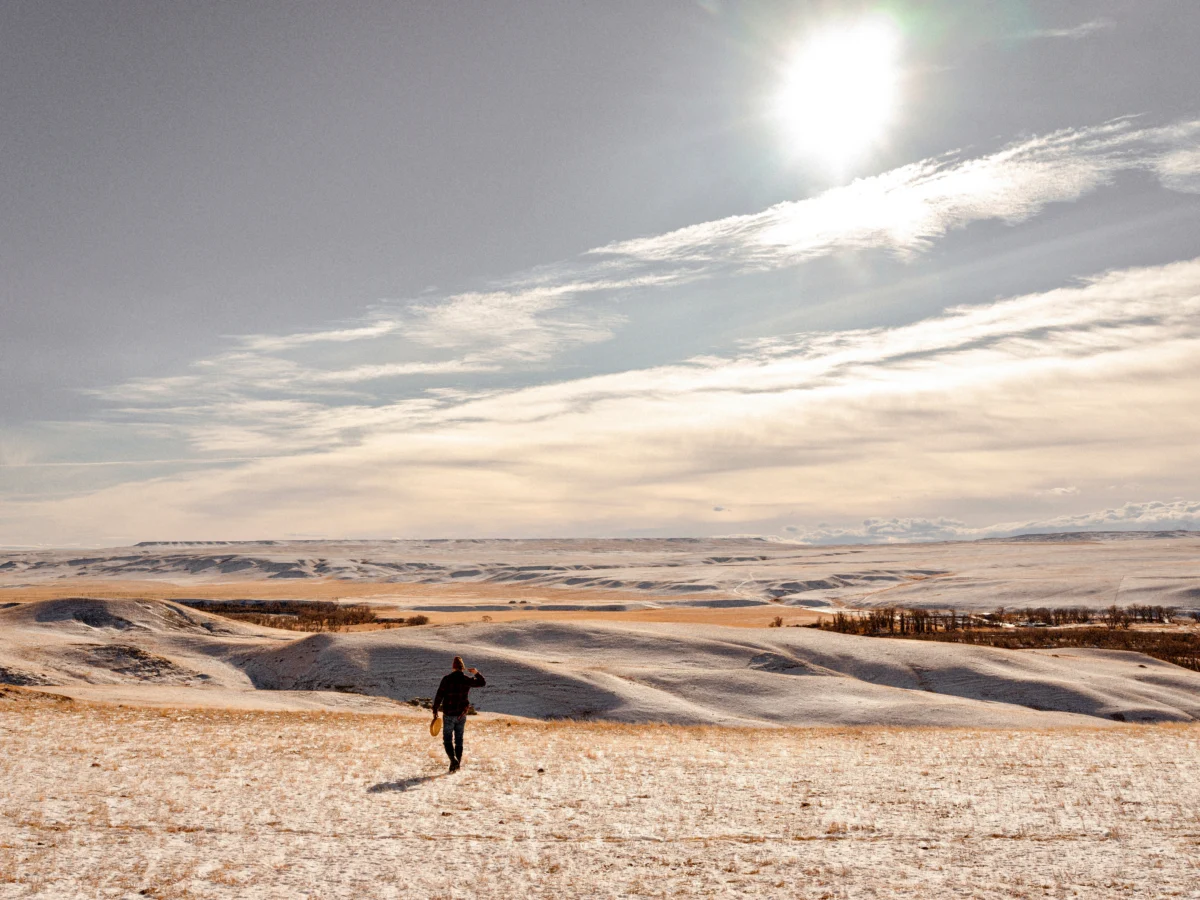
The Blackfoot Confederacy, a transborder alliance of four Indigenous nations, is currently spearheading a transformative initiative to redefine tourism and land stewardship across the Great Plains of northern Montana and southern Alberta. Known as "Destination Blackfoot," the project aims to dissolve the psychological barriers of the United States-Canada border, traditionally referred to by the Blackfoot as the "medicine line," by establishing a 100-operator cultural corridor. This movement is anchored by the ecological and spiritual reintroduction of the buffalo, or iinii, a species that served as the foundation of Blackfoot life for millennia before being driven to near-extinction in the late 19th century.

The Siksikaitsitapi: A Transborder Sovereignty
The Blackfoot Confederacy, or Siksikaitsitapi, is comprised of approximately 40,000 members across four distinct nations. These include the Kainai (Blood) and Siksika nations in Alberta, the Piikani Nation in Alberta, and the Aamskapi Pikuni (Southern Piegan) in Montana, the latter of which is federally recognized in the U.S. as the Blackfeet Nation.
While the 1849 and 1888 international boundary surveys imposed a formal division between the British Empire (later Canada) and the United States, the Blackfoot people have historically viewed the region as a singular ancestral domain known as Nititawahsi—the land where the buffalo live. Today, the Blackfoot Confederacy Tribal Council, established as a formal non-profit regional managing organization in 2018, is working to institutionalize this ancient unity through economic development and tourism.

Kimmy Shade, CEO of the Blackfoot Confederacy Tribal Council, emphasizes that the initiative is designed to treat the international border not as a barrier, but as a shared space of cooperation. "It’s a good opportunity to have a good news story about cooperation," Shade noted, highlighting that the corridor seeks to facilitate "Blackfoot-led networks" that prioritize Indigenous perspectives over colonial boundaries.
A Chronology of Displacement and Resurgence
The history of the Blackfoot people is inextricably linked to the fate of the American bison. To understand the current restoration efforts, it is necessary to examine the timeline of the region’s transformation:

- Pre-1870: Millions of buffalo roam the Great Plains, providing the Blackfoot with food, shelter, and a spiritual centerpiece. The people refer to themselves as Niitawahsin-nanni, or "the people of the land where the buffalo live."
- Late 19th Century: Settler expansion and government-sanctioned hunting programs drive the buffalo to the brink of extinction. The loss of the iinii results in widespread famine and economic collapse for Indigenous nations.
- 1877: Treaty 7 is signed between the Blackfoot Nations and the Canadian government. While the Blackfoot viewed the treaty as a peace agreement, the Crown interpreted it as a land surrender, leading to the confinement of the nations to limited reserve lands.
- Late 1800s: The U.S.-Canada border becomes known as the "medicine line" because Plains peoples observed that military forces from one side would not cross to the other, offering a temporary, supernatural sense of protection during periods of conflict.
- 1977: Prince Charles visits Blackfoot Crossing to commemorate the centenary of Treaty 7, an event that highlighted the lack of a centralized venue for Blackfoot storytelling.
- 2014: The "Buffalo Treaty" is signed by eight Indigenous nations (now expanded to over 30), establishing a formal alliance to restore buffalo to Indigenous lands for cultural and ecological purposes.
- 2018: The Blackfoot Confederacy Tribal Council is established to manage cross-border interests.
- Present Day: The "Destination Blackfoot" corridor launches, featuring eight self-guided routes and over 100 Indigenous-owned businesses.
The Iinii Initiative: Ecological and Spiritual Restoration
Central to the revitalization of the Confederacy is the "Iinii Initiative," a cross-border collaboration dedicated to the reintroduction of wild buffalo herds. For the Blackfoot, the buffalo is considered a "keystone relative," a term that encompasses both its ecological role and its spiritual significance.
Over the past decade, the Blackfeet Nation in Montana has successfully reintroduced herds near Browning, Montana. This restoration is not merely an environmental project; it is a vital component of cultural "rematriation." Observers and community members, such as cultural guide Lailani Upham of Iron Shield Creative, note that the return of the shaggy, bulky animals to the grasslands near the Rocky Mountain Front has fundamentally altered the feeling of the landscape, making the ancestral territory feel like "home" once again.

The ecological impact of the buffalo is significant. As a keystone species, their grazing patterns promote biodiversity, their wallows create micro-habitats for various insects and birds, and their presence helps restore the native prairie ecosystem which has been degraded by cattle ranching and industrial agriculture.
Building the Cultural Infrastructure: Destination Blackfoot
The "Destination Blackfoot" project represents a sophisticated shift in the regional tourism economy. By creating a custom Google Map and eight distinct "Immersion Routes," the Confederacy is providing a framework for travelers to engage with Indigenous history and modern entrepreneurship without the filter of non-Indigenous tour operators.

Key Cultural Hubs and Operators
- Blackfoot Crossing Historical Park (Alberta): Located in the Siksika Nation, this site features a glass-and-steel tipi-shaped museum. It serves as a primary interpretive center for Treaty 7 and the historical vastness of Blackfoot territory, which once stretched from the North Saskatchewan River in Alberta to the Yellowstone River in Montana.
- Sun Tours (Montana): Operating for over 31 years, this is the only company providing Blackfeet-led tours of Glacier National Park. The company’s history is one of legal resilience; founder Ed DesRosier famously fought for the right to operate tours on what he argued was traditional Blackfeet land, eventually winning a landmark case against the National Park Service.
- Iron Shield Creative (Montana): Founded by Lailani Upham, this company integrates traditional storytelling with outdoor exploration, leading cultural hikes on public lands that emphasize the "backbone of the world" (the Rocky Mountain Front).
- Paahtómahksikimi Cultural Centre (Alberta): Located near Waterton Lakes National Park, this center serves as a liaison between the Kainai Nation and Parks Canada, ensuring that Blackfoot language and imagery are woven into the visitor experience.
Navigating the Medicine Line: Logistics and Reality
Despite the cultural unity of the Confederacy, the physical reality of the international border remains a logistical hurdle for both the Blackfoot people and visitors. Travelers moving between the U.S. and Canadian sections of the corridor must still pass through official ports of entry, such as Del Bonita or Piegan-Carway.
Derek DesRosier, general manager of Sun Tours, points out that the border continues to play a role in "disconnecting communities." Movement that was once fluid and frequent is now dictated by the operating hours of rural checkpoints and the requirement of valid documentation like passports or NEXUS cards. One of the goals of Destination Blackfoot is to mitigate these disruptions by coordinating tourism efforts that encourage travelers to see the region as a singular cultural landscape, moving "nation to nation" rather than simply state to province.

Broader Implications and Future Outlook
The efforts of the Blackfoot Confederacy are part of a larger global trend toward Indigenous-led tourism and land management. According to data from the Indigenous Tourism Association of Canada (ITAC), Indigenous tourism is one of the fastest-growing sectors in the Canadian travel industry, contributing billions to the national GDP and providing a sustainable model for economic self-determination.
As the 150th anniversary of Treaty 7 approaches in 2027, the Blackfoot Confederacy is preparing for a period of intense commemoration. Unlike past centennials, which were often framed by colonial narratives, the 2027 events are expected to be led by the Blackfoot themselves. Plans are underway to expand Blackfoot Crossing Historical Park with new stages for concerts and festivals, allowing the nations to "explain ourselves as a people way more efficiently," as noted by senior interpreter Grant Many Heads.

The reintroduction of the buffalo and the establishment of the tourism corridor represent a profound reclamation of identity. By inviting the world to view the "backbone of the world" through their eyes, the Siksikaitsitapi are ensuring that their presence on the land is not a matter of historical record, but a living, breathing reality. The initiative suggests that true reconciliation involves not just the acknowledgment of past harms, but the active support of Indigenous sovereignty over the cultural and ecological future of their ancestral lands.