
 Reynand Wu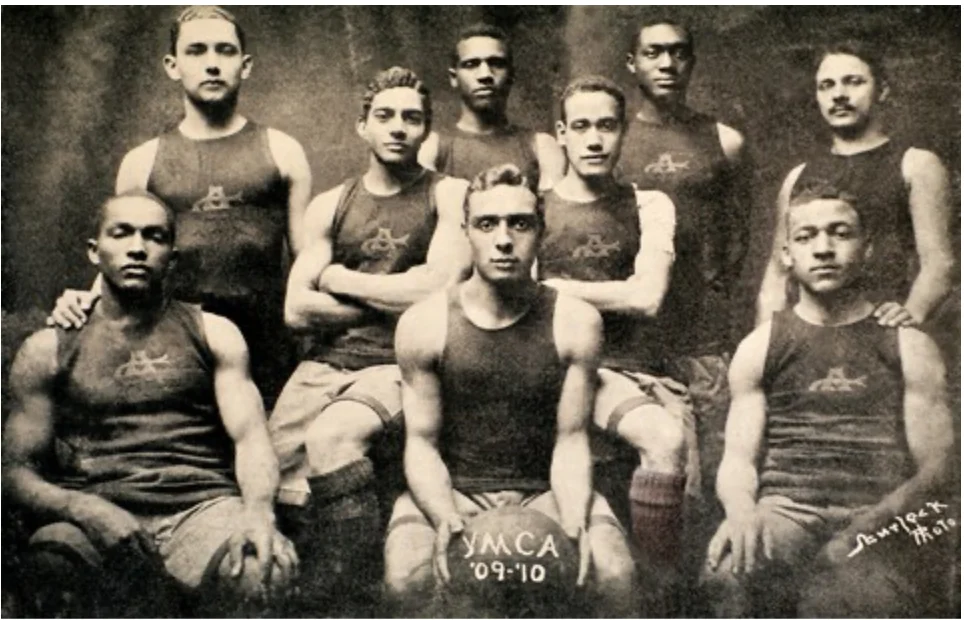
On 135th Street in Harlem, the rhythmic thud of a basketball against asphalt and the enthusiastic shouts of children are a familiar soundtrack. A vibrant, well-maintained outdoor court, enclosed by a sturdy chain-link fence and adorned with fresh paint, serves as a focal point, a testament to the sport’s deep-seated presence. Here, the ball is in constant motion—dribbled, passed, and launched from all angles—its energy drawing an ever-growing crowd of onlookers, mostly young, around the perimeter. This scene, replicated across countless neighborhoods from Harlem to Brooklyn, underscores New York City’s inextricable link with basketball, a relationship that has been woven into the city’s cultural fabric for decades, particularly within its African American communities. However, the roots of this profound connection are not merely organic; they are complex, deeply intertwined with a history of discriminatory practices such as redlining and segregation that inadvertently fostered the sport’s ascent among minority groups.
Basketball’s Formative Years: A "White Man’s Game"
Basketball, as we know it, was born in December 1891, conceived by Dr. James Naismith, a Canadian physical education instructor at the International YMCA Training School in Springfield, Massachusetts. His objective was to create an indoor sport less injury-prone than football but more dynamic than calisthenics, suitable for keeping his students active during the harsh New England winters. Initially played with peach baskets and a soccer ball, the game rapidly gained traction. Within a decade, it had permeated colleges and high schools nationwide, with prestigious institutions like Harvard, Yale, Cornell, and Princeton engaging in intercollegiate contests as early as 1901. The sport formalized its professional structures with the founding of the National Basketball League (NBL) in 1937, which later merged with the Basketball Association of America (BAA) in 1949 to form the ubiquitous National Basketball Association (NBA).
For its initial three decades, the landscape of collegiate and professional basketball was predominantly white. Institutionalized racism and informal "gentlemen’s agreements" effectively barred Black participants from official leagues and teams. The color barrier remained firmly in place, reflecting broader societal segregation and the prevailing racial prejudices of the era. The sentiment was succinctly captured by Micheal Novack in "The Joy of Sports" (1946), who stated, "Basketball was originally invented as a white man’s game." This perception was reinforced by the realities of participation. It wasn’t until 1928 that George Gregory Jr. made history as the first Black collegiate player, a solitary figure in a sea of white faces, signaling a slow, arduous shift. The professional ranks followed much later; the 1949-1950 NBA season marked a pivotal moment with Chuck Cooper (Boston Celtics), Nathaniel Clifton (New York Knicks), and Earl Lloyd (Washington Capitols) becoming the first Black players to break into the professional league. Their entry was a monumental step, but it came only after decades of exclusion.
During this era, basketball was largely cultivated within community centers, notably YMCAs. However, these facilities, often managed by white owners, routinely denied membership to Black individuals, mirroring the pervasive racial segregation of the time. This exclusionary practice left Black communities with a stark choice: either remain on the sidelines or establish their own sporting infrastructure. This necessity became a powerful catalyst for self-organization and the creation of alternative spaces where the sport could thrive, laying the groundwork for basketball’s unique trajectory within African American culture.
The Urban Landscape of Inequality: Redlining and Segregation in NYC
The story of basketball’s rise in Black communities, particularly in New York City, cannot be fully understood without examining the profound impact of racial and economic discrimination, epitomized by redlining. This exclusionary practice, formally initiated in 1934 with the implementation of the National Housing Act (NHA), fundamentally reshaped urban landscapes and economic opportunities for generations. The NHA aimed to bolster the housing market during the Great Depression by creating government programs like the Federal Housing Administration (FHA) and the Home Owners’ Loan Corporation (HOLC). While ostensibly designed to promote homeownership by providing mortgage insurance to lenders, thereby making loans more accessible, its implementation was deeply discriminatory, systematically disadvantaging Black Americans.
The HOLC, through its city surveys, produced color-coded maps that categorized neighborhoods based on perceived investment risk. Areas with significant Black populations were systematically labeled "hazardous" or "risky" (often shaded red, hence "redlining"), effectively signaling to banks and investors that these communities were undesirable for loans and development. These maps became de facto blueprints for the FHA’s lending policies, which consequently refused federally insured housing loans for minorities. This meant that Black families were largely denied access to the primary mechanism for wealth creation in post-war America: homeownership. Without access to FHA-backed mortgages, Black families were either relegated to renting or forced to purchase homes in segregated areas with predatory, high-interest loans, severely limiting their ability to build equity. The consequences were devastating and multi-generational, leading to a stark racial wealth gap that persists today.
As Black families, many migrating from the Jim Crow South in search of better opportunities during the Great Migration, increasingly moved to northern cities like New York, white residents often responded with "white flight," relocating to newly developed suburbs. This exodus further depressed property values in the inner cities, particularly in redlined areas. Remaining white homeowners, fearful of plummeting prices, often sold their homes at deep discounts, accelerating the cycle of disinvestment and racial segregation. This created concentrated Black communities in urban centers, which, while facing systemic disadvantages, also fostered strong internal social networks and cultural development.
This economic inequality, systematically enforced through redlining, directly impacted the types of recreational opportunities available to children in poorer, predominantly Black neighborhoods. Redlined areas were characterized by a severe lack of green spaces and, on average, possessed significantly smaller parks compared to affluent neighborhoods. A 2020 analysis by the Trust for Public Land revealed that the average park size in New York City’s impoverished neighborhoods was a mere 6.4 acres, a stark contrast to the 14 acres found in wealthier areas. This disparity in outdoor recreational infrastructure meant fewer large fields suitable for sports like baseball or football, further narrowing the options for physical activity.
Beyond spatial limitations, economic barriers played a crucial role in shaping sports preferences. Sports like baseball, with their requirements for specialized equipment (bats, gloves, uniforms, cleats) and the increasing prevalence of costly travel teams for competitive play, presented significant financial hurdles for families in economically depressed communities. Basketball, by contrast, required minimal equipment—a ball and a hoop were often sufficient—making it an inherently more accessible sport. David C. Ogden, a professor at the University of Nebraska who extensively studied race and sport dynamics, highlighted that the scarcity of baseball facilities in Black neighborhoods and the high cost of "select baseball" were primary reasons for the lack of racial diversity in the sport. His research indicated that "more than two-thirds of the 27 coaches said that African-American youth prefer to spend their time on the basketball court rather than on the diamond," a testament to the sport’s lower barrier to entry and greater availability.
The Rise of Black YMCAs and Independent Teams
In response to widespread exclusion from mainstream athletic and social institutions, Black communities began to forge their own athletic pathways. The development of Black YMCAs emerged as a critical response to the segregation of mainstream community centers, becoming vibrant hubs for social interaction, education, and athletic development. These institutions provided much-needed spaces for Black individuals to gather, organize, and pursue recreational activities, including basketball, often serving as de facto community centers in neighborhoods underserved by municipal facilities.
One of the earliest and most significant examples of independent Black basketball was the Smart Set Athletic Club of Brooklyn, founded in 1907, which became America’s first fully independent Black basketball team. As Black YMCAs proliferated in major cities across the East Coast—including New York, Philadelphia, and Baltimore—basketball rapidly spread within these networks. Edwin Bancroft Henderson, a pioneering educator in Washington D.C., played a pivotal role in this expansion. Having learned the game during summer sessions at Harvard University, Henderson returned to D.C. and enthusiastically introduced basketball to young Black men, effectively seeding its popularity throughout the region. His efforts laid the groundwork for organized Black basketball leagues, often referred to as the "Black Fives" era, which thrived from the early 1900s through the 1940s.
These independent teams and leagues, often operating outside the mainstream white-dominated structures, fostered a unique style of play characterized by speed, agility, and improvisation, and cultivated a powerful sense of community identity. Games were often major social events, drawing large crowds and generating intense local rivalries. A vivid account from Domke (2011) describes a climactic game where "the 12th Streeters beat the Smart Set in Brooklyn 20:17 in front of more than 2,000 spectators," showcasing the immense popularity and community engagement these early Black basketball contests commanded. These games were not just sporting events; they were cultural gatherings, celebrations of skill, and expressions of collective resilience.
Basketball also became a crucial avenue for economic upward mobility for Black athletes in an era of limited opportunities. The Harlem Globetrotters, formed in 1926 by Abe Saperstein in Chicago (though later strongly associated with Harlem through their name), epitomized this. Initially a competitive team, they quickly evolved into a renowned exhibition squad, showcasing unparalleled skill, athleticism, and entertainment value. For Black basketball players, the Globetrotters offered one of the few viable and often the only professional pathways to earn a living through the sport, allowing them to travel the world and achieve a level of fame and financial stability largely inaccessible elsewhere. This institution provided hope and inspiration, demonstrating the potential for excellence and success despite systemic barriers.
A Shifting Demography: From Segregation to Dominance
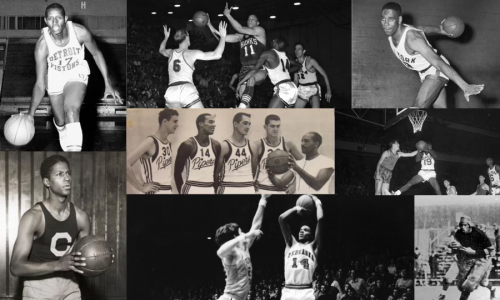
The breaking of the color barrier in professional basketball in 1949-50, initiated by players like Cooper, Clifton, and Lloyd, marked a significant, albeit gradual, shift. While the NBA was initially slow to integrate and Black players faced continued discrimination both on and off the court, their presence steadily grew. The skill, athleticism, and captivating style of play brought by Black athletes rapidly transformed the game, making it more dynamic, exciting, and ultimately more popular with a broader audience. Early Black stars like Bill Russell and Wilt Chamberlain not only dominated the game but also became cultural icons, further cementing basketball’s place in the public consciousness.
In the decades following the end of formal segregation, Black participation in basketball experienced an exponential surge, particularly in New York City. The cultural foundations laid during the era of exclusion—the community courts, the independent leagues, the accessible nature of the sport—provided a fertile ground for talent to flourish. The dense urban environments, limited green spaces, and the relative affordability of basketball equipment meant that the sport continued to be the most viable and popular outlet for athletic expression in many Black neighborhoods. Today, basketball is not merely a sport in NYC; it is an intrinsic part of the city’s identity, transcending racial lines while retaining its deep roots within African American communities.

Every summer, New York City parks transform into epicenters of basketball culture, hosting tournaments that capture local and even national attention. Events like Nike’s "NY vs NY" series and Slam magazine’s Summer Classic exemplify this phenomenon, drawing top-ranked high school players and thousands of fervent fans. For the past five years, Dyckman Park in Manhattan has been a premier venue for these high-stakes, community-driven competitions, showcasing the enduring vibrancy of streetball and its powerful connection to the city’s youth. These tournaments are not just about competition; they are cultural festivals, community gatherings, and proving grounds for aspiring athletes.
The professional landscape has also undergone a dramatic demographic transformation. In stark contrast to 1950, when Black players were a novelty, today approximately 75% of the NBA’s players are Black. This profound shift is not confined to the United States; Black athletes from America and around the world now dominate professional leagues globally, a testament to the talent pipeline that has been fostered over generations. The journey from exclusion to prominence is a powerful narrative of determination and cultural impact.
The historical trajectory of basketball in African American communities serves as a powerful illustration of resilience and adaptation in the face of systemic adversity. While segregation and redlining initially stifled Black participation in mainstream sports, the economic conditions and exclusionary practices they fostered inadvertently propelled basketball into an enduring staple of the community. What began as a consequence of discrimination evolved into a source of cultural pride, economic opportunity, and a powerful symbol of identity, shaping not only the sport itself but also the very fabric of New York City’s rich and diverse cultural landscape for generations. The vibrant courts of Harlem and beyond stand as living monuments to this complex and compelling history.
Sharif Nelson ‘26 is a student at Hamilton College studying economics.
Additional Resources:
Aaronson, D., Faber, J., Hartley, D., Mazumder, B., & Sharkey, P. (2020). The Long-Run Effects of the 1930s HOLC “Redlining” Maps on Place-Based Measures of Economic Opportunity and Socioeconomic Success. The Effects of the 1930s HOLC “Redlining” Maps. https://doi.org/10.21033/wp-2020-33
Bowen, F. (2023, April 7). In its early years, NBA blocked black players. The Washington Post. Retrieved April 24, 2023, from https://www.washingtonpost.com/lifestyle/kidspost/in-nbas-early-years-black-players-werent-welcome/2017/02/15/664aa92e-f1fc-11e6-b9c9-e83fce42fb61_story.html
Centopani, P. (2020, February 24). The makings of basketball mecca: Why it will always be New York. FanSided. Retrieved May 1, 2023,








