Jono Maryono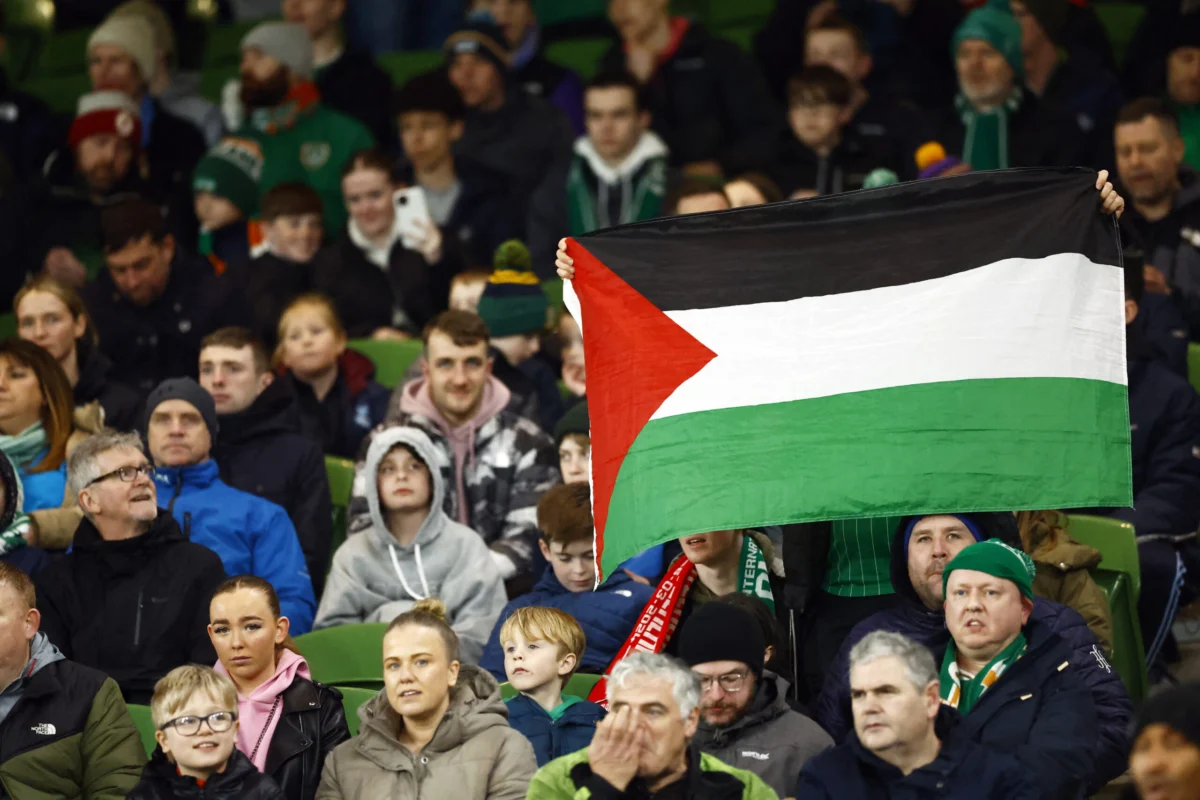
A significant movement within Irish sport, spearheaded by the campaign group Irish Sport for Palestine, is escalating its pressure on the Football Association of Ireland (FAI) to boycott an upcoming UEFA Nations League fixture against Israel. The campaign, bolstered by endorsements from prominent figures in Irish football, arts, and culture, accuses Israel of committing "genocide" in its ongoing military operations in Gaza and alleges violations of international football statutes by allowing matches to be played on occupied Palestinian territories. This call for a boycott represents a potent intersection of international human rights concerns and the realm of professional sports, drawing parallels to historical instances where political tensions have directly impacted sporting engagements.
The core of the campaign rests on an open letter dispatched to the FAI, articulating a series of grievances and demands. Central to these is the accusation of genocide against Israel, a grave charge leveled in the context of the ongoing conflict in Gaza. Beyond the human rights dimension, the letter also asserts that Israel’s participation in UEFA and FIFA competitions, particularly with teams operating on what the campaigners deem "occupied Palestinian land," contravenes established statutes of these governing bodies. This legalistic argument aims to leverage the internal regulations of international football to achieve the desired boycott.
A crucial point of leverage for Irish Sport for Palestine is the overwhelming mandate received by the FAI leadership. In November 2025, a substantial 93 percent of FAI members reportedly voted in favor of the association’s leadership petitioning UEFA to suspend Israel from competitions under the aforementioned statutes. Campaigners argue that the FAI is ethically and procedurally bound to "respect and represent" this clear directive from its membership, thereby compelling them to act on the call for a boycott.
Israel has vehemently denied the accusations of genocide, asserting that its military actions are defensive and in response to attacks. The Israeli government has consistently rejected claims of wrongdoing and maintains the legitimacy of its operations.
The "Stop the Game" letter, as it is titled, has garnered a diverse and influential array of signatories. Within the football fraternity, the endorsement includes players from the League of Ireland, a testament to the grassroots support for the campaign. Notable figures from the coaching and playing ranks have also lent their weight, including former Republic of Ireland men’s coach Brian Kerr and twice winner of the women’s player of the year award, Louise Quinn.
The appeal extends beyond the sporting arena, encompassing prominent voices from the Irish cultural landscape. The internationally acclaimed Irish rock band Fontaines D.C., the popular hip-hop trio Kneecap, and the legendary singer-songwriter Christy Moore are among the artists who have added their names. The inclusion of Oscar-nominated actor Stephen Rea further amplifies the campaign’s reach and gravitas, demonstrating a broad societal consensus among these public figures regarding the gravity of the situation in Palestine.
The fixtures in question are scheduled for later this year. The Republic of Ireland is slated to host Israel at Dublin’s Aviva Stadium on October 4th. Additionally, a September 27th fixture, designated as an Israeli home match, is expected to be held at a neutral venue due to security and logistical considerations, a common practice in international football when political tensions or conflict render a nation’s usual venues unsuitable.
Adding a powerful personal perspective to the campaign, the letter features a statement from Roberto Lopes, captain of Shamrock Rovers and chair of the Professional Footballers’ Association of Ireland. Lopes, a Dublin-born player set to represent Cape Verde at the upcoming World Cup in June, articulated a profound sense of moral obligation. He stated, "We can’t ignore the humanitarian catastrophe in Palestine; the sheer loss of life there has to take precedence over any sporting consideration." Lopes further emphasized Ireland’s potential role in global leadership, adding, "Ireland has an opportunity here to lead and do what others won’t." This sentiment underscores the belief that sporting boycotts can serve as a powerful tool for diplomatic and moral signaling on the international stage.
The historical context of Israel’s participation in UEFA competitions is also relevant to this debate. Israel has been a member of UEFA since the early 1980s, a period following its exclusion from the Asian Football Confederation (AFC) in the 1970s. This exclusion stemmed from a refusal by several AFC member nations to compete against Israel, highlighting a long-standing pattern of sporting isolation driven by political factors in the Middle East.
The Irish government’s position, as articulated by Prime Minister Micheál Martin, indicates a preference for the matches to proceed. Taoiseach Martin, while acknowledging Ireland’s strong criticisms of Israeli government policy, particularly in Gaza, and condemning the Hamas attack on Israel as "absolutely horrific," views sport as an arena that can become "challenging when it crosses into the realm of politics." This stance suggests a delicate balancing act between expressing political disapproval and maintaining the separation of sports from overt political interference, a principle often invoked by international sporting bodies.
The FAI’s perspective, as conveyed by Chief Executive David Courell in February, has centered on the potential ramifications of withdrawing from the fixtures. Courell indicated that the national team would have no alternative but to "fulfil its obligations or risk harming the long-term sporting interests of Irish football, including potential disqualification from future competitions." This highlights the significant institutional risks perceived by the FAI, including potential sanctions from UEFA and FIFA, which could have far-reaching consequences for the development and participation of Irish football in international tournaments.
Public opinion within Ireland also appears to be divided, with a significant portion of football supporters expressing opposition to the fixture. A poll conducted by the Irish Football Supporters Partnership revealed that 76 percent of respondents were against the matches against Israel being played, indicating a strong sentiment among the fanbase that aligns with the calls for a boycott. This data suggests that any decision made by the FAI will be closely scrutinized by a substantial segment of its active supporters.
Background and Chronology of the Campaign
The current push for a boycott is not an isolated incident but rather an escalation of ongoing advocacy by Irish Sport for Palestine and its supporters. The group has been active in raising awareness about the Palestinian cause within the Irish sporting community for some time. The specific impetus for the recent intensified campaign appears to be the scheduling of the UEFA Nations League matches against Israel for the latter half of 2024.
Key Milestones:
- Pre-2024: Irish Sport for Palestine and other advocacy groups have been vocal in their support for Palestine, often organizing awareness events and demonstrations.
- November 2025: A significant vote within the FAI membership mandates the association’s leadership to press UEFA to suspend Israel based on alleged breaches of statutes related to playing on occupied territories. This vote represents a critical internal endorsement of the campaign’s core arguments.
- Early 2024 (February): FAI Chief Executive David Courell articulates the association’s concerns regarding fulfilling contractual obligations and the potential consequences of withdrawal.
- Recent Months (leading up to current reporting): The "Stop the Game" open letter is drafted and circulated, garnering signatures from prominent figures in Irish sport and culture. The letter is formally submitted to the FAI.
- Current Period: Public attention intensifies as the fixtures draw nearer, with media coverage amplifying the calls for a boycott and the FAI facing mounting pressure from both the campaign and its own membership.
Supporting Data and International Context
The campaign’s accusations and demands are situated within a broader international context of criticism directed at Israel’s actions in the Palestinian territories and the ongoing conflict in Gaza. Human rights organizations have consistently documented alleged violations of international law by Israeli forces.
- Human Rights Reports: Numerous reports from organizations such as Amnesty International, Human Rights Watch, and the UN Human Rights Office have detailed concerns regarding potential violations of international humanitarian law, including disproportionate force, civilian casualties, and the impact of the blockade on Gaza.
- Gaza Conflict Statistics: The current conflict in Gaza, which began in October 2023 following attacks by Hamas, has resulted in a devastating humanitarian crisis. Official figures from health authorities in Gaza indicate tens of thousands of Palestinian casualties, a significant proportion of whom are women and children. The scale of destruction to civilian infrastructure, including homes, hospitals, and schools, has been extensively documented by international aid agencies.
- UEFA and FIFA Statutes: The campaign’s reference to UEFA and FIFA statutes points to potential clauses concerning discrimination, human rights, and the integrity of competitions. Governing bodies often have provisions that prohibit member associations from engaging in activities that could be deemed discriminatory or that violate international human rights standards. The specific interpretation and application of these statutes in relation to the Israeli-Palestinian conflict remain a point of contention.
- Historical Precedents for Sporting Boycotts: The history of sports boycotts is extensive, often linked to political and human rights issues. Examples include the international boycott of South Africa during apartheid, the exclusion of Russia from certain sporting events following geopolitical events, and various boycotts during the Cold War. These precedents demonstrate that sporting bodies and national federations have, at times, utilized sporting sanctions as a form of political protest or pressure.
Official Responses and Stakeholder Positions
The FAI, as the primary recipient of the campaign’s demands, faces a complex decision. Their statements have emphasized the obligation to fulfill contractual agreements with UEFA and the potential ramifications of withdrawal.
- Football Association of Ireland (FAI): As previously noted, FAI Chief Executive David Courell has highlighted the risk of harming "long-term sporting interests," including potential disqualification from future competitions. This pragmatic approach underscores the institutional pressures and responsibilities that guide the FAI’s decision-making.
- Irish Government: Taoiseach Micheál Martin has expressed critical views on Israeli government policy but has also indicated a preference for the matches to proceed, suggesting a desire to avoid conflating sports with politics, while still acknowledging the controversial nature of the situation.
- UEFA: As the organizing body for the Nations League, UEFA’s stance will be pivotal. Historically, UEFA has been reluctant to impose broad sporting bans based solely on political grounds, often citing its mandate to govern football universally. However, the pressure from a member association like the FAI, backed by a significant internal mandate and public support, could influence their deliberations. UEFA’s statutes generally prohibit discrimination and mandate adherence to human rights principles.
- FIFA: As the global governing body, FIFA holds ultimate authority over international football. While the immediate issue falls under UEFA’s purview, FIFA’s regulations and precedents on similar matters are relevant. FIFA has also faced calls to take action against member associations for political reasons.
- Israeli Football Association: The Israeli Football Association has not been quoted directly in this specific article but would likely defend its right to participate in international competitions, emphasizing that national sporting bodies should not be penalized for the actions of their governments.
Broader Impact and Implications
The campaign by Irish Sport for Palestine and its high-profile endorsements carry significant implications beyond the immediate context of the UEFA Nations League fixture.
- Moral and Ethical Debate: The calls for a boycott ignite a crucial debate about the role of sport in society and the ethical responsibilities of athletes, sporting bodies, and governments when confronted with severe human rights crises. It questions whether sporting ties should be maintained with nations accused of grave international transgressions.
- Precedent for Future Actions: A successful boycott, or even a strong FAI push for suspension, could set a precedent for other national federations and sporting bodies to consider similar actions in response to geopolitical events and human rights concerns. Conversely, a refusal to act could embolden other nations facing similar pressures.
- Impact on International Relations: While sport is often seen as a soft power tool, boycotts can have diplomatic repercussions, signaling strong disapproval from one nation’s sporting community and potentially influencing broader governmental stances.
- Athlete Activism: The involvement of prominent athletes and cultural figures in the campaign underscores the growing trend of athlete activism, where individuals use their platforms to advocate for social and political change. This can both empower movements and create challenges for athletes caught between their professional obligations and their personal convictions.
- FAI’s Position: The FAI finds itself in a challenging position, caught between its membership’s mandate, governmental advice, UEFA regulations, and the moral weight of the campaign’s accusations. Their decision will have lasting effects on their relationship with their membership, their standing within UEFA, and their public image. The poll data indicating strong opposition among fans suggests that any decision to proceed with the match without addressing these concerns could lead to significant internal dissent.
The unfolding situation highlights the increasingly complex relationship between sport, politics, and human rights on the global stage. The pressure on the FAI to boycott the UEFA Nations League match against Israel is a potent manifestation of this intersection, with significant ethical, political, and sporting dimensions at play. The coming months will reveal how the FAI navigates these competing pressures and whether the voices of Irish sport and its cultural allies can effect a change in international sporting policy.