Ana Megawati
The global footwear market has witnessed a remarkable resurgence and redefinition of comfort, exemplified by the surprising, yet undeniable, popularity of faux-fur-lined Crocs. Once relegated to the periphery of fashion, often synonymous with utilitarianism or perceived "uncoolness," these distinctive clogs have cemented their place not just as practical footwear but as a cultural phenomenon, particularly for those prioritizing warmth, ease, and a defiant stance against conventional style norms. This shift reflects broader trends in consumer behavior, where comfort and functionality are increasingly valued alongside or even above traditional aesthetic considerations.
The initial perception of Crocs, since their founding in 2002, was largely bifurcated: revered for their unparalleled comfort and practicality in certain professional settings, such as healthcare and culinary industries, and often viewed with skepticism by fashion critics for their unconventional silhouette. The signature Croslite material, a proprietary closed-cell resin, offered lightweight, non-marking, and odor-resistant properties, making them highly functional. However, their distinctive, bulbous design and perforated upper were frequently cited as antithetical to mainstream fashion sensibilities. For years, Crocs navigated this polarized public opinion, maintaining a loyal customer base despite widespread derision from certain quarters.
A Chronological Evolution: From Niche Utility to Mainstream Comfort
The journey of Crocs from a niche boating shoe to a global footwear giant is marked by several distinct phases. Founded by Lyndon Hanson, George Boedecker, Jr., and Scott Seamans, the original Crocs shoe, the "Beach," debuted at the Fort Lauderdale Boat Show in 2002, selling out quickly. Its initial success was driven by its ergonomic design and water-friendly features. The brand rapidly expanded, becoming a household name by the mid-2000s, reaching peak popularity before experiencing a significant backlash. This period saw Crocs become a recurring target in fashion discourse, widely considered an "ugly shoe." Sales plateaued, and the company faced financial challenges, prompting a strategic re-evaluation of its brand image and market position.
A pivotal moment in Crocs’ transformation occurred around 2017 when high-fashion designers began to embrace and reinterpret the iconic clog. The collaboration with British designer Christopher Kane for his London Fashion Week show introduced Crocs adorned with geological-inspired Jibbitz charms, signaling a subversive shift in perception. This move, initially met with surprise and skepticism, opened the floodgates for further high-profile partnerships. Balenciaga’s elevated platform Crocs, released in 2017 and later in 2021, pushed the boundaries even further, embedding the utilitarian shoe within luxury fashion narratives. These collaborations were instrumental in shifting the narrative, moving Crocs from an object of ridicule to a canvas for artistic expression and a statement of anti-fashion chic. The brand also diversified its collaborations to include popular culture icons and other brands, such as LoveShackFancy, Coca-Cola, and the NBA, further broadening its appeal and demonstrating its versatility.
The COVID-19 pandemic further accelerated Crocs’ resurgence. As global populations spent unprecedented time at home, the demand for comfortable, versatile, and easy-to-wear footwear skyrocketed. Athleisure and comfort wear became dominant trends, and Crocs, particularly their lined versions, were perfectly positioned to meet this burgeoning need. The societal focus shifted from outward appearance to personal well-being and domestic comfort, a paradigm shift that played directly into the brand’s core strengths. The company reported record revenues and significant growth during this period, solidifying its renewed market relevance and demonstrating the enduring appeal of comfort-oriented footwear.
The Appeal of the Lined Croc: Comfort, Warmth, and Practicality Redefined
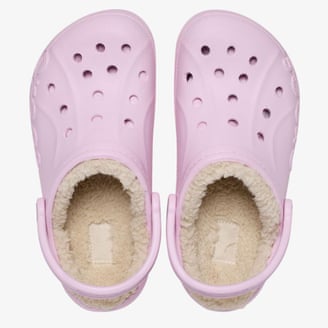
The faux-fur-lined Croc, specifically models like the Baya, represents a significant evolution in the brand’s product line, transforming the familiar utility shoe into a hybrid that bridges indoor and outdoor comfort. The addition of a soft, plush lining addresses a crucial gap: providing warmth and a luxurious feel without compromising the inherent benefits of the original design.

The design features contributing to its widespread appeal are manifold:
- Insulation and Warmth: The faux-fur lining acts as a key differentiator, offering immediate warmth and coziness, making them ideal for colder climates or simply for comfort around the home. This directly addresses the shortcomings of many traditional slippers, which often lack structural support and durability, leaving feet vulnerable to cold floors and minimal protection.
- Ergonomic Design: The spacious toe box, a hallmark of Crocs, allows toes to splay naturally, promoting better foot health and reducing pressure points that can arise in more restrictive footwear. This, combined with the lightweight Croslite foam construction, creates a sensation of "wearing nothing at all," enhancing overall comfort during prolonged wear. The anatomic footbed provides a soft, supportive landing for the feet, contributing to a comfortable experience.
- Secure Fit: Unlike many open-backed slippers or mules, the lined Crocs often incorporate a plush ankle strap that can be rotated for a more secure fit, preventing the foot from sliding out and minimizing unwanted lateral movement. This feature is particularly beneficial for active wear around the house, reducing the risk of slips or falls, and offering greater stability than typical house shoes.
- Versatility: The waterproof exterior, combined with respectably treaded soles, extends the utility of these lined clogs beyond indoor confines. They are perfectly suited for quick outdoor tasks such as retrieving mail, taking out recycling, or brief trips to the garden, a functionality that traditional slippers rarely offer. Their ease of cleaning further enhances their practicality for transitioning between indoor and outdoor environments, requiring only a quick spray of disinfectant and a wipe down to be sanitary for carpet duty again.
- Low Maintenance: The Croslite material is inherently easy to clean, and the faux fur, while requiring more care than the exterior, can often be spot-cleaned or, in some designs, the entire shoe can be gently washed, maintaining hygiene and freshness, especially when used for various tasks.
Supporting Data and Market Dynamics
The market performance of Crocs Inc. provides substantial evidence of this shift. In recent years, the company has consistently reported strong financial results, with revenues frequently exceeding analyst expectations. For example, in 2023, Crocs Inc. reported record annual revenues, highlighting the sustained demand for its core products and the successful integration of acquisitions like HeyDude. While specific sales data for lined Crocs are not always disaggregated, the overall growth trajectory indicates significant consumer embrace across the product portfolio, with comfort-focused styles being a key driver. This growth signals a broader market acceptance of Crocs as a legitimate and desirable footwear option, moving beyond its niche origins.
This success is part of a larger market trend often dubbed the "ugly shoe" phenomenon, which has seen brands like Birkenstock, Ugg, and even chunky sneakers from various athletic brands gain unprecedented traction. This trend is not merely about aesthetic defiance but signals a deeper cultural shift where consumers are increasingly prioritizing comfort, authenticity, and personal expression over dictated fashion norms. Social media platforms, particularly TikTok and Instagram, have played a crucial role in amplifying this trend, turning formerly niche or polarizing items into viral sensations. Influencers and everyday users alike showcase the practicality and unexpected styling versatility of lined Crocs, driving organic engagement and sales through user-generated content and authentic endorsements.
Expert Perspectives on Foot Health and Fashion
While the original article briefly touches upon a physiotherapist’s lukewarm endorsement, stating, "They’re not the best, but there are worse options out there," a broader perspective from podiatric and fashion experts can provide further context and analysis.
From a podiatric standpoint, general recommendations for indoor footwear often emphasize support, cushioning, and a secure fit to prevent common foot ailments. Traditional flat slippers can offer insufficient arch support and cushioning, potentially leading to issues like plantar fasciitis, heel pain, or arch strain, especially on hard surfaces like hardwood or tile. The Crocs’ anatomic footbed, combined with the soft Croslite material, offers a degree of cushioning and support superior to many conventional slippers. While some podiatrists might prefer shoes with more rigid support or fully adjustable ankle straps for individuals with specific biomechanical issues or extreme cases of pronation or instability, the secure ankle strap in many lined Crocs models offers a significant improvement over open-backed designs, mitigating unwanted lateral movement and enhancing stability. The roomy toe box is also a positive for natural toe splay, which is beneficial for overall foot health and preventing conditions like bunions or hammertoes. Therefore, while not a prescription orthopedic device, lined Crocs generally offer a more supportive and protective option for indoor wear than many flimsy alternatives, promoting comfort without a "modicum of discomfort" or attributable injuries, as one long-term user reported.
Fashion analysts interpret the rise of lined Crocs as a testament to the ongoing "comfort revolution" and the evolving definition of style. The embrace of utilitarian aesthetics, often termed "gorpcore" or "normcore," celebrates functionality and practicality. Crocs fit perfectly into this narrative, becoming a symbol of an "I-don’t-care-to-care" confidence, particularly appealing to busy individuals like parents who prioritize ease and function in their daily lives. This isn’t about neglecting style entirely but rather about consciously choosing comfort without sacrificing a sense of self-assuredness. It’s a statement that practical does not equate to unstylish in a world increasingly valuing authenticity over superficiality. The emergence of the "cool mom, not a regular mom" archetype further underscores this sentiment, where a relaxed, confident approach to fashion is seen as desirable.
Furthermore, the concept of Non-Exercise Activity Thermogenesis (NEAT), which encompasses the energy expended for everything we do that is not sleeping, eating, or sports-like exercise (e.g., walking to the fridge, cleaning, fidgeting), highlights the importance of comfortable footwear for daily tasks. Research, such as that published in Best Practice & Research Clinical Endocrinology, emphasizes that up to 30% of our daily activity falls under NEAT. Wearing comfortable, supportive shoes like lined Crocs during these mundane yet cumulative activities can significantly reduce foot fatigue and enhance overall well-being, effectively turning routine chores into less of a burden. The ability of such footwear to "romanticize and find comfort in the quieter, more mundane moments spent at home" speaks to a holistic approach to personal comfort and lifestyle.
Broader Impact and Future Outlook
The sustained popularity of faux-fur-lined Crocs has several broader implications for the footwear industry and consumer culture.
Firstly, it underscores the power of brand reinvention. Crocs’ ability to pivot from a polarizing product to a fashion-forward, yet still fundamentally comfortable, staple demonstrates a keen understanding of evolving consumer desires and strategic marketing through collaborations and targeted campaigns. This strategy has allowed them to diversify their product offerings significantly, extending beyond the classic clog to include boots, sandals, and various fashion-oriented silhouettes, all while maintaining their core identity of comfort and lightness. This adaptability has allowed the brand to maintain relevance across diverse demographics and style preferences.
Secondly, it reinforces the permanence of the comfort-first mentality. The pandemic did not merely create a temporary surge in demand for comfort wear; it solidified it as a foundational consumer value. People have experienced the benefits of prioritizing comfort and are less willing to compromise it for fleeting fashion trends. This suggests that brands focusing on ergonomic design, versatile functionality, and perceived value will continue to thrive in a market that increasingly values long-term well-being over transient aesthetics.
Finally, the phenomenon of lined Crocs speaks to a democratic approach to fashion, where accessibility and personal utility often trump exclusivity and high price points. At an accessible price point, typically starting from around $44.97, these shoes offer a blend of perceived luxury (the faux fur) and robust practicality that resonates with a wide demographic. They symbolize a quiet rebellion against the pressures of constant performance and external validation, instead championing self-care and finding joy in the quieter, more mundane moments of daily life. The disregard for traditional fashion "rules" exemplified by embracing these shoes reflects a broader cultural shift towards valuing individual comfort and authenticity above external judgment.
In conclusion, faux-fur-lined Crocs are more than just a comfortable pair of shoes; they are a microcosm of contemporary consumer trends. Their journey from a derided utility item to a celebrated comfort staple, embraced by both everyday wearers and high fashion, highlights a significant cultural shift towards valuing well-being, practicality, and personal expression in footwear. As the market continues to evolve, the success of lined Crocs serves as a compelling case study in how comfort, when strategically reimagined and marketed, can become the ultimate and most enduring fashion statement.