Ferry Irwandi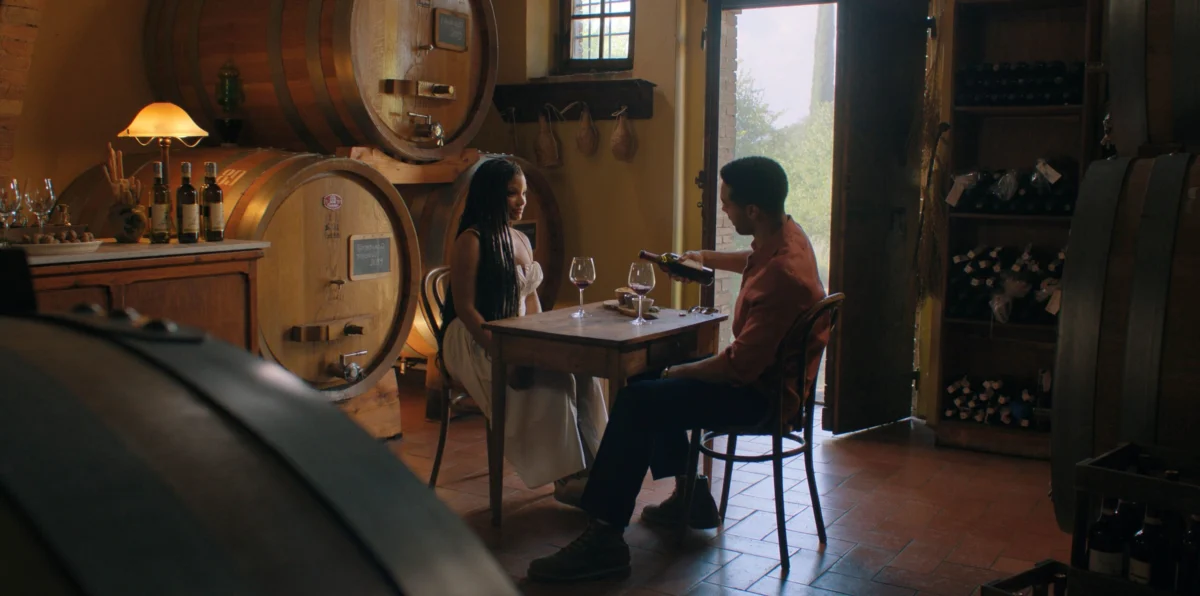
Narrative Overview and Character Dynamics
The film follows the journey of Anna (Bailey), a Manhattan-based culinary school defector whose life in New York is characterized by a series of transient house-sitting assignments and a lack of professional direction. The inciting incident occurs at a high-end Manhattan hotel bar where Anna meets Matteo, a charismatic Italian traveler. Upon learning that Matteo’s family maintains a vacant villa in Tuscany, Anna embarks on an impulsive journey to Italy, a decision questioned by her peers but framed by the narrative as a necessary pursuit of passion.
The plot thickens upon Anna’s arrival at the villa, Casa Luna. After being discovered by Matteo’s relatives, she adopts the false identity of his fiancée to justify her presence. This "fake engagement" trope serves as the catalyst for the film’s central conflict, particularly as Anna begins to develop a genuine connection with Michael (Page), Matteo’s cousin. Michael, a dedicated vintner, represents the grounded, authentic soul of the region, contrasting with the more flighty nature of the initial encounter that brought Anna to Europe. The resolution of the film sees Anna not only finding romantic clarity but also reconciling with her professional aspirations through the medium of Italian gastronomy.

Production Design and Aesthetic Philosophy
Production designer Elena Albanese, a native of Milan, was tasked with bridging the gap between authentic Italian sensibilities and the expectations of a global, primarily American, audience. Albanese’s approach focused on "enhancing" the reality of Italy rather than caricaturing it. This involved a sophisticated color palette that mirrored the natural hues of the Val d’Orcia—terracotta, sage green, and golden yellow—while ensuring that the interiors felt contemporary and accessible.
Albanese emphasized the importance of contrast in the film’s visual language. The New York sequences were designed to feel cramped and frantic, utilizing "plates" (background footage) of Fifth Avenue and the Metropolitan Museum of Art to establish a sense of place before transitioning the actual performances to controlled environments. In contrast, the Italian scenes were characterized by wide-angle shots of open horizons and historical architecture, emphasizing the psychological expansion Anna experiences during her travels.
Strategic Location Scouting: From Manhattan to Pienza
The production of You, Me & Tuscany required a complex logistical strategy that spanned two continents and several Italian regions. While the story begins in New York City, the majority of the metropolitan scenes were achieved through a combination of location filming and studio work in Rome.

The New York-Rome Connection
To maintain production efficiency, the crew filmed background plates in Manhattan, including iconic stretches near the Metropolitan Museum of Art. However, the interactive elements of these scenes—Bailey’s walks through the city—were filmed at the historic Cinecittà Studios in Rome. This facility, famously used by directors like Federico Fellini, provided the space to recreate New York streetscapes with precision.
The hotel scenes, which serve as the bridge between the two worlds, were a composite of several high-end locations. The exterior of the hotel was filmed in the Tuscan town of Pienza, while the interior luxury was captured at the Six Senses Rome and the InterContinental Rome Ambasciatori Palace. This blending of locations allowed the production to maintain a high level of visual opulence while keeping the crew centralized in Italy.
The Creation of San Conessa
The film’s primary setting, the fictional village of San Conessa, was brought to life in Pienza. A UNESCO World Heritage Site, Pienza is renowned as the "ideal city" of the Renaissance, commissioned by Pope Pius II. The production utilized Pienza’s authentic streetscapes, piazzas, and vistas to provide a scale and texture that would be impossible to replicate on a soundstage. By filming in a preserved historical site, the production captured the inherent romance of the Tuscan landscape, characterized by stone facades and narrow alleyways that have remained largely unchanged for centuries.

Technical Execution: Casa Luna and the Studio Build
One of the film’s central locations is Casa Luna, the ancestral villa of Matteo’s family. The production faced the challenge of finding a location that possessed historical exterior charm but could also accommodate the technical requirements of a modern film crew.
While the exterior of the villa was filmed on a working vineyard property in Tuscany, the interiors were constructed at Cinecittà Studios. This decision was driven by the need for "controlled environments." Studio builds allow for removable walls (wild walls), consistent lighting, and smoother camera movements, which are often impossible in the cramped and protected interiors of real historical villas. Albanese designed the interior of Casa Luna to be a "moment of surprise," blending rustic Italian architecture with sleek, modern amenities, including high-end appliances that signify the family’s wealth and contemporary lifestyle.
Cultural Context and Traditions: The Barrel Race
A pivotal scene in the film involves a "barrel race" between Michael and Matteo, a sequence that highlights the competitive tension between the two cousins. This scene is an homage to the Bravio delle Botti, a traditional competition held annually in Montepulciano. In the real event, representatives from eight local contrade (districts) push 80-kilogram wine barrels uphill through the town’s narrow streets.

For the film, this sequence was meticulously choreographed and filmed in Rome. The change in location allowed the cinematography team to utilize more expansive camera rigs and drones, capturing the "machismo" and physical strain of the race without the logistical constraints of Montepulciano’s steep, narrow inclines. The inclusion of this tradition serves to ground the film in local culture, providing a glimpse into the regional heritage that defines the characters’ lives.
Gastronomy and the Sesti Estate
Food is a foundational element of You, Me & Tuscany, serving as both a plot device and a visual feast. Anna’s background in culinary arts allows the film to showcase Italian gastronomy in a way that feels integral to the narrative.
The Sesti Estate
For the winery sequences, the production selected the Sesti Estate in Montalcino. Located in the heart of the Brunello di Montalcino region, the estate is situated within the walled hamlet of Castello di Argiano. The Sesti family is renowned for their traditional winemaking methods and their unique approach to viticulture, which incorporates astronomical cycles. The estate provided the "earthy" and "romantic" atmosphere Michael describes in the film, including the vineyards where the iconic sprinkler scene was filmed.

Culinary Authenticity
The film’s focus on "gastronomia" (deli culture) and home-cooked meals was supported by the use of real locations and authentic ingredients. The sandwich shop seen in the film is a dressed-up version of a local deli in Pienza. Similarly, the family restaurant interiors were filmed at Ristorante Coso in Rome. Despite being in the capital, the restaurant’s owner has a deep passion for Tuscan cuisine, allowing the production to utilize a space that already possessed the "bones" of an authentic regional eatery.
Economic and Cultural Implications of Film Tourism
The release of You, Me & Tuscany is expected to contribute to the ongoing trend of "set-jetting"—a phenomenon where travelers choose destinations based on locations seen in films and television shows. According to recent tourism data, major productions filmed in Italy have historically led to a significant increase in visitor numbers to the featured regions.
The Val d’Orcia, already a popular destination, stands to benefit from the "Regé-Jean Page effect," as fans of the actor seek out the romantic landscapes depicted in the film. Furthermore, the production’s reliance on Italian crews, studios, and local vendors provides a direct economic stimulus to the region. The collaboration between international film studios and Italian cultural sites underscores the importance of the film industry in promoting and preserving national heritage through global media.

Chronology of Production
The development of You, Me & Tuscany followed a rigorous timeline aimed at capturing the region during its most visually stunning season:
- Pre-Production (Early 2023): Script finalization and the casting of Bailey and Page. Elena Albanese begins conceptualizing the blend of New York and Tuscan aesthetics.
- Location Scouting (Spring 2023): Extensive searches across the Val d’Orcia to find a villa that met both aesthetic and logistical needs. Selection of Pienza and the Sesti Estate.
- Principal Photography (Summer 2023): Filming begins in Tuscany to capture the height of the vineyard season. This period included the challenging exterior shoots in Pienza and Montalcino.
- Studio Phase (Autumn 2023): The production moves to Cinecittà Studios in Rome for the construction of the villa interiors and the filming of the New York street sequences.
- Post-Production (Winter 2023 – Spring 2024): Editing, color grading to enhance the "warmth" of the Italian sun, and the scoring of the film, which features a blend of contemporary pop and classic Italian melodies.
Analysis of the Film’s Impact
You, Me & Tuscany arrives at a time when the romantic comedy genre is experiencing a resurgence, driven by high-profile casting and a focus on escapist travel. By casting two actors of color in a genre and setting that has historically been less diverse, the film modernizes the "American in Italy" trope. This inclusivity, combined with a deep respect for Italian tradition and production design, positions the film as a sophisticated entry in the Universal Pictures catalog.
The film successfully balances the artifice of a romantic plot with the tangible reality of its setting. Through the expertise of Elena Albanese and the use of iconic locations like Pienza and the Sesti Estate, the production offers more than just a background; it provides a character in the form of the landscape itself. As audiences continue to seek out stories that offer both emotional resonance and visual splendor, You, Me & Tuscany stands as a testament to the enduring power of the Italian "Dolce Vita" in the global imagination.